
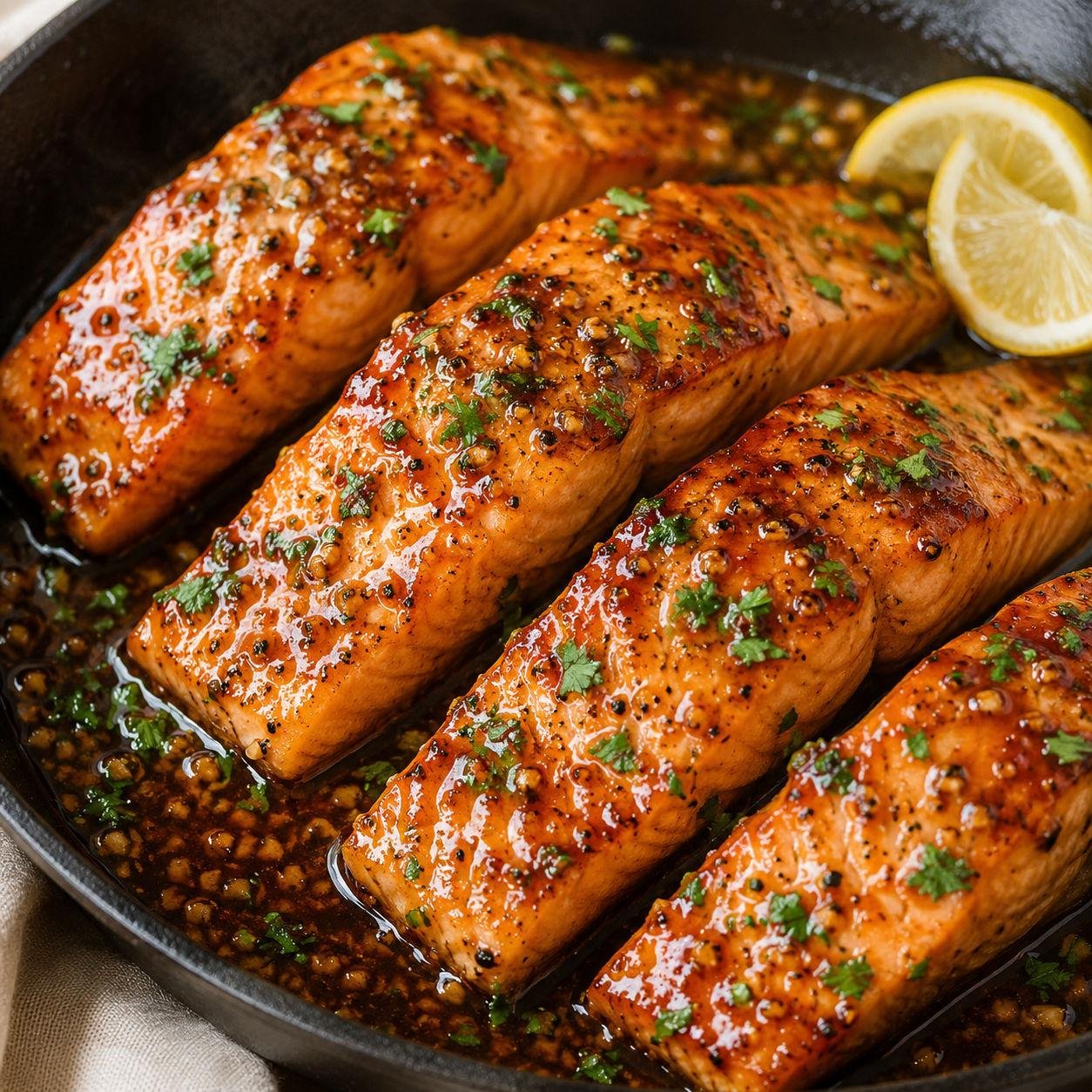
This Honey Garlic Butter Baked Salmon is a delicious, easy-to-make seafood dinner featuring tender, flaky salmon coated in a glossy honey garlic butter glaze. The combination of sweet honey, rich butter, fresh garlic, and a touch of lemon creates a flavorful dish that feels restaurant-quality but takes very little effort.
It is perfect for busy weeknight dinners, family meals, special occasions, or a healthy meal-prep option.
Recipe overview
The salmon is seasoned simply, coated with a homemade honey garlic butter sauce, and baked until tender. During cooking, the sauce melts into the fish, creating a delicious glaze with sweet, savory, buttery, and slightly tangy flavors.
You can serve it with roasted vegetables, mashed potatoes, rice, quinoa, or a fresh green salad.
Preparation and cooking details
Prep time
10 minutes
Cook time
12–18 minutes
Total time
22–28 minutes
Servings
4
Difficulty
Easy
Ingredients
For the baked salmon
Salmon fillets
4 fillets, about 6 oz (170 g) each
Unsalted butter
4 tablespoons, melted
Honey
3 tablespoons
Fresh garlic
4 cloves, finely minced
Fresh lemon juice
1 tablespoon
Seasonings
-
1 teaspoon smoked paprika
-
½ teaspoon onion powder
-
½ teaspoon salt, or to taste
-
½ teaspoon freshly ground black pepper
-
½ teaspoon dried parsley or Italian seasoning
-
¼ teaspoon chili flakes, optional
For garnish
-
1 tablespoon chopped fresh parsley
-
1 lemon, cut into wedges
-
1 teaspoon sesame seeds, optional
-
Extra lemon zest, optional
Equipment needed
-
Oven
-
Baking dish or rimmed baking sheet
-
Parchment paper or foil
-
Small mixing bowl
-
Pastry brush or spoon
-
Measuring spoons
-
Instant-read meat thermometer
-
Fork or spatula for serving
Detailed step-by-step instructions
Step 1: Preheat the oven
Preheat your oven to 400°F (200°C).
Line a baking dish or rimmed baking sheet with parchment paper or foil. Lightly grease the surface with a little butter or oil to prevent sticking.
Allow the oven to fully preheat before placing the salmon inside.
Step 2: Prepare the salmon
Pat the salmon fillets dry with paper towels. Removing excess moisture helps the seasoning adhere and encourages a better glaze.
Check for any pin bones by running your fingers gently over the surface. Remove any bones with clean tweezers if necessary.
Place the salmon fillets skin-side down in the prepared baking dish. Leave a little space between each fillet for even cooking.
Step 3: Make the honey garlic butter sauce
In a small bowl, combine:
-
4 tablespoons melted butter
-
3 tablespoons honey
-
4 minced garlic cloves
-
1 tablespoon lemon juice
-
1 teaspoon smoked paprika
-
½ teaspoon onion powder
-
½ teaspoon black pepper
-
½ teaspoon dried parsley
-
Optional chili flakes
Whisk until the sauce is smooth and well combined.
Taste a tiny amount of the sauce before adding salt to the salmon. If your butter is salted, you may need little or no additional salt.
Step 4: Season the salmon
Sprinkle the salmon fillets with the salt and any remaining black pepper.
Use a pastry brush or spoon to spread the honey garlic butter sauce generously over each fillet. Make sure the tops and sides are well coated.
Reserve a small amount of sauce for brushing during cooking or serving, but do not reuse sauce that has touched raw fish unless it is cooked first.
Step 5: Bake the salmon
Place the baking dish in the preheated oven.
Bake for approximately 12–18 minutes, depending on the thickness of the fillets.
The salmon is ready when:
-
The flesh flakes easily with a fork.
-
The center is opaque or nearly opaque, depending on your preferred doneness.
-
The thickest part reaches at least 145°F (63°C) for food safety.
Thicker fillets may require additional time. Avoid overbaking, as salmon can become dry when cooked too long.
Step 6: Baste with the glaze
At approximately the halfway point, carefully remove the baking dish from the oven.
Spoon some of the pan juices over the salmon or brush with a little fresh sauce. Return the dish to the oven and continue baking until the salmon is cooked through.
If you want a more caramelized top, switch the oven to broil for 1–2 minutes at the end. Watch carefully because honey can burn quickly.
Step 7: Rest and garnish
Remove the salmon from the oven and let it rest for 3–5 minutes.
Spoon the buttery honey garlic juices over the fillets. Garnish with fresh parsley, lemon zest, sesame seeds, and lemon wedges.
Serve immediately with your favorite side dishes.
Taste and texture notes
Flavor: Sweet, buttery, garlicky, savory, and bright with lemon.
Texture: Tender, moist, and flaky in the center, with a glossy glaze on top.
Aroma: Warm garlic, melted butter, honey, paprika, and fresh lemon.
Spice level: Mild by default. Add chili flakes or cayenne for extra heat.
Best result: Use salmon fillets of similar thickness so they finish cooking at approximately the same time.
High-protein version
Salmon is naturally rich in protein, so this recipe already makes an excellent protein-focused meal.
To increase protein per serving:
-
Use 7–8 oz salmon fillets instead of 6 oz.
-
Serve with steamed broccoli, asparagus, or green beans.
-
Add a side of plain Greek yogurt mixed with lemon and dill.
-
Include quinoa or lentils for additional protein and fiber.
-
Keep the butter and honey measured to control the total calories.
A 6 oz cooked salmon portion generally provides a substantial amount of protein, but exact values depend on the fish and serving size.
Ingredient substitutions
|
Original ingredient |
Substitute |
|---|---|
|
Salmon fillets |
Trout or arctic char |
|
Unsalted butter |
Olive oil or avocado oil |
|
Honey |
Maple syrup |
|
Fresh garlic |
1 teaspoon garlic powder |
|
Lemon juice |
Lime juice |
|
Smoked paprika |
Sweet paprika |
|
Fresh parsley |
Cilantro or dried parsley |
|
Chili flakes |
Cayenne pepper or hot sauce |
|
Salmon |
Skinless salmon portions |
Honey-free option
For a version without honey, replace it with an equal amount of maple syrup or use a small amount of a suitable sugar-free syrup. The flavor and caramelization will vary.
Dairy-free option
Replace the butter with olive oil or a dairy-free butter alternative. Olive oil creates a lighter glaze while still complementing the salmon.
Variations
1. Spicy honey garlic butter salmon
Add ½–1 teaspoon red pepper flakes, ¼ teaspoon cayenne pepper, or 1 tablespoon hot sauce to the glaze.
This version is especially delicious with steamed rice and roasted vegetables.
2. Lemon herb salmon
Add 1 teaspoon lemon zest, ½ teaspoon dried oregano, ½ teaspoon dried thyme, and extra fresh parsley.
The result is a bright, fresh flavor that pairs well with roasted potatoes.
3. Honey garlic soy salmon
Add 1 tablespoon low-sodium soy sauce to the glaze and reduce the added salt. The soy sauce adds savory depth and a slightly darker finish.
For a gluten-free version, use certified gluten-free tamari.
4. Honey mustard salmon
Add 1 tablespoon Dijon mustard to the honey garlic butter sauce. The mustard balances the sweetness and adds a tangy, savory flavor.
5. Garlic Parmesan salmon
Sprinkle 2–3 tablespoons grated Parmesan over the salmon during the final 3–5 minutes of baking. Bake until the cheese is melted and lightly golden.
6. One-pan honey garlic salmon and vegetables
Arrange broccoli florets, zucchini, bell peppers, or asparagus around the salmon.
Toss the vegetables with a little olive oil, salt, and pepper. Roast firm vegetables for a few minutes before adding the salmon, if necessary, so everything finishes at the same time.
Dietary adjustments
Lower-carb or keto-friendly
Honey contains sugar and carbohydrates, so traditional honey garlic salmon is not strictly keto-friendly.
For a lower-carb version:
-
Replace honey with a suitable sugar-free sweetener or syrup.
-
Use butter or olive oil.
-
Serve with cauliflower rice, asparagus, zucchini, or broccoli.
-
Avoid sweetened sauces and sugary side dishes.
Gluten-free
The basic recipe is naturally gluten-free. If adding soy sauce, choose gluten-free tamari and check all packaged ingredients for cross-contact.
Dairy-free
Use olive oil or dairy-free butter instead of regular butter.
No added sugar
Omit honey and use a sugar-free alternative if desired. The salmon will still be flavorful from garlic, lemon, paprika, and herbs, but it will not have the same sweet glaze.
Lower-sodium
-
Use unsalted butter.
-
Reduce the added salt.
-
Use fresh herbs and lemon for flavor.
-
Choose low-sodium soy sauce or tamari in variations.
-
Avoid adding extra salt if the sauce already tastes well seasoned.
Meal prep and storage
Storage guide
Refrigerator
3–4 days
Freezer
Up to 2–3 months
Reheating
Gently, until hot
Refrigerator storage
-
Allow the salmon to cool slightly after cooking.
-
Place it in a shallow, airtight container.
-
Refrigerate within 2 hours.
-
Store for 3–4 days.
-
Reheat gently in the oven at 275°F (135°C) or in the microwave until heated through.
Add a small splash of water or broth before reheating to help prevent the fish from drying out.
Freezer storage
-
Cool the salmon completely.
-
Wrap each fillet tightly in freezer-safe wrapping.
-
Place in a sealed freezer bag or container.
-
Label with the date.
-
Freeze for up to 2–3 months for best quality.
-
Thaw overnight in the refrigerator before reheating.
The glaze may become slightly less glossy after freezing, but the salmon can still be delicious.
Approximate nutrition
Estimated per serving, assuming four servings and the listed salmon, butter, and honey, without side dishes.
~440
Calories per serving
Protein
35 g
Carbohydrates
14 g
Fat
27 g
Fiber
0 g
Actual nutrition depends on the salmon’s fat content, the amount of glaze consumed, and ingredient brands.
WW-friendly tips
The WW Points value depends on your plan, the salmon’s portion size, and how much butter and honey are used.
For a lighter version:
-
Use 1–2 tablespoons butter instead of 4.
-
Replace some butter with olive oil or low-calorie broth.
-
Use a smaller amount of honey or a suitable sugar-free alternative.
-
Serve with non-starchy vegetables.
-
Keep the salmon portion consistent.
-
Measure the glaze rather than adding extra after cooking.
-
Calculate the recipe in your current WW app using the exact ingredients.
Salmon is a nutritious protein source, but the butter and honey contribute additional Points and calories.
Frequently asked questions
What temperature should I bake salmon at?
How do I know when salmon is done?
Can I use frozen salmon?
Should I bake salmon with the skin on?
Can I use salmon fillets without skin?
Why is my honey garlic sauce burning?
Can I prepare the sauce ahead of time?
Can I make this recipe without butter?
Can I add vegetables to the baking dish?
Can I make this salmon in an air fryer?
Troubleshooting
|
Problem |
Cause |
Solution |
|---|---|---|
|
Salmon is dry |
Overcooking or very thin fillets. |
Check early with a thermometer and avoid cooking longer than necessary. |
|
Glaze is too sweet |
Too much honey. |
Add more lemon juice, garlic, or a little Dijon mustard. |
|
Sauce is too thin |
Excess liquid from the fish. |
Spoon the pan juices over the salmon or reduce the sauce separately. |
|
Garlic tastes bitter |
Garlic burned during baking. |
Use fresh minced garlic and avoid prolonged broiling. |
|
Salmon sticks to the pan |
The dish was not greased. |
Use parchment paper or lightly grease the baking dish. |
|
Salmon is undercooked |
Fillets are thick or the oven temperature varies. |
Continue baking and check the thickest part with a thermometer. |
|
Glaze is not caramelized |
Too much liquid or insufficient heat. |
Broil briefly at the end, watching carefully to prevent burning. |
|
Fish smells too strong |
Salmon is not fresh or was stored improperly. |
Use fresh fish and keep it refrigerated until cooking. |
Chef’s tips and tricks
-
Pat the salmon dry. Excess moisture can dilute the glaze and prevent it from adhering properly.
-
Use fresh garlic. Freshly minced garlic gives the sauce a much stronger aroma and flavor.
-
Do not overbake. Salmon cooks quickly, and the difference between tender and dry can be just a few minutes.
-
Choose similar-sized fillets. This helps all portions finish cooking at the same time.
-
Add lemon juice for balance. The acidity cuts through the richness of the butter and sweetness of the honey.
-
Reserve a little fresh glaze. Keep a portion of the sauce separate for brushing or drizzling after cooking.
-
Broil with caution. Honey browns rapidly, so keep a close eye on the fish during the final minutes.
-
Let the salmon rest briefly. A few minutes of resting allows the juices to settle and makes serving easier.
-
Use a thermometer. Thickness and oven performance vary, so temperature is more reliable than time alone.
-
Serve immediately. Freshly baked salmon has the best texture and the most vibrant glaze.
Serving and presentation ideas
Best side dishes
-
Roasted asparagus
-
Steamed broccoli
-
Garlic mashed potatoes
-
Brown rice or white rice
-
Quinoa
-
Roasted sweet potatoes
-
Sautéed green beans
-
Fresh cucumber and tomato salad
-
Cauliflower rice
-
Lemon herb couscous
How to plate it beautifully
-
Place a salmon fillet in the center of a plate.
-
Spoon a little honey garlic butter glaze over the top.
-
Add a portion of roasted vegetables or rice beside the salmon.
-
Garnish with fresh parsley, lemon zest, and a lemon wedge.
-
Sprinkle with sesame seeds if desired.
-
Serve while warm for the best texture and flavor.
Final recipe notes
Honey Garlic Butter Baked Salmon is a simple, flavorful dinner that combines tender salmon with a sweet and savory glaze. The most important steps are to use fresh garlic, avoid overcooking the fish, and monitor the honey glaze closely near the end of baking.