
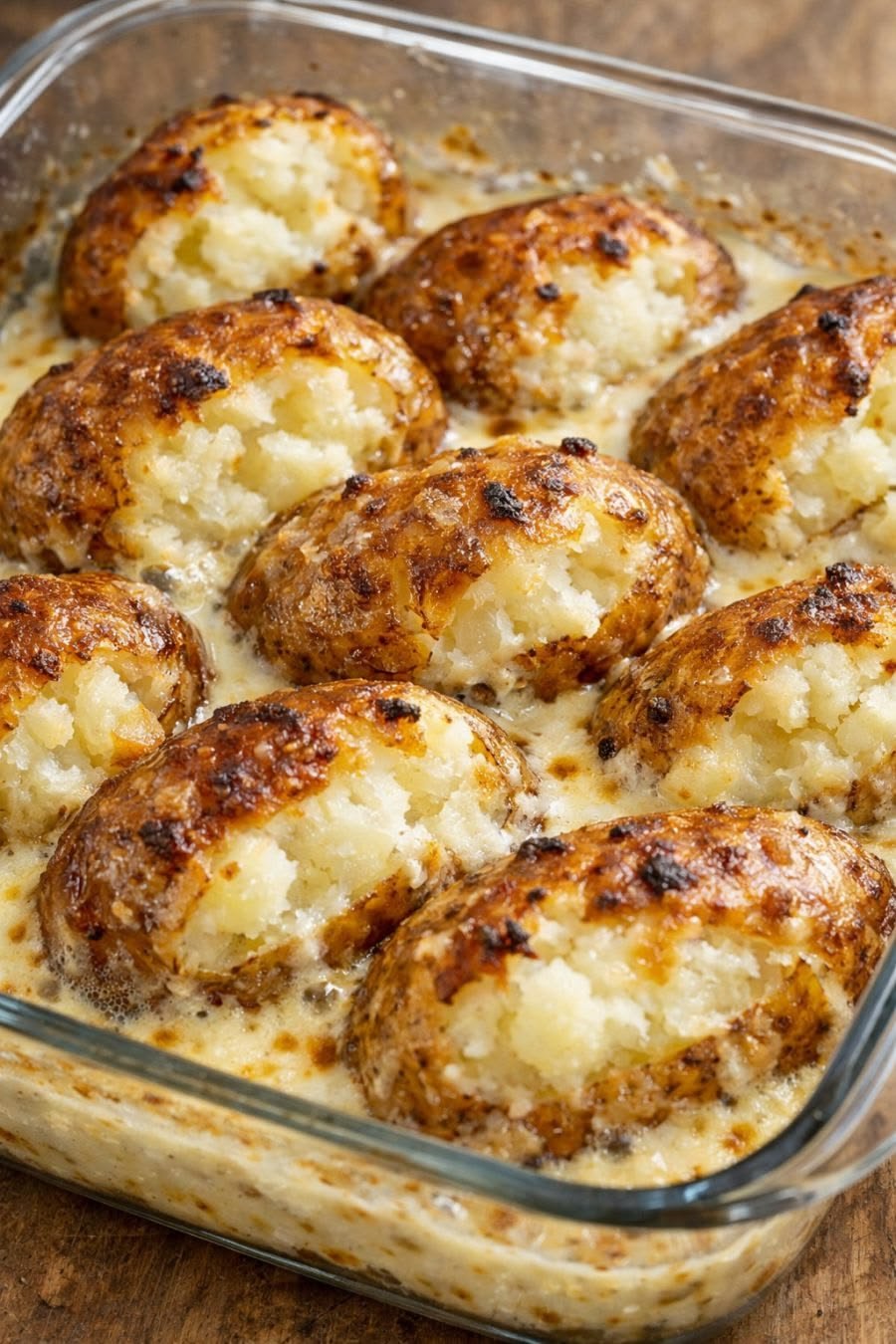
This recipe combines thinly sliced potatoes and tender butternut squash in a creamy milk sauce. The vegetables bake slowly until soft and flavorful, with a lightly golden top.
The recipe uses three main ingredients. Salt and pepper are optional seasonings, so the dish can remain simple while still tasting delicious.
Preparation and cooking details
Prep time
15 minutes
Cook time
50–65 minutes
Total time
65–80 minutes
Servings
4–6
Difficulty
Easy
Ingredients
The 3 main ingredients
1. Potatoes
2 lb (900 g), peeled and thinly sliced
2. Butternut squash
1 lb (450 g), peeled, seeded, and thinly sliced or cubed
3. Milk
1½ cups (360 ml) whole or semi-skimmed milk
Optional seasonings
These are not counted among the three main ingredients.
-
¾ teaspoon salt, or to taste
-
¼ teaspoon freshly ground black pepper
-
1 tablespoon butter or olive oil, for greasing the baking dish
-
Fresh thyme or parsley, optional for garnish
Important: The recipe works best with whole milk or semi-skimmed milk. Very low-fat milk may produce a thinner sauce.
Equipment needed
-
9 × 13-inch baking dish, or a similar medium-sized ovenproof dish
-
Sharp knife or mandoline slicer
-
Cutting board
-
Vegetable peeler
-
Measuring cups
-
Aluminum foil
-
Oven mitts
-
Fork or small knife for checking tenderness
Detailed step-by-step instructions
Step 1: Preheat the oven
Preheat your oven to 375°F (190°C).
Lightly grease a medium-sized baking dish with butter or olive oil. This helps prevent the vegetables from sticking and adds a little extra flavor.
If you prefer, line the bottom of the dish with parchment paper, although greasing is usually sufficient.
Step 2: Prepare the potatoes
Peel the potatoes and rinse them under cool water.
Slice them into thin, even rounds approximately ⅛ inch (3 mm) thick. A mandoline slicer can help create uniform slices, but use it carefully.
Try to keep the slices similar in thickness. Uneven slices may cook at different rates, leaving some potatoes firm while others become very soft.
Step 3: Prepare the butternut squash
Cut the butternut squash in half lengthwise. Scoop out the seeds and stringy interior with a spoon.
Peel the squash using a sturdy vegetable peeler, then cut it into thin slices or small, evenly sized pieces.
For the best result, slice the squash thinly enough that it cooks at approximately the same rate as the potatoes.
Step 4: Arrange the vegetables
Place a layer of sliced potatoes in the bottom of the baking dish.
Add a layer of butternut squash, followed by another layer of potatoes. Continue layering until all the vegetables have been used.
Sprinkle a little salt and pepper between the layers if desired.
Avoid packing the vegetables too tightly, as this can slow down cooking.
Step 5: Add the milk
Pour the milk slowly over the layered potatoes and butternut squash.
The milk should come partway up the vegetables rather than completely cover them. The vegetables will release moisture as they bake.
If using a smaller or deeper baking dish, you may need slightly more milk. Avoid filling the dish to the very top, as the milk may bubble over during cooking.
Step 6: Cover and bake
Cover the baking dish tightly with aluminum foil.
Place it in the preheated oven and bake for approximately 35–45 minutes.
The foil traps steam and helps the potatoes and squash become tender without drying out.
Step 7: Check for tenderness
Carefully remove the foil, watching for hot steam.
Insert a fork or thin knife into the thickest potato slice and a piece of butternut squash. Both should be nearly tender.
If the potatoes are still firm, cover the dish again and bake for another 10–15 minutes.
Cooking time may vary depending on the thickness of the slices and the depth of the baking dish.
Step 8: Uncover and finish baking
Once the vegetables are tender, remove the foil.
Return the dish to the oven and bake uncovered for another 15–20 minutes, or until the milk has reduced slightly and the top looks lightly golden.
For a more golden finish, you may increase the oven temperature to 400°F (200°C) for the final few minutes. Watch carefully to prevent the milk from scorching.
Step 9: Rest before serving
Remove the baking dish from the oven and allow it to rest for 10 minutes.
This resting time allows the milk sauce to settle and thicken slightly. It also makes the potatoes easier to serve without falling apart.
Garnish with fresh thyme or parsley if desired.
Taste and texture notes
Flavor: Mildly sweet from the butternut squash, creamy from the milk, and earthy from the potatoes.
Texture: Tender potatoes, soft squash, and a creamy, lightly thickened milk sauce.
Aroma: Warm baked potatoes with a subtle sweet squash fragrance.
Color: Pale golden with orange highlights from the butternut squash.
Overall character: Simple, comforting, and naturally sweet without needing added sugar.
High-protein version
The basic recipe is a vegetarian side dish and contains a moderate amount of protein. To make it more protein-rich:
-
Use high-protein or ultra-filtered milk if available.
-
Add ½ cup plain Greek yogurt to the milk after whisking it smooth with a few tablespoons of warm milk. Stir it in before pouring over the vegetables.
-
Serve with grilled chicken, baked fish, eggs, or lentils.
-
Add a side of cottage cheese or a bean salad.
-
If you want a cheesy variation, add a moderate amount of grated cheese, though this makes the recipe more than three ingredients.
Do not boil the milk and yogurt mixture aggressively, as the yogurt may separate.
Ingredient substitutions
|
Original ingredient |
Substitute |
|---|---|
|
Russet potatoes |
Yukon Gold or other starchy potatoes |
|
Butternut squash |
Pumpkin, acorn squash, or sweet potato |
|
Whole milk |
Semi-skimmed milk or evaporated milk diluted with water |
|
Dairy milk |
Unsweetened oat milk or soy milk |
|
Butter for greasing |
Olive oil or cooking |