
Serves: 4
Prep: 30–40 minutes, plus 8–12 hours soaking for dried chickpeas
Cook: 20–30 minutes
Total: about 1 hour, excluding soaking
1. Crispy Falafel
Ingredients
1½ cups dried chickpeas, soaked overnight
½ medium onion, roughly chopped
3 garlic cloves
¾ cup fresh parsley
½ cup fresh cilantro
1½ tsp ground cumin
1 tsp ground coriander
½ tsp salt
¼ tsp black pepper
¼ tsp cayenne or chili flakes
1 tsp baking powder
2–3 tbsp chickpea flour, if needed
1 tbsp sesame seeds, optional
Oil for frying
Important: For traditional-style falafel, use soaked dried chickpeas rather than cooked/canned chickpeas. Recipes from Food Network and USDA/MyPlate also use chickpeas as the base, with herbs and spices forming the characteristic mixture.
F
Food Network
+1
Method
Soak chickpeas in plenty of water for 8–12 hours. Drain very well.
Add chickpeas, onion, garlic, parsley, cilantro, cumin, coriander, salt, pepper and cayenne to a food processor.
Pulse until you have a fine, crumbly mixture. Don’t puree it into hummus.
Stir in baking powder and sesame seeds.
If the mixture won’t hold together, add chickpea flour 1 tablespoon at a time.
Refrigerate for 20–30 minutes.
Shape into small balls or slightly flattened patties.
Heat about 1–2 inches of oil to roughly 175–180°C / 350–355°F.
Fry in batches for approximately 3–4 minutes, turning as necessary, until deeply golden and crisp. Food Network’s version similarly fries falafel for about 3–4 minutes.
F
Food Network
Drain on a rack or paper towel and season lightly with salt.
Baking option: Brush or spray with oil and bake around 200°C / 400°F, turning halfway, until browned and crisp. Expect a somewhat less crunchy exterior than deep-fried falafel.
2. Creamy Hummus
Ingredients
2 cups cooked chickpeas
¼ cup tahini
¼ cup fresh lemon juice
2 garlic cloves
2 tbsp extra-virgin olive oil
½ tsp salt, or to taste
3–6 tbsp ice-cold water
½ tsp cumin, optional
The basic combination of chickpeas, tahini, lemon, garlic and olive oil is also used in the USDA/MyPlate hummus recipe.
N
Nutrition.gov
+1
Method
Blend lemon juice and garlic first.
Add tahini and blend until smooth.
Add chickpeas, salt and cumin.
Slowly add cold water while blending until exceptionally smooth.
Taste and adjust lemon, salt and tahini.
Spoon into a shallow bowl.
Make a circular depression in the center and drizzle with olive oil.
Garnish with paprika, chopped parsley or a few whole chickpeas.
For extra-smooth hummus: remove the chickpea skins before blending. It takes longer but produces a noticeably silkier texture.
3. Fresh Tabbouleh
Ingredients
1 cup finely chopped flat-leaf parsley
½ cup finely chopped fresh mint
2 medium tomatoes, finely diced
½ cucumber, finely diced
¼ small red onion, very finely chopped
¼ cup fine bulgur
2 tbsp extra-virgin olive oil
2–3 tbsp fresh lemon juice
Salt and black pepper
Method
Put bulgur in a bowl and cover with hot water.
Leave for about 10–15 minutes, then drain extremely well.
Finely chop the parsley and mint.
Combine herbs, tomato, cucumber and red onion.
Add cooled bulgur.
Mix in lemon juice, olive oil, salt and pepper.
Refrigerate for 15–30 minutes before serving.
The key to good tabbouleh is making the herbs the dominant ingredient, rather than turning it into a bulgur salad.
🫓 4. Flatbread
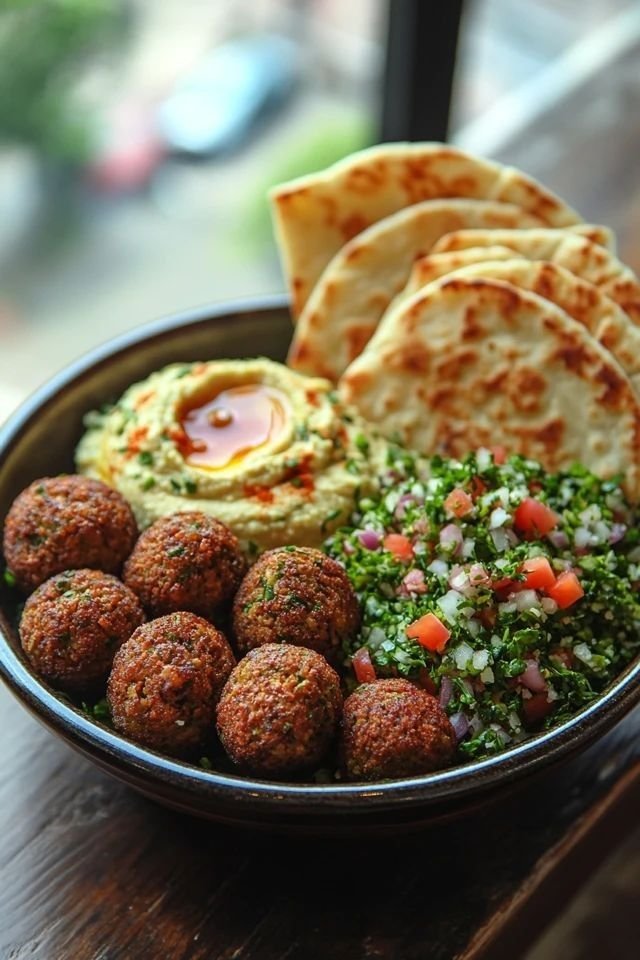
For the pictured appearance, use:
4–6 pita breads, naan-style flatbreads, or Arabic khubz
1 tbsp olive oil, optional
Warm each bread in a dry skillet for about 30–60 seconds per side. A little browning gives the attractive toasted patches seen in the photo. Similar falafel recipes recommend warming pita shortly before serving.
F
Food
5. Assemble It Like the Photo
Use a large shallow serving bowl or platter.
Arrange:
Back:
🫓 Folded/warm flatbreads
Left/rear:
Hummus with an olive-oil well
Right:
A generous mound of tabbouleh
Front:
6–8 falafel balls
Otional additions:
4–6 pita breads, naan-style flatbreads, or Arabic khubz
1 tbsp olive oil, optional
Pickled turnips
Cucumber
Tomato
Kalamata olives
Pickled chili
Romaine lettuce
Lemon wedges
Tahini sauce
Sumac
Paprika
For the closest visual match, keep the components separate rather than mixing them, and pile the falafel prominently around the front edge.
Nut & Allergen Information
Is this recipe nut-free?
It can be. Traditional hummus uses tahini, which is sesame seed paste—not a tree nut. Sesame is nevertheless a major food allergen in many countries.
The main potential allergens are:
Ingredient Allergen consideration
Chickpeas Legume; allergy is possible but less common
Tahini Sesame
Flatbread/pita Often wheat/gluten
Bulgur Wheat/gluten
Olive oil Generally not an allergen
Herbs/vegetables Generally low allergen risk
Sesame seeds Sesame
If you need a sesame-free hummus, you can make chickpea hummus without tahini, although the flavor will be different. USDA/MyPlate notes that peanut butter can also substitute for tahini, but that introduces peanut as another allergen, so it isn’t appropriate for a peanut-free meal.
M
MyPlate
Nutrition highlights
Chickpeas contribute plant protein, carbohydrates, fiber, folate, iron and other minerals. Hummus also provides fats from tahini and olive oil. USDA’s hummus recipe lists about 4 g protein and 4 g fiber per serving of its specified serving size.
M
MyPlate
The exact nutrition of the complete platter varies substantially with:
amount of frying oil absorbed by the falafel
size/number of pita breads
amount of tahini and olive oil
falafel size
serving size
Recipe Q&A
Can I use canned chickpeas for falafel?
Yes, but soaked dried chickpeas generally give better traditional falafel texture. Canned chickpeas contain more moisture and can make the mixture softer.
Why are my falafel falling apart?
Usually the mixture is too wet, the chickpeas weren’t drained sufficiently, or the mixture wasn’t processed finely enough. Refrigerating the mixture and adding a little chickpea flour can help.
Why is my falafel raw inside?
The oil may be too hot, causing the outside to brown before the center cooks. Make smaller falafel and maintain moderate frying temperature.
Can I make the falafel in an air fryer?
Yes. Lightly oil the shaped falafel and air-fry until browned and crisp, turning halfway. Exact timing varies considerably between air fryers.
Can I make this completely vegan?
Yes. Falafel, hummus, tabbouleh and a dairy-free flatbread can all be vegan. Traditional hummus itself is vegan; USDA’s basic hummus recipe contains chickpeas, tahini, lemon, garlic and olive oil.
N
Nutrition.gov
Is it gluten-free?
The falafel and hummus can be gluten-free, but regular pita and bulgur tabbouleh contain wheat. Use gluten-free flatbread and replace bulgur with quinoa or another gluten-free grain if necessary.
How long does it keep?
Store hummus, tabbouleh and falafel separately in airtight containers in the refrigerator. For best texture, reheat falafel and warm bread immediately before serving rather than assembling the entire platter in advance.
How do I get restaurant-style crispy falafel?
Use thoroughly drained soaked chickpeas, avoid over-processing into a paste, chill the mixture, don’t overcrowd the oil, and keep the frying temperature steady. The outside should become dark golden and crisp while the center remains moist and herbaceous.