
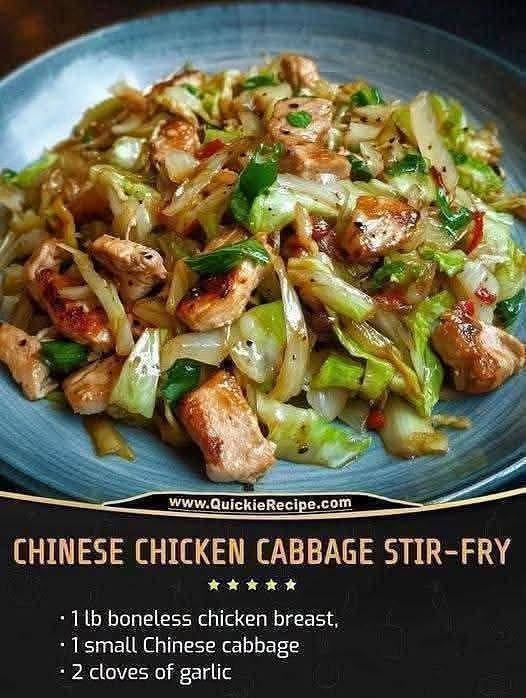
The image shows a Chinese-style chicken and cabbage stir-fry with browned chicken pieces, Chinese cabbage, garlic, green onion/herbs, and a savory, slightly spicy sauce. The image itself only clearly lists 1 lb boneless chicken breast, 1 small Chinese cabbage, and 2 cloves garlic, so the recipe below fills in the practical seasonings and sauce needed to reproduce the dish.
Quick Recipe
Servings: 4
Prep time: 15 minutes
Cook time: 15–20 minutes
Total: about 30–35 minutes
Difficulty: Easy
Ingredients
Main ingredients
1 lb (450 g) boneless, skinless chicken breast
1 small Chinese/Napa cabbage, about 1–1¼ lb
2–3 cloves garlic, finely chopped
3–4 green onions, sliced
1 small onion, sliced — optional
1 red chili, sliced — optional
2 tbsp neutral cooking oil, such as vegetable, canola, or peanut oil
Chicken seasoning
1 tbsp light soy sauce
1 tsp cornstarch
½ tsp ground black pepper
½ tsp grated ginger — optional
½ tsp sesame oil — optional
Stir-fry sauce
Mix together:
2 tbsp light soy sauce
1 tbsp oyster sauce
1 tbsp water or chicken stock
1 tsp rice vinegar
½–1 tsp sugar
½ tsp sesame oil
¼ tsp white or black pepper
½ tsp cornstarch
For a spicy version: add 1–2 tsp chili-garlic sauce, chili flakes, or sliced fresh chili.
Important: Oyster sauce and soy sauce can vary considerably in saltiness, so taste the finished dish before adding additional salt.
Full Step-by-Step Method
1. Prepare the chicken
Pat the chicken breast dry and cut it into thin bite-sized strips or small cubes.
Put it in a bowl and add:
1 tbsp soy sauce
1 tsp cornstarch
½ tsp black pepper
ginger, if using
½ tsp sesame oil, if using
Mix thoroughly.
Let it stand for 10–15 minutes while you prepare the vegetables.
Why cornstarch? It gives the chicken a light coating that helps it brown while keeping the pieces tender.
2. Prepare the cabbage
Remove any damaged outer leaves.
Cut the cabbage into quarters, then slice it into approximately 1-inch pieces.
Separate the thicker white stems from the more delicate leafy green portions if possible.
This makes a big difference because the stems need longer cooking than the leaves.
3. Mix the sauce
In a small bowl combine:
2 tbsp soy sauce + 1 tbsp oyster sauce + 1 tbsp water + 1 tsp rice vinegar + ½–1 tsp sugar + ½ tsp sesame oil + ½ tsp cornstarch + pepper.
Whisk until the cornstarch is completely dissolved.
Set aside.
4. Cook the chicken
Heat a large wok or heavy frying pan over medium-high to high heat.
Add about 1 tbsp oil.
When hot, add the chicken in a single layer.
Cook for approximately 2–3 minutes, then turn/stir.
Continue cooking another 2–3 minutes, until the outside is nicely browned.
Don’t overcrowd the pan. If necessary, cook the chicken in two batches.
Remove the chicken to a clean plate.
Don’t worry if it’s not completely cooked yet—it will return to the wok later.
For food safety, chicken should reach 165°F / 73.9°C internally, measured with a food thermometer.
F
Food Safety and Inspection Service
+1
5. Stir-fry the vegetables
Add another tablespoon of oil to the wok.
Add:
sliced onion, if using
cabbage stems
garlic
ginger, if using
chili, if using
Stir-fry for 2–3 minutes.
Then add the leafy cabbage.
Cook for another 2–4 minutes, tossing frequently.
You want the cabbage to become:
tender but not mushy
slightly caramelized
still somewhat crisp
reduced substantially in volume
The high heat helps prevent the cabbage from simply steaming in its own liquid.
6. Return the chicken
Put the browned chicken back into the wok.
Toss everything together for about 1 minute.
Give your sauce another stir—the cornstarch settles quickly.
Pour it around the hot sides of the wok.
Immediately toss everything together.
Cook for approximately 1–2 minutes, until the sauce becomes glossy and lightly coats the chicken and cabbage.
7. Finish
Turn off the heat.
Add the sliced green onions.
For extra flavor, you can add:
a few drops of sesame oil
fresh chili
toasted sesame seeds
freshly ground black pepper
a small splash of rice vinegar
Serve immediately.
What to Serve With It
This stir-fry works particularly well with:
steamed white rice
jasmine rice
brown rice
fried rice
noodles
cauliflower rice
lettuce cups for a lower-carb option
For a complete meal, serve 1–1½ cups cooked rice per person depending on appetite.
Nut & Allergen Information
Does the basic recipe contain nuts?
No. The recipe does not require tree nuts or peanuts.
However, peanut oil is optional. If you have a peanut allergy, simply use vegetable, canola, sunflower, or another suitable neutral oil.
Potential allergens
The conventional version can contain:
Ingredient Potential allergen
Soy sauce Soy, often wheat
Oyster sauce Usually shellfish/oyster, and sometimes soy/wheat depending on brand
Sesame oil Sesame
Peanut oil Peanut
Some chili sauces May contain soy, sesame, wheat, etc.
Sesame is one of the nine major food allergens recognized by the FDA, alongside soybeans, peanuts, tree nuts, wheat, milk, eggs, fish, and crustacean shellfish.
U
U.S. Food and Drug Administration
+1
For an allergy-sensitive preparation: check the actual labels of your soy sauce, oyster sauce, chili sauce and sesame oil rather than assuming they are allergen-free. FDA guidance specifically recommends checking the entire ingredient list when avoiding allergens.
U
U.S. Food and Drug Administration
Nut-free version
For a deliberately nut-free recipe:
Use canola/sunflower/vegetable oil
Use soy sauce labeled appropriately for your allergy
Omit sesame oil and sesame seeds if sesame is also a concern
Check oyster/chili sauces for cross-contact statements
Gluten-Free Version
Regular soy sauce commonly contains wheat.
For gluten-free stir-fry:
Replace regular soy sauce with gluten-free tamari or certified gluten-free soy sauce
Use a gluten-free oyster sauce if using oyster sauce
Check every bottled sauce and seasoning
Use cornstarch rather than wheat flour
Variations
1. Spicy Chinese Chicken Cabbage
Add:
1–2 tbsp chili-garlic sauce
1 sliced red chili
½ tsp chili flakes
2. Ginger-Garlic Version
Use:
1 tbsp freshly grated ginger
4 cloves garlic
This gives a much stronger aromatic flavor.
3. Honey Chicken Cabbage
Add 1–2 tsp honey to the sauce for a slightly sweet glaze.
4. Extra-Vegetable Version
Add:
carrots
bell peppers
mushrooms
snow peas
broccoli
Add harder vegetables first and leafy vegetables toward the end.
5. Low-Carb Version
Skip rice and serve the stir-fry alone or with cauliflower rice.
Tips for Restaurant-Style Results
1. Get the pan very hot.
A hot wok produces browning rather than watery vegetables.
2. Don’t overcrowd the chicken.
Crowding causes steaming.
3. Don’t overcook the cabbage.
It should remain slightly crisp.
4. Add sauce at the end.
This prevents the cabbage from becoming excessively watery.
5. Stir the sauce immediately before adding it.
Cornstarch settles at the bottom.
6. Use fresh garlic.
It makes a noticeable difference in this relatively simple dish.
7. Brown the chicken separately.
This gives you much better color and flavor.
Recipe Q&A
Q: Can I use chicken thighs?
Yes. Boneless, skinless thighs are actually more forgiving and remain juicy. Cut them into thin pieces and cook to 165°F / 73.9°C.
F
Food Safety and Inspection Service
Q: Can I use regular green cabbage?
Yes. Green cabbage works, although it is firmer and takes a little longer to soften. Napa/Chinese cabbage gives the softer texture shown in the photograph.
Q: Why is my stir-fry watery?
Usually because:
Tips for Restaurant-Style Results
the pan isn’t hot enough,
too much cabbage was added at once,
the cabbage was washed and not drained well,
or the sauce was added too early.
Cook over high heat and avoid overcrowding.
Q: Can I prepare it ahead of time?
Yes. Cook it, cool it promptly, and refrigerate it in a shallow container. USDA guidance recommends refrigerating cooked poultry within 2 hours and using refrigerated leftovers within 3–4 days.
F
Food Safety and Inspection Service
Q: Can I freeze it?
Yes, although the cabbage will be softer after thawing. For best texture, freeze the chicken separately from freshly cooked cabbage if possible.
Q: Can I make it without oyster sauce?
Absolutely. Substitute approximately:
1 extra tbsp soy sauce
1 tsp sugar
½ tsp mushroom seasoning or mushroom sauce, optional
For vegetarian/vegan cooking, use a vegetarian mushroom-based oyster-style sauce.
Q: Can I make it without soy sauce?
Yes. Use coconut aminos or another suitable soy-free seasoning sauce, adjusting the quantity because saltiness varies.
Q: Is sesame oil necessary?
No. It is primarily for aroma. The stir-fry will still work without it.
Q: How do I get the chicken as browned as in the picture?
Dry the chicken well, don’t overcrowd the pan, use high heat, and leave the pieces undisturbed for about 60–90 seconds before tossing.
Q: How do I know the chicken is done?
The safest method is a thermometer: the thickest piece should reach 165°F / 73.9°C. Color alone isn’t a reliable indicator of poultry safety.
F
Food Safety and Inspection Service
Q: Can children eat this?
Yes, provided the chicken is fully cooked and you omit or reduce the chili. Check sauces carefully for allergens.
Q: What does the finished dish taste like?
It should be savory, garlicky, lightly sweet, slightly salty, aromatic and fresh, with browned chicken contrasting with tender-crisp cabbage.
Condensed Recipe Card
Chinese Chicken Cabbage Stir-Fry
Serves: 4
Chicken:
1 lb chicken + 1 tbsp soy sauce + 1 tsp cornstarch + pepper.
Vegetables:
1 small Napa cabbage + 2–3 garlic cloves + 3–4 green onions + optional onion/chili.
Sauce:
2 tbsp soy sauce + 1 tbsp oyster sauce + 1 tbsp water + 1 tsp rice vinegar + ½–1 tsp sugar + ½ tsp sesame oil + ½ tsp cornstarch.
Method:
Slice and season chicken; rest 10–15 min.
Mix sauce.
Sear chicken in hot oil; remove.
Stir-fry cabbage stems, garlic and aromatics.
Add cabbage leaves.
Return chicken.
Add sauce and toss 1–2 min.
Add green onions and serve hot.
Ensure chicken reaches 165°F / 73.9°C.
F
Food Safety and Inspection Service
Best served with: steamed jasmine rice.
Nuts: None required.
Main potential allergens: soy, wheat (depending on sauces), sesame, and shellfish/oyster.