
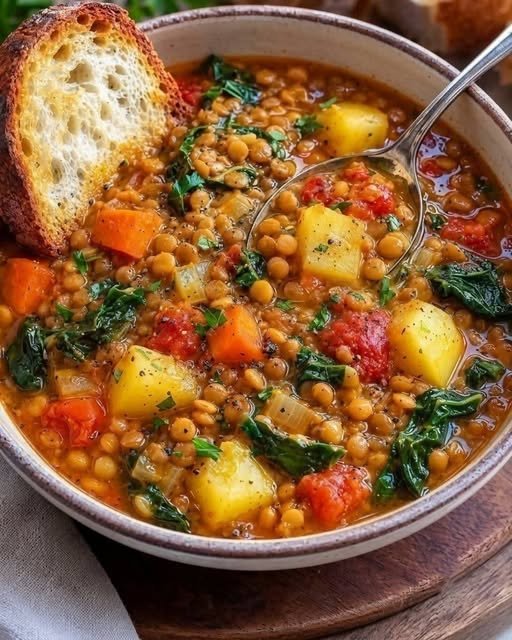
2. Ingredients
Main ingredients
Ingredient
Quantity
Dry brown or green lentils
300 g (about 1½ cups)
Potatoes, medium
3
Carrots, medium
2
Large onion
1
Celery stalks
2
Garlic cloves
4
Chopped tomatoes
400 g
Fresh spinach
100–150 g
Vegetable broth or water
1.5 litres
Olive oil
2 tablespoons
Herbs and seasonings
Ingredient
Quantity
Ground cumin
1 teaspoon
Paprika
1 teaspoon
Dried thyme
1 teaspoon
Bay leaf
1
Black pepper
½ teaspoon
Salt
1 teaspoon initially, then to taste
Lemon juice
1–2 tablespoons
Fresh parsley
2 tablespoons
Chilli flakes
Optional
For serving
6 slices of crusty bread or sourdough
1–2 teaspoons extra virgin olive oil for finishing
Freshly ground black pepper
Lemon wedges
Lentil choice: Brown and green lentils hold their shape and work best for this chunky soup. Red lentils cook faster and tend to break down, making the soup thicker and creamier.
3. Step-by-step cooking instructions
Step 1: Wash and prepare the lentils
Measure 300 g of dry lentils.
Place them in a fine-mesh strainer.
Rinse under cold running water.
Remove any small stones, damaged lentils, or debris.
Drain thoroughly.
Brown and green lentils generally do not require soaking. If you soak them for 1–2 hours, they may cook faster, so begin checking their tenderness earlier.
Step 2: Prepare the vegetables
Peel and finely dice the onion.
Peel the carrots and cut them into small cubes.
Finely chop the celery.
Mince the garlic.
Peel the potatoes if desired and cut them into approximately 2–3 cm cubes.
Chop the spinach into smaller pieces if the leaves are large.
If using fresh tomatoes instead of canned tomatoes, chop approximately 4 medium tomatoes.
Try to cut the carrots and potatoes into similar-sized pieces so they cook evenly.
Step 3: Cook the onion, carrots, and celery
Place a large, heavy-bottomed pot over medium heat.
Add 2 tablespoons of olive oil.
Once the oil is warm, add the diced onion.
Cook for 3–4 minutes, stirring occasionally.
Add the carrots and celery.
Continue cooking for another 4–5 minutes until the vegetables begin to soften.
Do not rush this step. Cooking the vegetables slowly creates a sweeter, richer flavour base.
Step 4: Add garlic and spices
Add the minced garlic.
Stir in the cumin, paprika, and dried thyme.
Add the black pepper and optional chilli flakes.
Cook for 30–60 seconds, stirring constantly.
The spices should become fragrant. Avoid cooking the garlic for too long because burnt garlic can make the soup bitter.
Step 5: Add the tomatoes
Add the 400 g of chopped tomatoes.
Stir to combine them with the vegetables and spices.
Cook for 3–5 minutes.
Allow some of the tomato liquid to reduce.
This step develops a richer tomato flavour and helps the soup taste less watery.
Step 6: Add potatoes, lentils, and broth
Add the cubed potatoes.
Add the rinsed lentils.
Pour in 1.5 litres of vegetable broth or water.
Add the bay leaf.
Stir thoroughly to distribute the ingredients.
Bring the liquid to a boil over medium-high heat.
Once it boils, reduce the heat to low or medium-low. The soup should simmer gently rather than boil vigorously.
Step 7: Simmer until tender
Partially cover the pot with a lid.
Simmer for approximately 25–35 minutes.
Stir every 8–10 minutes to prevent lentils from sticking to the bottom.
Check the liquid level during cooking.
Add another 100–250 ml of hot water or broth if necessary.
Cooking time depends on the lentil variety, age, and size. The lentils should be tender but not completely disintegrated. The potatoes should be soft enough to pierce easily with a fork.
If the lentils are still firm after 35 minutes, continue cooking and check every 5 minutes.
Step 8: Add spinach
Add the fresh spinach once the lentils and potatoes are nearly tender.
Stir until the leaves are submerged in the hot broth.
Cook for 2–3 minutes, until wilted.
If using kale instead of spinach, allow approximately 5–8 minutes, or until the leaves reach your preferred tenderness.
Adding the greens near the end helps preserve their colour and texture.
Step 9: Adjust the consistency
For a thick, rustic soup like the one you shared, choose one of these methods.
For a thicker soup:
Remove a few potato pieces and mash them with a fork.
Stir the mashed potatoes back into the pot.
Alternatively, simmer uncovered for 5–10 minutes to reduce the liquid.
For a thinner soup:
Add hot water or broth, approximately 100 ml at a time.
Stir and allow the soup to return to a gentle simmer.
Avoid adding too much liquid at once, as the soup should remain hearty rather than watery.
Step 10: Season and finish
Remove the bay leaf.
Add salt gradually, tasting as you go.
Stir in 1 tablespoon of lemon juice.
Taste and add more lemon juice if desired.
Add the chopped parsley.
Finish with a small drizzle of extra virgin olive oil.
The lemon juice is important because its acidity balances the earthy lentils, sweet carrots, and rich potatoes.
Allow the soup to rest for approximately 5 minutes before serving.
Step 11: Prepare the toasted bread
Slice a crusty loaf or sourdough.
Toast the slices in a toaster, grill, or dry frying pan.
For extra flavour, brush lightly with olive oil.
Optionally rub the warm toast with a cut garlic clove.
Ladle the soup into bowls and serve with the toast on the side.
4. How to make it taste even better
Richer flavour: Allow the onions to become lightly golden before adding the other vegetables.
Smokier flavour: Use smoked paprika instead of sweet paprika.
More Mediterranean flavour: Add ½ teaspoon of dried oregano.
More tanginess: Add additional lemon juice just before serving.
More heat: Add chilli flakes or a little cayenne pepper.
Creamier texture: Mash some potatoes and lentils into the broth.
More vegetables: Add diced zucchini, pumpkin, or bell pepper.
More protein: Increase the lentils or serve with plain Greek yogurt, if suitable.
Less sodium: Use low-sodium broth and adjust the salt at the end.
5. Nutrition information
The following estimates are for one serving when the pot is divided into six portions, using the listed ingredients and excluding bread and optional toppings.
Nutrient
Approximate amount per serving
Calories
300–360 kcal
Protein
14–17 g
Carbohydrates
48–58 g
Fat
6–9 g
Dietary fibre
12–16 g
Natural sugars
6–10 g
Values will vary with the size of the vegetables, type of broth, amount of oil, and exact serving size.
Nutritional benefits
Lentils: Provide plant protein, dietary fibre, folate, and iron.
Potatoes: Supply carbohydrates and potassium.
Carrots: Provide beta-carotene, which the body can convert into vitamin A.
Tomatoes: Provide vitamin C and lycopene.
Spinach: Contributes folate, vitamin K, and other micronutrients.
Olive oil: Supplies predominantly monounsaturated fats.
Lentils also contain natural carbohydrates. Anyone following a prescribed carbohydrate-controlled diet should account for the portion size.
6. Nut information and allergen details
The recipe is naturally free of peanuts and tree nuts as ingredients, provided you use suitable packaged products.
Allergen or dietary consideration
Recipe information
Peanuts
Not included
Tree nuts
Not included
Milk
Not required
Eggs
Not required
Wheat and gluten
The soup can be gluten-free; ordinary bread usually contains wheat
Soy
Not required; check packaged broth
Sesame
Not required; check bread labels
Lentils
Present; lentils are legumes and can cause allergic reactions in susceptible people
For a nut allergy, check the labels of vegetable broth, bread, spice blends, and other packaged ingredients. Manufacturing cross-contact warnings can matter for people with severe allergies.
Important distinction: Lentils are legumes, not tree nuts. However, someone with a lentil allergy should avoid this recipe unless advised otherwise by their allergy specialist.
7. Storage and reheating
Refrigerator
Cool and refrigerate the soup within 2 hours of cooking.
Store in an airtight container.
Use within 3–4 days.
Freezer
Divide into meal-sized portions.
Use freezer-safe containers and leave some space for expansion.
Freeze for approximately 2–3 months for best quality.
Thaw in the refrigerator before reheating when practical.
Potatoes may become slightly softer after freezing, but the soup should still taste good.
Reheating
Place the desired portion in a saucepan.
Add a splash of water or broth because the lentils absorb liquid during storage.
Heat over medium-low heat, stirring occasionally.
Reheat until steaming hot throughout.
Avoid repeatedly cooling and reheating the entire pot.
8. Troubleshooting
Problem
Solution
Soup is too watery
Simmer uncovered or mash some potatoes
Soup is too thick
Add hot broth or water gradually
Lentils are still hard
Continue simmering and check every 5 minutes
Soup tastes bland
Adjust salt, black pepper, lemon, and herbs
Soup tastes too acidic
Simmer a little longer or add a small amount of cooked potato
Potatoes are breaking apart
Stir gently and avoid excessive boiling
Garlic tastes bitter
Avoid browning it too deeply; burnt garlic cannot easily be corrected
Soup lacks richness
Finish with a little olive oil and fresh parsley
9. Frequently asked questions
Can I make this soup without celery?
Yes. Omit the celery or replace it with extra carrot or a little diced bell pepper.
Can I use canned lentils?
Yes. Drain and rinse approximately 2 cans of lentils, then add them during the final 10–15 minutes of cooking. Reduce the broth if necessary because canned lentils are already cooked.
Can I use water instead of broth?
Yes. Water works well, but broth generally provides more flavour. If using water, pay particular attention to the herbs, garlic, and final seasoning.
Can I cook it in a pressure cooker?
Yes. Sauté the vegetables and spices first, then add the remaining ingredients except spinach and lemon juice. Cook brown or green lentils under high pressure for approximately 10–15 minutes, depending on the appliance and lentil variety, followed by a natural pressure release. Add spinach and lemon juice at the end. Avoid filling the pressure cooker beyond its recommended limit for foods that expand or foam.
Can I make it ahead of time?
Yes. The flavour often improves after resting overnight in the refrigerator. Add a little water or broth when reheating to restore the consistency.
Is the soup vegan?
Yes, provided you use vegetable broth and do not add dairy toppings.
10. Final serving recommendation
For the best result, serve a generous bowl of thick lentil, potato, and vegetable soup with toasted crusty bread. Finish with fresh parsley, black pepper, a little olive oil, and a squeeze of lemon.
The combination of tender lentils, soft potato chunks, sweet carrots, tomato broth, and leafy greens makes a filling, fibre-rich meal without requiring meat, cream, or nuts.