
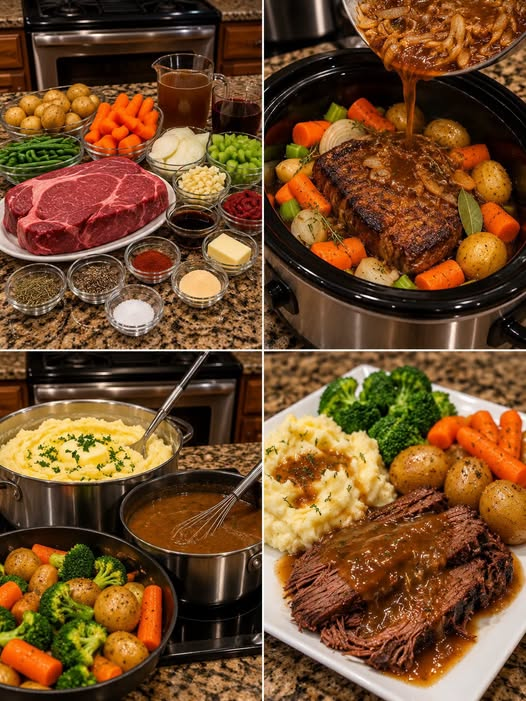
Ingredients
1. Beef pot roast
1.5–2 kg (3–4 lb) beef chuck roast
2 tablespoons olive oil
2 teaspoons salt, or to taste
1 teaspoon ground black pepper
1 teaspoon paprika
1 teaspoon garlic powder
1 teaspoon dried thyme
1 teaspoon dried rosemary
1 tablespoon Worcestershire sauce
2. Slow cooker vegetables and broth
700 g (1½ lb) baby potatoes, washed and halved if large
4–5 medium carrots, peeled and cut into large chunks
3 celery stalks, cut into chunks
2 medium onions, sliced
4 garlic cloves, minced
2 cups (475 ml) beef broth
1 tablespoon tomato paste
1 tablespoon Worcestershire sauce
1 teaspoon dried thyme
2 bay leaves
½ teaspoon black pepper, or to taste
3. Homemade onion gravy
2 cups (475 ml) strained cooking liquid from the slow cooker
2 tablespoons butter
2 tablespoons all-purpose flour
½ teaspoon Worcestershire sauce, optional
Salt and black pepper, to taste
For extra onion flavor, reserve some of the cooked onions from the slow cooker and mash them into the gravy.
4. Creamy mashed potatoes
1.2 kg (2.6 lb) potatoes, peeled and cut into chunks
4 tablespoons butter
½–¾ cup (120–180 ml) warm milk
½ teaspoon salt, or to taste
¼ teaspoon black pepper
2 tablespoons chopped fresh parsley, optional
5. Steamed broccoli and carrots
400 g broccoli florets
300 g carrots, peeled and sliced
1 tablespoon butter or olive oil
Salt and black pepper, to taste
Detailed cooking instructions
Step 1: Prepare and season the beef
Remove the beef from its packaging and pat it dry with paper towels.
Mix the salt, black pepper, paprika, garlic powder, thyme and rosemary in a small bowl.
Rub the seasoning mixture over every side of the beef.
Drizzle the Worcestershire sauce over the roast and rub it in gently.
Tip: Chuck roast is ideal because its connective tissue softens during long cooking, producing tender, flavorful beef.
Step 2: Brown the beef
Heat the olive oil in a large, heavy skillet over medium-high heat.
Place the seasoned beef in the hot pan.
Sear for approximately 3–5 minutes on each side until a deep brown crust develops.
Briefly brown the edges as well.
Transfer the beef to a plate and reserve any juices.
Browning is optional, but it adds a richer roasted flavor to the finished dish.
Step 3: Prepare the slow cooker
Place the baby potatoes in the bottom of the slow cooker.
Add the carrots, celery and sliced onions.
Sprinkle the minced garlic over the vegetables.
In a separate bowl, combine the beef broth, tomato paste, Worcestershire sauce, dried thyme and black pepper.
Stir until the tomato paste is dissolved.
Pour the broth mixture over the vegetables.
Add the bay leaves.
The vegetables at the bottom will absorb the beef juices as everything cooks.
Step 4: Add the beef
Place the browned roast on top of the vegetables.
Pour any juices remaining on the plate into the slow cooker.
Make sure the lid fits securely.
Do not add excessive liquid; the beef releases additional juices as it cooks.
The roast does not need to be completely submerged in broth.
Step 5: Slow-cook the roast
Choose one of the following settings:
LOW: 8–10 hours for tender, pull-apart beef.
HIGH: 4–5 hours, depending on the size and thickness of the roast.
Keep the lid closed as much as possible to maintain a steady temperature.
The beef is ready when a fork slides in easily and the meat separates with little resistance. If it is still tough, continue cooking for another 30–60 minutes and check again.
For best results, cook on LOW when time allows.
Step 6: Remove the beef and vegetables
Carefully lift the roast onto a cutting board or serving platter.
Remove the bay leaves.
Transfer the cooked potatoes and carrots to a serving dish using a slotted spoon.
Cover the beef loosely with foil and let it rest for 10–15 minutes.
Strain the remaining cooking liquid into a measuring jug.
Skim off excess fat if necessary.
Reserve approximately 2 cups of liquid for the gravy.
Step 7: Make the homemade brown onion gravy
Place a medium saucepan over medium heat.
Melt the butter.
Sprinkle in the flour.
Whisk continuously for 1–2 minutes until the mixture becomes smooth and lightly golden.
Slowly pour in the strained cooking liquid, whisking constantly to prevent lumps.
Bring the mixture to a gentle simmer.
Cook for 4–7 minutes, stirring frequently, until the gravy thickens.
Add the optional Worcestershire sauce.
Taste and adjust the salt and pepper.
For a deeper onion flavor, stir in some of the soft cooked onions.
Adjusting the consistency:
If the gravy is too thick, whisk in a little beef broth.
If it is too thin, simmer it longer.
For a quick thickener, mix 1 tablespoon cornstarch with 1 tablespoon cold water. Whisk it into the simmering gravy gradually until the desired consistency is reached.
Step 8: Boil the potatoes for mashing
Peel the potatoes and cut them into evenly sized chunks.
Place them in a large saucepan and cover with cold water.
Add a pinch of salt.
Bring the water to a boil.
Reduce the heat and simmer for 15–20 minutes, or until the potatoes are easily pierced with a fork.
Drain thoroughly.
Return the potatoes to the warm saucepan for about 1 minute to allow excess moisture to evaporate.
Russet or floury potatoes make a fluffy mash. Yukon Gold or similar yellow potatoes produce a naturally creamy texture.
Step 9: Make creamy mashed potatoes
Add the butter to the hot, drained potatoes.
Mash until the butter has melted and is evenly distributed.
Warm the milk separately; do not add it cold.
Gradually pour in the warm milk while mashing.
Stop when the potatoes reach your preferred consistency.
Season with salt and black pepper.
Add chopped parsley if desired.
Avoid using a blender or food processor, as excessive processing can make mashed potatoes sticky and gluey.
Step 10: Steam the broccoli and carrots
Place the broccoli florets in a steamer basket over gently boiling water.
Steam for 4–6 minutes, until bright green and tender-crisp.
Steam the sliced carrots separately for approximately 6–10 minutes, depending on their thickness.
Drain and transfer the vegetables to a bowl.
Toss with butter or olive oil.
Season with salt and black pepper.
You can omit these extra vegetables if you prefer to serve only the carrots and potatoes cooked with the beef.
Step 11: Slice the beef and plate the meal
Remove the foil from the resting beef.
Identify the direction of the muscle fibers.
Slice the beef across the grain into thick slices, or pull it apart with two forks.
Arrange the beef on a large serving platter.
Spoon some hot gravy over the meat.
Serve with mashed potatoes, slow-cooked baby potatoes, carrots and broccoli.
Offer the remaining gravy separately.
For the best presentation, place the mashed potatoes on one side of the plate, the vegetables on the other, and the sliced beef in the center with gravy poured over it.
Helpful tips for the best results
Choose the right cut: Beef chuck roast is the best all-around option. Beef shoulder and brisket can also work.
Avoid excess liquid: Slow cookers retain moisture, so too much broth can dilute the flavor.
Cook until tender: If the roast is tough, it usually needs more cooking time.
Make the gravy last: Prepare it after removing the meat so you can control its thickness.
Season at the end: Broth and cooking juices may already contain salt, so taste before adding more.
Make ahead: The roast and gravy can be refrigerated separately and reheated gently with a little broth if needed.
Nut information and allergen details
Nut content: This recipe contains no nuts in its listed ingredients.
If you are cooking for someone with a nut allergy, check packaged beef broth, Worcestershire sauce and seasoning labels for allergen statements and cross-contact warnings.
Ingredient
Potential allergen
Butter and milk
Dairy
All-purpose flour
Wheat and gluten
Beef broth
May contain soy, wheat or other allergens, depending on the brand
Worcestershire sauce
Some brands contain fish, soy or other allergens
Nut-free and alternative options
Dairy-free: Replace butter with olive oil or a suitable dairy-free alternative, and use unsweetened plant milk for the mashed potatoes.
Gluten-free: Use gluten-free beef broth and Worcestershire sauce, and thicken the gravy with cornstarch instead of wheat flour.
Lower-sodium: Choose reduced-sodium beef broth and adjust the added salt to taste.
Estimated nutrition
Approximate nutrition per serving, assuming 8 servings and including beef, gravy, mashed potatoes and vegetables:
Nutrient
Estimated amount
Calories
650–800 kcal
Protein
40–50 g
Carbohydrates
45–60 g
Fat
30–40 g
Fiber
6–9 g
Sugars
6–10 g
Actual values will vary with the cut of beef, amount of gravy, milk and butter used, and serving size.
Food safety and storage
For whole beef roasts, the standard minimum safe internal temperature is 63°C (145°F), followed by a 3-minute rest. Pot roast generally requires much longer cooking to become tender.
Refrigerate leftovers within 2 hours of cooking.
Store the beef, gravy and vegetables in airtight containers in the refrigerator for 3–4 days.
Reheat leftovers to 74°C (165°F).
Freeze leftovers in suitable containers for approximately 2–3 months for best quality.