
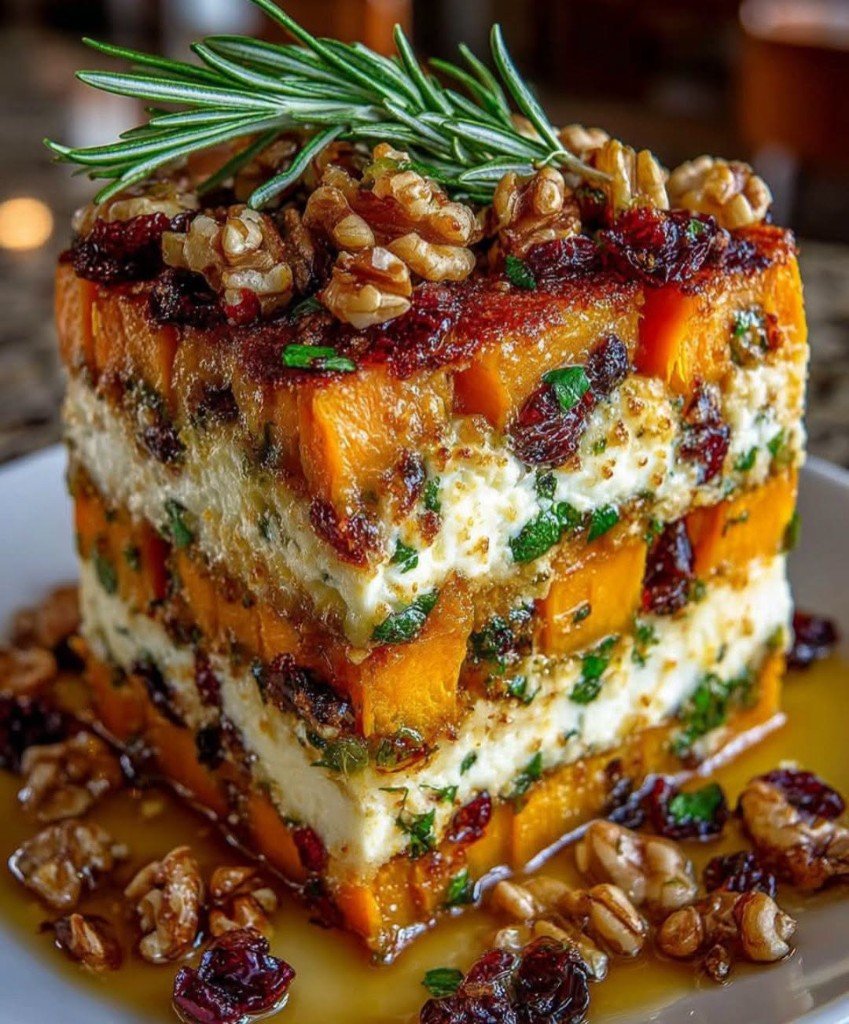
This beautiful layered squash casserole combines tender roasted butternut squash, creamy cheese, fresh spinach, sweet dried cranberries, crunchy walnuts, and fragrant rosemary. Finished with a golden roasted top and a light honey glaze, it makes an elegant vegetarian centerpiece for holidays, dinner parties, or a special family meal.
Preparation time: 30 minutes
Cooking time: 55–70 minutes
Total time: Approximately 1 hour 40 minutes
Servings: 6–8
Cuisine: Modern vegetarian
Dietary notes: Vegetarian; gluten-free if all ingredients are certified gluten-free.
Ingredients
For the squash layers
1 large butternut squash (about 1.2–1.5 kg / 2.6–3.3 lb)
2 tablespoons olive oil
1 teaspoon salt, or to taste
½ teaspoon freshly ground black pepper
1 teaspoon garlic powder
½ teaspoon smoked paprika
½ teaspoon dried thyme
For the creamy cheese and spinach filling
400 g (14 oz) ricotta cheese
200 g (7 oz) cream cheese, softened
150 g (5 oz) mozzarella cheese, shredded
100 g (3.5 oz) fresh spinach, finely chopped
2 cloves garlic, minced
1 tablespoon fresh parsley, chopped
½ teaspoon black pepper
¼ teaspoon salt, adjusted to taste
1 large egg, optional, to help bind the filling
For the cranberry and walnut mixture
100 g (¾ cup) dried cranberries
120 g (1 cup) walnut halves or roughly chopped walnuts
2 tablespoons butter or olive oil
1 tablespoon fresh rosemary, finely chopped
1 tablespoon fresh parsley, chopped
1 teaspoon finely grated orange zest, optional
A pinch of salt
For the topping and glaze
2 tablespoons honey or maple syrup
1 tablespoon olive oil or melted butter
1 small rosemary sprig, for garnish
2 tablespoons chopped walnuts, reserved for finishing
1 tablespoon dried cranberries, reserved for finishing
Step-by-Step Instructions
Step 1: Prepare the oven and squash
Preheat your oven to 200°C (400°F), or 180°C (350°F) for a fan-assisted oven.
Grease a deep baking dish, approximately 20 × 20 cm (8 × 8 inches), with olive oil.
Peel the butternut squash, remove the seeds, and cut it into slices approximately 1–1.5 cm (⅜–½ inch) thick.
In a large bowl, toss the squash with olive oil, salt, black pepper, garlic powder, smoked paprika, and thyme.
Arrange the slices on a lined baking tray in a single layer.
Step 2: Roast the squash
Roast for 20–25 minutes, turning the slices halfway through.
The squash should become slightly golden and tender enough for a fork to enter, but not so soft that it falls apart.
Remove from the oven and let it cool slightly.
Important: Roasting the squash before layering removes excess moisture and helps the finished casserole hold its shape.
Step 3: Prepare the creamy filling
Place the ricotta, softened cream cheese, and shredded mozzarella in a mixing bowl.
Add the chopped spinach, minced garlic, parsley, salt, and black pepper.
Add the egg if you prefer a firmer, more sliceable casserole.
Mix until evenly combined.
If the ricotta is watery, drain it in a fine-mesh strainer for 15–30 minutes before mixing. This helps prevent a soggy casserole.
Step 4: Prepare the cranberry and walnut mixture
Roughly chop the walnuts, leaving some larger pieces for texture.
Melt the butter in a small skillet over medium-low heat, or use olive oil.
Add the walnuts and toast for 2–4 minutes, stirring frequently.
Add the rosemary and stir for another 30 seconds.
Remove from the heat and mix in the dried cranberries, parsley, and optional orange zest.
Reserve a small handful of walnuts and cranberries for the final garnish.
Do not over-toast the walnuts because they can become bitter.
Step 5: Assemble the layers
Arrange the ingredients in your prepared baking dish.
First layer: Spread a thin layer of the cheese mixture over the bottom.
Second layer: Arrange roasted squash slices evenly over the cheese.
Third layer: Sprinkle a portion of the cranberry and walnut mixture across the squash.
Fourth layer: Spread another layer of the creamy spinach filling.
Repeat: Continue layering the squash, cranberries, walnuts, and cheese until the ingredients are used.
Finish: Add a final layer of squash, lightly brush with olive oil, and scatter a few walnuts and cranberries over the top.
Avoid pressing the layers too firmly, as this can squeeze out the filling.
Step 6: Bake until golden
Reduce the oven temperature to 190°C (375°F).
Cover the dish loosely with foil and bake for 20 minutes.
Remove the foil and bake for another 15–25 minutes, until the cheese is set and the top is golden.
Check that the center is hot and the squash is completely tender.
If the top needs more color, broil or grill for 1–3 minutes, watching closely to prevent the nuts from burning.
Step 7: Add the honey glaze
Mix the honey or maple syrup with the olive oil or melted butter.
Drizzle lightly over the hot casserole during the final 5 minutes of baking, or immediately after baking.
Scatter the reserved walnuts and cranberries over the top.
Garnish with a fresh rosemary sprig.
Use a light hand with the glaze: the cranberries are already sweet, and too much honey can overpower the savory cheese and herbs.
Step 8: Rest and serve
Let the casserole rest for 15–20 minutes before slicing. This allows the cheese filling to firm up and helps the layers remain intact.
Serve warm, with a fresh green salad, roasted vegetables, or crusty bread.
Nut Information
Walnuts are a defining ingredient in this recipe, contributing crunch, richness, and an earthy flavor that balances the sweet squash and cranberries.
Raw Walnut Halves 1kg Natural Shelled Walnuts by Natures Balance 500g 1kg 2kg | eBay UK
Walnuts
Amount: 120 g (approximately 1 cup)
Flavor: Earthy, mildly bitter, buttery
Texture: Crisp when toasted
Best use: Lightly toast before adding to the layers.
Nutrition: Provides unsaturated fats, plant-based protein, fiber, and alpha-linolenic acid, an omega-3 fat.
Approximate nutrition in walnuts
Values are approximate for 28 g (1 oz) of plain walnuts.
Nutrient
Approximate amount
Calories
185 kcal
Protein
4.3 g
Total fat
18.5 g
Saturated fat
1.7 g
Carbohydrates
3.9 g
Fiber
1.9 g
Omega-3 ALA
2.5 g
Values vary slightly by variety and serving size.
Can you substitute the walnuts?
Yes. Choose based on your taste and dietary needs.
Pecans: A sweeter, buttery flavor; excellent with squash and cranberries.
Pistachios: A vibrant green color and delicate flavor.
Almonds: Use slivered or roughly chopped almonds for a firm crunch.
Pumpkin seeds: A good seed-based alternative for a different texture.
Sunflower seeds: An economical, crunchy alternative.
For a nut-free version, omit all tree nuts and use pumpkin or sunflower seeds only if they are safe for the intended diners. Check packaging for cross-contact warnings when allergies are involved.
Allergy warning: Walnuts, pecans, pistachios, and almonds are tree nuts. Do not serve them to anyone with a relevant allergy. If preparing food for someone with a severe allergy, verify all ingredient labels and prevent cross-contact with utensils, trays, and surfaces.
Tips for the Best Results
Choose firm squash: A firm butternut squash with unblemished skin is easiest to slice and layer.
Control moisture: Drain the ricotta and avoid adding wet spinach. If using frozen spinach, thaw it and squeeze it thoroughly.
Toast the walnuts separately: This enhances their flavor and prevents them from becoming soggy.
Balance sweet and savory: Rosemary, black pepper, garlic, and orange zest complement the cranberries without making the dish overly sweet.
Create neat slices: Allow the casserole to rest before cutting, and use a sharp knife.
Prepare ahead: Roast the squash and prepare the filling up to one day in advance. Store separately in the refrigerator, then assemble and bake when ready.
Store leftovers safely: Refrigerate within two hours in a covered container and consume within 3–4 days. Reheat until steaming hot throughout.
Frequently Asked Questions (Q&A)
Q1. Can I make this recipe without ricotta cheese?
Yes. Replace the ricotta with well-drained cottage cheese, mascarpone mixed with a little yogurt, or additional cream cheese. Cottage cheese should be blended for a smoother filling.
Q2. Can I make the casserole vegan?
Yes. Use a plant-based cream cheese and mozzarella alternative, omit the egg, and choose olive oil instead of butter. A thick, unsweetened plant-based ricotta substitute works best. Check that your maple syrup and other ingredients are vegan.
Q3. Can I use pumpkin instead of butternut squash?
Yes. Use firm pumpkin flesh cut into similarly sized slices. Roast until just tender, as some pumpkin varieties contain more moisture and may soften more quickly.
Q4. Why did my casserole become watery?
Common causes include watery ricotta, insufficiently drained spinach, or squash that released too much moisture. Drain the cheese, squeeze out excess spinach liquid, and roast the squash before assembly.
Q5. Can I prepare it the night before?
Yes. Assemble the casserole, cover it, and refrigerate overnight. Bake the next day, allowing extra cooking time if it goes into the oven cold. For the best nut texture, reserve some walnuts and add them near the end of baking.
Q6. How can I make the top extra crispy?
Add the reserved walnuts during the final 10 minutes and finish with a brief broil. Keep a close eye on the nuts because they can burn quickly.
Q7. Are dried cranberries necessary?
No. You can use chopped dried apricots, raisins, or chopped dates. For a less sweet dish, reduce the quantity or use fresh cranberries that have been lightly cooked.
Q8. What can I serve alongside this casserole?
A crisp green salad with lemon vinaigrette, roasted Brussels sprouts, green beans, or steamed broccoli works well. For a more substantial meal, serve with quinoa or a lentil salad.
Q9. Is this recipe gluten-free?
The ingredients listed are naturally gluten-free in their plain forms, but check the labels of packaged cheese, dried cranberries, and seasonings for possible gluten-containing additives or cross-contact.
Q10. How do I know when it is fully cooked?
The squash should be fork-tender, the cheese filling should be set rather than liquid, and the center should be hot. If using an egg-containing filling, cook it thoroughly; a food thermometer can help confirm that the center reaches at least 71°C (160°F).
Q11. Can I freeze leftovers?
You can, but the cheese filling and squash may become softer after thawing. Cool completely, portion into airtight containers, and freeze for up to 2 months for best quality. Thaw in the refrigerator and reheat thoroughly.
Q12. Can I leave out all nuts and seeds?
Absolutely. The casserole will still taste delicious. Add extra herbs, a little crispy roasted onion, or a breadcrumb topping made with certified gluten-free breadcrumbs if needed.