
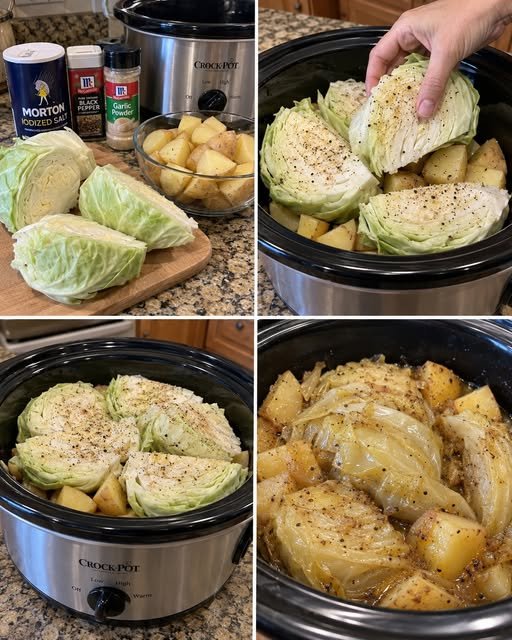
1. Ingredients
-
1 medium green cabbage, cut into 4–6 large wedges
-
1½–2 lb (680–900 g) potatoes, cut into chunks
-
2 cups (480 ml) vegetable or chicken broth
-
3 tbsp butter, cut into small pieces
-
1 tsp garlic powder
-
½ tsp onion powder (optional)
-
½–1 tsp salt, to taste
-
½ tsp black pepper
-
½ tsp dried thyme (optional)
-
1 tbsp chopped fresh parsley (optional garnish)
Optional additions: 1 sliced onion, 2 minced garlic cloves, or a pinch of smoked paprika for extra flavor.
2. Full cooking instructions
Step 1 — Prepare the vegetables
Wash the potatoes and cut them into evenly sized chunks, about 1½–2 inches wide. Remove any damaged outer cabbage leaves and cut the cabbage into thick wedges. Leave a little core attached so the wedges hold together.
Step 2 — Add potatoes to the slow cooker
Place the potato chunks in the bottom of the slow cooker. Spread them evenly so they cook consistently.
Step 3 — Arrange the cabbage
Place the cabbage wedges on top of the potatoes, with the cut sides facing upward or toward the sides of the cooker. Season with salt, black pepper, garlic powder, onion powder, and dried thyme.
Step 4 — Add butter and broth
Scatter the butter pieces over the cabbage and potatoes. Pour the broth around the vegetables rather than directly washing off the seasonings.
The liquid does not need to cover the vegetables; the cabbage will release moisture as it cooks.
Step 5 — Slow cook until tender
Cover with the lid and cook:
-
LOW: 4–5 hours
-
HIGH: 2–3 hours
Cooking time depends on the size of the potato chunks and your slow cooker. Check that the potatoes are fork-tender and the cabbage is soft but still holds its shape.
Step 6 — Check the seasoning
Taste a little of the cooking broth and adjust the salt and pepper. If desired, spoon some of the broth over the cabbage wedges to distribute the buttery flavor.
For a more concentrated broth, transfer some liquid to a saucepan and simmer it uncovered for a few minutes.
Step 7 — Garnish and serve
Carefully lift the cabbage wedges onto a serving plate and arrange the potatoes around them. Spoon the buttery broth over the top and finish with chopped fresh parsley.
Serve warm with roasted chicken, grilled sausage, baked fish, or crusty bread. For a vegetarian meal, pair it with beans or lentils.
3. Nutrition information
Estimated per serving, based on 6 servings
Approximately 180–230 calories
Protein
4–5 g
Carbohydrates
28–34 g
Total fat
6–9 g
Fiber
5–7 g
Sugar
4–6 g
Estimates vary with the amount of butter, potato size, broth, and serving portions.
4. Nut information and allergens
-
Nuts: No peanuts or tree nuts are included in the recipe as written.
-
Dairy: Butter contains milk. Replace it with olive oil or a dairy-free alternative if needed.
-
Broth: Check packaged broth labels for allergens and cross-contact warnings.
-
Nut allergy precautions: Check every ingredient label and use clean utensils and cookware if preparing food for someone with a nut allergy.
5. Tips for the best results
-
Put the potatoes at the bottom because they generally take longer to cook than cabbage.
-
Keep the cabbage wedges large to prevent them from falling apart.
-
Avoid adding excessive liquid; the vegetables release moisture during cooking.
-
For a richer flavor, add sautéed onions and fresh garlic.
-
If you prefer lightly browned cabbage edges, transfer the cooked wedges to a baking sheet and broil briefly before serving.
6. Storage and reheating
-
Refrigerate leftovers in an airtight container within 2 hours of cooking.
-
Store in the refrigerator for 3–4 days.
-
Reheat in a covered saucepan with a splash of broth until steaming hot.
-
Freeze for up to 2 months for best quality, although the cabbage and potatoes may become softer after thawing.
Serving suggestion: Serve these buttery cabbage wedges and seasoned potatoes with roasted chicken or smoky sausage for a simple, hearty homemade dinner.