
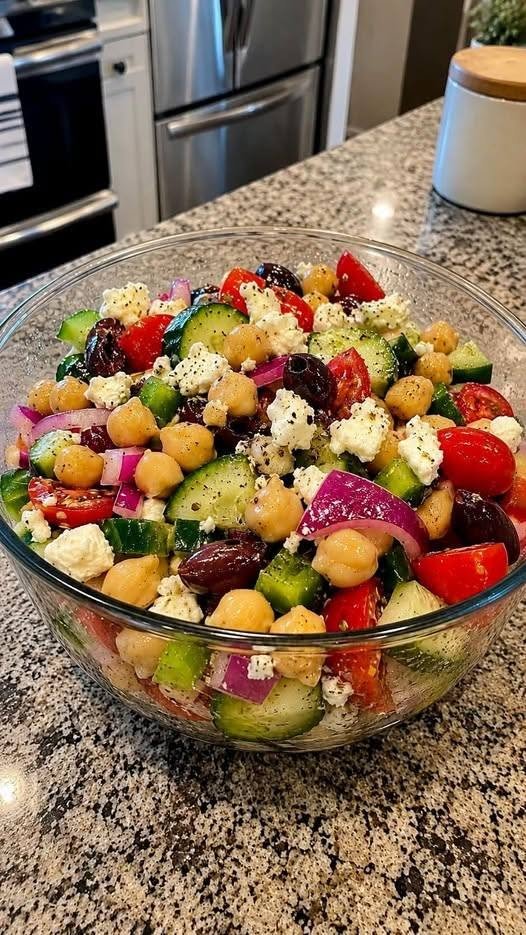
Recipe overview
Prep time: 25 minutes
Cook time: None
Total time: 25 minutes, plus optional chilling
Servings: 6–8 as a side dish or 4 as a main meal
Cuisine: Mediterranean-inspired
Dietary: Vegetarian, naturally gluten-free, nut-free as written
Texture: Crunchy cucumbers, juicy tomatoes, creamy chickpeas, salty feta, and tender olives
Ingredients
For the salad
2 cans (15 oz / 425 g each) chickpeas, drained and rinsed (about 3 cups cooked)
2 medium English cucumbers, sliced into half-moons or chunky pieces
2 cups cherry or grape tomatoes, halved
1 large red bell pepper, diced
1 medium red onion, thinly sliced
1 cup Kalamata olives, pitted
200 g (7 oz) feta cheese, crumbled into bite-sized pieces
½ cup fresh parsley, chopped
2 tablespoons fresh mint, chopped (optional)
1 small green bell pepper, diced (optional)
For the Mediterranean dressing
⅓ cup extra-virgin olive oil
3 tablespoons fresh lemon juice
1 tablespoon red wine vinegar
2 garlic cloves, finely minced
1 teaspoon dried oregano
½ teaspoon Dijon mustard (optional)
½ teaspoon salt, or to taste
½ teaspoon freshly ground black pepper
½ teaspoon honey or maple syrup (optional, to balance the acidity)
Optional seasonings and additions
¼ teaspoon red pepper flakes for gentle heat
1 teaspoon lemon zest for extra freshness
½ teaspoon sumac for a tangy Middle Eastern-inspired flavor
2 tablespoons toasted sunflower seeds or pumpkin seeds for extra crunch
Instructions
Step 1: Prepare the chickpeas
Drain the canned chickpeas in a colander.
Rinse thoroughly under cold running water.
Shake off excess water and pat dry with a clean kitchen towel.
Remove any loose chickpea skins if desired, although this is not necessary.
Tip: Dry chickpeas help the dressing cling better and prevent the salad from becoming watery.
Step 2: Chop the vegetables
Slice the cucumbers into half-moons or bite-sized chunks.
Halve the cherry tomatoes. If using larger tomatoes, cut them into wedges.
Dice the red bell pepper into small, even pieces.
Thinly slice the red onion.
Pit the Kalamata olives if they are not already pitted.
Chop the parsley and mint.
For a milder onion flavor, soak the sliced red onion in cold water for 5–10 minutes, then drain well.
Step 3: Make the dressing
Add the olive oil, lemon juice, red wine vinegar, minced garlic, oregano, Dijon mustard, salt, black pepper, and optional honey to a small bowl or jar.
Whisk vigorously until the dressing looks evenly combined.
Taste and adjust:
Add lemon juice for more brightness.
Add olive oil to soften excessive acidity.
Add black pepper or oregano for more flavor.
Add a small amount of honey if the dressing tastes too sharp.
Step 4: Combine the salad
Place the chickpeas, cucumbers, tomatoes, bell peppers, red onion, and olives in a large mixing bowl.
Pour about three-quarters of the dressing over the ingredients.
Toss gently until everything is coated.
Add the chopped parsley and mint.
Fold in the crumbled feta carefully so it retains some larger pieces.
Add the remaining dressing as needed.
Sprinkle with extra black pepper, oregano, or sumac if desired.
Step 5: Chill and serve
Refrigerate the salad for 15–30 minutes to allow the flavors to develop.
Taste again before serving and adjust the lemon juice, salt, or olive oil.
Garnish with fresh herbs and a little extra feta.
Serve cold or slightly chilled as a side dish, or enjoy it as a filling lunch with pita bread, grilled vegetables, or grilled chicken.
Nut information and allergy guidance
Nut-free as written
The main ingredients—chickpeas, vegetables, olives, feta, and olive oil—are not tree nuts or peanuts.
Check packaged ingredients
If preparing this for someone with a nut allergy, check labels for cross-contact warnings on chickpeas, olives, feta, Dijon mustard, vinegar, and seasonings. Use clean utensils and surfaces.
Peanuts: Not included.
Tree nuts: Not included.
Coconut: Not included.
Seeds: Sunflower or pumpkin seeds are optional additions, not nuts, but seed allergies can occur.
Dairy: Feta contains milk. Omit it or use a suitable dairy-free alternative for a dairy-free version.
Gluten: The salad is naturally gluten-free when all packaged ingredients are verified gluten-free. Serve with gluten-free accompaniments if necessary.
Legumes: Chickpeas are legumes, not nuts, but people with chickpea or other legume allergies should avoid them as appropriate.
For a severe allergy, ingredient labels and cross-contact precautions are important; a recipe alone cannot guarantee an allergen-free dish.
Nutrition information
Estimated nutrition per serving, assuming 8 servings and the full recipe with feta and dressing:
Nutrient
Approximate amount
Calories
330–390 kcal
Protein
10–13 g
Carbohydrates
25–30 g
Dietary fiber
6–8 g
Total fat
21–27 g
Saturated fat
5–7 g
Sugar
5–7 g
Sodium
550–850 mg
Values vary with the brands used, amount of dressing consumed, feta, and olives. The sodium content can be reduced by using low-sodium chickpeas, rinsing the chickpeas well, choosing lower-sodium feta and olives, and adding salt gradually.
Storage and make-ahead tips
Refrigeration: Store in an airtight container for up to 3 days at 4°C / 40°F or below.
Best texture: For a make-ahead salad, keep the dressing separate and add it shortly before serving.
Feta: Add just before serving if you prefer distinct chunks rather than feta distributed throughout the salad.
Refreshing leftovers: Add a squeeze of lemon and a little fresh parsley before serving.
Freezing: Not recommended because cucumber and tomato become watery and soft after thawing.
Food safety: Refrigerate promptly; do not leave the salad at room temperature for more than 2 hours, or 1 hour in temperatures above 32°C / 90°F.
Q&A
Q1. Can I make this salad the night before?
Yes. Chop the vegetables and prepare the chickpeas in advance. Keep the dressing in a separate container and combine everything shortly before serving for the freshest texture. If already dressed, it can still be made ahead, but the vegetables may release liquid.
Q2. Can I use dried chickpeas instead of canned?
Yes. Soak dried chickpeas, then cook until tender according to package directions. Cool completely before adding them. Approximately 1 cup of dried chickpeas yields around 2½–3 cups cooked, depending on the variety and cooking method.
Q3. What can I use instead of feta cheese?
Try a dairy-free feta alternative, diced avocado, or omit the cheese and add extra herbs and lemon. Avocado changes the flavor and texture, so add it shortly before serving.
Q4. Can I make the salad without olives?
Absolutely. Replace the olives with diced cucumber, extra tomatoes, roasted red peppers, or a few capers. If using capers, reduce the added salt because they are salty.
Q5. Are chickpeas a good source of protein?
Yes. Chickpeas provide plant-based protein and dietary fiber. Feta contributes additional protein, while the combination of vegetables and olive oil adds a variety of nutrients and healthy unsaturated fats.
Q6. Can I add nuts for extra crunch?
If there is no nut allergy, you can add a small amount of chopped toasted walnuts, almonds, or pistachios. These are optional and are not required for the recipe. For an allergy-friendly alternative, use toasted pumpkin or sunflower seeds after checking the packaging for cross-contact warnings.
Q7. How can I make this salad more filling as a main meal?
Increase the chickpeas, add cooked quinoa, or serve it with grilled chicken, baked tofu, or whole-grain pita. If adding another protein, adjust the dressing and seasoning to taste.
Q8. Why does my salad become watery?
Cucumbers and tomatoes release moisture, especially after salting or prolonged refrigeration. Pat the chickpeas dry, avoid adding excess salt too early, and dress the salad shortly before serving. Drain excess liquid before refreshing leftovers.
Q9. Is this salad suitable for a weight-conscious diet?
It can fit into many balanced eating plans. Chickpeas provide fiber and protein, vegetables add volume, and olive oil and feta contribute fat and calories. To reduce calories, use less dressing and feta while keeping the vegetables and chickpeas.
Q10. Is the salad vegan?
Not as written, because feta contains dairy and the optional honey is an animal-derived ingredient. For a vegan version, omit the feta or use plant-based feta and use maple syrup instead of honey.
Q11. Can I use bottled lemon juice?
Yes, but freshly squeezed lemon juice usually gives a brighter flavor. Start with the stated amount and adjust to taste.
Q12. What should I serve with this salad?
It pairs well with grilled chicken, fish, falafel, hummus, pita bread, roasted vegetables, or lentil soup. It can also be served over leafy greens for a larger salad.