
Prep time: 20 minutes
Cook time: 0 minutes if using ready-made chickpeas
Total time: 20 minutes
Servings: 4–6
Cuisine: Mediterranean / Middle Eastern
Diet: Vegetarian, naturally gluten-free when served without pita bread
Allergen information: Contains sesame and dairy; may contain other allergens depending on ingredients.
Ingredients
1. For the hummus base
2 cups (about 330 g) cooked chickpeas, drained and rinsed
¼ cup (60 g) tahini (sesame seed paste)
3 tablespoons fresh lemon juice
1 small garlic clove
2–3 tablespoons extra-virgin olive oil
¼ teaspoon ground cumin
½ teaspoon salt, or to taste
3–5 tablespoons ice-cold water
½ teaspoon paprika, for garnish
2. For the Mediterranean toppings
1 medium cucumber, thinly sliced
1½ cups cherry tomatoes, halved
½ cup Kalamata or other Mediterranean olives, pitted
½ small red onion, thinly sliced
100 g feta cheese, crumbled
¼ cup fresh parsley, finely chopped
1 tablespoon fresh mint, chopped (optional)
2–3 tablespoons extra-virgin olive oil, for drizzling
A pinch of salt and freshly ground black pepper
½ teaspoon dried oregano (optional)
3. For serving
Warm pita bread or toasted pita chips
Carrot sticks, bell pepper strips or celery sticks
Lemon wedges
Instructions
Step 1: Prepare the chickpeas
Drain and rinse the chickpeas thoroughly. For extra-smooth hummus, remove the chickpea skins by gently rubbing them between your fingers. This is optional but improves the texture.
Step 2: Blend the hummus
Add the tahini and lemon juice to a food processor.
Blend for 30–60 seconds until creamy.
Add the garlic, chickpeas, cumin and salt.
Blend until the mixture becomes thick and smooth.
With the processor running, gradually add the ice-cold water, one tablespoon at a time.
Add 2 tablespoons of olive oil and blend again until the hummus is fluffy and creamy.
Taste and adjust the lemon juice, salt or cumin as needed.
Step 3: Prepare the vegetables
Slice the cucumber into thin rounds.
Halve the cherry tomatoes.
Thinly slice the red onion.
Chop the parsley and mint.
Crumble the feta cheese.
Drain the olives if they are stored in brine.
Keep the vegetables relatively dry so excess liquid does not make the hummus watery.
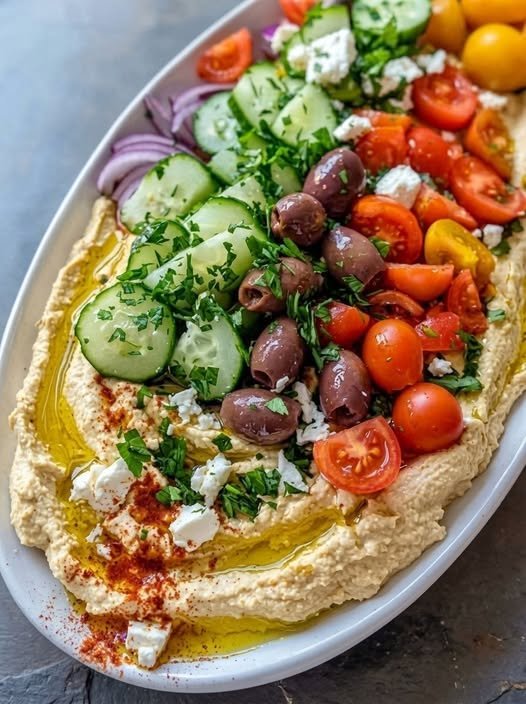
Step 4: Arrange the platter
Spread the hummus onto a large, shallow serving plate.
Use the back of a spoon to create swirls and shallow wells in the surface.
Drizzle generously with extra-virgin olive oil.
Arrange the cucumber slices along one side.
Add the cherry tomatoes, red onion and olives.
Sprinkle the crumbled feta over the hummus and vegetables.
Finish with chopped parsley, mint, paprika, oregano and freshly ground black pepper.
Serve immediately with warm pita bread or fresh vegetable sticks.
Nutritional Information
Estimated values per serving, assuming 6 servings and including the feta and olive oil used in the recipe.
Nutrient
Approximate amount
Calories
300–350 kcal
Protein
8–10 g
Carbohydrates
20–25 g
Dietary fiber
6–8 g
Total fat
21–25 g
Saturated fat
4–6 g
Sugars
4–6 g
Sodium
400–650 mg
Values vary with the amount of oil, feta, salt and olives used. Pita bread is not included.
Nut Information and Allergens
Does this recipe contain nuts?
The recipe does not require tree nuts or peanuts. However, tahini is made from sesame seeds, which are an allergen in their own right.
Sesame: Present in tahini. Avoid tahini if you have a sesame allergy; do not substitute another seed or nut butter unless it is confirmed safe for your particular allergy.
Dairy: Feta cheese contains milk. For a dairy-free version, omit the feta or use a suitable dairy-free alternative.
Peanuts and tree nuts: Not normally present in the listed ingredients, but check product labels for cross-contact warnings.
Gluten: The hummus and toppings are naturally gluten-free, but pita bread contains wheat. Choose certified gluten-free accompaniments if needed.
Other possible allergens: Commercial olives, seasoning blends and packaged ingredients can contain additional ingredients or cross-contact warnings.
If cooking for someone with a serious allergy, check every ingredient label and prevent cross-contact with utensils, food processors and serving dishes.
Tips for the Best Results
For extra-creamy hummus: Blend the tahini and lemon juice first, then add the chickpeas and cold water gradually.
For a brighter flavor: Add another teaspoon of lemon juice just before serving.
For a traditional presentation: Make a shallow well in the hummus and fill it with olive oil.
For less sodium: Use no-salt-added chickpeas, rinse the olives and reduce the feta and added salt.
For more protein: Serve with extra chickpeas or add grilled chicken on the side.
For a vegan version: Leave out the feta or replace it with a plant-based alternative.
Storage
Hummus without toppings: Store in an airtight container in the refrigerator for up to 4 days.
Assembled platter: Refrigerate promptly and ideally consume within 1–2 days for the best texture.
Freezing: Plain hummus can be frozen for up to 2–3 months. Thaw in the refrigerator and stir well before serving. Fresh vegetables and feta are best added after thawing.
Do not leave the platter at room temperature for more than 2 hours, or 1 hour in temperatures above 32°C.
Questions & Answers (Q&A)
Q1. Can I use canned chickpeas?
Yes. Canned chickpeas work very well. Drain and rinse them before blending. Removing their skins can make the hummus smoother.
Q2. Can I make this recipe without tahini?
Yes, although the flavor will be different. You can omit the tahini and add a little extra olive oil and lemon juice. The result will be less rich and will no longer have the traditional sesame flavor.
Q3. Are Kalamata olives necessary?
No. You can use green olives, black olives or another pitted variety. Kalamata olives provide a particularly rich, tangy Mediterranean flavor.
Q4. Can I make the platter vegan?
Yes. Simply omit the feta cheese or use a dairy-free alternative. The hummus and vegetable toppings are otherwise vegan, provided the ingredients are suitable.
Q5. Is this recipe suitable for weight management?
It can fit into a balanced diet. Chickpeas provide fiber and plant protein, while tahini and olive oil provide unsaturated fats. Portion size matters because olive oil and tahini are energy-dense.
Q6. How can I make the hummus spicier?
Add a pinch of cayenne pepper, chili flakes or a little harissa. You can also sprinkle chili powder over the finished platter.
Q7. Can I prepare it the night before?
Yes. Prepare the hummus and chop the vegetables separately, storing them in covered containers in the refrigerator. Assemble the platter shortly before serving to keep the vegetables fresh and the hummus creamy.
Q8. What can I serve instead of pita bread?
Try cucumber sticks, carrot sticks, celery, bell pepper strips, gluten-free crackers or toasted gluten-free bread.
Q9. Is hummus high in protein?
Hummus contains plant protein from chickpeas and some additional protein from tahini. It provides a moderate amount per serving, rather than the high protein content found in meat, fish or some concentrated protein foods.
Q10. Can I omit the feta?
Absolutely. The platter will still be flavorful. Add extra herbs, a squeeze of lemon and a drizzle of olive oil to maintain its fresh Mediterranean character.