
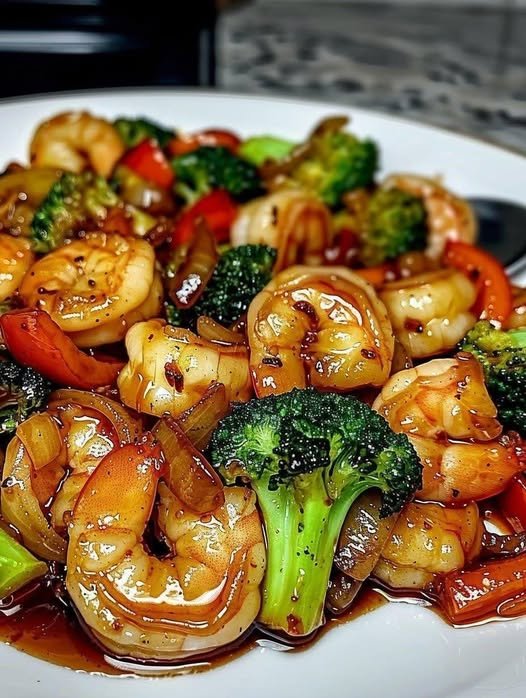
Enjoy a delicious, restaurant-style Garlic Butter Shrimp and Broccoli Stir-Fry made with juicy shrimp, fresh broccoli florets, colorful bell peppers, and tender onions, all coated in a rich, flavorful garlic sauce. This easy shrimp stir-fry is packed with savory, sweet, and slightly spicy flavors, making it a perfect choice for a quick weeknight dinner or a special family meal.
The shrimp cook beautifully in a glossy garlic sauce, while the vegetables add freshness, color, and a satisfying crunch. Every bite is full of flavor, and the best part is that this dish comes together in one pan with simple ingredients.
Whether you serve it over steamed rice, noodles, or enjoy it on its own, this shrimp and vegetable stir-fry is sure to become a favorite in your kitchen.
Recipe Details
Recipe Name: Garlic Butter Shrimp and Broccoli Stir-Fry
Preparation Time: 15 minutes
Cooking Time: 15 minutes
Total Time: 30 minutes
Servings: 4
Course: Main Course, Dinner
Cuisine: Asian-Inspired
Cooking Method: Stovetop Stir-Frying
Difficulty: Easy
Dietary Style: High-Protein, Dairy-Free Option
Why You Will Love This Recipe
There are plenty of reasons to add this delicious shrimp stir-fry to your weekly meal rotation.
Quick and easy: This recipe takes approximately 30 minutes from preparation to serving.
Full of flavor: Garlic, soy sauce, honey, ginger, and butter create a delicious savory-sweet sauce.
Colorful vegetables: Broccoli, red bell peppers, and onions add beautiful colors and freshness.
High in protein: Shrimp provide lean protein that makes this dish satisfying.
One-pan meal: Everything comes together in one skillet or wok, making cleanup easier.
Customizable: You can add your favorite vegetables, adjust the spice level, or make the sauce sweeter or more savory.
Perfect for meal planning: Prepare the ingredients ahead of time for an easy dinner.
Ingredients
For the Shrimp
1 pound (450 g) large shrimp, peeled and deveined
1 tablespoon olive oil
1 tablespoon butter
3 cloves garlic, finely minced
1/2 teaspoon paprika
1/2 teaspoon black pepper
1/2 teaspoon salt
1/4 teaspoon red chili flakes (optional)
1 teaspoon lemon juice
For the Vegetables
2 cups fresh broccoli florets
1 medium red bell pepper, sliced
1 medium yellow bell pepper, sliced
1 small onion, cut into chunks
1/2 cup sliced mushrooms (optional)
1 tablespoon olive oil
For the Garlic Stir-Fry Sauce
1/4 cup low-sodium soy sauce
2 tablespoons honey
1 tablespoon oyster sauce
1 tablespoon rice vinegar
1 teaspoon sesame oil
3 cloves garlic, minced
1 teaspoon freshly grated ginger
1/2 teaspoon red chili flakes
1/4 cup water or chicken broth
1 teaspoon cornstarch
1 tablespoon cold water (for mixing cornstarch)
For Garnishing
1 tablespoon sesame seeds
2 tablespoons chopped green onions
Fresh parsley or cilantro
A few drops of fresh lemon juice
Kitchen Equipment
Before starting, prepare the following kitchen tools:
Large skillet or wok
Sharp kitchen knife
Cutting board
Mixing bowls
Measuring cups and spoons
Wooden spoon or spatula
Small whisk
Paper towels
How to Make Garlic Butter Shrimp and Broccoli Stir-Fry
Step 1: Prepare the Shrimp
Start by preparing the shrimp. If using frozen shrimp, thaw them completely in the refrigerator or under cold running water.
Peel and devein the shrimp if necessary. Rinse if desired and pat them thoroughly dry with paper towels.
Place the shrimp in a medium mixing bowl. Add olive oil, paprika, black pepper, salt, red chili flakes, and lemon juice.
Toss everything together until the shrimp are evenly coated with the seasoning.
Set aside while preparing the vegetables and sauce. Avoid leaving raw shrimp at room temperature for an extended period.
Step 2: Prepare the Vegetables
Wash the broccoli thoroughly and cut it into small, bite-sized florets.
Slice the red and yellow bell peppers into thin strips. Cut the onion into medium-sized chunks and slice the mushrooms if using.
Try to cut the vegetables into similar-sized pieces so they cook evenly.
Keep the broccoli, peppers, and onions separate because they will be added to the pan at slightly different times.
Step 3: Prepare the Garlic Stir-Fry Sauce
In a small bowl, combine soy sauce, honey, oyster sauce, rice vinegar, sesame oil, minced garlic, grated ginger, red chili flakes, and water or chicken broth.
Whisk until the honey is incorporated.
In another small bowl, mix cornstarch with one tablespoon of cold water until smooth.
Set both mixtures aside.
The cornstarch slurry will help thicken the sauce and give it a beautiful glossy texture.
Step 4: Cook the Shrimp
Heat a large skillet or wok over medium-high heat.
Add olive oil and butter. Once the butter has melted, add the seasoned shrimp in a single layer.
Cook for approximately 1–2 minutes on the first side, then turn them over and cook for another 1–2 minutes, depending on their size.
The shrimp should turn pink and opaque and form a light golden exterior.
Remove the cooked shrimp from the skillet and transfer them to a clean plate.
Avoid overcooking the shrimp because they can become tough and rubbery.
Step 5: Cook the Broccoli
Using the same skillet, add a little olive oil if needed.
Add the broccoli florets and stir-fry for approximately 2 minutes.
Add 2–3 tablespoons of water and cover the skillet for another 1–2 minutes to help soften the broccoli.
The broccoli should become bright green and slightly tender while maintaining a little crunch.
Remove the lid and allow any excess water to evaporate.
Step 6: Add the Bell Peppers and Onions
Add the sliced red bell pepper, yellow bell pepper, and onion to the skillet.
Stir-fry over medium-high heat for approximately 3–4 minutes.
Stir frequently to prevent the vegetables from sticking.
Cook until the peppers are slightly softened but still retain their natural crunch.
If using mushrooms, add them along with the bell peppers and cook until tender.
Step 7: Add the Garlic Sauce
Give the prepared sauce a quick stir because the ingredients may settle.
Pour the sauce into the skillet with the vegetables.
Bring it to a gentle simmer, stirring continuously.
Add the cornstarch slurry and mix well.
Cook for approximately 1–2 minutes until the sauce becomes slightly thick, glossy, and coats the vegetables.
If the sauce becomes too thick, add a tablespoon or two of water or chicken broth.
Step 8: Return the Shrimp to the Pan
Add the cooked shrimp back into the skillet.
Gently toss everything together until the shrimp and vegetables are evenly coated with the garlic sauce.
Cook for another 30–60 seconds, just until the shrimp are hot.
Make sure the shrimp are thoroughly cooked and reach an internal temperature of 145°F (63°C).
Taste the sauce and adjust the seasoning if necessary.
You can add extra honey for sweetness, soy sauce for saltiness, lemon juice for freshness, or chili flakes for more heat.
Step 9: Garnish and Serve
Turn off the heat.
Sprinkle sesame seeds and chopped green onions over the shrimp and vegetables.
Add a little fresh parsley or cilantro and finish with a few drops of lemon juice.
Serve immediately while the sauce is warm and glossy.
Enjoy this delicious Garlic Butter Shrimp and Broccoli Stir-Fry with steamed rice, fried rice, or noodles.
Expert Tips for the Best Shrimp Stir-Fry
1. Use large shrimp: Large or jumbo shrimp are ideal because they remain juicy and are less likely to overcook quickly.
2. Dry the shrimp properly: Excess moisture prevents the shrimp from developing a light golden exterior.
3. Avoid overcrowding the pan: Cook the shrimp in batches if necessary. Overcrowding can cause them to steam instead of sear.
4. Do not overcook the shrimp: Shrimp cook very quickly. Remove them as soon as they turn opaque and are fully cooked.
5. Keep vegetables slightly crunchy: Avoid cooking the vegetables for too long. Their fresh texture makes the dish more enjoyable.
6. Use fresh garlic and ginger: Fresh ingredients give the sauce a much richer aroma and flavor.
7. Add cornstarch gradually: This allows you to control the thickness of the sauce.
8. Adjust the sweetness: If you prefer a less sweet stir-fry, reduce the honey to one tablespoon.
9. Use low-sodium soy sauce: This helps prevent the sauce from becoming too salty.
10. Serve immediately: This dish tastes best freshly cooked when the shrimp are tender and the vegetables retain their texture.
What to Serve with Garlic Butter Shrimp and Broccoli
This versatile shrimp stir-fry pairs beautifully with several side dishes.
Steamed white rice: A classic choice that absorbs the delicious garlic sauce.
Brown rice: A hearty option with additional dietary fiber.
Fried rice: Adds extra flavor and makes the meal more filling.
Egg noodles: Perfect for turning this dish into a noodle stir-fry.
Lo mein noodles: A delicious restaurant-style combination.
Cauliflower rice: A lighter, lower-carbohydrate alternative.
Quinoa: Adds extra fiber and plant-based protein.
Fresh cucumber salad: Provides a refreshing contrast to the savory sauce.
Recipe Variations
1. Spicy Garlic Shrimp Stir-Fry
If you enjoy spicy food, increase the red chili flakes and add a teaspoon of chili garlic sauce. You can also add a little sriracha for extra heat.
2. Honey Garlic Shrimp Stir-Fry
For a sweeter flavor, increase the honey to three tablespoons and reduce the chili flakes. This creates a delicious sweet and savory sauce.
3. Lemon Garlic Shrimp Stir-Fry
Add extra fresh lemon juice and a little lemon zest to the sauce. This creates a fresh, bright flavor that complements the shrimp beautifully.
4. Shrimp and Chicken Stir-Fry
You can add boneless chicken breast cut into small pieces. Cook the chicken separately until it reaches an internal temperature of 165°F (74°C), then prepare the vegetables and sauce. Return the cooked chicken and shrimp to the pan at the end.
5. Extra Vegetable Stir-Fry
Add carrots, zucchini, snap peas, mushrooms, baby corn, or cabbage for additional color, texture, and nutrition.
Storage and Reheating Instructions
How to Store Leftovers
Allow the shrimp stir-fry to cool slightly, then transfer it to an airtight food-safe container.
Refrigerate within two hours of cooking and consume within 3–4 days.
For the best texture, store the shrimp and vegetables together with their sauce.
How to Reheat
Stovetop Method:
Place the leftovers in a skillet over medium-low heat. Add one or two tablespoons of water or broth and gently stir until heated throughout.
Avoid cooking for too long because shrimp can become rubbery.
Microwave Method:
Transfer a portion to a microwave-safe dish. Cover loosely and heat in short intervals, stirring between intervals, until the food reaches 165°F (74°C).
Can You Freeze Shrimp Stir-Fry?
Yes. Place completely cooled leftovers in a freezer-safe airtight container and freeze for approximately 1–2 months for best quality.
Thaw overnight in the refrigerator before reheating.
Keep in mind that broccoli and bell peppers may become softer after freezing and thawing.
Nutritional Information
The following nutritional values are estimates based on four servings of the recipe, including the shrimp, vegetables, sauce, and cooking fats. Actual values vary depending on ingredient brands and portion sizes.
Estimated Nutrition Per Serving:
Calories: 320–370 kcal
Protein: 30–35 g
Total Fat: 12–16 g
Saturated Fat: 3–5 g
Carbohydrates: 18–23 g
Dietary Fiber: 3–5 g
Total Sugars: 11–15 g
Cholesterol: 180–220 mg
Sodium: 750–950 mg
Nutrition Note: Shrimp provide high-quality protein, while broccoli and bell peppers contribute vitamin C, vitamin K, and dietary fiber. Using low-sodium soy sauce and reducing added honey can help adjust the sodium and sugar content.
Values are approximate and should not be treated as laboratory-tested nutritional information.
Frequently Asked Questions (FAQs)
1. Can I use frozen shrimp for this recipe?
Yes! Frozen shrimp work perfectly. Thaw them completely before cooking and pat them dry with paper towels to remove excess moisture.
2. Should I use fresh or frozen broccoli?
Both options work well. Fresh broccoli provides a slightly firmer texture, while frozen broccoli is convenient. If using frozen broccoli, thaw and drain it before adding it to the skillet.
3. How do I know when shrimp are fully cooked?
Fully cooked shrimp become opaque and pearly white with pink or reddish outer coloring. They usually curl into a loose C shape. For food safety, check that they reach an internal temperature of 145°F (63°C).
4. Why did my shrimp become rubbery?
Shrimp become rubbery when cooked for too long. They need only a few minutes of cooking, depending on their size. Remove them from the pan as soon as they are fully cooked.
5. Can I make this recipe without oyster sauce?
Absolutely. You can replace oyster sauce with additional soy sauce and a little extra honey. For a vegetarian alternative, use a suitable vegetarian mushroom stir-fry sauce.
6. Can I make this recipe gluten-free?
Yes. Use certified gluten-free tamari or gluten-free soy sauce and check the labels of your oyster sauce and other packaged ingredients.
7. Can I prepare the sauce in advance?
Yes. Mix all the sauce ingredients except the cornstarch slurry and refrigerate in a covered container for up to 2 days. Prepare the cornstarch slurry just before cooking.
8. Can I make this dish without butter?
Yes. Replace butter with olive oil or avocado oil. The recipe will still have a delicious garlic flavor.
9. How can I make the sauce thicker?
Mix one teaspoon of cornstarch with one tablespoon of cold water. Slowly add the mixture to the simmering sauce while stirring until it reaches your preferred consistency.
10. Can I make this recipe less spicy?
Of course. Simply leave out the red chili flakes and chili sauce. The garlic, honey, soy sauce, and ginger will still provide plenty of flavor.
11. Can I use other vegetables?
Yes! Carrots, zucchini, mushrooms, snap peas, asparagus, cabbage, and baby corn are all excellent choices.
12. Is this recipe suitable for meal prep?
Yes. Divide the cooked shrimp stir-fry into individual airtight containers and refrigerate. For the best quality, consume within 3–4 days.
13. What type of shrimp is best?
Large or jumbo peeled and deveined shrimp are recommended. Both fresh and frozen shrimp can produce excellent results.
14. Can I serve this recipe with pasta?
Yes. Toss the cooked shrimp and vegetables with spaghetti, linguine, or rice noodles. Add a little reserved pasta water if needed to loosen the sauce.
15. Can I make this recipe dairy-free?
Yes. Replace the butter with olive oil or another dairy-free cooking fat. Make sure all other packaged ingredients are dairy-free.