
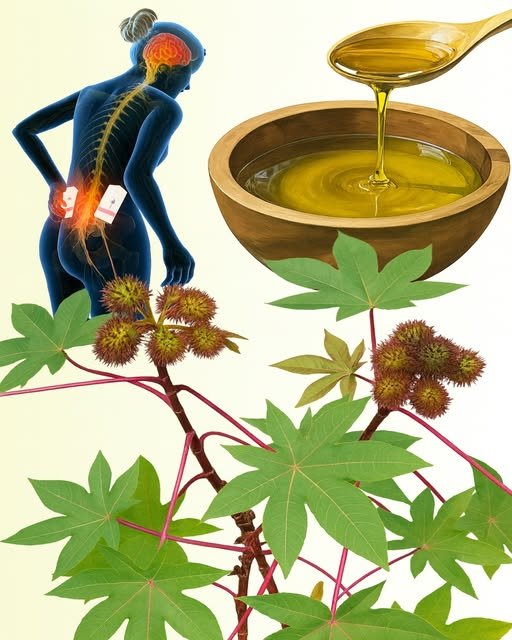
Castor leaves come from the Ricinus communis plant. In traditional medicine (Ayurveda & folk remedies), the leaves have been used externally for pain relief and skin support.
⚠️ Important: Castor plant seeds contain ricin (toxic). Leaves are used carefully and mainly externally.
🌿 Potential Benefits (Traditional Uses)
1️⃣ Joint & Muscle Pain Relief
-
Warm castor leaves applied as a compress
-
May help reduce inflammation and stiffness
2️⃣ Swelling & Inflammation
-
Used as poultice for minor swelling
3️⃣ Skin Support
-
Sometimes applied for minor rashes or irritation
4️⃣ Digestive Support (Traditional)
-
Warm leaf placed on abdomen in folk practices
-
Limited scientific evidence
🔬 What Science Says
✔ Castor oil (from seeds) is well studied for constipation relief.
✔ Leaves contain flavonoids & plant compounds with mild anti-inflammatory properties.
❗ Strong clinical evidence for major healing claims is limited.
🏠 Traditional External Use (Poultice Method)
1️⃣ Wash fresh leaf thoroughly.
2️⃣ Warm slightly (not hot).
3️⃣ Apply to affected area.
4️⃣ Cover with cloth for 20–30 minutes.
Do NOT ingest leaves without medical supervision.
⚠️ Safety Warnings
-
Do not consume raw castor plant parts.
-
Avoid during pregnancy unless advised by doctor.
-
Test small skin area first (possible irritation).
-
Keep away from children (seeds are highly toxic).
🩺 Is It Anti-Inflammatory?
Mildly — based on plant compounds.
Not a replacement for medical treatment for serious inflammation.
🌿 Traditional Uses (External)
🔹 1. Joint & Muscle Pain
Warm leaf compresses are used to:
-
Ease stiffness
-
Reduce mild swelling
-
Support circulation
🔹 2. Breast Engorgement (Folk Remedy)
In some cultures, warmed leaves are applied externally for temporary relief.
🔹 3. Skin & Minor Wounds
Used as herbal poultice for:
-
Minor irritation
-
Boils
-
Insect bites
⚠ Evidence is limited — mostly traditional use.
🧪 What Compounds Are Present?
Castor leaves contain:
-
Flavonoids (antioxidant activity)
-
Alkaloids
-
Tannins
These may contribute to mild anti-inflammatory and antimicrobial effects.
🩺 Internal Use – Important Warning
❗ Castor plant seeds contain ricin, a highly toxic compound.
❗ Leaves are NOT commonly consumed.
❗ Do NOT drink castor leaf juice without medical supervision.
Castor oil used medically is processed safely — raw plant parts are not the same.
🔥 How to Make a Safe External Compress
1️⃣ Wash fresh leaf thoroughly.
2️⃣ Lightly warm (steam or pan for 1–2 minutes).
3️⃣ Apply to skin (not broken wounds).
4️⃣ Cover with cloth for 15–30 minutes.
Stop if irritation occurs.
🤔 Is It Anti-Inflammatory?
Mildly — based on plant antioxidants.
Not strong enough to replace medications like:
-
Ibuprofen
-
Prescription anti-inflammatories
⚖️ Who Should Avoid It?
-
Pregnant women
-
People with sensitive skin
-
Children (unless supervised)
-
Anyone with plant allergies
🧠 Final Balanced View
✔ Useful in traditional external remedies
✔ May support mild inflammation
❌ Not scientifically proven for major diseases
❌ Not a replacement for prescribed medicine