
Serves: 4
Prep time: 15–20 minutes
Cooking: None
Total: ~20 minutes
Difficulty: Easy
Ingredients
Salad
3 medium ripe tomatoes, cut into wedges or large chunks
1 large English cucumber, sliced into half-moons
½ medium red onion, very thinly sliced
½ green bell pepper, sliced — optional
½ cup Kalamata olives, pitted
½ cup green olives, pitted
200 g (7 oz) feta cheese, preferably a firm block
2–3 tbsp fresh parsley, chopped
1 tbsp fresh dill, chopped — optional
1 tsp dried Greek oregano
½ tsp sweet paprika
Pinch of red-pepper flakes — optional
Dressing
4 tbsp extra-virgin olive oil
1½ tbsp red-wine vinegar
1 tbsp fresh lemon juice
1 small garlic clove, finely grated
½ tsp dried oregano
¼ tsp freshly ground black pepper
Salt, very sparingly, because feta and olives are already salty
This ingredient combination is consistent with established Greek-salad preparations, which commonly use tomatoes, cucumber, onion, olives, feta, oregano and olive oil.
B
BBC Good Food
+1
Step-by-step method
1. Prepare the vegetables
Wash and dry the tomatoes and cucumber.
Cut the tomatoes into large wedges. Slice the cucumber into fairly thick half-moons so it retains its crunch.
Thinly slice the red onion. If you prefer a milder onion flavor, soak it in cold water for 5 minutes, then drain thoroughly.
2. Prepare the dressing
Whisk together:
olive oil + red-wine vinegar + lemon juice + garlic + oregano + black pepper.
Taste before adding salt.
3. Build the salad
Place cucumber, tomatoes, onion, bell pepper and both types of olives in a wide serving bowl.
Drizzle over about two-thirds of the dressing and gently toss.
4. Add the feta
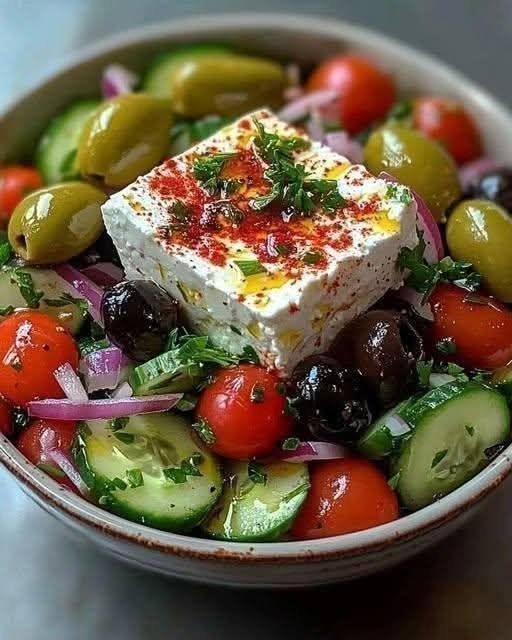
For the appearance in your photograph, don’t crumble the feta.
Place one large block of feta directly on top of the vegetables.
Drizzle the remaining dressing over the feta.
5. Finish
Sprinkle the feta with:
paprika
a little oregano
fresh parsley/dill
optional chili flakes
Finish with a small drizzle of extra-virgin olive oil.
Don’t overmix after adding the feta—keeping the block intact gives you the dramatic presentation shown in the photo.
Nut information
Is this salad naturally nut-free?
Yes. The basic recipe contains no tree nuts or peanuts. A standard Greek salad is also commonly described as nut-free.
B
BBC Good Food
Important allergy caution
If you’re preparing this for someone with a serious nut allergy, check the labels on:
packaged olives
feta
bottled dressing
spice blends
chili/paprika
any optional toppings
Manufacturers can have cross-contact warnings even when nuts aren’t an intentional ingredient. Some olive products, for example, may be processed in facilities handling nuts.
C
Cooking with Brielle
Milk allergy
Feta contains milk, so this recipe is not dairy-free.
N
nhs.uk
+1
For a dairy-free version, replace feta with a suitable plant-based feta alternative and verify its allergen label.
Approximate nutrition
For a salad divided into four portions, the exact numbers depend heavily on how much oil, feta and olives you use.
A comparable Greek salad recipe provides roughly 211 kcal, 5 g protein, 17 g fat and 8 g carbohydrate per serving, while other versions are around 240–300 kcal depending on ingredients and dressing.
B
BBC Good Food
+2
For this richer, feta-block version, a reasonable estimate is:
Nutrient Approx. per serving
Calories 250–320 kcal
Protein 7–10 g
Carbohydrates 8–12 g
Fat 20–27 g
Fiber 2–4 g
Saturated fat ~5–8 g
Sodium Highly variable
The biggest calorie contributors are olive oil, feta and olives, rather than the vegetables.
Tips to make it taste like the photo
Use room-temperature tomatoes for better flavor.
Use an English/Persian cucumber for maximum crunch.
Buy feta in a block, rather than pre-crumbled feta.
Use good-quality extra-virgin olive oil.
Don’t drown the vegetables in dressing.
Drain olives well.
Add the feta last.
A little paprika on top gives the attractive red finish seen in the photograph.
Fresh parsley makes the salad look much more vibrant.
For authentic Greek character, don’t add lettuce—the classic style is intentionally simple.
F
Feel Good Foodie
+1
Serving ideas
Serve it with:
warm pita
crusty sourdough
grilled chicken
grilled fish
lamb or chicken souvlaki
hummus
roasted potatoes
It can also become a more substantial meal by adding chickpeas, quinoa or grilled chicken.
G
Gundersen Health System
Recipe Q&A
Q: Can I use only green olives?
Yes. Kalamata olives give a more traditional Greek flavor, but green olives work very well.
Q: Can I crumble the feta?
Absolutely. For a traditional salad presentation, however, a slab/block of feta on top is especially attractive.
Q: Can I make it ahead?
Prepare the vegetables and dressing several hours ahead and refrigerate separately. Add dressing and feta shortly before serving to keep the vegetables crisp.
Q: How long does it keep?
Once dressed, it’s best within about 1 day. The cucumber and tomatoes progressively release water. Undressed vegetables can last longer refrigerated.
Q: Is it gluten-free?
The basic ingredients are naturally gluten-free, but check packaged ingredients for cross-contact if you have celiac disease or a severe gluten allergy.
Q: Is it vegetarian?
Yes, provided the feta and other packaged ingredients are vegetarian-compatible.
Q: Is it vegan?
Not with feta. Replace feta with a vegan alternative.
Q: Can I add nuts?
You can, although nuts aren’t traditional. Toasted walnuts, almonds or pistachios would add crunch. If you’re cooking for an allergy-sensitive person, however, keep the salad nut-free.
Q: What makes the photo version different from a classic Greek salad?
The photo appears to emphasize a large feta block, mixed green and Kalamata olives, abundant herbs and a paprika/chili garnish. Those are presentation/flavor variations rather than a completely different salad.