
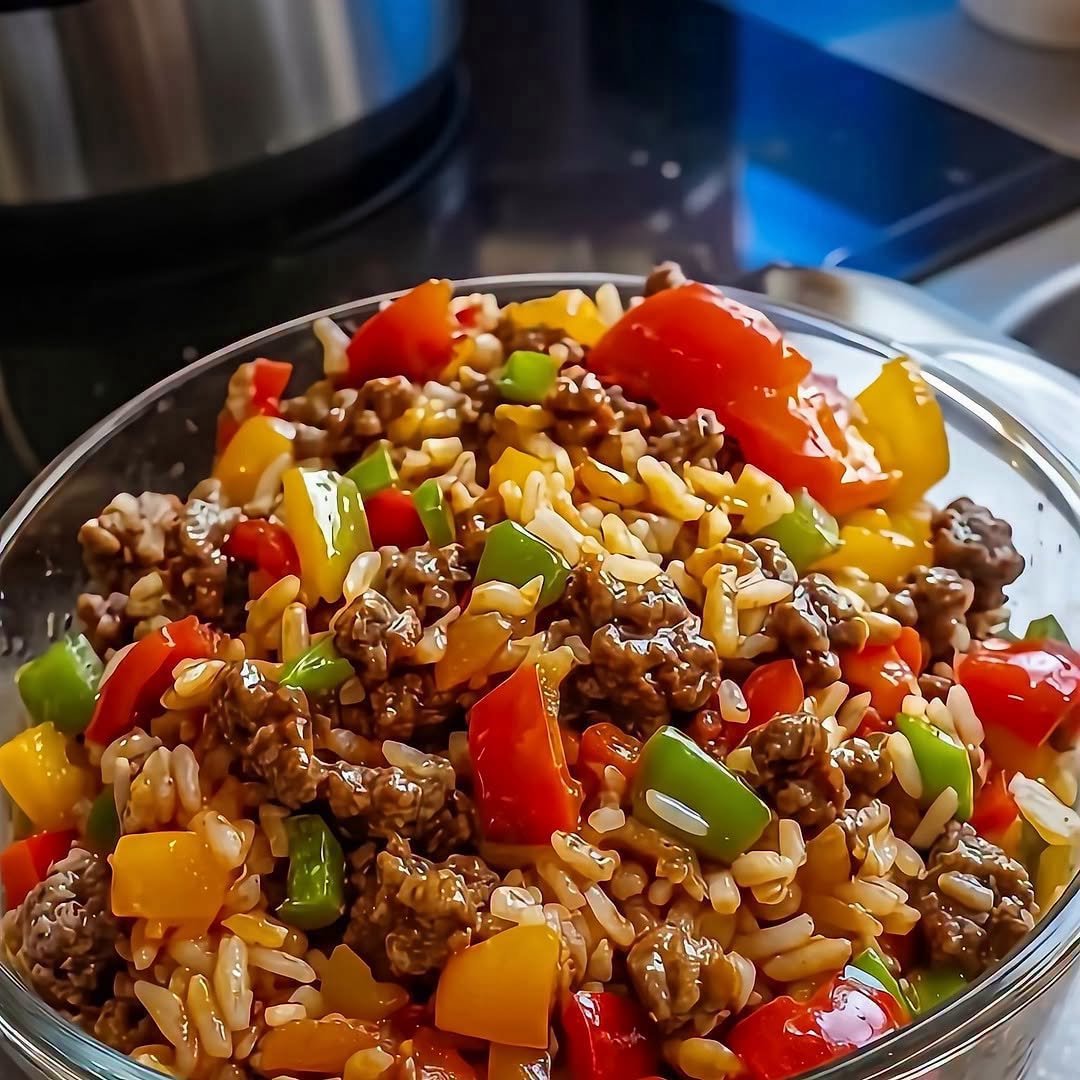
Beef and Pepper Rice Bowl is a delicious, savory meal made with tender strips of beef, colorful bell peppers, onions, and fluffy rice tossed with a rich garlic-soy sauce. It combines the flavors of a classic beef stir-fry with the comfort of a warm rice bowl, making it perfect for lunch, dinner, or weekly meal prep.
This easy homemade recipe delivers juicy beef, crisp-tender vegetables, and a flavorful sauce in every bite. You can customize it with your favorite vegetables, adjust the spice level, or make it higher in protein.
Recipe Details
-
Prep Time: 15 minutes
-
Cook Time: 25 minutes
-
Total Time: 40 minutes
-
Servings: 4
-
Difficulty: Easy
-
Cooking Method: Stovetop
-
Cuisine: Asian-inspired
-
Main Ingredients: Beef, bell peppers, rice, garlic, soy sauce
-
Best For: Family dinners, meal prep, quick lunches
Ingredients
For the beef and peppers
-
1 pound (450 g) beef sirloin or flank steak, thinly sliced
-
2 bell peppers, preferably one red and one green, thinly sliced
-
1 medium onion, thinly sliced
-
3 cloves garlic, minced
-
1 tablespoon freshly grated ginger, optional
-
2 tablespoons cooking oil, divided
-
2 tablespoons low-sodium soy sauce
-
1 tablespoon oyster sauce
-
1 tablespoon rice vinegar
-
1 teaspoon honey or brown sugar, optional
-
½ teaspoon black pepper
-
½ teaspoon paprika
-
¼ teaspoon red pepper flakes, optional
-
2 tablespoons water or beef broth
For the rice
-
1 cup uncooked long-grain white rice
-
2 cups water, or the amount recommended on the rice package
-
¼ teaspoon salt, optional
For the sauce thickener
-
1 teaspoon cornstarch
-
1 tablespoon cold water
Optional toppings
-
2 tablespoons sliced green onions
-
1 teaspoon sesame seeds
-
Fresh cilantro, chopped
-
Extra red pepper flakes
-
A few drops of sesame oil
Kitchen Equipment
-
Large skillet or wok
-
Medium saucepan with lid or rice cooker
-
Sharp knife and cutting board
-
Small bowl for mixing the sauce
-
Measuring cups and spoons
-
Tongs or a spatula
Detailed Step-by-Step Instructions
Step 1: Prepare the beef
Place the beef on a cutting board and slice it into thin strips against the grain. Cutting against the grain shortens the muscle fibers and helps the meat feel more tender when cooked.
Pat the beef dry with paper towels. This removes excess surface moisture and helps the beef brown instead of steaming.
Season the beef with black pepper and paprika.
If using flank steak, slicing it thinly is particularly important for a tender stir-fry.
Step 2: Rinse and cook the rice
Place the rice in a bowl or fine-mesh strainer and rinse it under cold water until the water becomes less cloudy.
Transfer the rice to a saucepan. Add the water and optional salt.
Bring to a boil, then reduce the heat to low and cover with a tight-fitting lid. Cook according to the package directions, generally around 15–18 minutes for long-grain white rice.
Once the rice is cooked, turn off the heat and allow it to rest, covered, for 5–10 minutes.
Fluff gently with a fork before serving.
Helpful tip: Avoid stirring the rice repeatedly during cooking, as this can make it sticky.
Step 3: Prepare the vegetables
Wash the bell peppers and remove their seeds and stems.
Slice the peppers into thin strips. Slice the onion and mince the garlic. If using fresh ginger, grate it finely.
Keep the vegetables ready beside the stove because stir-frying happens quickly.
Cutting the peppers into similar-sized strips helps them cook evenly while retaining some crunch.
Step 4: Prepare the beef sauce
In a small bowl, combine:
-
2 tablespoons low-sodium soy sauce
-
1 tablespoon oyster sauce
-
1 tablespoon rice vinegar
-
1 teaspoon honey or brown sugar, if desired
-
2 tablespoons water or beef broth
Stir until the ingredients are combined.
In a separate small bowl, mix the cornstarch with 1 tablespoon cold water until smooth. Keep this mixture ready for later.
The soy sauce provides saltiness, the oyster sauce adds savory depth, and the vinegar balances the richness of the beef.
Step 5: Sear the beef
Heat 1 tablespoon of cooking oil in a large skillet or wok over medium-high heat.
When the oil is hot, add the beef in a single layer. Work in batches if necessary to prevent overcrowding.
Cook for approximately 2–3 minutes per side, depending on the thickness of the strips, until browned and nearly cooked through.
Transfer the beef to a clean plate.
Do not worry if the beef is not completely finished at this stage; it will return to the pan later. Avoid overcooking it, as thin strips can become tough quickly.
Step 6: Cook the peppers and onions
Add the remaining tablespoon of oil to the same skillet if needed.
Add the sliced onion and bell peppers. Stir-fry for 3–5 minutes, stirring frequently.
The vegetables should soften slightly while retaining a little crunch.
Add the minced garlic and grated ginger. Cook for another 30–60 seconds until fragrant.
Avoid burning the garlic because it can make the sauce taste bitter.
Step 7: Combine the beef and vegetables
Return the seared beef to the skillet with the peppers and onions.
Pour in the prepared soy-based sauce. Toss everything together so the beef and vegetables are evenly coated.
Allow the mixture to simmer for 1–2 minutes.
Taste the sauce and adjust the seasoning if needed. Add a splash of water or beef broth if it becomes too concentrated.
Step 8: Thicken the sauce
Stir the cornstarch slurry again, then slowly pour it into the skillet while stirring continuously.
Cook for another 1–2 minutes until the sauce thickens and lightly coats the beef and peppers.
If the sauce becomes too thick, add a tablespoon of water at a time until the consistency is right.
The finished sauce should be glossy rather than pasty.
Step 9: Check doneness and seasoning
Make sure the beef is fully cooked to a safe temperature. For whole cuts of beef, the USDA recommends reaching 145°F (63°C), followed by a 3-minute rest; use a food thermometer to check.
Taste the sauce before adding extra salt because soy sauce and oyster sauce can already be quite salty.
For a spicier bowl, add extra red pepper flakes. For a slightly sweeter flavor, add a small amount of honey.
Step 10: Assemble the rice bowls
Divide the cooked rice among four serving bowls.
Spoon the beef and pepper mixture over each portion, distributing the beef, peppers, and onions evenly.
Drizzle any remaining sauce over the rice.
Finish with sliced green onions, sesame seeds, or chopped cilantro if desired.
Serve immediately while the rice is warm and the beef is juicy.
Taste and Texture
-
Beef: Savory, tender, and richly seasoned.
-
Bell peppers: Slightly sweet with a fresh, crisp-tender texture.
-
Onions: Soft, aromatic, and naturally sweet.
-
Rice: Fluffy and mild, balancing the bold sauce.
-
Sauce: Glossy, garlicky, salty-sweet, and full of umami flavor.
The combination creates a satisfying bowl with a balance of protein, carbohydrates, vegetables, and savory flavor.
High-Protein Beef and Pepper Rice Bowl
To increase the protein content:
-
Use 1¼ pounds of lean beef instead of 1 pound.
-
Divide the beef evenly between four servings.
-
Keep the rice portion moderate if you prefer more room for beef and vegetables.
-
Add steamed edamame or serve with a high-protein side if desired.
-
Choose lean sirloin and measure the cooking oil to control calories.
You can also replace part of the white rice with cauliflower rice, although this changes the texture and nutritional profile of the bowl.
Ingredient Substitutions
| Ingredient | Substitute |
|---|---|
| Beef sirloin | Flank steak, rump steak, or lean beef strips |
| White rice | Brown rice, jasmine rice, or basmati rice |
| Red and green peppers | Yellow or orange bell peppers |
| Oyster sauce | Vegetarian mushroom stir-fry sauce |
| Soy sauce | Gluten-free tamari |
| Rice vinegar | Apple cider vinegar in a smaller amount |
| Honey | Brown sugar or a suitable sugar-free alternative |
| Cornstarch | Arrowroot starch |
| Fresh ginger | A small amount of ground ginger |
| Cooking oil | Avocado oil or another suitable high-heat oil |
Delicious Variations
1. Spicy Beef and Pepper Rice Bowl
Add 1–2 teaspoons of chili garlic sauce or a little extra red pepper flakes. Finish with sliced green chilies for additional heat.
2. Teriyaki Beef Rice Bowl
Replace the original sauce with a teriyaki-style sauce made from soy sauce, ginger, garlic, a little honey, and water. Thicken lightly with cornstarch.
3. Garlic Butter Beef Rice Bowl
After cooking the beef and vegetables, stir in 1 tablespoon of butter and an additional minced garlic clove. This creates a richer, more buttery sauce.
4. Broccoli Beef and Pepper Bowl
Add 1–2 cups of small broccoli florets. Steam or blanch them briefly before adding them to the skillet so they become tender without overcooking the beef.
5. Mushroom Beef Rice Bowl
Add 1 cup of sliced mushrooms with the onions. Cook until their moisture evaporates and they begin to brown.
6. Korean-Inspired Beef Bowl
Add a little grated ginger, sesame oil, and gochujang to taste. Top with sesame seeds and green onions for a spicy, savory finish.
7. Low-Carb Beef and Pepper Bowl
Replace the rice with cauliflower rice or shredded cabbage. Use a low-sugar sauce and check the labels of all bottled condiments.
Dietary Adjustments
-
Gluten-free: Use tamari or certified gluten-free soy sauce and a gluten-free oyster sauce alternative.
-
Dairy-free: The standard recipe contains no dairy when prepared with the listed ingredients.
-
Lower sodium: Use reduced-sodium soy sauce, reduce the oyster sauce, and avoid adding extra salt.
-
Lower calorie: Choose lean beef, reduce the cooking oil, and use a moderate rice portion.
-
Higher protein: Increase the lean beef per serving or add edamame.
-
Lower carbohydrate: Replace the rice with cauliflower rice and use a low-sugar sauce.
-
No added sugar: Omit the honey or brown sugar and select sauces without added sugar where possible.
Meal Prep and Storage
Refrigerator
Store the beef and peppers separately from the rice in airtight containers when practical. Refrigerate leftovers within 2 hours of cooking and use within 3–4 days.
Freezer
Freeze the cooked beef and pepper mixture in airtight freezer-safe containers for approximately 2–3 months for best quality. Rice can also be frozen separately, although its texture may change slightly after thawing.
Reheating
Reheat the beef mixture in a skillet over medium heat with a tablespoon of water if needed. Stir until steaming hot throughout.
For microwave reheating, cover the food loosely and heat in short intervals, stirring between intervals. Leftovers should reach 165°F (74°C) when reheated.
Meal-Prep Method
For four prepared lunches:
-
Cook the rice and divide it among four containers.
-
Prepare the beef and pepper mixture.
-
Divide the beef and vegetables evenly.
-
Allow the food to cool promptly before refrigerating.
-
Add fresh toppings after reheating.
For the best texture, avoid overcooking the peppers during the initial preparation.
Approximate Nutrition Information
Estimated per serving when the recipe is divided into four bowls using white rice, lean beef, the listed sauces, and cooking oil.
| Nutrient | Approximate amount |
|---|---|
| Calories | 500–600 kcal |
| Protein | 32–40 g |
| Carbohydrates | 48–60 g |
| Fat | 14–22 g |
| Fiber | 3–5 g |
| Sugar | 4–9 g |
| Sodium | 600–1,000 mg |
Values vary depending on the cut of beef, the quantity of rice, the sauce brands, and how much oil is absorbed during cooking. These figures are estimates, not laboratory-tested nutrition values.
Weight Watchers-Friendly Tips
-
Choose lean sirloin or another lean cut of beef.
-
Measure the oil instead of pouring it directly into the pan.
-
Use low-sodium soy sauce.
-
Fill more of the bowl with bell peppers, onions, and other non-starchy vegetables.
-
Measure the cooked rice into individual servings.
-
Omit honey or sugar if you prefer a less sweet sauce.
-
Calculate WW Points using your current plan and the exact ingredients, especially the beef, oil, rice, and bottled sauces.
The exact Points value depends on your WW plan and ingredient choices, so it is best calculated from the specific version you prepare.
Frequently Asked Questions
1. What is the best beef for a rice bowl?
Sirloin and flank steak are excellent choices because they can be sliced thinly and cooked quickly. Rump steak is another option. For the most tender result, slice against the grain.
2. Can I use leftover cooked rice?
Yes. Cold, properly refrigerated leftover rice works very well. Add a little water when reheating if it has dried out, and ensure it is steaming hot throughout.
Cooked rice should be cooled quickly and refrigerated promptly because it can develop harmful bacteria if left at room temperature for too long.
3. Can I make this recipe without oyster sauce?
Yes. Use a vegetarian mushroom stir-fry sauce or add a little extra soy sauce with a splash of broth. The flavor will be slightly different, but the bowl will still be delicious.
4. Why is my beef tough?
The beef may have been sliced with the grain, cut too thickly, or cooked for too long. Slice thinly against the grain and sear over high heat in small batches.
5. How do I prevent watery vegetables?
Use a hot skillet and avoid overcrowding it. Cook the peppers in batches if necessary, and let excess moisture evaporate before adding the sauce.
6. Can I make this recipe ahead of time?
Yes. Cook the beef, vegetables, sauce, and rice ahead of time, then portion into containers. Refrigerate promptly and reheat thoroughly before serving.
7. Can I make it spicy?
Absolutely. Add chili flakes, fresh chilies, chili garlic sauce, or a little gochujang. Start with a small quantity and adjust to taste.
8. Can I use frozen bell peppers?
Yes, although they release more moisture and may be softer than fresh peppers. Add them to a hot skillet and cook until excess liquid evaporates.
9. Is this recipe suitable for a low-carb diet?
The original version contains a substantial amount of carbohydrates from the rice. Replace the rice with cauliflower rice and check the sauces for added sugar to create a lower-carb version.
10. What can I serve with a beef and pepper rice bowl?
The bowl is a complete meal on its own. You can also serve it with steamed broccoli, cucumber salad, sautéed mushrooms, or a light vegetable soup.
Troubleshooting Guide
| Problem | Possible cause | Solution |
|---|---|---|
| Beef is tough | Overcooking or slicing with the grain | Slice against the grain and cook quickly |
| Sauce is too salty | Too much soy or oyster sauce | Add water or unsalted broth |
| Sauce is too thin | Insufficient thickening | Add a little cornstarch slurry |
| Sauce is too thick | Too much cornstarch | Add water a tablespoon at a time |
| Peppers are too soft | Cooking for too long | Stir-fry briefly until crisp-tender |
| Rice is sticky | Too much surface starch or water | Rinse rice and follow package ratios |
| Beef does not brown | Pan is overcrowded or insufficiently hot | Sear in small batches |
| Bowl tastes bland | Insufficient seasoning or aromatics | Adjust garlic, ginger, pepper, and sauce |
Chef’s Tips for Restaurant-Style Results
-
Slice the beef evenly so it cooks at the same rate.
-
Pat the beef dry before searing.
-
Heat the skillet properly before adding the meat.
-
Cook the beef in batches rather than crowding the pan.
-
Add garlic and ginger after the firmer vegetables begin cooking to prevent burning.
-
Mix the cornstarch with cold water before adding it to the hot sauce.
-
Keep the peppers slightly crisp for a better contrast with the tender beef.
-
Taste the sauce before adding extra salt.
-
Use freshly cooked or properly stored rice for the best flavor and texture.
-
Add fresh green onions and sesame seeds just before serving for a professional finish.
Serving and Presentation Ideas
For a beautiful rice bowl, place a mound of fluffy rice on one side of the bowl and arrange the beef and colorful peppers beside it. Spoon the glossy sauce over the beef, then garnish with sliced green onions and sesame seeds.
For a balanced meal, aim to include a generous portion of vegetables alongside the beef and rice.
Serve with cucumber salad, steamed broccoli, or sautéed mushrooms if you want additional vegetables.
Final Recipe Notes
Beef and Pepper Rice Bowl is a practical, flavorful dinner that combines tender beef, colorful vegetables, and a savory garlic-soy sauce over fluffy rice. It is easy enough for busy weeknights but versatile enough to customize for meal prep, higher-protein meals, or lower-carb preferences.