
1. Recipe Overview
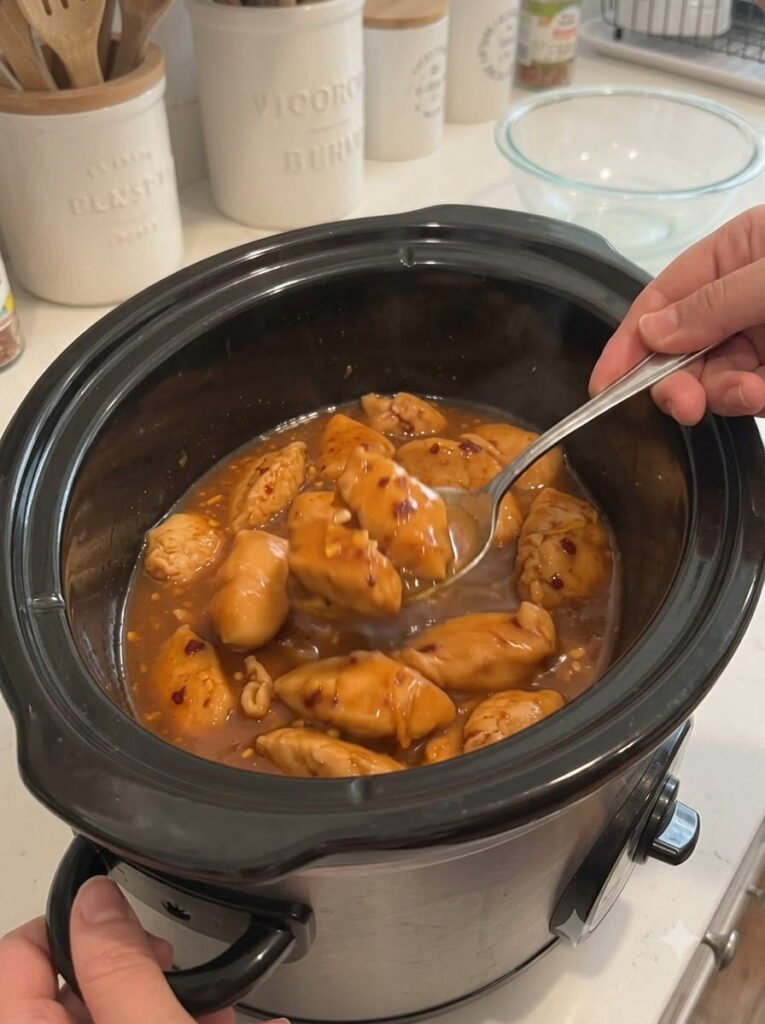
Slow Cooker Orange Chicken is a delicious homemade version of the popular Chinese-American takeout favorite. It features tender pieces of chicken cooked in a sweet, tangy, savory orange sauce made with fresh orange juice, orange zest, garlic, ginger, soy sauce, honey, and a touch of vinegar.
The slow cooker makes the chicken tender while allowing the flavors to blend beautifully. At the end, the sauce is thickened until glossy, creating a rich coating that clings to every piece of chicken.
This recipe is perfect for busy weeknights, family dinners, meal preparation, and anyone who enjoys sweet-and-savory Asian-inspired meals without ordering takeout.
Recipe Details
- Prep Time: 15 minutes
- Cook Time: 3–4 hours on LOW or 1½–2½ hours on HIGH
- Sauce Thickening Time: 5–10 minutes
- Total Time: Approximately 3 hours 20 minutes to 4 hours 25 minutes on LOW
- Servings: 6
- Difficulty: Easy
- Cooking Method: Slow cooker
- Cuisine: Chinese-American-inspired
- Flavor Profile: Sweet, tangy, citrusy, savory, and mildly spicy
- Texture: Tender chicken coated in a thick, glossy orange sauce
2. Ingredients
For the Chicken
- 2 pounds (900 g) boneless, skinless chicken thighs or chicken breasts
- 1 tablespoon olive oil, optional
- ½ teaspoon salt, or to taste
- ½ teaspoon freshly ground black pepper
- 1 teaspoon garlic powder
- ½ teaspoon ground ginger
- 2 tablespoons cornstarch, for optional pre-cooking coating
Best choice: Boneless, skinless chicken thighs generally remain juicier during slow cooking. Chicken breasts also work well, but they can dry out if cooked for too long.
For the Homemade Orange Sauce
- 1 cup freshly squeezed orange juice
- 1 tablespoon finely grated orange zest
- ⅓ cup low-sodium soy sauce
- ¼ cup honey or brown sugar
- 3 tablespoons rice vinegar or apple cider vinegar
- 3 cloves garlic, finely minced
- 1 tablespoon freshly grated ginger
- 2 tablespoons tomato ketchup, optional
- 1 tablespoon hoisin sauce, optional
- ½ teaspoon red pepper flakes, optional
- ¼ teaspoon black pepper
- ½ cup chicken broth, preferably low-sodium
For Thickening the Sauce
- 2 tablespoons cornstarch
- 2 tablespoons cold water
Optional Garnishes
- 2 tablespoons sliced green onions
- 1 teaspoon sesame seeds
- A little extra orange zest
- Thinly sliced fresh red chili
The garnishes are optional but add freshness, color, and a restaurant-style finish.
3. Why This Recipe Works
This recipe combines several ingredients that balance one another.
Orange juice: Provides the bright citrus flavor and natural sweetness.
Orange zest: Adds concentrated orange aroma that makes the sauce taste more vibrant.
Soy sauce: Provides savory depth and balances the sweetness.
Honey or brown sugar: Creates a rounded sweetness and helps the sauce develop a glossy finish.
Garlic and ginger: Add warmth and savory flavor.
Rice vinegar: Balances the sweet orange flavor with acidity.
Cornstarch: Thickens the sauce so it coats the chicken rather than remaining watery.
Together, these ingredients create a sauce that is sweet, tangy, aromatic, and savory.
4. Step-by-Step Instructions
Step 1: Prepare the Chicken
Pat the chicken dry with paper towels.
Cut the chicken into approximately 1½-inch pieces if you prefer bite-sized orange chicken. You can also leave the pieces larger and shred or slice the chicken after cooking.
Place the chicken in a bowl and season with salt, black pepper, garlic powder, and ground ginger.
Toss gently to distribute the seasonings evenly.
If you want to brown the chicken before slow cooking, heat the olive oil in a skillet over medium-high heat and brown the chicken in batches for approximately 2 minutes per side.
Browning is optional. It adds extra flavor, but the chicken can be cooked directly in the slow cooker.
Food safety tip: Wash your hands, utensils, and surfaces after handling raw chicken.
Step 2: Prepare the Fresh Orange Juice
Squeeze enough oranges to obtain 1 cup of juice.
Strain out any seeds. A small amount of pulp is fine.
Finely grate approximately 1 tablespoon of orange zest, taking care to remove only the orange-colored outer layer. The white pith underneath can taste bitter.
Fresh orange juice is recommended for the brightest flavor, but a good-quality, unsweetened bottled orange juice can also work.
Step 3: Make the Orange Sauce
In a medium bowl, combine:
- Orange juice
- Orange zest
- Soy sauce
- Honey or brown sugar
- Rice vinegar
- Minced garlic
- Freshly grated ginger
- Tomato ketchup, if using
- Hoisin sauce, if using
- Red pepper flakes, if using
- Black pepper
- Chicken broth
Whisk until the honey or sugar is dissolved and the ingredients are evenly combined.
Taste the sauce before adding it to the slow cooker.
If you prefer a sweeter sauce, add a little more honey. If you prefer a tangier sauce, add a small amount of vinegar.
Keep in mind that the sauce will concentrate somewhat during cooking.
Step 4: Arrange the Chicken in the Slow Cooker
Place the seasoned chicken in the slow cooker.
Arrange the pieces in a relatively even layer when possible.
Pour the prepared orange sauce over the chicken, making sure the pieces are coated.
Use a spoon to distribute the garlic and ginger throughout the sauce.
Do not worry if the chicken is not completely submerged. It will release moisture as it cooks.
Step 5: Slow Cook the Chicken
Cover the slow cooker with its lid.
Choose your preferred setting:
LOW: Cook for approximately 3–4 hours.
HIGH: Cook for approximately 1½–2½ hours.
Cooking time varies according to the size of the chicken pieces, the slow cooker, and whether the chicken starts chilled or at room temperature.
Chicken breasts may finish sooner than thick chicken thighs or large pieces, so check early rather than automatically using the longest cooking time.
The chicken is ready when it is tender and the thickest pieces reach an internal temperature of 165°F (74°C).
Use a food thermometer to check doneness. Avoid repeatedly lifting the slow cooker lid because this releases heat and can extend cooking time.
Step 6: Remove the Chicken if Necessary
Once the chicken reaches a safe temperature, check its texture.
If you cut the chicken into small pieces, you can leave it in the slow cooker while preparing the thickener, provided you can stir the sauce without breaking up the meat.
For especially tender chicken breasts, transfer the pieces temporarily to a clean plate to prevent them from overcooking while you thicken the sauce.
If you prefer shredded orange chicken, use two forks to shred the cooked chicken, then return it to the sauce after thickening.
Step 7: Prepare the Cornstarch Slurry
In a small bowl, combine:
- 2 tablespoons cornstarch
- 2 tablespoons cold water
Whisk until completely smooth.
Do not add dry cornstarch directly to the hot sauce because it may form lumps.
Step 8: Thicken the Orange Sauce
For the best control over consistency, transfer the sauce to a saucepan.
Bring it to a gentle simmer over medium heat.
Slowly whisk in the cornstarch slurry. Continue stirring for approximately 2–4 minutes, until the sauce becomes glossy and thick enough to coat the back of a spoon.
If you prefer to thicken the sauce directly in the slow cooker, switch it to HIGH, stir in the slurry, and cook uncovered for approximately 15–25 minutes, stirring occasionally if practical.
The slow cooker method may take longer to thicken the sauce, and the lid should remain off during this stage.
Return the chicken to the thickened sauce if you removed it earlier.
Step 9: Adjust the Flavor
Taste the finished sauce and adjust it as needed.
- Too sweet: Add a small splash of rice vinegar.
- Too tangy: Add a little honey.
- Too salty: Add a little orange juice or unsalted broth.
- Too thick: Stir in warm water or broth, one tablespoon at a time.
- Too thin: Simmer a little longer or add a small additional amount of cornstarch slurry.
- Not orange enough: Add a little fresh orange zest.
- Not spicy enough: Add red pepper flakes or a small amount of chili sauce.
Make adjustments gradually because small amounts can significantly change the flavor.
Step 10: Finish and Serve
Spoon the chicken and orange sauce over cooked rice or noodles.
Garnish with sliced green onions, sesame seeds, or a little fresh orange zest.
Serve immediately while the chicken is hot and the sauce is glossy.
The finished dish should have tender chicken pieces coated in a sweet, tangy, citrus-forward sauce with a balanced savory finish.
5. How to Make the Sauce Taste Like Restaurant-Style Orange Chicken
Restaurant-style orange chicken often has a stronger sweet-and-sour flavor, a pronounced orange aroma, and a thick coating sauce.
For a more restaurant-inspired version:
- Use fresh orange zest for a stronger citrus aroma.
- Add 1 tablespoon of hoisin sauce for extra savory depth.
- Include 2 tablespoons of ketchup for color and a slightly tangy flavor.
- Use honey or brown sugar to balance the acidity.
- Thicken the sauce separately for better control.
- Finish with a little extra orange zest immediately before serving.
For a more traditional takeout-style texture, some recipes use battered and fried chicken pieces. This slow cooker version is softer and more tender, with a sauce-coated texture rather than a crispy exterior.
6. Tips for Perfect Slow Cooker Orange Chicken
Use Chicken Thighs for Extra Juiciness
Chicken thighs are generally more forgiving during slow cooking. Their higher fat content helps them remain juicy.
Avoid Overcooking Chicken Breasts
Chicken breasts can become dry if left in the slow cooker for too long.
Check the internal temperature and remove the chicken when it reaches 165°F (74°C).
Do Not Skip the Orange Zest
Orange juice supplies sweetness and acidity, while orange zest provides concentrated citrus aroma.
Use the zest of a clean orange and avoid the bitter white pith.
Use Low-Sodium Soy Sauce
This allows you to control the saltiness more easily.
Regular soy sauce can make the finished sauce overly salty as it reduces.
Thicken the Sauce at the End
Adding the cornstarch slurry near the end helps you control the final texture and prevents the sauce from becoming too thick during cooking.
Balance the Sweetness
Orange juice and honey both contribute sweetness. Start with the recommended amount, then adjust after cooking.
Avoid Excessive Liquid
Chicken releases moisture as it cooks. Too much broth can leave the sauce thin and dilute the orange flavor.
Do Not Add Cornstarch Dry
Always mix cornstarch with cold water before adding it to hot liquid.
Keep the Sauce Glossy
Once the sauce thickens, avoid boiling it aggressively for an extended period. A gentle simmer is enough.
7. Delicious Recipe Variations
Variation 1: Honey Orange Chicken
For a sweeter, honey-forward version, use:
- 1 cup orange juice
- ¼ cup honey
- ⅓ cup low-sodium soy sauce
- 3 tablespoons rice vinegar
- 3 cloves garlic
- 1 tablespoon ginger
- 1 tablespoon orange zest
Reduce or omit the brown sugar if your original sauce includes it.
Cook according to the main recipe and thicken before serving.
Flavor: Sweet, citrusy, and gently tangy.
Variation 2: Spicy Orange Chicken
Add the following to the sauce:
- 1–2 teaspoons chili garlic sauce
- ½ teaspoon red pepper flakes
- ¼ teaspoon cayenne pepper, optional
Start with a small amount of chili and increase it after tasting.
Flavor: Sweet orange, savory garlic, and a warming chili finish.
Variation 3: Garlic Ginger Orange Chicken
For a more aromatic version, increase the garlic to 5 cloves and the ginger to 1½ tablespoons.
Use a little less honey if you prefer a savory balance.
Flavor: Fragrant, savory, and citrusy.
Variation 4: Orange Sesame Chicken
Add 1 tablespoon of toasted sesame oil to the sauce after cooking.
Finish with toasted sesame seeds and sliced green onions.
Sesame oil has a strong flavor, so a small amount is usually sufficient.
Flavor: Nutty, aromatic, sweet, and savory.
Variation 5: Orange Chicken with Vegetables
Add vegetables for a more complete one-pot meal.
Good options include:
- 1 sliced red bell pepper
- 1 sliced yellow bell pepper
- 1 cup broccoli florets
- 1 medium carrot, thinly sliced
For the best texture, add quick-cooking vegetables such as broccoli during the final 30–45 minutes on LOW or 15–25 minutes on HIGH, depending on the slow cooker.
Bell peppers can soften considerably if cooked for the entire cooking time, so add them later if you prefer them to retain some texture.
Check that the chicken reaches 165°F (74°C).
Variation 6: Orange Pineapple Chicken
Add ½ cup drained pineapple chunks during the final 30–45 minutes of cooking.
For a stronger tropical flavor, replace a small portion of the orange juice with unsweetened pineapple juice.
Because pineapple adds sweetness, taste the sauce before adding extra honey.
Variation 7: Low-Sugar Orange Chicken
Use:
- Unsweetened orange juice
- A reduced-sugar or no-added-sugar barbecue-style alternative only if it suits the flavor you want, or simply omit the ketchup
- Reduced-sodium soy sauce
- Rice vinegar
- Garlic and ginger
- A small amount of a suitable non-sugar sweetener, if desired
Reduce or omit the honey and brown sugar.
The sauce will be less sweet than conventional orange chicken, and the natural sugar in the orange juice will remain.
Variation 8: Orange Chicken with Cashews
Add ½ cup roasted, unsalted cashews immediately before serving.
This creates a crunchy contrast with the tender chicken and soft sauce.
Do not add the cashews at the beginning, as they will soften during slow cooking.
8. Ingredient Substitutions
| Original Ingredient | Substitute | Notes |
|---|---|---|
| Chicken thighs | Chicken breasts | Leaner, but can dry out more easily |
| Fresh orange juice | Unsweetened bottled orange juice | Convenient alternative |
| Orange zest | A small amount of orange extract | Use sparingly; the flavor is more concentrated |
| Soy sauce | Tamari | Choose gluten-free tamari when needed |
| Honey | Brown sugar or maple syrup | Changes the flavor slightly |
| Rice vinegar | Apple cider vinegar | Use a similar amount |
| Fresh ginger | Ground ginger | Use about ¼–½ teaspoon initially |
| Fresh garlic | Garlic powder | Use about 1 teaspoon, adjusting to taste |
| Cornstarch | Arrowroot starch | Follow package guidance and avoid prolonged boiling |
| Chicken broth | Water or unsalted broth | Water creates a lighter sauce |
| Hoisin sauce | Omit or use a small amount of suitable alternative sauce | Hoisin is optional |
9. Dietary Adjustments
Gluten-Free Orange Chicken
Use gluten-free tamari instead of regular soy sauce, and verify that the broth and other packaged ingredients are gluten-free.
Cornstarch is naturally gluten-free, provided it has not been cross-contaminated.
Dairy-Free Orange Chicken
The main recipe is naturally dairy-free when all packaged ingredients are free from dairy.
Lower-Sugar Orange Chicken
Reduce the honey or brown sugar and omit optional ketchup if desired.
Choose unsweetened orange juice, but remember that orange juice still contains natural sugars.
Lower-Sodium Orange Chicken
Use reduced-sodium soy sauce and unsalted broth.
Avoid adding extra salt until you have tasted the finished sauce.
Higher-Protein Meal
Chicken provides substantial protein. Serve the dish with steamed broccoli, green beans, or another vegetable alongside your preferred grain.
Lower-Carbohydrate Version
Replace the rice with cauliflower rice and use a smaller amount of orange juice and honey.
Keep in mind that even unsweetened orange juice contains carbohydrates. For a lower-carbohydrate sauce, emphasize orange zest, ginger, vinegar, garlic, and a suitable low-carbohydrate sweetener.
10. What to Serve with Slow Cooker Orange Chicken
Rice Options
- Steamed jasmine rice
- Brown rice
- Basmati rice
- Coconut rice
- Cauliflower rice
Jasmine rice is especially suitable because its mild flavor complements the citrus sauce.
Noodle Options
- Rice noodles
- Egg noodles
- Lo mein-style noodles
- Stir-fried noodles
If using noodles, prepare them separately and spoon the chicken and sauce over them just before serving.
Vegetable Sides
- Steamed broccoli
- Stir-fried green beans
- Roasted carrots
- Sautéed cabbage
- Stir-fried bell peppers
- Steamed snap peas
Garnishes
- Sesame seeds
- Green onions
- Orange zest
- Fresh cilantro
- Thinly sliced red chili
Best complete meal: Serve the orange chicken over steamed rice with broccoli and a sprinkle of sesame seeds.
11. Make-Ahead Instructions
You can prepare several components in advance to make dinner easier.
Prepare the Sauce Ahead
- Whisk together the orange juice, zest, soy sauce, honey, vinegar, garlic, ginger, and seasonings.
- Store the sauce in a covered container in the refrigerator.
- Use it within 24–48 hours for best flavor.
Keep the raw chicken separate from the prepared sauce until cooking.
Prepare the Chicken Ahead
Cut the chicken into pieces and refrigerate it in a covered container.
For best quality and food safety, use fresh raw poultry within 1–2 days of refrigeration at 40°F (4°C) or below, or freeze it if it will not be used in that period.
Can You Cook the Whole Recipe Ahead?
Yes. Cook the chicken completely, cool it promptly, and refrigerate it with the sauce.
Reheat thoroughly before serving, bringing the center to 165°F (74°C).
12. Storage and Reheating
Refrigerator Storage
Transfer leftover chicken and sauce into shallow, airtight containers.
Refrigerate within 2 hours of cooking, or within 1 hour if the surrounding temperature is above 90°F (32°C).
Keep the refrigerator at 40°F (4°C) or below and consume the leftovers within 3–4 days.
Freezing Instructions
- Allow the cooked chicken to cool slightly.
- Divide it into meal-sized portions.
- Add enough sauce to keep the chicken moist.
- Place in freezer-safe containers.
- Seal tightly and label with the date.
For best quality, use within approximately 2–3 months.
Thaw overnight in the refrigerator before reheating.
Reheating on the Stovetop
- Place the chicken and sauce in a saucepan.
- Add a tablespoon or two of water or broth if the sauce is too thick.
- Heat over medium-low heat, stirring gently.
- Continue until the chicken reaches 165°F (74°C).
Avoid vigorous stirring, which can break the chicken into small pieces.
Reheating in the Microwave
- Place a serving in a microwave-safe dish.
- Cover loosely.
- Heat in 30–60 second intervals.
- Stir or turn the chicken between intervals if possible.
- Continue until heated thoroughly to 165°F (74°C).
Can You Freeze the Sauce Separately?
Yes. The orange sauce can be frozen separately, although its consistency may change slightly after thawing.
Reheat it gently and whisk until smooth. If needed, add a little water or broth to adjust the consistency.
13. Frequently Asked Questions
Q1. Can I use chicken breasts instead of thighs?
Yes. Chicken breasts are leaner and work well in this recipe.
Because they can dry out more quickly, cut them into evenly sized pieces and check the internal temperature early. Remove them from the heat when they reach 165°F (74°C).
Q2. Can I use frozen chicken in the slow cooker?
No. Frozen chicken should be thawed safely in the refrigerator before slow cooking. Starting with frozen poultry can allow it to remain at an unsafe temperature for too long.
Q3. Why is my orange sauce too watery?
Chicken releases moisture during cooking, and the orange juice and broth add liquid.
Remove the chicken when it is cooked, then simmer the sauce separately and thicken it with a cornstarch slurry.
Q4. Why does my orange sauce taste bitter?
Too much orange zest, especially the white pith, can create bitterness. Some orange varieties also have a more bitter flavor.
Use only the orange-colored outer zest and adjust the balance with a little honey or vinegar if necessary.
Q5. Can I make this recipe without cornstarch?
Yes. Simmer the sauce uncovered in a saucepan until it reduces and thickens naturally.
This method may take longer but avoids the need for a separate thickener.
Q6. Can I use bottled orange juice?
Yes. Unsweetened orange juice works well.
If using juice made from concentrate or a sweetened product, taste the sauce before adding the full amount of honey.
Q7. Can I make orange chicken without honey or brown sugar?
Yes. The sauce will be less sweet, but orange juice still contributes natural sweetness.
You can use a suitable non-sugar sweetener if desired.
Q8. How do I make the sauce spicy?
Add chili garlic sauce, red pepper flakes, or a little cayenne pepper.
Begin with a small quantity and adjust after cooking.
Q9. Can I add broccoli?
Yes. Add broccoli toward the end of cooking to help it retain its color and texture.
If you prefer very tender broccoli, you can add it earlier, but it may become quite soft.
Q10. Can I shred the chicken instead of cutting it into pieces?
Yes. Cook the chicken until it reaches a safe temperature and is tender, shred it with two forks, and return it to the thickened sauce.
This produces a shredded orange chicken suitable for rice bowls, wraps, and lettuce cups.
Q11. Is this the same as crispy Chinese takeout orange chicken?
Not exactly. Traditional takeout-style orange chicken is often battered and fried before being tossed in sauce.
This slow cooker version has tender chicken and a soft, glossy sauce coating rather than a crispy crust.
Q12. Can I double the recipe?
Yes, provided your slow cooker has enough capacity and the ingredients are not packed too tightly.
Do not exceed the manufacturer’s recommended fill level. Cooking time may change, so check the chicken’s internal temperature and texture.
Q13. Can I prepare this without soy sauce?
Yes. You can use coconut aminos or another suitable savory alternative, but the flavor and saltiness will differ.
Taste the sauce before adding extra salt.
Q14. What should I do if the sauce is too salty?
Add a little more orange juice or unsalted broth, then thicken the sauce again if necessary.
Avoid adding more soy sauce or salty seasonings.
Q15. Can I use this recipe for meal prep?
Absolutely. Divide the cooked chicken, sauce, rice, and vegetables into individual containers.
Refrigerate the portions promptly and consume within 3–4 days. Store the rice separately if you prefer to control the texture.
14. Troubleshooting Guide
| Problem | Likely Cause | Solution |
|---|---|---|
| Chicken is dry | It cooked too long, especially if using breast meat | Check the temperature early and remove when done |
| Sauce is watery | Too much liquid or moisture released by the chicken | Reduce the sauce separately |
| Sauce is bitter | Too much zest or white pith | Use less zest and adjust the flavor gently |
| Sauce is too sweet | Too much honey or sweetened juice | Add a small splash of vinegar |
| Sauce is too sour | Too much vinegar | Add a little honey or orange juice |
| Sauce is too salty | Soy sauce or broth contained too much sodium | Add unsalted broth or orange juice |
| Sauce is lumpy | Cornstarch was not mixed with cold water first | Whisk the slurry separately before adding |
| Sauce is too thick | Too much cornstarch or excessive reduction | Add warm water or broth gradually |
| Chicken is not tender | Pieces may be too large or cooking time too short | Continue cooking while checking temperature and texture |
| Orange flavor is weak | Not enough zest or juice | Add a little fresh zest at the end |
15. Approximate Nutrition Information
The following estimates are for one serving when the recipe is divided into six portions. Values vary depending on the chicken cut, type of sweetener, soy sauce, and amount of sauce consumed.
| Nutrient | Approximate Amount Per Serving |
|---|---|
| Calories | 300–400 |
| Protein | 35–45 g |
| Carbohydrates | 20–30 g |
| Fat | 7–15 g |
| Fiber | 0–1 g |
| Sugar | 15–23 g |
| Sodium | 600–1,000 mg |
These estimates do not include rice, noodles, or other side dishes.
To reduce calories and carbohydrates, use less honey and serve with vegetables or cauliflower rice. To reduce sodium, use reduced-sodium soy sauce and unsalted broth.
16. Chef’s Tips for the Best Results
- Use fresh orange zest for the strongest citrus aroma.
- Choose chicken thighs if you want a more forgiving, juicy result.
- Cut the chicken into evenly sized pieces so they cook consistently.
- Use reduced-sodium soy sauce to maintain better control over seasoning.
- Add the cornstarch slurry only after the chicken is cooked.
- Thicken the sauce separately if you want a glossy, restaurant-style finish.
- Do not overcook chicken breasts.
- Add broccoli and other quick-cooking vegetables toward the end.
- Finish with fresh green onions and sesame seeds for color and texture.
- Taste the sauce before serving and adjust the sweet, salty, and tangy elements.
- Serve immediately after thickening for the best sauce consistency.
17. Serving and Presentation Ideas
For a classic presentation, spoon steamed rice into a bowl and arrange the orange chicken on top.
Pour extra sauce over the chicken, then garnish with sesame seeds and thinly sliced green onions.
For a meal-prep bowl, divide rice, orange chicken, and steamed broccoli between containers.
For a lighter option, serve the chicken with cauliflower rice and stir-fried vegetables.
For a family-style dinner, place the chicken in a serving dish, pour the glossy orange sauce over it, and garnish with fresh orange zest.
18. Final Recipe Summary
Slow Cooker Orange Chicken is a flavorful homemade takeout-inspired meal featuring tender chicken cooked in a sweet, tangy orange sauce with garlic, ginger, soy sauce, and fresh citrus.
The slow cooker makes the chicken tender, while a simple cornstarch slurry creates a thick, glossy sauce that coats every piece.
Best cooking setting: LOW for approximately 3–4 hours, checking for doneness early as needed.
Best chicken choice: Boneless, skinless chicken thighs for a juicy result.
Best flavor tip: Use fresh orange zest and balance the sweetness with a little rice vinegar.
Best serving suggestion: Serve over steamed rice with broccoli and finish with sesame seeds and sliced green onions.