
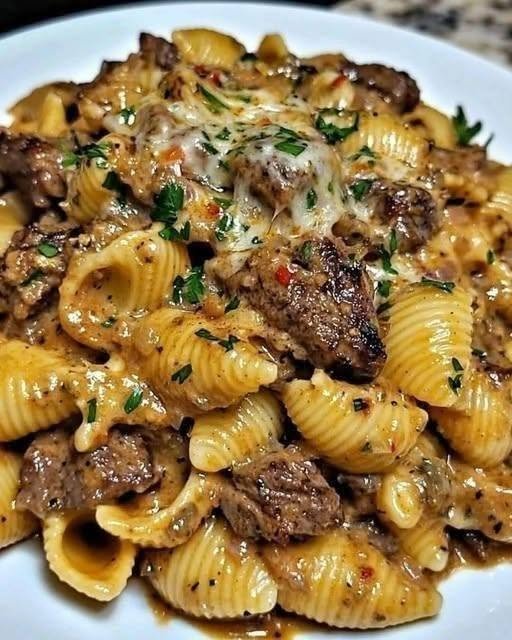
1. Ingredients
These quantities are designed to produce a creamy, glossy sauce with plenty of beef, pasta, and melted cheese.
For the beef
500 g (1.1 lb) beef steak, sirloin, ribeye, or tenderloin, cut into bite-sized cubes
1 tbsp olive oil
1 tsp paprika
½ tsp freshly ground black pepper
¾ tsp salt, or to taste
½ tsp garlic powder
½ tsp onion powder
¼ tsp chili flakes, optional
For the pasta
300 g (10.5 oz) medium pasta shells
Water for boiling
1–2 tsp salt for the pasta water
For the creamy garlic butter sauce
3 tbsp unsalted butter
5–6 garlic cloves, finely minced
1 small onion, finely chopped, optional
1 tbsp all-purpose flour, optional but helpful for a thicker sauce
1 cup (240 ml) heavy cream
¾ cup (180 ml) beef broth
½ tsp Italian seasoning
¼ tsp smoked paprika, optional
½ tsp black pepper
Salt to taste
½ tsp Worcestershire sauce, optional
¼ tsp chili flakes, optional
For the cheesy topping
1 cup (100–120 g) shredded mozzarella
¼ cup (25 g) freshly grated Parmesan
2 tbsp chopped fresh parsley
Extra black pepper, to finish
Cheese tip: Low-moisture mozzarella gives you the stretchy, melted cheese effect shown in the photo. Freshly grated Parmesan adds a deeper, savory flavor.
2. Step-by-step cooking instructions
Hungarian Beef Goulash : 12 Steps (with Pictures) – Instructables
Step 1: Season the beef
Pat the beef dry with paper towels. Toss it with olive oil, salt, pepper, paprika, garlic powder, onion powder, and optional chili flakes.
Let it sit for 5–10 minutes while you prepare the pasta water.
Sunny Foods Inc.
Step 2: Sear the beef
Heat a large skillet over medium-high to high heat. Add a little oil, then arrange the beef in a single layer.
Sear for approximately 2–3 minutes per side, depending on cube size and desired doneness. Work in batches if necessary so the beef browns rather than steams.
Transfer to a plate and keep the juices. Avoid overcooking, especially if using tender steak.
Cooked pasta in a sieve. Pasta for making fetapasta
Step 3: Cook the pasta
Bring a large pot of salted water to a boil. Add the pasta shells and cook according to the package instructions until just al dente.
Reserve about ½ cup of pasta water before draining. This starchy water helps the sauce cling to the shells.
Best Creamy Tuscan Chicken Recipe
Step 4: Make the garlic butter base
Reduce the skillet to medium heat. Add the butter and optional chopped onion. Cook for 2–3 minutes until softened.
Add the minced garlic and cook for 30–60 seconds, stirring constantly. Do not let the garlic turn dark brown, as it can become bitter.
If using flour, stir it in for about 1 minute.
Garlic Parmesan Sauce Recipe (Ready in 15 Minutes) | The Kitchn
Step 5: Prepare the creamy sauce
Slowly pour in the beef broth, scraping up the browned bits from the skillet. Add the cream, Italian seasoning, black pepper, optional smoked paprika, and Worcestershire sauce.
Simmer gently for 3–5 minutes, stirring occasionally, until slightly thickened. Avoid a vigorous boil, which can make the cream sauce separate.
Garlic Butter Steak Bites & Creamy Parmesan Shells
Step 6: Combine the pasta and beef
Add the drained shells to the skillet. Stir in the Parmesan and about half the mozzarella until the sauce coats the pasta.
Return the beef and its resting juices to the pan. Toss gently for 1–2 minutes.
If the sauce is too thick, add reserved pasta water 1 tablespoon at a time. Taste and adjust salt and pepper.
Creamy Beef and Shells – Easy One Pot Pasta Dinner
Step 7: Melt the cheese and serve
Sprinkle the remaining mozzarella over the top. Cover the skillet for 1–2 minutes on low heat until the cheese melts.
Alternatively, transfer the pasta to an oven-safe dish and broil briefly until the cheese is bubbly. Watch carefully to prevent burning.
Finish with fresh parsley and cracked black pepper. Serve immediately while the sauce is creamy and the cheese is stretchy.
3. Nutrition information
The following values are estimates for the recipe as written, divided into four servings. Actual nutrition depends on the cut of beef, cream, cheese, and portion size.
Estimated nutrition per serving
750–900 calories
Protein
35–45 g
Carbohydrates
55–70 g
Total fat
40–55 g
Fiber
2–4 g
Estimated per-serving ranges, not laboratory-tested values. Sodium varies substantially with broth, cheese, and added salt.
Nutrition highlights
Protein: Beef and cheese provide protein to support muscle maintenance and repair.
Iron and vitamin B12: Beef supplies heme iron and vitamin B12.
Calcium: Parmesan, mozzarella, and cream contribute calcium.
Carbohydrates: Pasta provides energy, with some fiber depending on the pasta type.
Saturated fat: Butter, heavy cream, and cheese make this a rich dish, so the portion size matters if you’re limiting saturated fat.
How to make it lighter
Replace half the heavy cream with milk, adding a little extra Parmesan for flavor.
Reduce the butter to 1–2 tablespoons.
Use a smaller quantity of mozzarella and Parmesan.
Replace some pasta with mushrooms, spinach, broccoli, or zucchini.
Choose lean sirloin instead of a fattier steak cut.
These changes can reduce calories and saturated fat while preserving the garlic and beef flavors.
4. Nut information and allergens
Does this recipe contain nuts?
No tree nuts or peanuts are required in the standard recipe. However, packaged ingredients and preparation environments can introduce allergens or cross-contact.
Ingredient
Allergen information
Beef
Naturally contains no common tree nuts, peanuts, dairy, or gluten
Pasta shells
Usually contain wheat and gluten; check the label
Butter and heavy cream
Contain milk
Mozzarella and Parmesan
Contain milk
Beef broth
Check for wheat, milk, soy, and other declared ingredients
Seasonings and sauces
Check labels for allergens and cross-contact warnings
If you have a nut allergy, check every packaged ingredient and the manufacturer’s cross-contact statement. For a severe allergy, use ingredients verified as suitable for your allergy and clean utensils, cookware, and preparation surfaces carefully.
Other dietary considerations:
Contains dairy.
Usually contains gluten.
Not vegetarian.
Not suitable for a vegan diet as written.
May be high in sodium and saturated fat.
5. Recipe troubleshooting and tips
For restaurant-style beef
Dry the meat thoroughly and use a very hot skillet. Crowding the pan causes the beef to release moisture and steam instead of developing a crust.
For a silky sauce
Keep the cream at a gentle simmer. Add the cheese gradually and stir until melted. Avoid adding cold cheese in one large pile.
For extra flavor
Use the browned bits left by the beef, freshly minced garlic, freshly grated Parmesan, and a small splash of Worcestershire sauce.
For reheating
Refrigerate leftovers promptly in a covered container and use within 3–4 days. Reheat gently with a splash of milk, broth, or water to loosen the sauce. Reheat leftovers to 74°C (165°F).
6. Questions and answers (Q&A)
Q1. Can I use ground beef instead of steak?
Yes. Use approximately 450–500 g ground beef. Brown it thoroughly, drain excess fat if needed, and proceed with the sauce. The result will resemble creamy beef pasta rather than steak bites.
Q2. Which pasta shape is best?
Medium shells are ideal because their curved shape catches the creamy sauce. Rotini, fusilli, cavatappi, and penne also work well.
Q3. Can I make this without heavy cream?
Yes. Use whole milk with 1 tablespoon of flour, or combine milk with a little cream cheese. The sauce will be less rich, and you may need to adjust the thickening time.
Q4. Why is my sauce watery?
The pasta may be under-drained, or the sauce may not have reduced enough. Simmer it gently for another 1–3 minutes before adding more cheese. Remember that the sauce thickens as it cools.
Q5. Why is my sauce grainy or oily?
Excessive heat can cause dairy and cheese to separate. Lower the heat before adding cheese, use freshly grated cheese, and stir gradually. A small splash of warm pasta water may help bring the sauce together.
Q6. Can I prepare it ahead of time?
Yes, but it tastes best freshly made. For meal prep, store the beef and sauce separately from the pasta when practical. Combine and reheat gently before serving.
Q7. Can I freeze this pasta?
You can freeze it in airtight portions for up to about 2 months for best quality. Cream-based sauces may separate slightly after thawing, so reheat gently and stir in a little milk or broth.
Q8. How do I know the beef is safely cooked?
For whole beef steaks, USDA guidance recommends reaching at least 63°C (145°F) and resting for 3 minutes. If you use ground beef, cook it to 71°C (160°F). Use a food thermometer rather than relying only on color.
Q9. What can I serve with this dish?
Garlic bread, a green salad, roasted broccoli, sautéed green beans, or steamed vegetables complement the rich sauce.
Q10. How can I make it spicier?
Add chili flakes, cayenne pepper, or a little hot sauce. Start with a small amount and adjust to taste.