
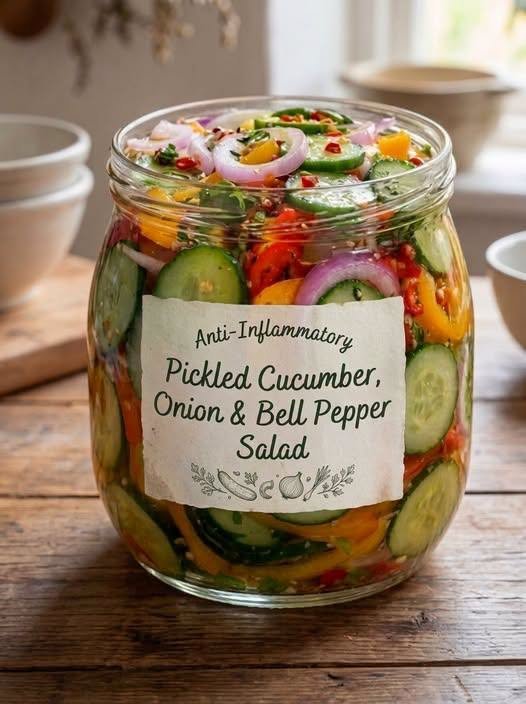
A refreshing, crunchy, tangy refrigerator salad made with fresh cucumbers, red onions, colorful bell peppers, garlic, herbs and an apple cider vinegar dressing.
1. Recipe Information
Preparation time: 20 minutes
Refrigeration time: 2–4 hours
Total time: 2 hours 20 minutes to 4 hours 20 minutes
Servings: 6–8
Difficulty: Easy
Cuisine: Healthy homemade
Diet: Vegan, vegetarian, gluten-free and naturally nut-free
Cooking method: No cooking required
2. Ingredients
Vegetables
3 medium cucumbers, thinly sliced
1 large red onion, sliced into rings
1 red bell pepper, thinly sliced
1 yellow bell pepper, thinly sliced
½ green bell pepper, thinly sliced
2 garlic cloves, finely chopped
2 tablespoons fresh parsley, chopped
1 tablespoon fresh dill, chopped
1 teaspoon fresh ginger, grated (optional)
Pickling dressing
½ cup apple cider vinegar
¼ cup white vinegar (5% acidity)
½ cup water
2 tablespoons extra virgin olive oil
1 teaspoon sea salt
½ teaspoon black pepper
1 tablespoon honey or maple syrup (optional)
½ teaspoon mustard seeds
¼ teaspoon turmeric powder
¼ teaspoon red chili flakes
Optional toppings
1 tablespoon pomegranate seeds
1 tablespoon pumpkin seeds
1 tablespoon chopped walnuts
1 tablespoon sliced almonds
1 teaspoon sesame seeds
Fresh mint leaves
3. Step-by-Step Preparation
Step 1: Wash and prepare vegetables
Wash cucumbers, bell peppers and fresh herbs thoroughly.
Slice cucumbers into thin rounds.
Cut red onion into thin rings.
Slice bell peppers into strips.
Chop parsley and dill.
Mince garlic and grate ginger if using.
Step 2: Prepare the dressing
In a mixing bowl, combine:
Apple cider vinegar
White vinegar
Water
Olive oil
Salt
Black pepper
Honey or maple syrup
Mustard seeds
Turmeric
Chili flakes
Whisk everything until well combined.
Step 3: Arrange the vegetables
Take a clean glass jar with an airtight lid.
Add a layer of cucumber slices.
Add red onion rings.
Add red, yellow and green bell peppers.
Sprinkle garlic, parsley and dill.
Repeat the layers until the jar is filled, leaving a little space at the top.
Step 4: Add the dressing
Pour the prepared dressing over the vegetables.
Gently press the vegetables down with a clean spoon.
Make sure they are coated with the dressing.
Close the jar securely.
Step 5: Refrigerate
Place the jar in the refrigerator.
Refrigerate for at least 2–4 hours.
For better flavor, refrigerate overnight.
Gently shake or turn the jar before serving.
Step 6: Serve
Serve chilled as a side salad with lunch or dinner. Add nuts or seeds immediately before serving to maintain their crunch.
4. Nutritional Information
Estimated nutrition per serving, assuming 8 servings:
Nutrient
Amount
Calories
65–85 kcal
Carbohydrates
9–11 g
Protein
1–2 g
Total fat
3–4 g
Dietary fiber
2–3 g
Sugar
5–7 g
Sodium
250–350 mg
Vitamin C
35–60 mg
Values are approximate and depend on the dressing consumed, ingredient quantities and serving size.
5. Anti-Inflammatory Nutritional Benefits
Cucumber
Contains water and vitamin K.
Provides small amounts of antioxidants.
Helps add hydration to meals.
Red onion
Contains quercetin and other flavonoids.
Provides antioxidant plant compounds.
Adds flavor without requiring excessive salt.
Bell peppers
Excellent source of vitamin C.
Contain carotenoids.
Support normal immune function and antioxidant protection.
Garlic
Contains sulfur-containing compounds.
Has been studied for antioxidant and anti-inflammatory effects.
Turmeric
Contains curcumin.
Curcumin has been studied for its potential anti-inflammatory properties.
Extra virgin olive oil
Provides monounsaturated fats.
Contains beneficial polyphenols.
Fits well into a Mediterranean-style eating pattern.
Fresh parsley and dill
Provide vitamin K and plant antioxidants.
Add flavor and freshness.
Note: This salad can contribute to a balanced anti-inflammatory dietary pattern, but it is not a treatment for inflammation or any medical condition.
6. Nut Information and Allergens
The basic recipe is naturally nut-free.
Nut
In original recipe?
Almonds
No
Walnuts
No
Cashews
No
Pistachios
No
Peanuts
No
Hazelnuts
No
Pecans
No
Macadamia nuts
No
Optional nuts and seeds
You can add the following for additional nutrients and crunch:
Addition
Suggested quantity
Nutritional benefit
Walnuts
1 tbsp
Plant-based omega-3 ALA
Almonds
1 tbsp
Vitamin E and healthy fats
Pumpkin seeds
1 tbsp
Magnesium and zinc
Sunflower seeds
1 tbsp
Vitamin E
Sesame seeds
1 tsp
Healthy fats and minerals
Important: Add nuts and seeds just before serving rather than during pickling.
For people with nut allergies, avoid these additions and check ingredient labels for cross-contamination. Sesame is a separate food allergen.
7. Storage and Food Safety
Store in a clean, airtight glass container.
Keep refrigerated at 4°C or below.
For best texture and quality, consume within 3–5 days.
Always use a clean spoon.
Keep vegetables coated with dressing.
Do not store this quick pickle at room temperature.
Discard if you notice mold, unusual odor or other signs of spoilage.
This is a refrigerator pickle, not a shelf-stable canned product.
8. Frequently Asked Questions (Q&A)
Q1. Can I eat this salad every day?
Yes. Most people can enjoy it regularly as part of a balanced diet. Monitor salt intake if you have been advised to restrict sodium.
Q2. Is this salad good for weight management?
It can be a helpful low-calorie side dish. Its vegetables provide fiber and volume, which may help with fullness.
Q3. Can I make it without honey or sugar?
Yes. Simply omit honey or maple syrup. The vinegar and vegetables provide plenty of flavor.
Q4. Can I use lemon juice instead of vinegar?
Yes, but the flavor will change. Lemon juice is not a validated substitute for vinegar in a preservation recipe.
Q5. Can I use regular cucumbers?
Absolutely. Regular cucumbers work well. Remove large seeds if they contain excessive water.
Q6. Is apple cider vinegar necessary?
No. You can use food-grade white vinegar with 5% acidity. The flavor will be slightly different.
Q7. Is this salad suitable for people with diabetes?
The basic recipe is relatively low in carbohydrates. Avoid added honey or sugar if appropriate for your meal plan, and consider individual carbohydrate requirements.
Q8. Is it gluten-free?
The basic ingredients are naturally gluten-free. Check packaged seasonings, mustard and vinegar labels.
Q9. Can I eat it immediately?
Yes, but refrigerating it for 2–4 hours allows the vegetables to absorb more flavor.
Q10. Does pickling reduce vitamins?
Some vitamins, particularly vitamin C, can decrease during storage. However, the vegetables retain fiber and many other nutrients.
Q11. Is this a probiotic salad?
No. Quick vinegar pickling does not automatically produce probiotics. Fermented vegetables prepared through controlled fermentation are different.
Q12. Can children eat this salad?
Yes, provided they enjoy the ingredients. Reduce chili flakes and salt for a milder version.
Q13. Can I use dried herbs instead of fresh herbs?
Yes. Use approximately 1 teaspoon dried parsley and ½ teaspoon dried dill.
Q14. Can I prepare this salad in advance?
Yes. Prepare it the night before and refrigerate. Add nuts and seeds just before serving.
Q15. Can I serve it with other meals?
Yes. It pairs well with grilled chicken, fish, lentils, chickpeas, rice, quinoa and whole-grain sandwiches.
9. Serving Suggestions
Enjoy this salad alongside:
Grilled chicken or fish.
Brown rice or quinoa.
Lentil and chickpea dishes.
Whole-grain sandwiches.
Grilled vegetables.
Homemade wraps.
Baked potatoes.