
Serves: 4–5
Prep: 20 minutes
Cook: 20–25 minutes
Total: ~45 minutes
Difficulty: Easy–medium
Ingredients
For the beef
- 500 g (1.1 lb) beef steak, preferably sirloin, ribeye, flank steak, or tenderloin
- 1 tbsp soy sauce
- 1 tsp cornstarch
- 1 tsp sesame oil
- ½ tsp black pepper
- ½ tsp garlic powder
- 1 tbsp neutral cooking oil
For the rice
- 4 cups cold cooked rice — about 600–650 g
- 1½ tbsp neutral oil
- 1 tbsp sesame oil
- 3 cloves garlic, finely minced
- 1 tsp fresh ginger, grated
- 1 medium carrot, diced or cut into thin strips
- ½ red bell pepper, diced
- ½ yellow or orange bell pepper, diced
- ½ green bell pepper, diced
- 1 cup small broccoli florets
- 1 cup chopped leafy greens — spinach, bok choy, kale, or similar
- 3–4 green onions, sliced
Sauce
Mix together:
- 3 tbsp regular soy sauce
- 1 tbsp oyster sauce
- 1 tbsp hoisin sauce
- 1 tsp rice vinegar
- 1 tsp honey or brown sugar
- ½ tsp toasted sesame oil
- ½ tsp chili flakes or chili sauce, optional
- ¼ tsp white pepper
- 2 tbsp water
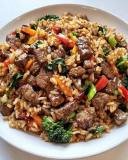
Optional: Add ½–1 tsp dark soy sauce if you want the deeper brown color seen in the photograph.
Best rice to use
Day-old long-grain white rice gives the closest fried-rice texture. Basmati or jasmine both work.
The important part is that the rice is cold and relatively dry. Fresh, steaming rice contains more surface moisture and can turn the dish soft or clumpy.
If you don’t have leftover rice:
- Cook the rice normally.
- Spread it in a thin layer on a large tray.
- Let the steam escape.
- Refrigerate until thoroughly chilled.
- Break up any clumps before frying.
Detailed Method
1. Cut and marinate the beef
Trim excess fat from the beef and cut it into small bite-size pieces or thin strips.
Put it in a bowl with:
- 1 tbsp soy sauce
- 1 tsp cornstarch
- 1 tsp sesame oil
- ½ tsp black pepper
- ½ tsp garlic powder
Mix thoroughly and let it stand for 10–15 minutes.
The small amount of cornstarch helps create that glossy, lightly browned coating around the beef.
2. Prepare everything before cooking
Fried rice cooks quickly, so have everything beside the stove.
Keep separate:
- cold rice
- marinated beef
- carrots
- peppers
- broccoli
- greens
- garlic and ginger
- sauce
- green onions
This is especially important because the cooking should happen over fairly high heat.
3. Sear the beef
Heat a large wok or very large skillet over high heat.
Add 1 tbsp neutral oil.
When very hot, add the beef in a single layer.
Don’t immediately stir it.
Let it sear for approximately 1–2 minutes, then toss/stir and cook the other side.
For bite-size steak pieces, cook until browned and appropriately cooked through. USDA guidance recommends whole beef steaks/roasts reach at least 145°F (63°C) followed by a 3-minute rest.
Transfer the beef to a plate.
Don’t overcrowd the pan. If necessary, cook the beef in two batches. Overcrowding causes steaming instead of browning.
4. Stir-fry the vegetables
Add another 1 tbsp oil if the pan is dry.
Add:
- Carrot
- Broccoli
- Bell peppers
Stir-fry for approximately 2–3 minutes.
You want the vegetables cooked but still slightly crisp.
Add the leafy greens and cook for another 30–60 seconds, just until wilted.
Remove the vegetables to the same plate as the beef if your pan is small.
5. Fry the garlic and ginger
Add another small drizzle of oil.
Add:
- minced garlic
- grated ginger
Stir constantly for about 20–30 seconds.
Don’t let the garlic become dark brown; burnt garlic will make the entire dish bitter.
6. Add the rice
Add the cold rice.
Use your spatula to break apart the clumps.
Spread the rice across the bottom of the pan and allow it to cook undisturbed for about 30–60 seconds before tossing.
Repeat this several times.
This creates the toasted, slightly crispy pieces visible in the photograph.
7. Add the sauce
Pour the prepared sauce around the hot sides of the wok/pan, rather than dumping it all in one spot.
Immediately toss the rice.
Continue stir-frying for approximately 2 minutes until:
- the rice is evenly colored
- the sauce has coated the grains
- excess moisture has evaporated
- the rice becomes slightly glossy
8. Return the beef and vegetables
Add the cooked beef and vegetables back into the pan.
Toss everything together over high heat for 2–3 minutes.
Taste.
Adjust with:
- soy sauce → more salt/umami
- rice vinegar → brightness
- honey → sweetness
- chili sauce → heat
- sesame oil → stronger sesame aroma
- white pepper → more savory warmth
9. Finish
Turn off the heat.
Add sliced green onions and, if desired:
- toasted sesame seeds
- fresh cilantro
- extra chili
- a tiny drizzle of sesame oil
Serve immediately.
To Make It Look More Like the Photograph
For the colorful appearance in your image, use:
- red bell pepper
- yellow/orange bell pepper
- green bell pepper
- carrots
- broccoli
- dark leafy greens
- plenty of browned beef
Cut the vegetables into relatively large pieces rather than tiny dice. This gives the finished dish the chunky, colorful appearance shown.
For especially attractive beef, sear it separately and don’t cook it together with the rice from the beginning.
Nut & Allergy Information
If by “nut info” you mean nuts/allergens, this recipe can easily be made nut-free.
Naturally nut-free ingredients
Beef, rice, broccoli, carrots, bell peppers, spinach/bok choy, garlic, ginger, soy sauce and rice vinegar are not tree nuts or peanuts.
Watch the sauces
Check the labels of:
- oyster sauce
- hoisin sauce
- chili sauce
- soy sauce
- sesame oil
Manufacturers can change formulations, and some products may carry allergen warnings.
Sesame
Sesame is not a tree nut or peanut, but it is a major food allergen in the United States. If someone has a sesame allergy, omit sesame oil and sesame seeds and check the labels of prepared sauces.
Peanut-free version
Use:
- neutral vegetable oil
- soy sauce
- oyster sauce/appropriate substitute
- no peanut oil
- no peanuts
- no peanut-containing chili sauce
For severe allergies, use products specifically labeled according to the person’s allergy requirements and avoid cross-contact.
Approximate Nutrition
For 1/5 of the recipe, assuming lean beef, 4 cups cooked white rice, the listed sauces and about 2½ tbsp cooking oil:
| Nutrient | Approximate amount |
|---|---|
| Calories | 550–650 kcal |
| Protein | 30–35 g |
| Carbohydrates | 65–75 g |
| Fat | 18–25 g |
| Fiber | 4–6 g |
| Sugar | 5–9 g |
| Sodium | ~1,200–1,700 mg |
These are estimates, not laboratory values. Actual nutrition varies substantially with the beef cut, rice quantity, oil, and particularly the sodium content of the sauces. USDA’s FoodData Central is a useful database for checking individual ingredient nutrition.
To reduce calories
- Use 350–400 g beef instead of 500 g.
- Use 1–1½ tbsp oil total.
- Increase broccoli, peppers and greens.
- Use 3 cups rice instead of 4.
To increase protein
- Increase beef to 600 g, or
- Add 2–3 eggs.
To reduce sodium
Use low-sodium soy sauce and reduce oyster/hoisin sauce. Add garlic, ginger, vinegar, chili and pepper for flavor instead of relying entirely on salt.
Recipe Q&A
Can I use brown rice?
Yes. Brown rice gives more chew and a nuttier flavor. It works particularly well if it is cooked, cooled completely and dried slightly before frying.
Can I use frozen vegetables?
Absolutely. Thaw and drain them first when possible. Add them toward the end so they don’t release excessive water into the rice.
Can I use chicken instead of beef?
Yes. Chicken thighs are particularly flavorful. Chicken needs to reach 165°F (74°C) internally.
Can I use ground beef?
Yes. Brown it thoroughly, break it into small pieces, drain excess fat if necessary, and cook ground beef to 160°F (71°C).
Why is my fried rice soggy?
Usually one or more of these:
- rice was freshly cooked and wet
- too much sauce
- pan wasn’t hot enough
- pan was overcrowded
- vegetables released too much water
- rice wasn’t fried long enough
Why does restaurant fried rice taste better?
Three major reasons are high heat, dry/cold rice and good browning. Restaurants also tend to use more oil and concentrated sauces.
Can I add egg?
Definitely. Push the rice to one side of the wok, add 1–2 beaten eggs to the empty side, scramble them, then mix them into the rice.
Can I make it spicy?
Yes. Add sambal, sriracha, chili crisp, red pepper flakes, fresh chilies or a small amount of cayenne.
Can I make it without oyster sauce?
Yes. Substitute approximately 1 tbsp mushroom stir-fry sauce for a vegetarian-friendly version, or use an additional 1 tbsp soy sauce plus ½–1 tsp hoisin sauce.
Can I make it gluten-free?
Use gluten-free tamari or certified gluten-free soy sauce and make sure the oyster/hoisin/chili sauces are gluten-free. Check every packaged sauce.
Can I make it vegetarian?
Yes. Replace beef with tofu, tempeh, mushrooms, or extra vegetables and use a vegetarian mushroom-based stir-fry sauce instead of oyster sauce.
Can I prepare it ahead?
Yes. Cook it, divide it into shallow containers, and refrigerate promptly. USDA recommends refrigerating perishable leftovers within 2 hours and generally using cooked leftovers within 3–4 days.
How should I reheat it?
Reheat thoroughly until the center reaches 165°F (74°C). In a skillet, add a splash of water and stir frequently; in a microwave, cover and stir/rotate during heating.
Can I freeze it?
Yes. Cool it promptly, portion it into airtight containers, and freeze. For best quality, use within a few months. Thaw in the refrigerator and reheat thoroughly.
Can I use freshly cooked rice if I’m in a hurry?
Yes, but spread it thinly on a tray and cool it quickly before frying. The drier the surface, the better the fried-rice texture.
What is the secret to tender beef?
Use a tender cut, slice it against the grain, don’t overcrowd the pan, cook it quickly over high heat, and remove it before frying the rice. The small amount of cornstarch in the marinade also helps protect the surface.
Best Version at a Glance
Cold rice + separately seared beef + high heat + crisp vegetables + sauce added late = the closest result to the pictured dish.
For the closest visual match, I’d use 500 g sirloin, 4 cups cold jasmine rice, red/yellow/green peppers, carrot, broccoli, spinach or bok choy, and a dark soy–based sauce, then finish with green onion and sesame seeds.