
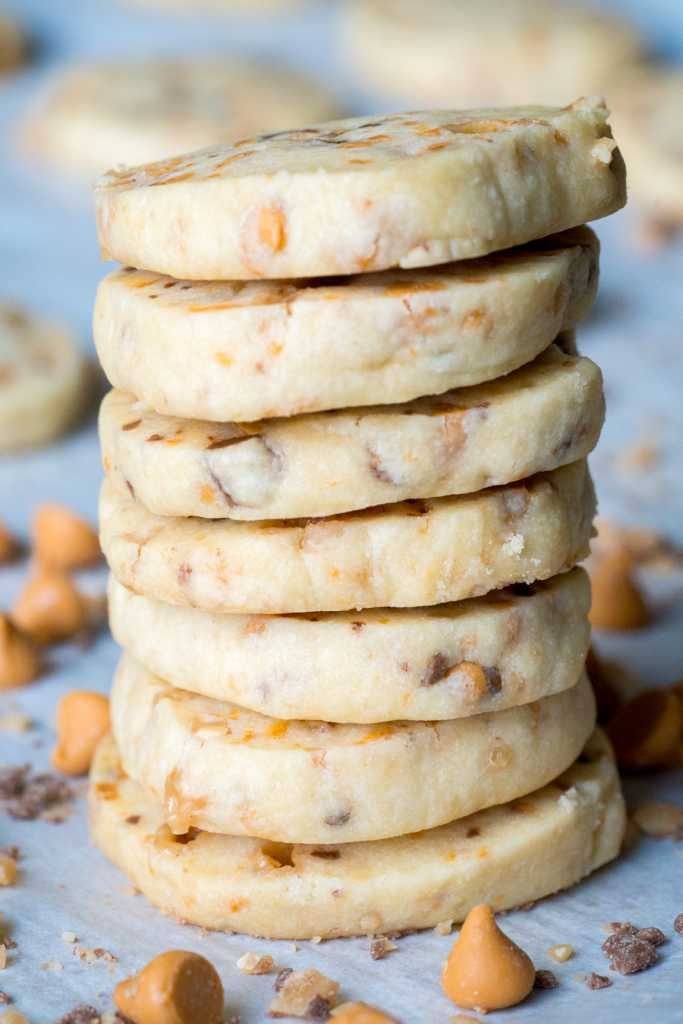
Butterscotch Shortbread Cookies are buttery, tender, crisp-edged cookies with a rich caramel-like flavor and little pockets of sweet butterscotch throughout. They are simple to prepare, hold their shape beautifully, and make a wonderful holiday cookie, afternoon treat, or homemade gift.
Recipe at a Glance
| Details | Information |
|---|---|
| Recipe | Butterscotch Shortbread Cookies |
| Prep Time | 15 minutes |
| Chill Time | 30 minutes |
| Bake Time | 10–14 minutes |
| Total Time | About 1 hour |
| Servings | 24 cookies |
| Difficulty | Easy |
| Course | Dessert / Cookie |
| Method | Oven-baked |
| Texture | Buttery, crisp & tender |
| Flavor | Rich, caramel-like & sweet |
Ingredients
- 1 cup (226 g) unsalted butter, softened
- ½ cup powdered sugar
- ¼ cup packed light brown sugar
- 1 teaspoon vanilla extract
- 2 cups (250 g) all-purpose flour
- ½ teaspoon salt
- ¾ cup butterscotch chips
- 2 tablespoons cornstarch
- 1 tablespoon milk or heavy cream, only if needed
Optional Toppings
- Extra butterscotch chips
- Flaky sea salt
- Melted chocolate
- Chopped pecans or walnuts
- Powdered sugar
Step-by-Step Instructions
1. Prepare the Oven
Preheat your oven to:
350°F (175°C)
Line two baking sheets with parchment paper.
2. Cream the Butter
Place the softened butter in a large mixing bowl.
Beat for approximately 2–3 minutes until smooth and creamy.
Don’t melt the butter. Softened butter is important for the proper shortbread texture.
3. Add the Sugars
Add:
- Powdered sugar
- Brown sugar
Beat for another 1–2 minutes until smooth.
The brown sugar adds a deeper butterscotch flavor while the powdered sugar helps keep the cookies tender.
4. Add Vanilla
Mix in the vanilla extract.
Scrape down the sides of the bowl as needed.
5. Combine the Dry Ingredients
In a separate bowl, whisk together:
- Flour
- Cornstarch
- Salt
Mix well.
6. Combine Wet and Dry Ingredients
Gradually add the flour mixture to the butter mixture.
Mix on low speed or use a spatula.
Stop mixing as soon as the dough comes together.
Do not overmix.
If the dough seems unusually dry and crumbly, add 1 tablespoon milk or heavy cream.
Add another teaspoon only if necessary.
7. Add the Butterscotch Chips
Fold in the butterscotch chips.
Try to distribute them evenly throughout the dough.
8. Chill the Dough
Form the dough into a disk.
Wrap it tightly and refrigerate for approximately:
30 minutes
Chilling helps the cookies maintain their shape during baking.
9. Roll Out the Dough
Lightly flour your work surface.
Roll the dough to approximately:
¼-inch thickness
For thicker, softer shortbread, roll to approximately ⅓-inch thickness.
10. Cut the Cookies
Use a cookie cutter approximately 2–2½ inches wide.
Cut the cookies and transfer them to the prepared baking sheets.
Leave approximately 1 inch between cookies.
11. Add Optional Toppings
Press a few extra butterscotch chips onto the tops.
For a sweet-and-salty flavor, add a very small pinch of flaky sea salt.
12. Bake
Bake at:
350°F (175°C) for 10–14 minutes
The edges should be lightly golden while the centers remain relatively pale.
Don’t wait for the cookies to become dark brown.
13. Cool
Allow the cookies to cool on the baking sheet for approximately 5 minutes.
Then transfer them to a wire rack.
Let them cool completely.
They will become firmer and crispier as they cool.
What Do Butterscotch Shortbread Cookies Taste Like?
These cookies have a rich combination of:
- Buttery shortbread
- Brown sugar
- Vanilla
- Caramel-like butterscotch
- Slight saltiness
The texture is tender and crumbly in the center with lightly crisp edges.
The Secret to Perfect Shortbread
The most important things are:
- Use softened, not melted, butter.
- Measure flour carefully.
- Don’t overmix the dough.
- Chill the dough before baking.
- Don’t overbake.
- Allow the cookies to cool completely before storing.
Butterscotch Chip Shortbread Bars
Instead of cutting individual cookies, press the dough into a lined 8 × 8-inch baking pan.
Bake at:
325°F (165°C) for approximately 25–30 minutes
Cool completely before slicing into squares.
Chocolate-Dipped Butterscotch Shortbread
Once the cookies have cooled completely:
- Melt ½ cup chocolate.
- Dip half of each cookie into the chocolate.
- Place on parchment paper.
- Allow the chocolate to set.
Dark chocolate works particularly well because its bitterness balances the sweet butterscotch.
Butterscotch Pecan Shortbread
Add:
½ cup finely chopped toasted pecans
along with the butterscotch chips.
Pecans give the cookies an excellent crunchy texture.
Butterscotch Walnut Shortbread
Replace the pecans with:
½ cup chopped walnuts
For extra flavor, lightly toast them before adding them to the dough.
Salted Butterscotch Shortbread
Add:
¼ teaspoon flaky sea salt
to the dough and sprinkle a tiny amount over each cookie before baking.
The salty-sweet combination makes the butterscotch flavor stand out.
Cinnamon Butterscotch Shortbread
Add:
½ teaspoon ground cinnamon
to the dry ingredients.
This is especially delicious during fall and the holiday season.
Espresso Butterscotch Shortbread
Add:
1 teaspoon instant espresso powder
to the flour mixture.
Coffee intensifies the caramel and butterscotch flavors without making the cookies taste strongly like coffee.
Orange Butterscotch Shortbread
Add:
1 teaspoon finely grated orange zest
to the butter mixture.
Orange zest provides a bright contrast to the rich butterscotch.
How to Make Them Less Sweet
For a less-sweet cookie:
- Reduce the butterscotch chips to ½ cup.
- Use dark chocolate instead of milk chocolate for dipping.
- Add a small amount of flaky salt.
Don’t drastically reduce the sugar because sugar also affects the texture of shortbread.
How to Make Them Extra Buttery
Use high-quality unsalted butter and avoid replacing it with a low-fat spread.
The butter is one of the primary ingredients responsible for the characteristic shortbread texture.
Make-Ahead Instructions
The dough can be prepared ahead of time.
Wrap it tightly and refrigerate for up to approximately 3 days.
When ready to bake, let the dough sit at room temperature for several minutes if it’s too firm to roll.
Freezing the Dough
Shortbread dough freezes very well.
Wrap the dough tightly and place it in a freezer-safe bag.
Freeze for up to approximately 2–3 months.
Thaw overnight in the refrigerator before rolling and cutting.
Freezing Baked Cookies
Allow the cookies to cool completely.
Place them in an airtight freezer-safe container with parchment between layers.
Freeze for up to approximately 2–3 months.
Storage
Store cooled cookies in an airtight container at room temperature.
They are best enjoyed within approximately 1 week, although they can remain good for longer when properly stored.
Keep them away from humidity to preserve their crisp texture.
Approximate Nutrition
For 1 of 24 cookies:
- Calories: approximately 150–165
- Protein: approximately 1–2 g
- Carbohydrates: approximately 18–20 g
- Fat: approximately 8–9 g
- Fiber: approximately 0–1 g
- Sugar: approximately 8–10 g
Nutrition varies according to the size of the cookies and the butterscotch chips used.
WW-Friendly Tips
Traditional shortbread is naturally rich in butter and sugar, so it isn’t a low-point cookie.
For a lighter version:
- Make smaller cookies.
- Reduce the butterscotch chips.
- Use a smaller amount of sugar where practical.
- Avoid chocolate dipping.
- Use portion control rather than drastically changing the butter-to-flour ratio.
WW Points depend on your current plan and exact ingredients, so calculate the specific recipe in your WW app for the most accurate value.
Frequently Asked Questions
1. Why are my shortbread cookies spreading?
The butter may have been too warm or the dough wasn’t chilled enough.
Chill the cut cookies for 10–15 minutes before baking if necessary.
2. Why are my cookies crumbly?
Shortbread should be somewhat crumbly, but excessive crumbling usually means there is too much flour or not enough moisture.
Measure the flour carefully.
3. Why are my cookies hard?
They may have been overbaked.
Remove them when the edges are just lightly golden.
4. Can I use salted butter?
Yes.
If using salted butter, reduce or omit the additional salt.
5. Can I use granulated sugar instead of powdered sugar?
Yes, but the texture will be slightly different.
Powdered sugar produces a particularly tender shortbread.
6. Can I use only brown sugar?
You can, but the cookies will be darker, softer, and have a stronger caramel flavor.
7. Can I use butterscotch baking chips?
Yes.
They’re ideal for this recipe.
8. Can I use toffee bits?
Absolutely.
Toffee bits create an even more caramelized flavor and crunchy texture.
9. Can I add nuts?
Yes.
Pecans and walnuts are particularly good.
10. Can I use chocolate chips?
Yes.
Semi-sweet or dark chocolate chips pair beautifully with butterscotch.
11. Can I make the cookies without cornstarch?
Yes.
You can replace the cornstarch with an equal amount of flour, but the cookies may be slightly less tender.
12. Can I make these gluten-free?
Yes.
Use a good-quality 1:1 gluten-free flour blend designed for baking.
13. Can I make these dairy-free?
Use a suitable dairy-free butter alternative and dairy-free butterscotch chips.
Check the labels because many butterscotch chips contain dairy.
14. Can I make them vegan?
Yes, with suitable dairy-free butter and vegan butterscotch chips.
You may need to check the ingredients carefully because traditional butterscotch products often contain dairy.
15. Can I make these without butterscotch chips?
Yes.
The base recipe will still make delicious classic shortbread.
You can replace them with chocolate chips, nuts, dried cranberries, or toffee bits.
16. Can I make them thicker?
Yes.
Roll the dough closer to ⅓-inch thick and add a couple of minutes to the baking time if needed.
17. Can I make them thinner?
Yes.
Roll closer to ⅛–¼ inch and watch them carefully because thin shortbread can bake quickly.
18. Can I freeze the dough?
Yes.
Freeze it tightly wrapped for up to approximately 2–3 months.
19. Can I make these in an air fryer?
Yes.
Place a few cookies in a single layer in the basket.
Bake around 320–330°F (160–165°C) and begin checking after approximately 7–9 minutes.
Air fryer temperatures vary considerably.
20. Why did my butterscotch chips melt into the dough?
If the dough is very warm, the chips can soften.
Chill the dough thoroughly before baking and use good-quality baking chips designed to hold their shape.
Troubleshooting Guide
| Problem | Likely Cause | Solution |
|---|---|---|
| Cookies spread | Warm butter/dough | Chill dough |
| Cookies too hard | Overbaking | Bake until edges are lightly golden |
| Cookies too crumbly | Too much flour | Measure flour accurately |
| Dough won’t come together | Too dry | Add 1 teaspoon milk at a time |
| Chips melt too much | Dough too warm | Chill before baking |
| Uneven cookies | Uneven rolling | Use rolling guides if available |
| Burnt edges | Oven too hot | Check oven temperature |
| Pale but soft cookies | Not cooled | Allow them to cool completely |
| Cookies stick | Warm baking sheet | Use parchment paper |
Pro Tips for Perfect Butterscotch Shortbread
Tip 1: Use room-temperature butter
Soft butter creams properly without becoming greasy.
Tip 2: Don’t melt the butter
Melted butter can cause excessive spreading.
Tip 3: Chill the dough
This is especially important for cut-out shortbread.
Tip 4: Don’t overwork the dough
Mix just until everything comes together.
Tip 5: Use parchment paper
It prevents sticking and makes cleanup easier.
Tip 6: Don’t overbake
Shortbread should remain relatively pale.
Tip 7: Cool before moving
Freshly baked shortbread is delicate and firms up as it cools.
Best Serving Ideas
Serve Butterscotch Shortbread with:
- Coffee
- Black tea
- Chai
- Hot chocolate
- Milk
- Vanilla ice cream
- Caramel sauce
- Fresh berries
Holiday Cookie Box Idea
Combine these cookies with:
- Chocolate chip cookies
- Gingerbread cookies
- Snowball cookies
- Sugar cookies
- Chocolate shortbread
Place them in a decorative tin for a homemade cookie assortment.
Final Result
You get rich, buttery shortbread cookies with crisp edges, a tender crumb, and sweet bursts of caramel-like butterscotch in every bite. They’re simple enough for everyday baking but elegant enough for holiday cookie trays, gifting, parties, and afternoon tea.