
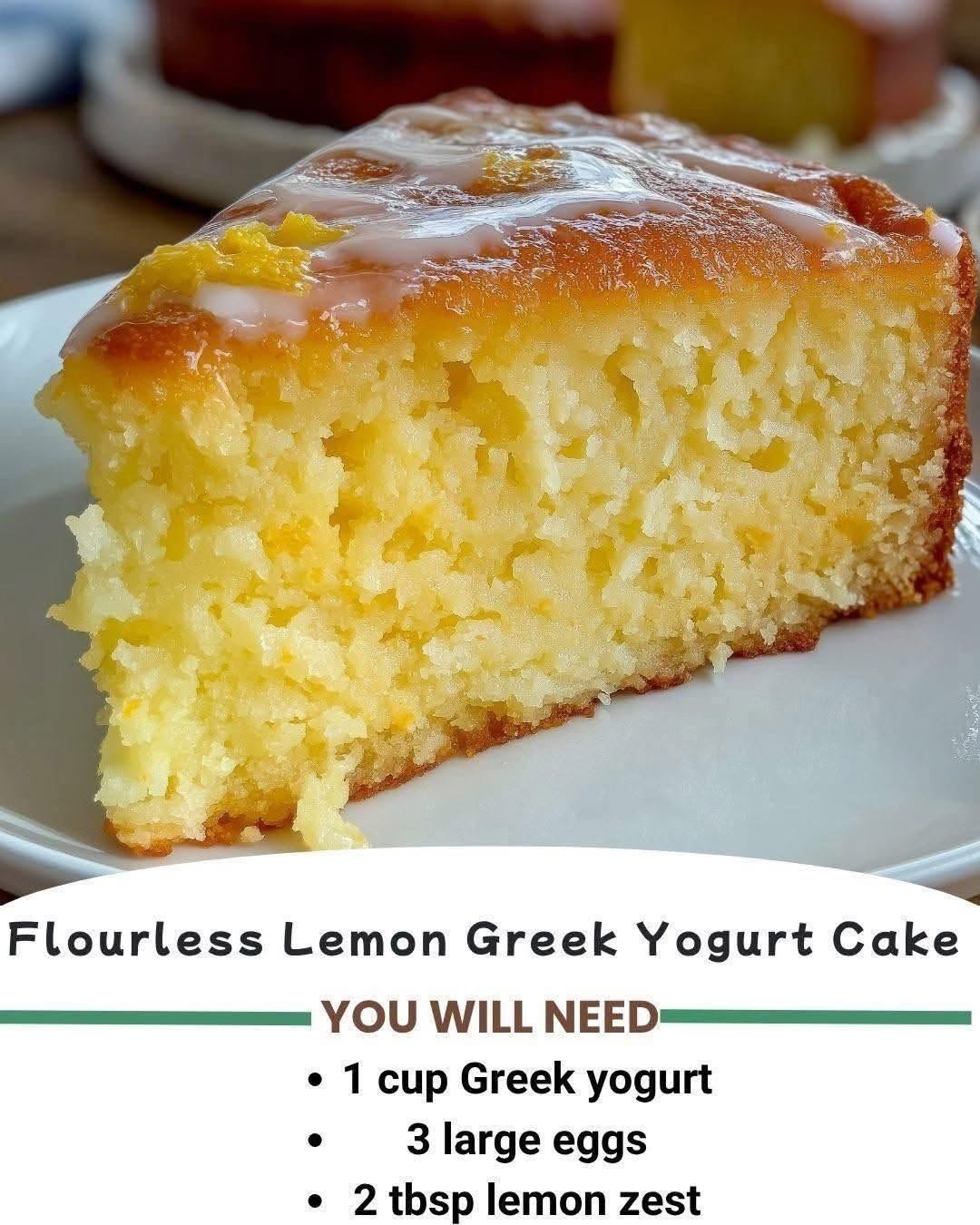
A soft, fluffy, moist and delicious lemon cake made without regular flour. Greek yogurt gives it a creamy texture, while fresh lemon zest and juice provide a refreshing citrus flavour.
This cake has a delicate, tender centre with a beautiful golden top and a sweet lemon glaze.
1. Recipe information
Preparation time: 15 minutes
Baking time: 35–45 minutes
Cooling time: 45–60 minutes
Total time: Approximately 1 hour 45 minutes
Servings: 8 slices
Cake tin: 7-inch round cake pan
Oven temperature: 170°C (340°F)
2. Ingredients
For the cake
Ingredient
Quantity
Thick Greek yogurt
1 cup (240 g)
Large eggs
3
Granulated sugar
½ cup (100 g)
Fresh lemon zest
2 tablespoons
Fresh lemon juice
2 tablespoons
Cornstarch
¼ cup (32 g)
Baking powder
1 teaspoon
Vanilla extract
1 teaspoon
Salt
1 small pinch
For the lemon glaze
Ingredient
Quantity
Powdered sugar
½ cup (60 g)
Fresh lemon juice
1–2 tablespoons
Lemon zest
½ teaspoon (optional)
3. Detailed preparation method
Step 1: Prepare the oven and cake pan
Preheat your oven to 170°C (340°F).
Take a 7-inch round cake pan.
Grease the bottom and sides with butter or cooking oil.
Line the bottom with parchment paper.
Lightly grease the parchment paper as well.
Set the prepared pan aside.
Important: Use a cake pan with sides at least 2 inches high because the cake will rise during baking.
Step 2: Prepare the lemon sugar
Wash and dry 2 fresh lemons.
Finely grate the yellow outer skin to obtain 2 tablespoons of zest.
Put ½ cup granulated sugar in a mixing bowl.
Add the lemon zest.
Rub the zest into the sugar using your fingertips for approximately 1 minute.
This releases the natural lemon oils and gives the cake a stronger lemon aroma.
Avoid grating the white part of the lemon peel because it can taste bitter.
Step 3: Beat the eggs
Take a large, clean mixing bowl.
Add 3 large eggs at room temperature.
Using an electric hand mixer, beat the eggs for approximately 3–4 minutes.
Gradually add the lemon sugar while continuing to beat.
Beat until the mixture becomes pale, fluffy and slightly thick.
This step helps incorporate air into the batter and contributes to a lighter cake texture.
Step 4: Add the Greek yogurt
Add 1 cup (240 g) thick Greek yogurt to the beaten egg mixture.
Add 1 teaspoon vanilla extract.
Add 2 tablespoons fresh lemon juice.
Mix gently using a hand whisk or spatula.
Continue mixing until everything is combined and smooth.
Do not overmix at this stage.
Step 5: Prepare the dry ingredients
In a separate bowl, combine:
¼ cup (32 g) cornstarch
1 teaspoon baking powder
1 pinch of salt
Mix these ingredients together.
Sift the mixture to remove any lumps.
Keep it ready for the next step.
Important: Cornstarch is used instead of regular wheat flour. It helps bind the cake mixture and gives the cake its delicate texture.
Step 6: Combine the wet and dry ingredients
Gradually add the sifted dry ingredients to the yogurt and egg mixture.
Add them in 2–3 portions.
Fold gently with a silicone spatula.
Continue folding until no dry patches remain.
Stop mixing as soon as the batter becomes smooth.
The batter should be creamy, smooth and slightly thick.
Avoid vigorous mixing because it can remove the air incorporated into the eggs.
Step 7: Transfer the batter into the cake pan
Pour the prepared batter into the lined cake pan.
Use a spatula to spread the batter evenly.
Gently tap the pan against the countertop 2–3 times to release large air bubbles.
Smooth the surface.
Your cake batter is now ready for baking.
Step 8: Bake the cake
Place the cake pan on the middle rack of your preheated oven.
Bake at 170°C (340°F) for approximately 35–45 minutes.
Check the cake after 35 minutes.
The top should be lightly golden.
Insert a toothpick into the centre.
The toothpick should come out without wet batter. A few moist crumbs are fine.
If the cake is still wet in the middle, bake for another 5 minutes and check again.
Important baking tips:
Do not open the oven during the first 25 minutes.
If the top becomes too dark, loosely cover it with aluminium foil.
Avoid overbaking because it can make the cake dry.
Oven temperatures can vary, so use the toothpick test rather than relying only on time.
Step 9: Cool the cake properly
Remove the cake from the oven.
Leave it inside the pan for 15–20 minutes.
Carefully run a knife around the edges.
Remove the cake from the pan.
Place it on a wire cooling rack.
Allow it to cool completely.
The cake may shrink or settle slightly while cooling. This is normal for a flourless yogurt cake.
Do not pour the glaze over a hot cake.
4. Prepare the lemon glaze
You will need:
½ cup powdered sugar (60 g)
1 tablespoon fresh lemon juice
Additional lemon juice if required
½ teaspoon lemon zest (optional)
Method:
Take a small mixing bowl.
Add the powdered sugar.
Add 1 tablespoon lemon juice.
Mix until smooth.
If the glaze is too thick, add lemon juice a few drops at a time.
If it becomes too thin, add a little more powdered sugar.
Add lemon zest if desired.
The consistency should be smooth, slightly thick and pourable.
5. Decorate the cake
Make sure the cake has cooled completely.
Place it on a serving plate.
Slowly drizzle the lemon glaze over the top.
Allow some glaze to run naturally down the sides.
Sprinkle a little fresh lemon zest over the glaze.
Leave the cake for 10–15 minutes so the glaze can set.
Your flourless lemon Greek yogurt cake is ready!
6. Expected cake texture and taste
The finished cake should have:
A golden, slightly glossy top.
A soft and moist interior.
A delicate, airy yet tender crumb.
A refreshing lemon aroma.
A pleasant balance of sweet and tangy flavours.
It will be more delicate and moist than a traditional wheat-flour sponge cake.
7. Important tips for a perfect cake
Use thick Greek yogurt: Ordinary runny yogurt contains more water and can make the cake too wet.
Use room-temperature eggs: They mix more easily and help create a fluffy batter.
Beat the eggs properly: This is important for incorporating air.
Measure cornstarch accurately: Too much can make the cake dense or rubbery.
Use fresh lemon zest: It gives the best lemon fragrance.
Do not overmix: Fold the dry ingredients gently.
Do not overbake: The cake should remain moist.
Cool completely: Allow the cake to cool before removing and glazing.
Chill before serving: Refrigerating it for 2–3 hours helps it become firmer and easier to slice.
8. Ingredient substitutions
Original ingredient
Substitute
Greek yogurt
Thick strained plain yogurt
Cornstarch
Arrowroot starch
Granulated sugar
Caster sugar
Vanilla extract
Vanilla essence
Fresh lemon juice
Bottled lemon juice
Fresh lemon zest
Finely grated lemon peel
For the best results, use Greek yogurt and cornstarch as specified.
9. Storage instructions
Room temperature: Up to 2 hours, especially in warm weather.
Refrigerator: Store in an airtight container for up to 4 days.
Freezer: Freeze individual unglazed slices for up to 1 month.
For serving, thaw frozen slices in the refrigerator.
10. Serving suggestions
You can serve this cake with:
Fresh strawberries or blueberries.
A little extra powdered sugar.
Whipped cream.
Fresh lemon slices.
A cup of tea or coffee.
Extra lemon glaze.
My final recommendation: For the best flavour and texture, prepare the cake a few hours before serving and refrigerate it for 2–3 hours after it has cooled and been glazed. It will become beautifully set, moist and refreshing, with a lovely lemon flavour.