
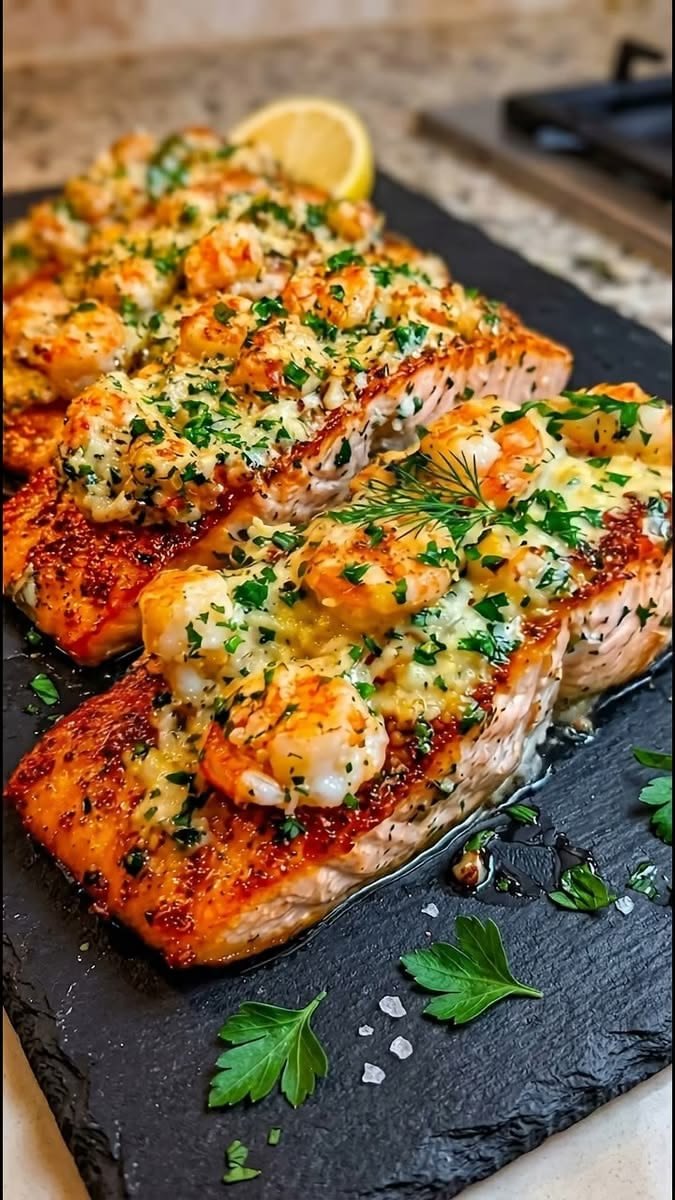
Garlic Butter Shrimp-Topped Salmon is a rich, restaurant-style seafood dinner featuring tender, flaky salmon covered with juicy shrimp and finished with a silky garlic butter sauce. The combination of salmon, shrimp, fresh garlic, lemon, butter, and herbs creates an elegant meal that is surprisingly easy to prepare.
This recipe works beautifully for a weeknight dinner, date night, dinner party, or special occasion.
Recipe Overview
The salmon is seasoned and baked until nearly tender, then topped with garlic-butter shrimp and returned to the oven briefly so the shrimp finish cooking and the flavors come together. A final squeeze of fresh lemon cuts through the richness and keeps the dish bright.
The key is to avoid overcooking either seafood. Salmon should remain moist and flaky, while shrimp should be just opaque and tender.
Preparation and Cooking Details
Prep Time: 15 minutes
Cook Time: 18–25 minutes
Total Time: 33–40 minutes
Servings: 4
Difficulty: Easy to Moderate
Cooking Method: Oven-baked
Ingredients
For the Salmon
4 salmon fillets, about 6 oz (170 g) each
1 tablespoon olive oil
½ teaspoon salt
½ teaspoon black pepper
½ teaspoon paprika
½ teaspoon onion powder
½ teaspoon Italian seasoning
1 tablespoon fresh lemon juice
For the Garlic Butter Shrimp
12 oz (340 g) medium or large shrimp, peeled and deveined
4 tablespoons unsalted butter
4–5 cloves fresh garlic, finely minced
1 tablespoon fresh lemon juice
½ teaspoon paprika
¼ teaspoon black pepper
¼ teaspoon red pepper flakes, optional
1 tablespoon chopped fresh parsley
1 teaspoon fresh lemon zest, optional
For Finishing
1 tablespoon fresh parsley, chopped
Lemon wedges
Extra melted garlic butter, optional
Freshly cracked black pepper
Equipment Needed
Large baking dish or rimmed baking sheet
Parchment paper or foil
Small skillet
Small mixing bowl
Tongs
Spoon
Pastry brush
Instant-read thermometer
Cutting board and knife
Detailed Step-by-Step Instructions
Step 1: Preheat the Oven
Preheat the oven to 400°F (200°C).
Line a baking sheet or baking dish with parchment paper or lightly grease it with a little olive oil.
If your salmon has skin, place it skin-side down.
Step 2: Prepare the Salmon
Pat the salmon fillets dry with paper towels.
This is an important step because removing excess moisture helps the seasonings adhere and allows the surface of the salmon to develop better flavor during baking.
Check the salmon for pin bones by gently running your fingers across the surface. Remove any bones with clean kitchen tweezers if necessary.
Step 3: Season the Salmon
Brush each salmon fillet lightly with olive oil.
Combine the salt, black pepper, paprika, onion powder, and Italian seasoning.
Sprinkle the seasoning mixture evenly over the salmon.
Finish with a small amount of fresh lemon juice.
Avoid adding too much lemon juice at this stage because excessive liquid can interfere with browning.
Step 4: Start Baking the Salmon
Place the seasoned salmon into the prepared baking dish.
Bake at 400°F (200°C) for approximately 8–12 minutes.
The exact time depends on the thickness of the salmon.
The salmon does not need to be completely finished at this point because it will return to the oven with the shrimp.
Step 5: Prepare the Shrimp
While the salmon begins baking, pat the shrimp dry with paper towels.
Removing excess moisture is especially important for shrimp because wet shrimp can release a lot of liquid into the butter sauce.
Season the shrimp lightly with paprika and black pepper.
Do not add too much salt because the butter and other seasonings will already provide plenty of flavor.
Step 6: Make the Garlic Butter
Place a skillet over medium-low heat.
Add the butter and allow it to melt gently.
Add the minced garlic and cook for approximately 30–60 seconds, stirring constantly.
The garlic should become fragrant but should not turn dark brown.
Burned garlic can make the entire sauce bitter.
Add the lemon juice, paprika, black pepper, optional red pepper flakes, and lemon zest.
Stir well.
Step 7: Add the Shrimp
Add the seasoned shrimp to the garlic butter.
Cook for approximately 1–2 minutes per side, just until the shrimp begin turning pink and opaque.
Do not fully cook them at this stage.
They will finish cooking in the oven.
Remove the skillet from the heat.
Step 8: Remove the Salmon
Carefully remove the partially baked salmon from the oven.
The surface should be beginning to cook, but the thickest part can still be slightly underdone.
Do not worry if the salmon is not fully cooked yet.
Step 9: Top the Salmon With Shrimp
Arrange the garlic butter shrimp over each salmon fillet.
Try to distribute the shrimp evenly so every portion receives a generous amount.
Spoon some of the garlic butter from the skillet over the shrimp and salmon.
Step 10: Finish Baking
Return the salmon and shrimp to the oven.
Bake for another 5–8 minutes, or until:
The salmon flakes easily with a fork.
The shrimp are completely opaque.
The thickest part of the salmon reaches at least 145°F (63°C) for food safety.
Avoid prolonged cooking because both salmon and shrimp can become dry and rubbery if overcooked.
Step 11: Optional Broiling
For a beautiful golden finish, switch the oven to broil for approximately 1–2 minutes.
Watch the salmon carefully.
The butter can brown quickly, and garlic can burn under high heat.
Do not walk away from the oven during broiling.
Step 12: Garnish and Rest
Remove the salmon from the oven.
Allow it to rest for approximately 3–5 minutes.
Spoon some of the garlic butter from the baking dish over the top.
Finish with fresh parsley, cracked black pepper, and lemon wedges.
Serve immediately.
Taste and Texture Notes
Flavor: Rich, buttery, garlicky, savory, lemony, and mildly spicy if red pepper flakes are used.
Salmon texture: Tender, moist, flaky, and buttery.
Shrimp texture: Juicy, succulent, and slightly firm.
Sauce: Silky melted butter infused with garlic, lemon, herbs, and seafood juices.
Aroma: Strong fresh garlic with buttery seafood and bright lemon.
Spice level: Mild by default. Red pepper flakes can be increased for a spicy version.
How to Choose the Best Salmon
For this recipe, salmon fillets that are approximately 1–1½ inches thick work particularly well.
Good options include:
Atlantic salmon
Sockeye salmon
King salmon
Coho salmon
Atlantic salmon generally has a richer, fattier texture, while sockeye tends to be leaner and more intensely flavored.
Try to choose fillets of similar thickness so they cook evenly.
How to Choose the Shrimp
Medium or large shrimp work best.
For convenient preparation, use:
Peeled shrimp
Deveined shrimp
Fresh or properly thawed frozen shrimp
If using frozen shrimp, thaw them completely and pat them very dry before cooking.
Avoid overcooking shrimp. As soon as they become opaque and form a loose “C” shape, they are generally close to done.
High-Protein Version
This meal is naturally high in protein because it combines two excellent seafood protein sources.
For an even more protein-focused meal:
Use 7–8 oz salmon portions.
Increase shrimp to 16 oz for four servings.
Reduce butter to 2–3 tablespoons.
Serve with steamed broccoli, asparagus, green beans, or cauliflower rice.
Add a side of quinoa if you want additional plant-based protein and carbohydrates.
For a lighter high-protein plate, prioritize the salmon and shrimp while using the garlic butter primarily as a finishing sauce.
Ingredient Substitutions
Original Ingredient Substitute
Salmon Trout or arctic char
Shrimp Scallops or crab meat
Butter Olive oil or avocado oil
Fresh garlic Garlic powder
Lemon juice Lime juice
Parsley Cilantro or chives
Italian seasoning Dried oregano and thyme
Paprika Smoked paprika
Red pepper flakes Cayenne pepper
Fresh shrimp Thawed frozen shrimp
Dairy-Free Version
Replace the butter with:
Olive oil
Avocado oil
Dairy-free butter
Olive oil gives the recipe a lighter Mediterranean-style flavor.
Garlic-Free Version
If you cannot use garlic, replace the garlic with:
Finely minced shallot
Onion powder
Fresh herbs
A little extra lemon zest
The flavor will be different but still delicious.
Variations
1. Creamy Garlic Shrimp-Topped Salmon
After cooking the shrimp, remove them from the skillet.
Add:
½ cup heavy cream
2 tablespoons Parmesan
¼ teaspoon Italian seasoning
Simmer gently until slightly thickened.
Return the shrimp to the sauce and spoon over the salmon.
2. Cajun Garlic Butter Salmon
Replace the regular paprika with 1–2 teaspoons Cajun seasoning.
Add extra red pepper flakes if you enjoy heat.
This creates a smoky, spicy version that pairs especially well with rice.
3. Lemon Parmesan Shrimp Salmon
Add ¼ cup freshly grated Parmesan to the garlic butter sauce.
Finish with extra lemon zest and parsley.
The Parmesan gives the sauce a richer, savory flavor.
4. Tuscan Shrimp-Topped Salmon
Add:
½ cup chopped sun-dried tomatoes
1 cup fresh spinach
½ cup heavy cream
¼ cup Parmesan
Cook the spinach until wilted and combine everything with the shrimp before spooning the mixture over the salmon.
5. Spicy Honey Garlic Salmon
Add 1 tablespoon honey to the garlic butter sauce along with ½ teaspoon red pepper flakes.
The combination of sweetness, garlic, butter, and chili works especially well with salmon.
6. Mediterranean Salmon and Shrimp
Use olive oil instead of butter and add:
Fresh oregano
Parsley
Lemon zest
Cherry tomatoes
Kalamata olives
Serve with quinoa or a fresh cucumber salad.
Dietary Adjustments
Low-Carb
This recipe can easily fit a low-carb meal plan.
Serve it with:
Cauliflower rice
Broccoli
Asparagus
Zucchini
Green beans
Sautéed spinach
Avoid serving it with sugary sauces or high-carbohydrate sides if you need a strict low-carb meal.
Keto
For a keto-style version:
Use butter or olive oil.
Omit honey.
Serve with non-starchy vegetables.
Check any packaged seasonings for added sugars.
Gluten-Free
The basic recipe is naturally gluten-free.
If using packaged Cajun seasoning or other seasoning blends, check the label to ensure they are gluten-free.
Dairy-Free
Use olive oil or dairy-free butter instead of regular butter.
Lower-Sodium
Use unsalted butter.
Reduce added salt.
Use fresh herbs and lemon for flavor.
Avoid heavily salted seasoning blends.
Choose fresh shrimp rather than heavily processed or pre-seasoned shrimp.
One-Pan Vegetable Option
You can turn this into a complete one-pan dinner.
Add vegetables around the salmon, such as:
Broccoli
Asparagus
Zucchini
Bell peppers
Cherry tomatoes
Green beans
Toss the vegetables with a little olive oil, pepper, and herbs.
Harder vegetables such as carrots or potatoes should be partially roasted before adding the salmon because they require more cooking time.
Meal Prep and Storage
Refrigerator
Storage time: 3–4 days
Allow the seafood to cool slightly, then place it in a shallow airtight container.
Refrigerate within 2 hours of cooking.
Reheating
Seafood is best reheated gently.
Oven method
Preheat oven to 275°F (135°C).
Place the salmon and shrimp in an oven-safe dish.
Add 1–2 teaspoons water, broth, or extra butter.
Cover loosely with foil.
Heat until warmed through.
Microwave method
Use medium power in short intervals.
Heat for approximately 30–45 seconds at a time, checking between intervals.
Avoid overheating because shrimp become rubbery and salmon can dry out.
Freezing
Cooked salmon and shrimp can technically be frozen, but the texture is best when consumed fresh.
If freezing:
Cool completely.
Place in an airtight freezer-safe container.
Remove as much excess air as possible.
Label and date.
Use within approximately 2 months for best quality.
Thaw overnight in the refrigerator.
The butter sauce may separate slightly after freezing and thawing.
Approximate Nutrition
Estimated per serving, assuming four servings and the listed salmon, shrimp, and butter.
Calories: Approximately 500–560
Protein: Approximately 45–50 g
Carbohydrates: Approximately 2–4 g
Fat: Approximately 32–38 g
Fiber: Approximately 0–1 g
Sugar: Approximately 1 g naturally occurring
These values are estimates and can change considerably depending on the size and fat content of the salmon, amount of butter used, and exact ingredients.
WW-Friendly Tips
The exact WW Points value depends on your current WW plan and the specific ingredients.
For a lighter version:
Use skinless salmon.
Reduce butter to 2 tablespoons.
Replace some butter with olive oil spray or a small amount of broth.
Increase the shrimp while keeping the butter measured.
Serve with zero- or low-Point vegetables where appropriate for your plan.
Avoid calorie-heavy creamy side dishes.
Measure the butter rather than estimating it.
For the most accurate Points calculation, enter the exact ingredients and quantities into your current WW calculator.
Frequently Asked Questions
Can I use frozen salmon?
Yes. Thaw it completely in the refrigerator first and pat it very dry before seasoning.
Cooking directly from frozen will require a different cooking time and can result in uneven cooking.
Can I use frozen shrimp?
Yes. Thaw them completely, remove excess moisture with paper towels, and then proceed with the recipe.
Can I cook everything at once?
Yes, but shrimp cook much faster than salmon.
For the best texture, partially cook the salmon first, then add the shrimp during the final portion of cooking.
Should I leave the salmon skin on?
Yes. If your salmon has skin, keeping it on can help protect the fish from the heat and makes the fillet easier to handle.
You can remove the skin before serving if preferred.
Can I use salmon with the skin removed?
Absolutely. Skinless salmon works well.
Just be careful not to overcook it because there is less protection between the flesh and the hot baking surface.
Can I use garlic powder instead of fresh garlic?
Yes.
Use approximately 1–1½ teaspoons garlic powder in place of the fresh garlic, adjusting to taste.
Fresh garlic provides a stronger and more aromatic flavor.
Can I make this without butter?
Yes.
Use olive oil or avocado oil. The finished dish will be lighter and have a slightly different flavor.
Can I add cheese?
Yes.
Parmesan, mozzarella, or a small amount of Monterey Jack can work well.
Add cheese during the final few minutes so it melts without overcooking the seafood.
Why did my shrimp become rubbery?
Shrimp become rubbery when they are overcooked.
Cook them only until they are opaque and tender, then remove them from the heat.
Why is my salmon dry?
The most common reason is overcooking.
Salmon thickness varies considerably, so start checking early and use an instant-read thermometer.
Can I prepare the garlic butter ahead of time?
Yes.
The garlic butter can be prepared several hours ahead and refrigerated.
Bring it back toward room temperature before using so it spreads easily.
Troubleshooting Guide
Problem Likely Cause Solution
Salmon is dry Overcooking Check the temperature early and remove promptly
Shrimp are rubbery Overcooking Cook only until opaque and tender
Garlic tastes bitter Garlic was burned Cook garlic over medium-low heat
Sauce is greasy Too much butter or excessive heat Whisk with lemon juice and reduce heat
Salmon is bland Insufficient seasoning Add lemon, herbs, pepper, and garlic butter
Shrimp release lots of water They were not dried properly Pat shrimp thoroughly before cooking
Top is not golden Insufficient finishing heat Broil briefly for 1–2 minutes
Salmon sticks to pan No grease or parchment Use parchment or lightly grease the dish
Sauce is too salty Salted butter or salty seasoning Use unsalted butter and adjust seasoning carefully
Fish is undercooked Fillet is unusually thick Continue baking and check the center temperature
Chef’s Tips and Tricks
Pat both seafood ingredients dry. This helps the seasonings stick and prevents excess liquid from diluting the garlic butter.
Use fresh garlic whenever possible. It gives the sauce a much more pronounced flavor.
Cook garlic gently. High heat can quickly turn garlic bitter.
Do not fully cook the shrimp before adding them to the salmon. They need only a quick start in the skillet.
Use a thermometer. Salmon thickness can vary dramatically, making cooking time an imperfect guide.
Add lemon at the end. Fresh lemon brightens the rich butter sauce.
Do not drown the salmon. A generous coating of garlic butter is enough; excessive liquid can make the fish steam rather than roast.
Use similar-sized salmon fillets. This allows the portions to cook evenly.
Broil carefully. The garlic and butter can burn quickly under the broiler.
Rest briefly before serving. Three to five minutes gives the juices time to settle.
Serve immediately. Both salmon and shrimp have their best texture when freshly cooked.
Keep the sauce warm, not boiling. Excessive heat can cause butter-based sauces to separate.
Serving and Presentation Ideas
Best side dishes
Garlic mashed potatoes
Roasted asparagus
Steamed broccoli
Lemon herb rice
Cauliflower rice
Quinoa
Roasted baby potatoes
Green beans
Creamed spinach
Fresh garden salad
Mediterranean cucumber salad
Grilled zucchini
For a low-carb plate
Place the salmon in the center of a large plate and surround it with roasted asparagus, broccoli, zucchini, or cauliflower rice.
Spoon the garlic butter over the seafood and finish with fresh parsley and lemon.
For a family dinner
Serve the salmon and shrimp with rice or roasted potatoes and a large platter of steamed vegetables.
Keep extra lemon wedges and garlic butter on the table so everyone can adjust the flavor.
For a special occasion
Place one salmon fillet in the center of each plate with the shrimp arranged neatly across the top.
Add a small portion of asparagus or roasted vegetables beside it, drizzle the garlic butter around the salmon, and finish with fresh parsley, lemon zest, and a lemon wedge.
Final Recipe Notes
Garlic Butter Shrimp-Topped Salmon is all about timing and temperature. Start the salmon first because it takes longer to cook, then prepare the shrimp separately and add them toward the end. This keeps both seafood components tender rather than overcooked.