
Serves: 4
Prep: 20 minutes
Marinate: 20–60 minutes
Cook: 25 minutes
Total: about 1 hour
Ingredients
Chicken
600 g (1.3 lb) boneless, skinless chicken breast
2 tbsp olive oil
3 garlic cloves, minced
1 tbsp lemon juice
1 tsp Italian seasoning
½ tsp paprika
½ tsp salt
¼ tsp black pepper
½ tsp dried oregano
1 tbsp chopped fresh parsley
Pasta & tomato sauce
300 g (10–11 oz) pasta — fusilli, penne, rotini or spaghetti
2 tbsp olive oil
4 garlic cloves, finely chopped
300–350 g cherry/grape tomatoes, halved
200 g canned diced tomatoes, preferably drained slightly
½ tsp red-pepper flakes, optional
½ tsp dried oregano
½ tsp Italian seasoning
½ tsp salt, plus more to taste
¼ tsp black pepper
½ cup reserved pasta water
2 tbsp butter, optional
¼ cup grated Parmesan, optional
½ cup fresh parsley or basil, chopped
1–2 tsp lemon juice
For the finish
Extra fresh parsley
Freshly ground black pepper
Parmesan
1 tbsp olive oil
Detailed Method
1. Prepare the chicken
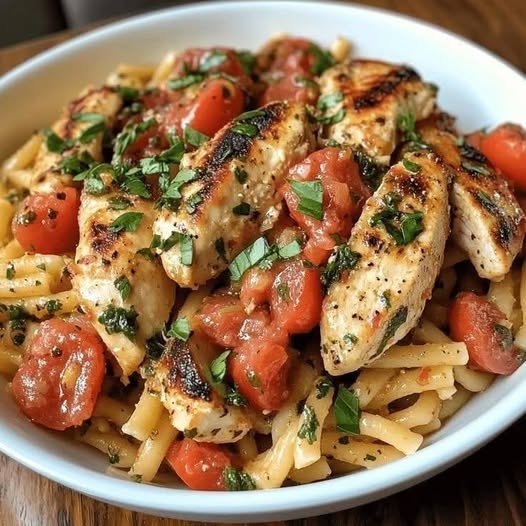
If the chicken breasts are thick, slice them horizontally into thinner cutlets or gently pound them to about 1–1.5 cm thick. This helps them cook evenly and gives you the grilled appearance seen in the photo.
Mix together:
olive oil + garlic + lemon juice + Italian seasoning + paprika + oregano + salt + pepper + parsley
Coat the chicken thoroughly.
Cover and refrigerate for 20–60 minutes. You can marinate longer, but because the marinade contains lemon juice, I wouldn’t leave thin chicken sitting in it indefinitely.
2. Cook the pasta
Bring a large pot of generously salted water to a boil.
Cook the pasta until al dente, according to the package directions.
Before draining, reserve ½–1 cup pasta water.
Drain the pasta. Don’t rinse it.
Why reserve the water? The starchy water helps the tomato, olive oil and butter come together into a glossy sauce.
3. Grill the chicken
Heat a grill pan, cast-iron skillet or outdoor grill over medium-high heat.
Lightly oil the cooking surface.
Place the chicken down and cook approximately:
3–5 minutes on the first side
3–5 minutes on the second side
The exact time depends on thickness.
For food safety, chicken should reach 165°F / 74°C internally, measured with a food thermometer at the thickest part.
F
Food Safety and Inspection Service
+1
Don’t constantly move the chicken around. Let it sit against the hot surface so it develops those attractive browned/grilled marks.
Transfer to a plate and rest for 5 minutes.
Then slice diagonally into strips.
4. Make the tomato-garlic sauce
Using the same skillet is ideal because all those browned chicken bits add flavor.
Add 2 tbsp olive oil.
Add the garlic and cook for about 30 seconds.
Add:
cherry tomatoes
canned tomatoes
oregano
Italian seasoning
red-pepper flakes
salt
pepper
Cook over medium-high heat for 4–6 minutes.
The cherry tomatoes should soften and some should begin to blister and burst.
Add about ¼ cup pasta water and stir.
5. Combine everything
Add the cooked pasta to the skillet.
Toss thoroughly.
Add additional pasta water, a tablespoon at a time, until the sauce lightly coats the pasta rather than sitting at the bottom of the pan.
For a richer finish, stir in:
2 tbsp butter
¼ cup Parmesan
Turn off the heat.
Add the lemon juice and most of the fresh parsley.
Taste and adjust:
More salt → if flat
More lemon → if too rich
More chili → if you want heat
More pasta water → if dry
Parmesan → for a richer/saltier finish
6. Plate like the picture
Pile the pasta into a shallow bowl.
Arrange the grilled chicken strips over the top.
Spoon some of the blistered tomatoes around and over the chicken.
Finish with:
fresh parsley
Parmesan
black pepper
a small drizzle of olive oil
For the closest visual match to your photograph, don’t completely bury the chicken in the pasta. Place several large grilled pieces visibly across the top.
Nut & Allergen Information
Does this recipe contain nuts?
No. The basic recipe contains no peanuts or tree nuts.
However, if you’re cooking for someone with a serious allergy, check the labels of packaged ingredients such as pasta, pesto, Parmesan, seasoning blends and any prepared sauces for cross-contact/allergen statements.
The FDA recognizes peanuts and tree nuts among the major food allergens, along with milk, eggs, fish, crustacean shellfish, wheat, soy and sesame.
U
U.S. Food and Drug Administration
+1
Main allergens in this recipe
Ingredient Potential allergen
Pasta Wheat; sometimes egg depending on pasta
Parmesan Milk
Butter Milk
Chicken None inherently
Tomatoes None among the major allergens
Garlic/herbs None among the major allergens
Olive oil None among the major allergens
Nut-free version
For a strictly nut-free meal:
Use plain pasta rather than pesto pasta.
Check pasta packaging.
Check Parmesan packaging.
Avoid shared cutting boards, utensils and colanders that may have contacted nuts.
Don’t add pine nuts, almonds or pesto unless you’re certain they’re safe.
Approximate Nutrition
For 1 of 4 servings, assuming 600 g chicken, 300 g dry pasta, 2 tbsp olive oil, Parmesan and butter:
Nutrient Approx. per serving
Calories 650–700 kcal
Protein 50–55 g
Carbohydrates 65–70 g
Fat 20–24 g
Fiber 5–7 g
Sugar 7–9 g
Sodium 700–1,000 mg*
*Very dependent on the amount of salt, Parmesan and the specific pasta/tomatoes used.
For a lighter version, reduce the pasta to 225 g, use 1 tbsp olive oil for the sauce, and omit the butter. You can also increase the tomatoes and parsley.
Recipe Q&A
Can I use chicken thighs?
Yes. Boneless, skinless thighs work extremely well and are more forgiving than breast. Cook until they reach 165°F/74°C internally.
Can I make this without a grill?
Absolutely. Use a cast-iron or heavy skillet. Get it very hot, then sear the chicken without moving it too much.
Why is my chicken dry?
Usually because the breast is too thick, it’s cooked too long, or the heat is too low. Pound it evenly and use a thermometer rather than relying only on cooking time.
Can I use spaghetti?
Yes. Spaghetti, linguine, penne, fusilli and rotini all work.
Can I use only fresh tomatoes?
Yes. Use approximately 500–600 g cherry tomatoes. Cook them longer until they become juicy and begin breaking down.
Can I make it creamy?
Yes. After adding the pasta, stir in ¼ cup heavy cream or 2–3 tbsp cream cheese. Reduce the pasta water accordingly.
Can I make it spicy?
Add ½–1 tsp red-pepper flakes, or finish with sliced fresh chili.
Can I add pesto?
Definitely. Stir 1–2 tbsp pesto through the pasta at the end. If you’re avoiding nuts, use a nut-free pesto and verify the ingredient label.
Can I prepare it ahead?
You can marinate the chicken and prepare the sauce ahead. For the best texture, cook the pasta shortly before serving.
How do I reheat leftovers?
Reheat gently in a skillet with a splash of water or chicken stock. Add a little olive oil to restore moisture. Avoid aggressively microwaving the chicken, which can make breast meat rubbery.
What vegetables would go well with it?
Excellent additions include:
zucchini
spinach
mushrooms
bell peppers
broccoli
roasted red peppers
asparagus
Can I make it gluten-free?
Yes. Use certified gluten-free pasta and verify all packaged seasonings/sauces.
Can I make it dairy-free?
Yes. Omit butter and Parmesan, or use dairy-free alternatives. Olive oil provides enough richness on its own.
Best version for the pictured result
For the closest match to the photograph, I’d use:
Chicken breast + fusilli/short pasta + cherry tomatoes + canned tomatoes + garlic + olive oil + oregano + parsley + Parmesan + lemon + plenty of black pepper.
The key tricks are thin chicken breasts, very high heat for the grill marks, blistered tomatoes, and finishing the pasta with starchy pasta water rather than making a heavy sauce.