
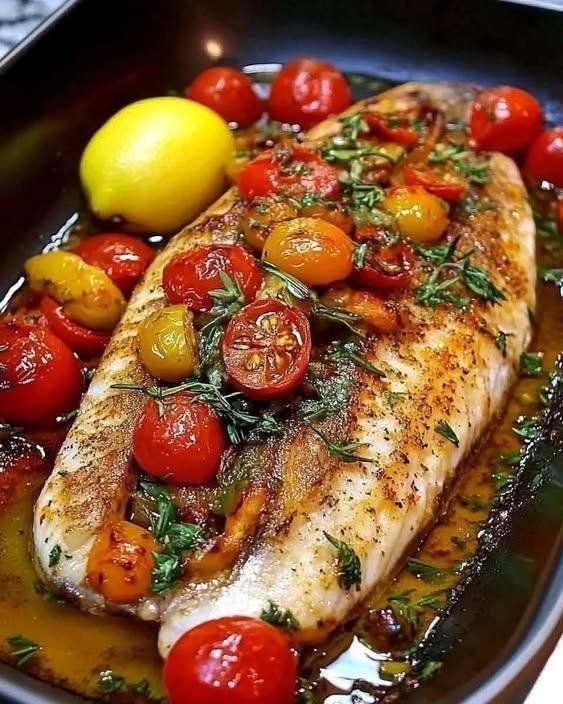
Serves: 2–3
Prep: 10–15 minutes
Cook: 18–25 minutes
Total: ~35 minutes
Difficulty: Easy
Ingredients
Salmon
1 large salmon fillet, about 500–600 g
2 tbsp extra-virgin olive oil
3–4 garlic cloves, finely chopped
1 tsp paprika
½ tsp freshly ground black pepper
½ tsp salt, or to taste
½ tsp dried oregano
½ tsp dried thyme
¼ tsp chili flakes — optional
1 tbsp lemon juice
Zest of ½ lemon
Tomato topping
250–300 g cherry tomatoes
½ small red onion, thinly sliced — optional
1 tbsp olive oil
2 garlic cloves, sliced
1 tbsp lemon juice
1 tsp chopped fresh rosemary
1–2 tbsp chopped fresh parsley or dill
Salt and black pepper
1 lemon, cut into wedges
To finish
1 tbsp chopped fresh parsley
1 tbsp chopped fresh dill
Extra lemon juice
1–2 tbsp good-quality olive oil
Method
1. Prepare the salmon
Pat the salmon thoroughly dry with paper towels.
Place it skin-side down in a baking dish or on a lined baking tray.
Mix together:
olive oil
garlic
paprika
black pepper
salt
oregano
thyme
chili flakes
lemon juice
lemon zest
Rub the mixture generously over the salmon.
Tip: Leave the salmon at room temperature for about 10–15 minutes while you prepare the tomatoes.
2. Prepare the tomatoes
Add the cherry tomatoes to a bowl.
Toss with:
olive oil
sliced garlic
salt
pepper
rosemary
lemon juice
For the appearance in your photo, use a mixture of red, orange and yellow cherry tomatoes if available.
3. Arrange everything
Scatter approximately two-thirds of the tomatoes around the salmon.
Place a few tomatoes directly on top of the fillet.
Add the remaining garlic and herbs around the fish.
Put several lemon wedges into the dish.
Drizzle another small amount of olive oil over everything.
4. Bake
Preheat your oven to:
200°C / 400°F
Bake for approximately:
18–22 minutes for a 500–600 g fillet.
The exact time depends on thickness.
For a thicker fillet, you may need closer to 25 minutes.
The salmon should be opaque and flake easily, while the tomatoes should become soft and blistered.
For food safety, salmon should reach 63°C / 145°F in the thickest part.
U
U.S. Food and Drug Administration
5. Get the roasted appearance
For the darker, slightly caramelized appearance shown in your picture, switch the oven to broil/grill for approximately 1–3 minutes at the end.
Watch it closely—the garlic and herbs can burn quickly.
6. Finish
Remove from the oven and spoon the hot tomato-and-garlic juices over the salmon.
Finish with:
olive oil
sliced garlic
salt
pepper
rosemary
lemon juice
For the appearance in your photo, use a mixture of red, orange and yellow cherry tomatoes if available.
3. Arrange everything
Scatter approximately because it was cooked too long. Salmon thickness varies considerably, so start checking it early rather than relying only on the two-thirds of the tomatoes around the salmon.
Put several lemon wedges into the dish.
fresh parsley
fresh dill
a squeeze of lemon
a drizzle of extra-virgin olive oil
Let it rest for 3–5 minutes before serving.
The sauce
The beautiful liquid surrounding the salmon in the picture is essentially a simple tomato-garlic herb pan sauce.
If you want it more saucy, add this before baking:
The sauce
3 tbsp olive oil
2 tbsp lemon juice
2 tbsp water or fish stock
1 minced garlic clove
½ tsp paprika
pinch of salt
Mix and pour around the salmon.
As the tomatoes roast, their juices combine with the olive oil, garlic and lemon to create the sauce.
What to serve with it
Good options include:
steamed or roasted potatoes
mashed potatoes
rice
couscous
quinoa
crusty bread
sautéed spinach
asparagus
green beans
simple cucumber salad
For a lighter meal, serve the salmon with green salad + roasted vegetables.
Approximate nutrition
Nutrition varies substantially with the salmon variety and amount of oil used. For reference, FDA data lists about 200 calories and 24 g protein per 84 g (3 oz) serving for Atlantic/coho/sockeye/chinook salmon, before accounting for the added oil and other ingredients.
U
U.S. Food and Drug Administration
A typical serving of this recipe with the tomato topping and olive oil would be approximately:
Nutrient Per serving*
Calories ~450–550 kcal
Protein ~35–45 g
Fat ~28–38 g
Carbohydrates ~8–12 g
Fiber ~2–3 g
Sugars ~4–6 g
*Approximate; depends heavily on salmon size and how much oil is actually consumed.
Nut / allergen information
This recipe contains no tree nuts or peanuts.
The main major allergen is fish (salmon). Fish is recognized as a major food allergen.
A
AMS
+1
Ingredients to check
Salmon → fish allergen
Olive oil → generally nut-free, but check the label if cross-contact is a concern
Herbs, lemon, tomatoes, garlic → no major allergens
No dairy
No egg
No wheat/gluten
No soy
No sesame
No peanuts
No tree nuts
If you’re cooking for someone with a serious fish allergy, don’t substitute another fish without checking their allergy requirements.
Q&A
Can I use frozen salmon?
Yes. Thaw it completely in the refrigerator first and pat it very dry.
Can I use salmon steaks?
Yes. Cooking time will vary depending on thickness.
Can I make this without olive oil?
Yes. You can reduce the oil substantially, although the oil helps create the glossy sauce seen in the photograph.
Can I use butter?
Yes. Add 1–2 tbsp butter during the last few minutes of baking. It gives the sauce a richer flavor.
Can I make it spicy?
Absolutely. Add ½–1 tsp chili flakes, cayenne, or sliced fresh chili.
Can I use dried herbs?
Yes. Use roughly ⅓ the amount of dried herbs compared with fresh.
Why did my salmon become dry?
Usually because it was cooked too long. Salmon thickness varies considerably, so start checking it early rather than relying only on the clock.
Should I remove the skin?
You can, but I recommend leaving it on during baking. It helps protect the fish and can become nicely crisp underneath.
Can I make this in an air fryer?
Yes. For individual salmon portions, approximately 190°C / 375°F for 8–12 minutes is a reasonable starting point, depending on thickness and your appliance.
Can I prepare it ahead?
You can prepare the herb mixture and tomatoes several hours ahead and refrigerate them. For best texture, bake the salmon shortly before serving.
What makes the tomatoes taste so good?
Don’t skip the high heat. Roasting causes the cherry tomatoes to blister and release their juices, which mix with garlic, olive oil and herbs to form the pan sauce.
Can I use other fish?
Yes. Cod, haddock, trout or halibut can work, but cooking times will change. FDA nutrition data shows substantial nutritional differences among fish varieties, so the nutrition numbers above shouldn’t be transferred directly to another fish.
U
U.S. Food and Drug Administration
For the closest match to your photo: use a thick salmon fillet, colorful cherry tomatoes, plenty of fresh dill/parsley, lemon wedges, garlic, paprika, and finish with a brief high-heat broil.