
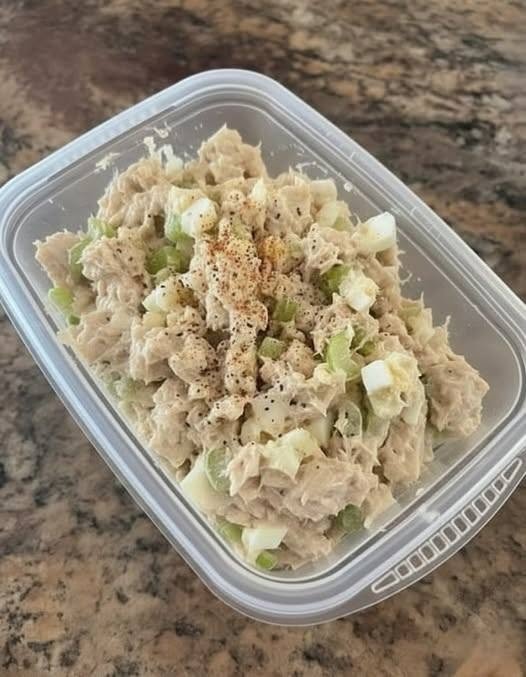
This High-Protein Tuna Salad is creamy, crunchy, fresh, and filling without being heavy. It combines tuna, Greek yogurt, vegetables, and a simple savory dressing to create an easy high-protein meal that works for lunch, dinner, meal prep, lettuce wraps, sandwiches, or crackers.
Recipe at a Glance
| Details | Information |
|---|---|
| Recipe | High-Protein Tuna Salad |
| Prep Time | 10 minutes |
| Cook Time | None |
| Total Time | 10 minutes |
| Servings | 2 |
| Difficulty | Easy |
| Course | Lunch, Dinner, Snack |
| Method | No-cook |
| Texture | Creamy, crunchy & fresh |
| Main Flavor | Savory, tangy & refreshing |
| Protein | Approximately 30–35 g per serving |
Ingredients
For the Tuna Salad
- 2 cans tuna in water, approximately 5 oz (142 g) each, drained
- ½ cup plain Greek yogurt
- 1 tablespoon mayonnaise, optional
- ¼ cup finely diced celery
- ¼ cup finely diced cucumber
- 2 tablespoons finely diced red onion
- 2 tablespoons chopped dill pickles
- 1 tablespoon fresh parsley, chopped
- 1 teaspoon Dijon mustard
- 1 teaspoon fresh lemon juice
- ½ teaspoon garlic powder
- ¼ teaspoon black pepper
- ¼ teaspoon salt, or to taste
Optional Additions
- 1 hard-boiled egg, chopped
- 1 tablespoon chopped green onion
- 1 teaspoon capers
- ¼ avocado, diced
- 1 tablespoon sunflower seeds
- 1 tablespoon chopped walnuts
- Fresh dill
- Pinch of paprika
- Pinch of red pepper flakes
Step-by-Step Instructions
1. Drain the Tuna
Open the tuna cans and drain them thoroughly.
For the best texture, press out as much excess water as possible.
Transfer the tuna to a large mixing bowl.
Use a fork to break it into smaller pieces.
Do not mash it into a paste; leaving some small chunks gives the salad a better texture.
2. Prepare the Vegetables
Finely dice:
- Celery
- Cucumber
- Red onion
- Pickles
Chop the parsley.
Smaller pieces distribute throughout the tuna much better and make every bite flavorful.
3. Make the Creamy Dressing
In a separate small bowl, combine:
- Greek yogurt
- Mayonnaise
- Dijon mustard
- Lemon juice
- Garlic powder
- Black pepper
Mix until smooth.
Taste the dressing before adding it to the tuna.
Add a little more lemon juice or mustard if you prefer a tangier flavor.
4. Combine Everything
Add the celery, cucumber, onion, pickles, and parsley to the tuna.
Pour the dressing over everything.
Gently fold together with a spoon or spatula.
Don’t overmix.
5. Adjust the Seasoning
Taste the tuna salad.
Add salt if necessary.
For more flavor, add:
- Extra black pepper
- Fresh dill
- A little Dijon mustard
- Lemon juice
- Paprika
6. Chill
For the best flavor, cover and refrigerate for approximately 20–30 minutes.
This gives the ingredients time to blend together.
You can also eat it immediately.
How to Serve
There are many ways to enjoy this tuna salad.
Lettuce Wraps
Spoon the tuna salad into large lettuce leaves.
Top with cucumber, tomato, and fresh herbs.
High-Protein Bowl
Serve over:
- Mixed greens
- Cucumber
- Tomatoes
- Bell peppers
- Avocado
Sandwich
Spread the tuna salad between two slices of your favorite bread.
Add lettuce and tomato for extra freshness.
Whole-Grain Toast
Spoon the tuna mixture over toasted whole-grain bread.
Cucumber Boats
Cut a cucumber in half lengthwise, scoop out some of the center, and fill it with tuna salad.
Crackers
Serve with whole-grain crackers for an easy snack.
What Makes This Tuna Salad High in Protein?
The main protein sources are:
Tuna
Tuna provides a concentrated source of protein.
Greek Yogurt
Greek yogurt increases protein while creating the creamy texture without requiring a large amount of mayonnaise.
Optional Egg
A chopped hard-boiled egg adds additional protein and makes the salad even more filling.
How to Make It Even Higher in Protein
For a very high-protein version, use:
- 2 cans tuna
- ¾ cup nonfat Greek yogurt
- 1 hard-boiled egg
- Vegetables and seasonings
You can also add a small amount of cottage cheese that has been blended until smooth.
The exact protein content depends on the brands and quantities used.
Healthier Creamy Dressing
For a lighter version, skip the mayonnaise completely.
Use:
- ¾ cup Greek yogurt
- 1 teaspoon Dijon mustard
- 1 teaspoon lemon juice
- Garlic powder
- Black pepper
- Fresh dill
This creates a creamy dressing with more protein and less fat.
Mediterranean Tuna Salad
For a Mediterranean-inspired version, add:
- Chopped cucumber
- Cherry tomatoes
- Kalamata olives
- Red onion
- Fresh parsley
- Feta cheese
- Lemon juice
Replace the mayonnaise with extra Greek yogurt and a small drizzle of extra-virgin olive oil.
Spicy Tuna Salad
Add:
- ½ teaspoon hot sauce
- ¼ teaspoon red pepper flakes
- ½ teaspoon smoked paprika
- Finely diced jalapeño
For extra creaminess, mix in a little Greek yogurt.
Avocado Tuna Salad
Replace the mayonnaise with:
- ½ ripe avocado
Mash the avocado and combine it with the tuna and Greek yogurt.
Add extra lemon juice to help balance the richness.
Crunchy Tuna Salad
For extra crunch, add:
- Celery
- Cucumber
- Bell pepper
- Pickles
- Sunflower seeds
Chopped apples can also provide a pleasant sweet-and-crunchy contrast.
No-Mayonnaise Tuna Salad
For a completely mayo-free version, use:
- ¾ cup Greek yogurt
- 1 teaspoon Dijon mustard
- 1 teaspoon lemon juice
- Fresh dill
- Garlic powder
- Black pepper
The Greek yogurt provides plenty of creaminess.
Low-Carb Version
For a lower-carb meal:
- Serve over leafy greens.
- Use cucumber and celery.
- Avoid bread and crackers.
- Skip sweetened sauces.
- Use Greek yogurt instead of mayonnaise.
- Add avocado for healthy fats.
No-Sugar Version
The basic recipe contains no added sugar.
For a strict no-added-sugar version:
- Choose plain Greek yogurt.
- Use unsweetened tuna.
- Check pickle labels for added sugar.
- Use mustard without added sugar.
- Avoid sweet relish.
Meal Prep Instructions
This recipe is excellent for meal prep.
Prepare the tuna salad and place it into airtight containers.
Keep bread, crackers, lettuce, and other toppings separate so they don’t become soggy.
For best quality, refrigerate promptly and use within 3–4 days.
If the salad has been sitting at room temperature for an extended period, discard it rather than attempting to refrigerate and reuse it.
Storage
Store the tuna salad in an airtight container in the refrigerator.
Keep the refrigerator at 40°F (4°C) or below.
Don’t leave the salad at room temperature for more than about 2 hours; if the surrounding temperature is very hot, food should not remain out for more than about 1 hour.
Freezing
Freezing is not recommended.
Greek yogurt, mayonnaise, and fresh vegetables can separate and become watery after thawing.
For the best texture, prepare it fresh or refrigerate it for a few days.
Approximate Nutrition
For 1 of 2 servings using tuna in water, nonfat Greek yogurt, and 1 tablespoon mayonnaise:
- Calories: approximately 230–280
- Protein: approximately 32–36 g
- Carbohydrates: approximately 6–9 g
- Fat: approximately 7–10 g
- Fiber: approximately 1–2 g
Adding avocado, nuts, crackers, bread, or additional mayonnaise will increase calories and fat.
Exact nutrition depends on the brands and quantities used.
WW-Friendly Tips
For a lighter WW-friendly version:
- Use tuna packed in water.
- Use fat-free Greek yogurt.
- Reduce or omit mayonnaise.
- Use plenty of zero-point vegetables such as cucumber and celery.
- Choose mustard instead of calorie-dense sauces.
- Serve over lettuce or other non-starchy vegetables.
WW Points depend on your individual plan and the exact products used, so enter the specific ingredients into your current WW app for the most accurate calculation.
Frequently Asked Questions
1. Can I use tuna packed in oil?
Yes. Tuna packed in oil has a richer flavor, but it will generally contain more calories and fat.
Drain it thoroughly before using.
2. Can I use fresh tuna?
Yes.
Cooked fresh tuna can be flaked and used in the same recipe.
Allow it to cool before mixing.
3. Can I use canned chicken instead?
Yes.
Canned chicken works as a direct alternative, although the flavor will be different.
4. Can I use cottage cheese instead of Greek yogurt?
Yes.
Blend cottage cheese until smooth first for the creamiest result.
5. Can I leave out mayonnaise?
Absolutely.
Greek yogurt alone works very well.
6. Why is my tuna salad watery?
The tuna or vegetables may contain excess moisture.
Drain the tuna thoroughly and pat watery vegetables dry before adding them.
7. How can I make it creamier?
Add a little more Greek yogurt or a small amount of mayonnaise.
You can also blend cottage cheese until smooth and add it to the dressing.
8. How can I make it less tangy?
Reduce the lemon juice and Dijon mustard.
You can also add a little more Greek yogurt.
9. Can I add boiled eggs?
Yes.
A chopped hard-boiled egg is an excellent addition and increases the protein and richness.
10. Can I use sweet relish?
Yes, but check the nutrition label if you’re avoiding added sugar.
Diced dill pickles are an excellent alternative.
11. Can I use Greek yogurt instead of mayonnaise?
Yes, and it is one of the easiest ways to increase protein while making the recipe lighter.
12. Can I make this ahead of time?
Yes.
It can be prepared ahead and refrigerated.
For best quality, use within approximately 3–4 days.
13. Can I eat tuna salad every day?
Tuna can be part of a healthy diet, but it’s better to vary seafood and protein sources rather than relying on the same fish every day.
Choose tuna varieties according to current mercury guidance and vary your seafood choices.
14. What tuna is best for this recipe?
Tuna packed in water works particularly well for a lighter, high-protein version.
15. Can I make this dairy-free?
Yes.
Replace Greek yogurt with a suitable unsweetened dairy-free yogurt or use mashed avocado as the creamy component.
16. Is this keto-friendly?
The basic version can fit a low-carbohydrate diet, especially when served in lettuce wraps or over salad instead of bread or crackers.
17. Can I make it spicy?
Yes.
Add hot sauce, jalapeño, cayenne, or red pepper flakes.
18. Can I add cheese?
Yes.
Feta, cheddar, or Parmesan can work well, although they will change the nutrition profile.
Troubleshooting Guide
| Problem | Likely Cause | Solution |
|---|---|---|
| Too watery | Tuna or vegetables weren’t drained | Drain and pat ingredients dry |
| Too dry | Not enough dressing | Add Greek yogurt 1 tablespoon at a time |
| Too tangy | Too much lemon/mustard | Add more yogurt |
| Too salty | Pickles, tuna, or added salt | Reduce added salt and add more vegetables |
| Bland | Not enough seasoning | Add lemon, mustard, pepper, garlic, or herbs |
| Too thick | Too much tuna | Add Greek yogurt |
| Too creamy | Too much dressing | Add more tuna or vegetables |
| Vegetables become soggy | Stored too long | Add fresh vegetables immediately before serving |
Pro Tips for Perfect Tuna Salad
Tip 1: Drain the tuna extremely well
Excess liquid is one of the main causes of watery tuna salad.
Tip 2: Don’t overdo the mayonnaise
Greek yogurt provides plenty of creaminess while keeping the recipe protein-focused.
Tip 3: Add lemon gradually
A little lemon brightens the entire recipe.
Tip 4: Use fresh herbs
Fresh dill or parsley can dramatically improve the flavor.
Tip 5: Let it rest
Even 20 minutes in the refrigerator allows the flavors to develop.
Tip 6: Keep toppings separate
If meal prepping, keep lettuce, bread, crackers, and crunchy vegetables separate.
Tip 7: Taste before adding salt
Tuna, pickles, mustard, and mayonnaise can already contain significant salt.
Best Serving Combination
For a balanced high-protein lunch, serve:
High-Protein Tuna Salad + Mixed Greens + Cucumber + Tomatoes + Avocado + Lemon
For a more substantial meal, add a slice of whole-grain toast or a small serving of roasted potatoes.
Final Result
You get a creamy, tangy, crunchy tuna salad with approximately 30–35 grams of protein per serving, depending on the ingredients. It’s quick enough for a busy weekday, versatile enough for meal prep, and easy to adapt into low-carb, no-added-sugar, Mediterranean-style, or WW-friendly meals.