
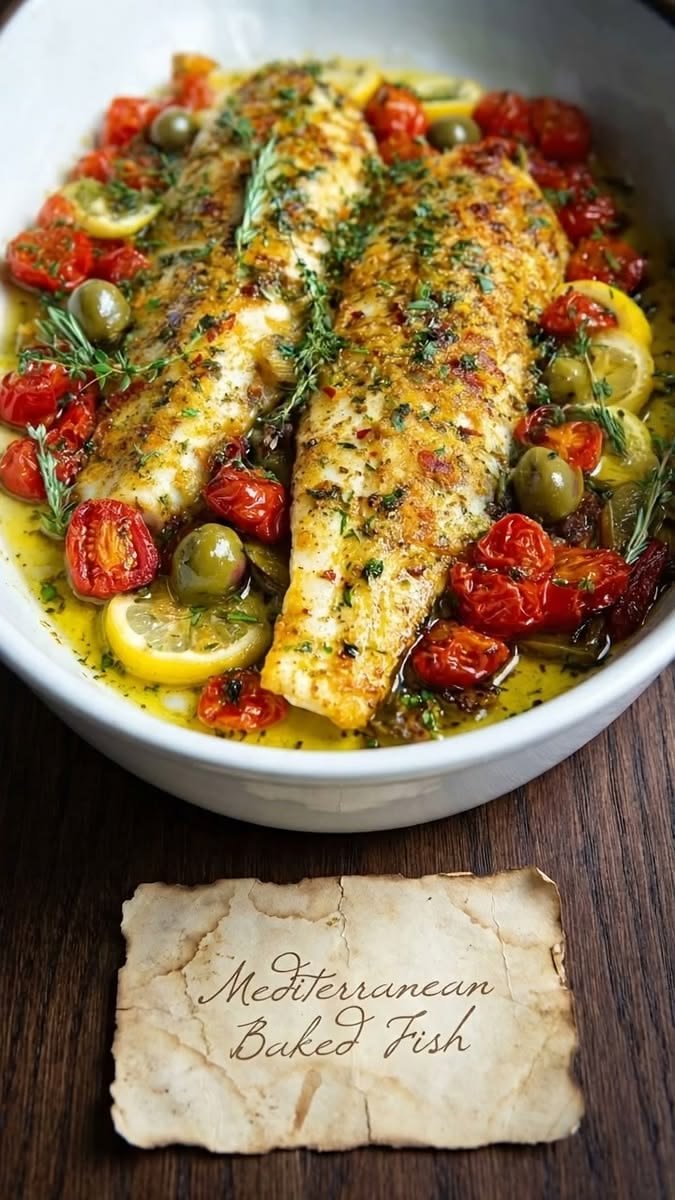
Serves: 4
Prep: 15 minutes
Bake: 18–25 minutes
Total: ~40 minutes
Difficulty: Easy
Ingredients
Fish
4 white-fish fillets, about 150–180 g each
3 tbsp extra-virgin olive oil
3 cloves garlic, finely minced
1 tsp dried oregano
1 tsp dried thyme
½ tsp paprika
½ tsp red chili flakes, or to taste
½ tsp ground black pepper
¾ tsp salt
1 tsp lemon zest
1 tbsp fresh lemon juice
Mediterranean topping
2 cups cherry tomatoes, halved
½–¾ cup green olives, pitted
1 lemon, thinly sliced
2 tbsp capers, optional
½ small red onion, thinly sliced
3–4 sprigs fresh dill
3–4 sprigs fresh thyme
2 tbsp chopped fresh parsley
2 tbsp extra-virgin olive oil
Optional finishing sauce
1 tbsp lemon juice
1 tbsp olive oil
1 tsp chopped parsley
Pinch of chili flakes
Method
1. Prepare the fish
Pat the fish completely dry with paper towels. This is important because dry fish browns better and doesn’t release as much water into the baking dish.
Mix:
3 tbsp olive oil + garlic + oregano + thyme + paprika + chili flakes + pepper + salt + lemon zest + lemon juice.
Rub this mixture generously over both sides of the fish.
2. Prepare the Mediterranean base
Heat the oven to 200°C / 400°F.
Place the tomatoes, olives, onion and capers in a large baking dish.
Drizzle with about 2 tbsp olive oil and toss everything together.
Arrange several lemon slices underneath and around the fish.
3. Add the fish
Place the seasoned fillets on top of the tomato-olive mixture.
Scatter fresh thyme and dill around the fish.
For the appearance shown in your photo, put a few additional lemon slices, olives and tomatoes directly around the fillets.
4. Bake
Bake uncovered at 200°C / 400°F for approximately 18–25 minutes, depending on the thickness of the fillets.
The fish is safely cooked when the center reaches 145°F / 63°C. The FDA also describes properly cooked fish as opaque and separating easily with a fork.
U
U.S. Food and Drug Administration
+1
Don’t rely solely on cooking time because a thin tilapia fillet and a thick cod fillet will cook at very different rates.
5. Make the juices
When the fish is finished, spoon the hot tomato-olive-oil juices from the bottom of the dish over the fish.
Mix the optional finishing ingredients and drizzle over the top.
Finish with plenty of fresh parsley and dill.
Flavor profile
You’ll get:
Richness: extra-virgin olive oil
Acidity: lemon
Sweetness: roasted cherry tomatoes
Saltiness: olives + optional capers
Herbal flavor: dill, parsley, oregano and thyme
Heat: chili flakes
Savory depth: garlic and roasted fish juices
The combination of tomatoes + olives + lemon + herbs is what gives the dish its Mediterranean character.
Nutrition estimate
For 1 serving (¼ of recipe), assuming 170 g white fish and the listed amount of olive oil:
Nutrient Approx. per serving
Calories 400–470 kcal
Protein 35–40 g
Fat 24–29 g
Saturated fat 4–5 g
Carbohydrates 9–12 g
Fiber 2–3 g
Net carbs 7–9 g
Sugars 5–7 g
Sodium 650–900 mg
These are estimates, not laboratory values. Sodium can vary substantially depending on the olives, capers and amount of added salt, while calories vary with the type of fish and how much olive oil is actually consumed.
Is it keto/low-carb?
Yes. Without bread, rice or potatoes, this is naturally a relatively low-carbohydrate meal.
Is it high protein?
Yes. A typical serving provides roughly 35–40 g of protein, depending on the fish.
Nut & allergen information
Does this recipe contain nuts?
No. There are no tree nuts or peanuts in the recipe.
Important allergen
The main allergen is fish.
If you’re cooking for someone with a fish allergy, don’t substitute another seafood without checking their specific allergy.
Possible hidden allergens
Check packaged ingredients for:
Jarred olives
Capers
Spice blends
Prepared sauces
Some commercially prepared products can contain additional ingredients or cross-contact warnings.
For a completely nut-free meal: use plain olive oil, fresh herbs and individual spices rather than a prepared seasoning blend.
Best fish substitutions
You can use:
Cod – thick, flaky and mild
Haddock – delicate and slightly sweet
Sea bass – richer and more luxurious
Snapper – firm with excellent flavor
Tilapia – economical and mild
Halibut – thick, meaty and excellent for baking
For very thick fillets, allow additional cooking time, but use the internal temperature rather than time alone.
Tips for getting the photo-style result
1. Don’t overcrowd the dish.
The tomatoes should roast rather than steam.
2. Use plenty of olive oil.
The oil combines with tomato juices, garlic and lemon to make the sauce.
3. Roast the tomatoes first if you want deeper flavor.
Bake the tomatoes, olives, onion and oil for 10 minutes, then add the fish and continue baking.
4. Don’t overcook the fish.
White fish can go from perfectly juicy to dry surprisingly quickly.
5. Add fresh herbs at the end.
Keep some dill and parsley fresh rather than baking all of it.
6. Use lemon zest as well as lemon juice.
The zest provides a much stronger citrus aroma without making the dish excessively acidic.
Serving ideas
Serve the fish with:
Crusty sourdough or baguette
Roasted potatoes
Couscous
Bulgur
Rice
Quinoa
Greek salad
Steamed green beans
Roasted zucchini
A simple cucumber salad
For the closest presentation to the photograph, serve the fish in a shallow white bowl with the roasted tomatoes, olives and lemon slices surrounding it, then spoon the golden olive-oil cooking juices over the top.
Quick Q&A
Can I prepare it ahead?
You can assemble the vegetables, seasoning and fish several hours ahead and refrigerate. Bake shortly before serving.
Can I use frozen fish?
Yes, but thaw it safely in the refrigerator and pat it very dry before seasoning.
U
U.S. Food and Drug Administration
Can I make it without olives?
Yes. Add extra tomatoes, capers, artichokes or sliced bell pepper.
Can I make it dairy-free?
Yes — the recipe is naturally dairy-free.
Can I make it gluten-free?
Yes — the dish itself contains no gluten. Check packaged seasonings and accompaniments if strict gluten avoidance is required.
How do I know the fish is done?
Use a thermometer and target 145°F / 63°C in the thickest part.
U
U.S. Food and Drug Administration
Can I use salmon?
Yes, although the result will be considerably richer and won’t resemble the lean white fish in the photograph as closely.
What gives the sauce its golden color?
Primarily the olive oil, paprika, roasted tomato juices and herbs.