
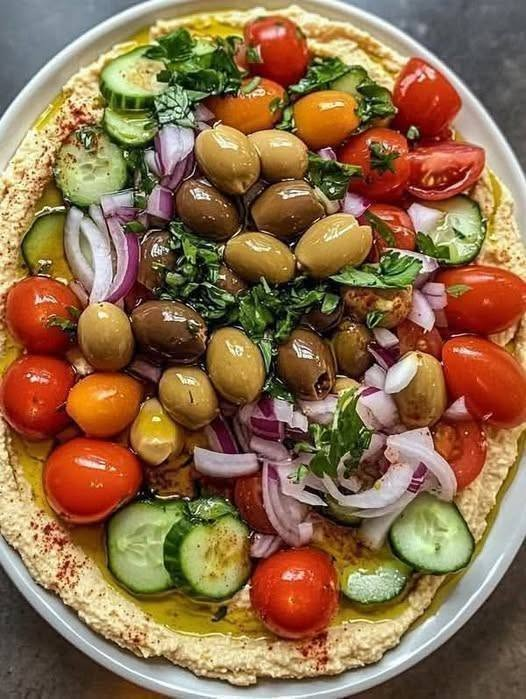
The photo appears to show a creamy hummus base topped with mixed olives, cherry/grape tomatoes, cucumber, red onion, fresh herbs and olive oil, with some roasted vegetables and paprika around the edges. It works beautifully as an appetizer, mezze platter, light lunch, or party dip.
Ingredients
For the hummus
Makes about 3 cups
2 cans (15 oz / 425 g each) chickpeas, drained and rinsed
½ cup tahini
3 tbsp fresh lemon juice
2 garlic cloves
½ tsp ground cumin
¾ tsp salt, plus more to taste
3–5 tbsp ice-cold water
2 tbsp extra-virgin olive oil
½ tsp paprika, optional
For an especially smooth hummus: remove the chickpea skins after rinsing, or simmer the chickpeas for another 10–15 minutes until very soft.
Topping
1 cup cherry or grape tomatoes
½ cup cucumber, sliced
½ small red onion, thinly sliced
¾–1 cup mixed green and Kalamata olives
½ cup fresh parsley, chopped
¼ cup fresh mint or basil, chopped
2–3 tbsp extra-virgin olive oil
1 tbsp lemon juice
½ tsp dried oregano
¼ tsp salt
¼ tsp black pepper
½ tsp sumac, optional
Optional roasted vegetables
The image appears to contain a few pieces of roasted vegetables among the toppings.
Use:
½ small eggplant, cubed
½ red bell pepper, chopped
1 tbsp olive oil
Pinch of salt
¼ tsp cumin or smoked paprika
Garnish
Extra olive oil
Paprika or sumac
Fresh parsley/mint
Lemon wedges
Toasted pita bread
Step-by-Step Recipe
1. Prepare the chickpeas
Drain and rinse the chickpeas thoroughly.
For ultra-smooth hummus, put them in a saucepan, cover with water and simmer for 10–15 minutes. Drain well.
If you have time, rub the chickpeas between your hands and remove loose skins. You don’t have to remove every skin.
2. Make the tahini base
Put the following into a food processor:
tahini
lemon juice
garlic
salt
Process for about 30–45 seconds.
The tahini may initially become thick. Add 1–2 tbsp cold water and process again until creamy.
3. Add the chickpeas
Add the chickpeas and cumin.
Blend for 2–3 minutes, stopping occasionally to scrape down the sides.
Slowly add cold water, 1 tablespoon at a time, until you get a very smooth, creamy consistency.
Finally add the olive oil and blend for another 20–30 seconds.
Texture goal
For this particular platter, make the hummus thick enough to hold the toppings, rather than making it thin or runny.
4. Roast the vegetables
If using eggplant and pepper:
Heat oven to 220°C / 425°F.
Toss vegetables with olive oil, salt and cumin/paprika.
Spread on a baking tray.
Roast for 20–25 minutes, turning once.
Cool slightly before adding to the hummus.
You can also pan-roast them for about 8–12 minutes.
5. Prepare the fresh topping
Halve some of the cherry tomatoes and leave others whole for the appearance shown in the photograph.
Combine:
tomatoes
cucumber
red onion
parsley
mint/basil
lemon juice
oregano
black pepper
Toss gently.
Don’t add too much salt yet because the olives can be quite salty.
6. Arrange the hummus
Spread the hummus onto a large shallow plate.
Use the back of a spoon to create a wide circular depression in the center.
Drizzle 1–2 tbsp olive oil over the hummus.
Sprinkle a little paprika or sumac around the outer edge.
7. Add the toppings
Arrange rather than completely mixing the toppings.
A good order is:
Cucumber
Tomatoes
Red onion
Roasted eggplant/pepper
Fresh herbs
Mixed olives in the center
Drizzle with another little stream of olive oil.
Finish with sumac, paprika and fresh herbs.
Serve with warm toasted pita.
Nut & Allergy Information
Is this recipe nut-free?
Yes, as written, it contains no peanuts or tree nuts.
However, there is an important allergen:
Tahini contains sesame
Tahini is made from ground sesame seeds. Sesame is a major food allergen, even though sesame is technically a seed rather than a tree nut.
So this recipe is:
Peanut-free
Tree-nut-free
Not sesame-free
Vegetarian
Vegan, assuming the pita is vegan
If you’re cooking for someone with a sesame allergy, do not simply substitute another nut butter. Use a certified sesame-free hummus recipe instead.
Also check packaged:
Olives
Tahini
Pita
Spice blends
Hummus ingredients
for cross-contact warnings.
Nutrition — Approximate
Assuming the platter serves 8 people, without counting pita:
Nutrient Approx. per serving
Calories 250–300 kcal
Protein 7–9 g
Carbohydrates 25–30 g
Fat 13–17 g
Fiber 7–9 g
Saturated fat ~2 g
Sodium ~450–700 mg
The biggest variable is olives and added salt, which can substantially increase sodium.
For a lower-sodium version, use fewer olives and rinse them briefly before serving.
Easy Variations
🫒 Greek-style
Add:
oregano
feta
Kalamata olives
roasted red pepper
Spicy
Ad:
chili flakes
Aleppo pepper
harissa
sliced jalapeño
Roasted vegetable
Add generous amounts of:
roasted eggplant
zucchini
red pepper
caramelized onion
Creamier version
Add diced avocado immediately before serving. Don’t mix it into the hummus too early because it can discolor. Extra-herby
Use a combination of:
parsley
mint
cilantro
dill
Serving Ideas
Serve with:
Warm pita
Toasted pita wedges
Lavash
Cucumber sticks
Carrot sticks
Bell pepper strips
Celery
Radishes
Cherry tomatoes
Roasted vegetables
For a complete mezze meal, add falafel, tabbouleh, stuffed grape leaves and grilled vegetables.
FAQ
Can I make the hummus ahead of time?
Yes. Make it up to 3 days ahead and keep it covered in the refrigerator. Add the fresh toppings shortly before serving.
Can I prepare the whole platter ahead?
Prepare the hummus and chopped vegetables separately. Assemble approximately 30–60 minutes before serving. This prevents the tomatoes. and cucumbers from releasing too much water into the hummus.
Why is my hummus bitter?
The most common culprit is tahini. Different tahinis vary considerably in bitterness. Lemon, salt and additional chickpeas can help balance it.
Why isn’t my hummus smooth?
The chickpeas may not be soft enough, or the hummus hasn’t been processed long enough. Blend for several minutes and add cold water gradually.
Can I use dried chickpeas?
Yes. Soak them overnight, then cook until extremely tender before making the hummus. Very soft chickpeas produce a smoother result.
Can I use canned chickpeas?
Absolutely. They’re the easiest option and work very well.
Can I make it without tahini?
Yes, but it will no longer have the characteristic hummus flavor. You can make a chickpea dip with olive oil, lemon, garlic and cumin instead.
Can I make it without garlic?
Yes. Simply omit it or use a small amount of roasted garlic for a milder flavor.
Are olives necessary?
No. They’re a major visual and flavor component of the pictured platter, but you can replace them with roasted peppers, artichokes, chickpeas or grilled vegetables.
How do I keep the cucumber crunchy?
Slice it shortly before serving and pat it dry. For a platter that will sit out for a while, use Persian or English cucumbers because they tend to be less watery.
Can I use regular tomatoes?
Yes. Dice Roma tomatoes or other firm tomatoes and drain excess juice before adding them.
How long can the platter sit out?
Because hummus is a perishable food, don’t leave it at room temperature for an extended period. For parties, keep portions chilled and replenish the serving platter rather than leaving one large dish out for hours.
What gives the photographed dish its glossy appearance?
Mostly extra-virgin olive oil drizzled over the hummus and vegetables. A small amount goes a long way visually. Best way to recreate the photograph
For the closest presentation, make very smooth, thick hummus, spread it in a broad oval/round shape, create a shallow well, then pile whole cherry tomatoes, cucumber slices, red onion, mixed green/Kalamata olives and plenty of fresh parsley in the middle. Finish with good olive oil + sumac/paprika and serve with warm pita.