
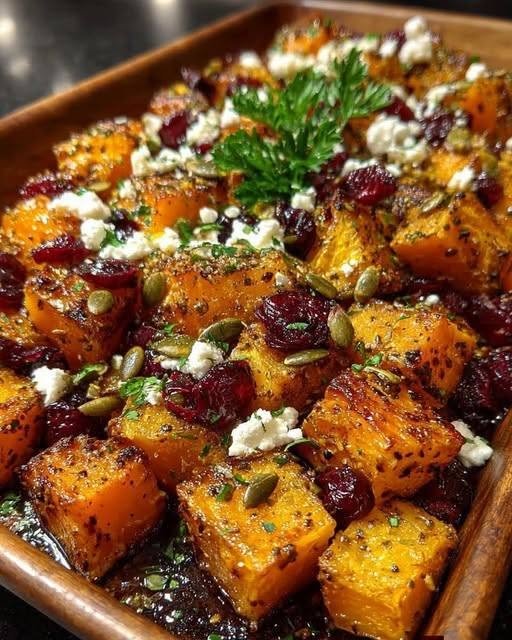
From the photo, this appears to be roasted butternut squash with dried cranberries, feta, pumpkin seeds (pepitas), herbs, and a savory herb-spice coating. The recipe below recreates that style and presentation.
Yield: 4–6 servings
Prep: 20 minutes
Roasting: 30–40 minutes
Total: about 1 hour
Ingredients
For the roasted squash
1.2 kg (about 2½ lb) butternut squash, peeled and cut into 3–4 cm cubes
3 tbsp extra-virgin olive oil
1 tsp dried thyme
1 tsp dried oregano
½ tsp dried rosemary
1 tsp smoked paprika
½ tsp ground cumin
½ tsp garlic powder
½ tsp freshly ground black pepper
¾ tsp salt
¼ tsp chili flakes, optional
1 tbsp maple syrup or honey, optional
For the topping
¾ cup dried cranberries
½ cup pumpkin seeds/pepitas, preferably roasted
100–125 g feta cheese, crumbled
2–3 tbsp fresh parsley, finely chopped
1–2 tbsp fresh dill, optional
1 tbsp pumpkin seeds for final garnish
A little lemon zest, optional
Lemon-herb dressing
3 tbsp extra-virgin olive oil
1½ tbsp fresh lemon juice
1 tsp lemon zest
1 tsp honey or maple syrup
1 small garlic clove, finely grated
½ tsp Dijon mustard
¼ tsp salt
¼ tsp black pepper
Method
1. Prepare the squash
Heat the oven to 220°C / 425°F.
Peel and seed the butternut squash and cut it into fairly large cubes. Try to keep the pieces similar in size so they cook evenly.
Pat the squash dry if it is particularly moist.
2. Season
Put the squash into a large bowl.
Add olive oil, thyme, oregano, rosemary, smoked paprika, cumin, garlic powder, pepper and salt.
Toss very thoroughly so every piece is lightly coated.
For the slightly caramelized appearance in the photograph, add 1 tbsp maple syrup or honey.
3. Roast
Spread the squash on a large baking tray in one layer.
Don’t overcrowd the tray; space between the pieces allows the edges to brown rather than steam.
Roast for approximately:
20 minutes: turn the pieces
30 minutes: check for tenderness
35–40 minutes: continue until deeply browned and caramelized
The ideal pieces should be soft inside with dark golden, slightly crisp edges.
4. Toast the pepitas
If your pumpkin seeds aren’t already roasted, put them in a dry skillet over medium heat.
Toast for about 3–5 minutes, stirring frequently, until fragrant and lightly browned.
Remove immediately from the pan so they don’t continue cooking.
5. Make the dressing
Whisk together:
olive oil + lemon juice + lemon zest + honey/maple syrup + Dijon + garlic + salt + pepper.
Taste it.
For a sweeter dressing, add a little honey.
For more acidity, add lemon juice.
For a richer flavor, add another tablespoon of olive oil.
6. Assemble
Place the hot roasted squash on a serving platter.
Scatter over:
dried cranberries
crumbled feta
toasted pumpkin seeds
parsley
dill, if using
Drizzle the lemon-herb dressing over everything.
Finish with a little lemon zest, black pepper and a final sprinkling of pepitas.
For the appearance in the photograph: use a large shallow wooden or ceramic serving dish and arrange some of the squash pieces on top rather than mixing everything completely. Finish with a generous herb sprig in the center.
Nut & Allergen Information
Is this recipe made with nuts?
No. The photograph appears to contain pumpkin seeds/pepitas, not tree nuts.
Pumpkin seeds are seeds, not tree nuts.
However, if you’re preparing this for someone with a severe allergy, check the packaging for cross-contact warnings and use a product from a manufacturer appropriate for that allergy.
What are the major allergens?
The feta introduces milk, which is one of the major food allergens recognized by the FDA. The FDA currently recognizes nine major food allergens: milk, eggs, fish, crustacean shellfish, tree nuts, peanuts, wheat, soybeans and sesame.
U
U.S. Food and Drug Administration
+1
So this version contains:
Ingredient Allergy consideration
Butternut squash Generally not a major FDA allergen
Pumpkin seeds Seeds, not tree nuts
Feta Milk
Cranberries Check flavored/sweetened product label
Olive oil Generally no major allergen
Mustard Not one of the 9 FDA major allergens, but can cause individual allergies
Honey/maple syrup No major allergen
Herbs/spices Check commercial blends for cross-contact
Nut-free version: Use plain pumpkin seeds and verify the package is produced in a facility appropriate for the person’s allergy.
Dairy-free version: Replace feta with a dairy-free feta-style cheese, or simply omit it and increase the pumpkin seeds and herbs.
Vegan version: Use maple syrup instead of honey and omit/replace the feta.
Gluten-free: The ingredients in this recipe are naturally gluten-free, but packaged products and spice blends should still be checked for cross-contact if medically necessary.
The FDA recommends reading ingredient labels carefully for people with food allergies, and its current guidance specifically discusses allergen labeling and cross-contact.
U
U.S. Food and Drug Administration
+1
Quick Q&A
Q: Can I use sweet potato instead?
Yes. Use an equal weight of sweet potato. It will become sweeter and softer than butternut squash.
Q: Can I use fresh cranberries?
Not directly. Fresh cranberries are much more tart. Dried cranberries give the sweet, chewy contrast visible in the dish.
Q: Can I use walnuts or pecans?
Yes, if there is no nut allergy. Toasted pecans would give a particularly rich variation. If serving someone with a nut allergy, keep the pepitas and don’t substitute tree nuts.
Q: Can I prepare it ahead?
Yes. Roast the squash several hours ahead and refrigerate. Reheat at 200°C/400°F for 10–15 minutes, then add the feta, cranberries, seeds and dressing just before serving.
Q: How do I stop the squash becoming soggy?
Use a large tray, don’t overcrowd it, dry the squash before seasoning, and roast at high heat. Adding the dressing after roasting also helps preserve the caramelized edges.
Q: Can I make it spicy?
Absolutely. Add ½–1 tsp chili flakes, or use a little cayenne or Aleppo pepper.
Q: What can I serve with it?
It works particularly well alongside roast chicken, grilled fish, lamb, roasted chickpeas, couscous, quinoa or crusty bread.
Q: Can I turn it into a complete vegetarian meal?
Yes. Increase the feta and pepitas and serve it over quinoa, couscous or lentils. Chickpeas are another good addition.
Q: What gives the photographed dish its strong flavor?
The combination is essentially sweet caramelized squash + tart cranberries + salty creamy feta + toasted seeds + herbs + acidic lemon dressing. The contrast is what makes the dish work.
Q: How should the final dish taste?
Aim for sweet, savory, salty, tangy and slightly smoky, with crisp browned squash edges and crunchy pepitas.