
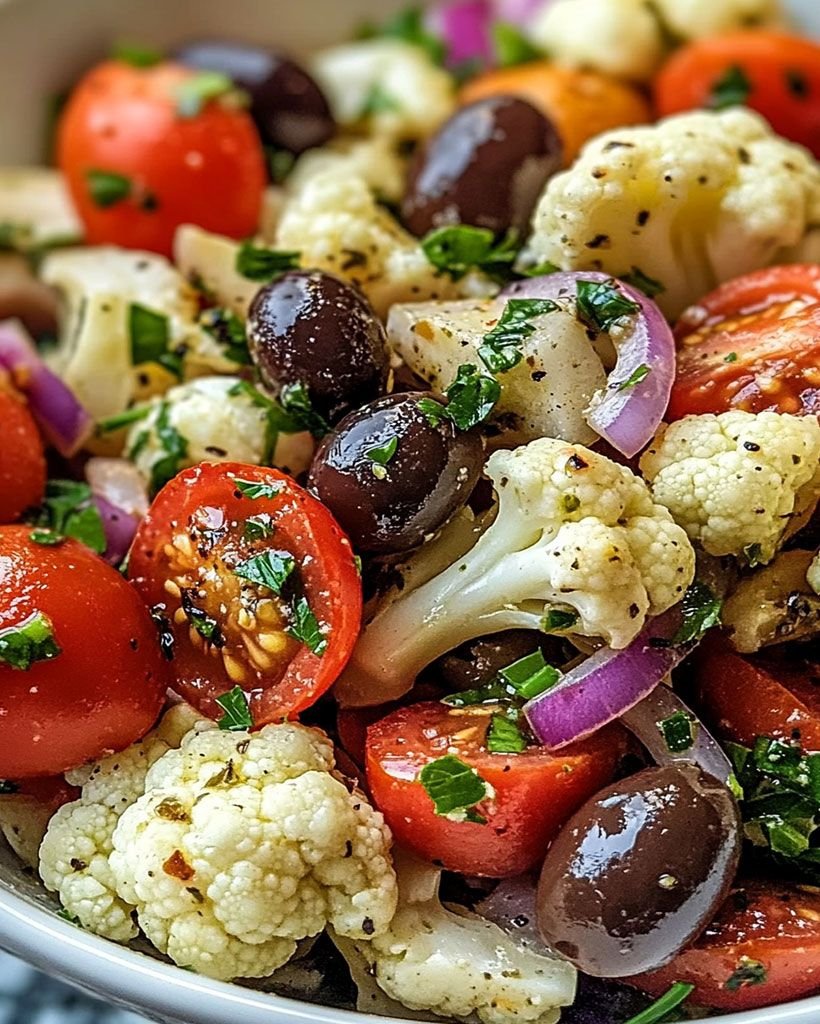
Based on the photo, this looks like a Mediterranean-style roasted cauliflower salad with cherry tomatoes, Kalamata-style olives, red onion, parsley, olive oil, lemon, and herbs. The exact seasoning/dressing can’t be determined from the image, so the recipe below is a close reconstruction.
Yield
4–6 servings
Prep: 15 minutes
Roasting: 25–30 minutes
Total: about 45 minutes
Ingredients
Salad
1 large cauliflower, about 600–700 g, cut into bite-size florets
300 g cherry or grape tomatoes, halved
100–120 g Kalamata or other black olives, pitted
½ medium red onion, thinly sliced
¼ cup fresh parsley, finely chopped
2–3 garlic cloves, minced
2½ tbsp extra-virgin olive oil
½ tsp dried oregano
½ tsp dried thyme
¼ tsp freshly ground black pepper
¼ tsp red-pepper flakes, optional
Salt, to taste
Lemon dressing
2 tbsp extra-virgin olive oil
1½ tbsp fresh lemon juice
1 tsp red-wine vinegar
1 tsp Dijon mustard, optional
½ tsp dried oregano
1 small garlic clove, finely grated
Black pepper
Salt only if needed—the olives already add salt
Method
1. Heat the oven
Preheat to 220°C / 425°F. Line a large baking sheet with parchment if desired.
2. Season the cauliflower
Pat the cauliflower dry. Toss it with 2½ tbsp olive oil, garlic, oregano, thyme, black pepper and a small amount of salt.
Spread it in one layer. Avoid crowding the pan; this helps the cauliflower roast rather than steam.
3. Roast
Roast for 15 minutes, then turn the florets.
Add the halved tomatoes and sliced red onion, toss lightly, and return to the oven for another 10–15 minutes.
The cauliflower should have golden-brown edges and tender centers, while the tomatoes should soften and become slightly blistered.
4. Make the dressing
Whisk together the lemon juice, red-wine vinegar, olive oil, Dijon, oregano, garlic and black pepper.
Taste before adding salt.
5. Assemble
Transfer the warm roasted vegetables to a large bowl. Add the olives and fresh parsley.
Pour over the dressing and gently toss.
6. Rest before serving
Let the salad stand for 5–10 minutes. This gives the roasted vegetables time to absorb the dressing.
For the appearance in your photo
For a particularly close visual match:
Use large cauliflower florets, rather than tiny pieces.
Keep some tomatoes halved and some whole.
Use whole, glossy dark olives rather than sliced olives.
Add the red onion after roasting for some crisp purple pieces.
Finish with plenty of fresh chopped parsley.
Drizzle a little extra virgin olive oil over the finished dish immediately before serving.
A pinch of coarse black pepper on top gives the same speckled appearance.
Optional additions
You can add:
50–75 g feta for a salty, creamy version
1 tbsp capers
½ tsp sumac for extra lemony acidity
A few toasted pumpkin seeds or sunflower seeds for crunch
Cucumber for a fresher, less-roasted version
Chickpeas to make it more substantial
Nutrition — approximate
For 1/6 of the recipe, using the quantities above and without feta:
Nutrient Approx. per serving
Calories ~120 kcal
Protein ~3 g
Carbohydrates ~11 g
Fiber ~3 g
Fat ~8 g
Saturated fat ~1 g
Sugars ~5 g
Sodium ~200–350 mg*
*Sodium varies substantially depending on the olives and how much salt is used. These are recipe estimates, not laboratory-tested values. USDA FoodData Central provides food-composition data and notes that nutrient values depend on the specific food/product and dataset.
F
FoodData Central
+1
For comparison, USDA’s MyPlate also uses cauliflower, tomatoes, onion, oil and herbs in vegetable recipes and reports that nutrient values can vary as food-composition data are updated.
M
MyPlate
Nut & allergen information
As written:
Tree nuts: None
Peanuts: None
Gluten: None
Dairy: None
Egg: None
Soy: None
So the base recipe is nut-free and naturally vegan.
If you add feta, it will no longer be dairy-free. If you use packaged olives, mustard or other prepared ingredients, check their labels for cross-contact warnings if you’re cooking for someone with a severe allergy.
Recipe Q&A
Q: Can I make this without roasting the cauliflower?
Yes. You can blanch or steam it until just tender, cool it, and toss it with the tomatoes, olives, onion and dressing. Roasting gives the version in the photo its browned, slightly caramelized flavor.
Q: Can I prepare it ahead?
Yes. Make it up to 1 day ahead and refrigerate. For the freshest texture, add some of the parsley and a little fresh dressing just before serving.
Q: Should I serve it hot or cold?
It’s excellent warm, at room temperature, or chilled. Room temperature is particularly good because the olive oil and lemon dressing become more aromatic.
Q: How do I stop the cauliflower becoming soggy?
Dry it thoroughly, don’t overcrowd the baking tray, and roast at 220°C/425°F. High heat and space between the florets are the key.
Q: Can I use frozen cauliflower?
Yes. Roast it directly from frozen, but give it extra space and expect roughly 5–10 additional minutes. It may not brown quite as deeply as fresh cauliflower.
Q: What olives should I use?
Kalamata olives are ideal. Black Greek-style olives or another pitted dark olive will also work.
Q: How can I make it more filling?
Add chickpeas, white beans, lentils or quinoa. Chickpeas are especially good with the lemon-olive dressing.
Q: What should I serve with it?
It works as a side for grilled chicken, fish or lamb, or as a vegetarian main with warm pita or crusty bread.
Q: Can I make it spicy?
Absolutely. Add ½–1 tsp red-pepper flakes, sliced fresh chili, or a little harissa to the dressing.