
1. Recipe Overview
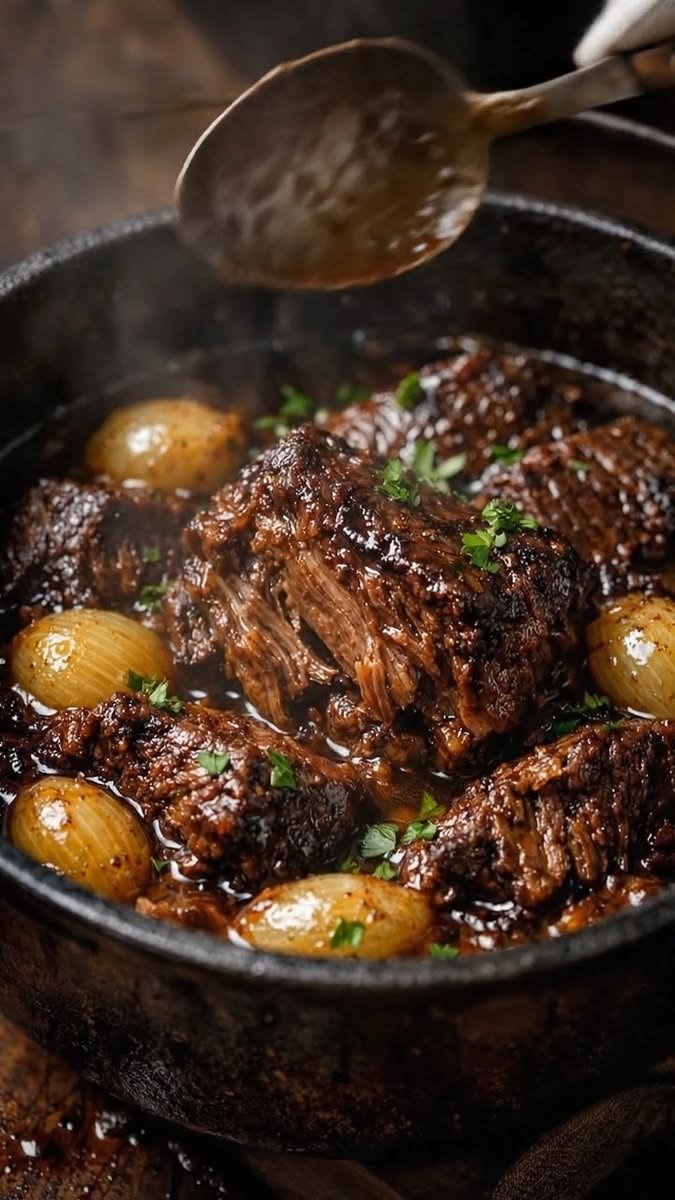
Slow-Braised Pot Roast with Pearl Onions is a classic comfort-food dinner featuring tender, slow-cooked beef, sweet pearl onions, aromatic vegetables, and a rich, savory gravy. The beef gently braises in beef broth, Worcestershire sauce, garlic, herbs, and a splash of red wine or additional broth until it becomes fork-tender and full of flavor.
Pearl onions add a subtle sweetness that complements the deep, savory taste of the beef. As the roast cooks, the onions soften and absorb the flavorful braising liquid, creating a delicious sauce that can be spooned over the meat and accompanying vegetables.
This dish is ideal for Sunday dinners, family gatherings, holiday meals, and cozy evenings when you want a hearty, homemade meal.
Recipe Details
- Prep Time: 25 minutes
- Cook Time: 3–4 hours in the oven
- Total Time: Approximately 3 hours 25 minutes to 4 hours 25 minutes
- Servings: 6–8
- Difficulty: Moderate
- Cooking Method: Oven-braising
- Cuisine: American-inspired comfort food
- Flavor Profile: Savory, rich, buttery, earthy, and gently sweet
- Texture: Tender, juicy beef with soft pearl onions and a silky gravy
2. Ingredients
For the Pot Roast
- 3–4 pounds (1.4–1.8 kg) beef chuck roast
- 2 tablespoons olive oil
- 2 tablespoons unsalted butter
- 1½ teaspoons salt, or to taste
- 1 teaspoon freshly ground black pepper
- 2 teaspoons garlic powder
- 1 teaspoon onion powder
- 2 teaspoons smoked paprika, optional
- 1 tablespoon all-purpose flour, optional, for lightly coating the beef
For the Pearl Onion Braising Liquid
- 2 cups pearl onions, peeled, fresh or frozen
- 2 medium yellow onions, roughly chopped
- 3 medium carrots, cut into large pieces
- 3 celery stalks, chopped
- 5 cloves garlic, minced
- 2 tablespoons tomato paste
- 2 cups beef broth, preferably low-sodium
- 1 cup dry red wine, optional
- 2 tablespoons Worcestershire sauce
- 1 tablespoon balsamic vinegar
- 2 teaspoons Dijon mustard
- 2 sprigs fresh rosemary
- 4 sprigs fresh thyme
- 2 bay leaves
- 1 teaspoon dried parsley, optional
For the Gravy
- 2 tablespoons cornstarch
- 2 tablespoons cold water
- 1 tablespoon butter, optional
- Salt and black pepper, to taste
- 1 tablespoon chopped fresh parsley, for garnish
Important: If you do not want to use wine, replace it with 1 additional cup of beef broth. The dish will still develop a rich flavor from the browned beef, tomato paste, Worcestershire sauce, and herbs.
3. Best Cut of Beef for Pot Roast
Choosing the right cut of beef is one of the most important steps in making a tender pot roast.
Beef Chuck Roast
Chuck roast is the best all-around choice for this recipe. It contains connective tissue and marbling that gradually soften during braising, producing tender meat and a flavorful cooking liquid.
Beef Brisket
Brisket can also work well, although its texture and cooking time may differ from chuck roast.
Beef Round Roast
Round roast is leaner and can become drier if overcooked. If using it, monitor the cooking process carefully and keep the meat surrounded by sufficient braising liquid.
My recommendation: Choose a well-marbled chuck roast weighing approximately 3–4 pounds for the best balance of flavor, tenderness, and gravy.
4. Step-by-Step Instructions
Step 1: Prepare the Beef
Remove the beef from its packaging and pat it dry thoroughly with paper towels.
Drying the surface helps the meat brown properly.
Trim away any excessively thick pieces of hard fat, but leave some marbling because it contributes to the roast’s flavor and texture.
In a small bowl, combine:
- Salt
- Black pepper
- Garlic powder
- Onion powder
- Smoked paprika, if using
Sprinkle the seasoning mixture over all sides of the beef.
If desired, lightly coat the roast with the optional tablespoon of flour. This can help the surface brown and may contribute a little body to the gravy, although the gravy can also be thickened later.
Step 2: Preheat the Oven
Preheat your oven to 325°F (163°C).
Choose a heavy, oven-safe Dutch oven or a deep, covered roasting pot.
A Dutch oven is especially useful because it allows you to brown the meat, sauté the vegetables, and braise everything in the same vessel.
Step 3: Sear the Beef
Place the Dutch oven over medium-high heat on the stovetop.
Add the olive oil and allow it to heat.
Carefully place the seasoned beef in the pot.
Sear for approximately 4–5 minutes on each side, turning as needed to develop a deep golden-brown crust.
If the roast is irregularly shaped, brown the edges as well.
Avoid moving the beef too frequently. Letting the surface make contact with the hot pot helps develop the browned crust that contributes to the finished gravy’s flavor.
Once browned, transfer the roast to a plate.
Why this step matters: Searing develops additional savory flavors through browning. It does not seal in the juices, but it adds depth to the finished dish.
Step 4: Sauté the Onions and Vegetables
Reduce the heat to medium.
Add the butter to the same pot.
Add the chopped yellow onions, carrots, and celery.
Cook for approximately 5–7 minutes, stirring occasionally, until the vegetables begin to soften and the onions turn translucent.
Add the minced garlic and cook for another 30–60 seconds.
Stir continuously during this stage so the garlic does not burn.
The vegetables should become fragrant and lightly softened without being completely cooked through.
Step 5: Add the Tomato Paste
Add the tomato paste to the vegetables.
Stir and cook for approximately 1–2 minutes.
Allowing the tomato paste to cook briefly deepens its flavor and reduces its raw, acidic taste.
Scrape up any browned bits from the bottom of the pot as you stir. These browned bits contain concentrated flavor that will enrich the braising liquid.
Step 6: Deglaze the Pot
If using red wine, pour it into the pot carefully.
Bring it to a gentle simmer and scrape the bottom of the pot with a wooden spoon to release any remaining browned bits.
Let the wine simmer for approximately 3–5 minutes.
This helps reduce the raw alcohol aroma and concentrates its flavor.
If you are not using wine, add a little beef broth and scrape the bottom of the pot instead.
Step 7: Prepare the Braising Liquid
Add the following ingredients:
- Beef broth
- Worcestershire sauce
- Balsamic vinegar
- Dijon mustard
- Rosemary
- Thyme
- Bay leaves
Stir gently until the ingredients are combined.
Taste the liquid carefully before adding more salt. The broth and Worcestershire sauce may already provide sufficient seasoning.
The braising liquid should be flavorful but not overly salty, because its flavor will concentrate during cooking.
Step 8: Return the Beef to the Pot
Place the seared beef back into the Dutch oven.
Arrange it so the thicker portion is well surrounded by the liquid.
The liquid does not need to cover the entire roast. Ideally, it should come approximately one-third to halfway up the sides of the beef.
This allows the meat to braise gently rather than boil.
Cover the pot with a tight-fitting lid.
Step 9: Begin Slow-Braising the Roast
Transfer the covered pot to the preheated oven.
Braise for approximately 2 hours before adding the pearl onions, depending on the size and thickness of the roast.
During this time, the beef begins to soften and absorb the flavors of the broth, herbs, and vegetables.
Avoid repeatedly opening the oven or lifting the lid, as this releases heat and moisture.
Step 10: Prepare the Pearl Onions
While the beef braises, prepare the pearl onions.
If using frozen pearl onions: Thaw them according to the package instructions, if necessary, and drain any excess water.
If using fresh pearl onions: Peel them carefully. To make peeling easier, blanch them briefly in boiling water, transfer them to cold water, and trim the root ends. The skins should loosen more easily.
For additional flavor, you can sauté the onions in a small amount of butter for 3–4 minutes until lightly golden.
This step is optional, but browning adds a pleasant sweetness and deeper flavor.
Step 11: Add the Pearl Onions
After the beef has braised for approximately 2 hours, carefully remove the pot from the oven.
Lift the lid away from your face to avoid steam.
Arrange the pearl onions around the roast, gently pressing them into the braising liquid.
If the onions are large, distribute them evenly so they cook at a similar rate.
Replace the lid and return the pot to the oven.
Continue braising for another 1–2 hours, depending on the tenderness of the beef.
Step 12: Check the Beef for Tenderness
Begin checking the roast after approximately 3 hours of total cooking time.
Insert a fork into the thickest portion of the beef.
The roast is ready when the fork enters easily and the meat separates with little resistance.
If the beef still feels firm, cover the pot and continue cooking in 20–30 minute increments.
Pot roast often needs additional time for its connective tissue to soften. Do not assume the meat is ready simply because it has reached a particular cooking time.
For a chuck roast, an internal temperature around 195–205°F (91–96°C) often corresponds to a tender, shreddable texture, although the exact temperature varies. Use tenderness as the final guide.
Step 13: Remove the Roast and Herbs
When the beef is tender, carefully transfer it to a large plate or cutting board.
Remove the rosemary stems, thyme stems, and bay leaves from the pot.
Leave the carrots, celery, and pearl onions in the braising liquid if you want a rustic, vegetable-filled gravy.
If you prefer a smooth gravy, strain the liquid and reserve the vegetables separately.
Let the roast rest for approximately 10–15 minutes before slicing or shredding.
Step 14: Prepare the Gravy
Place the Dutch oven on the stovetop over medium heat.
Allow the cooking liquid to simmer gently.
If the gravy is already thick enough, you can simply skim off excess fat and adjust the seasoning.
For a thicker gravy, mix:
- 2 tablespoons cornstarch
- 2 tablespoons cold water
Whisk until smooth.
Slowly pour the slurry into the simmering liquid while stirring.
Cook for approximately 2–3 minutes, or until the gravy thickens.
Add the optional tablespoon of butter for extra richness.
Taste and adjust with salt and black pepper as needed.
If the gravy becomes too thick, add a little beef broth. If it is too thin, simmer it a little longer or add a small additional amount of cornstarch slurry.
Step 15: Return the Beef to the Gravy
Slice the beef against the grain or gently pull it apart into large pieces.
Return the meat to the pot and spoon the gravy over it.
Arrange the pearl onions around the roast.
Let everything sit in the warm gravy for a few minutes before serving.
Step 16: Garnish and Serve
Sprinkle chopped fresh parsley over the beef and pearl onions.
Serve the pot roast with mashed potatoes, roasted vegetables, buttered noodles, or crusty bread.
The finished dish should have tender beef, soft and slightly sweet pearl onions, and a rich gravy infused with herbs and browned beef flavor.
5. What Makes This Pot Roast So Delicious?
Tender, Slow-Braised Beef
Chuck roast becomes tender as connective tissue gradually breaks down during prolonged cooking.
Sweet Pearl Onions
Pearl onions have a delicate sweetness that complements the savory beef and aromatic braising liquid.
Rich, Savory Gravy
Browned beef, tomato paste, Worcestershire sauce, and broth create a deeply flavored gravy.
Aromatic Herbs
Rosemary, thyme, and bay leaves contribute earthy, fragrant notes.
Balanced Acidity
A small amount of red wine or balsamic vinegar helps balance the richness of the beef.
Soft, Flavorful Vegetables
Carrots, celery, and onions add sweetness, aroma, and extra depth to the cooking liquid.
6. Tips for Perfect Slow-Braised Pot Roast
- Choose chuck roast. Its marbling and connective tissue make it especially suitable for slow braising.
- Dry the beef before searing. A dry surface browns more effectively than a wet one.
- Do not crowd the pot during searing. If necessary, brown the beef in batches.
- Brown the tomato paste. Cooking it briefly adds depth and reduces its raw flavor.
- Keep the liquid below the top of the roast. Braising works best when the meat is partially submerged rather than completely covered.
- Use a tight-fitting lid. This helps retain moisture and maintain a steady cooking environment.
- Add pearl onions later. This helps them retain their shape instead of becoming overly soft.
- Allow enough cooking time. Tough beef usually needs more time, not less.
- Rest the meat before slicing. This makes it easier to cut or pull apart neatly.
- Thicken the gravy separately if needed. This gives you better control over the final consistency.
- Taste before adding salt. Broth and Worcestershire sauce can already contain substantial sodium.
- Slice against the grain. If you prefer slices instead of shredded beef, cutting against the muscle fibers improves tenderness.
7. Delicious Recipe Variations
Variation 1: Garlic Herb Pot Roast with Pearl Onions
For a more aromatic version, add:
- 2 additional cloves garlic
- 1 teaspoon dried rosemary
- 1 teaspoon dried thyme
- 1 tablespoon chopped fresh parsley
Increase the garlic slightly and use extra herbs in the braising liquid.
Finish with fresh parsley just before serving.
Flavor profile: Savory, aromatic, earthy, and rich.
Variation 2: Red Wine Pot Roast
Replace the optional wine-free liquid with 1 cup dry red wine and 2 cups beef broth.
Choose a dry wine such as Cabernet Sauvignon or Merlot.
Simmer the wine briefly after adding it to the pot, then continue with the recipe.
Flavor profile: Deep, robust, and slightly fruity.
Variation 3: Mushroom and Pearl Onion Pot Roast
Add 8 ounces (225 g) sliced mushrooms.
For the best texture, sauté the mushrooms separately until their moisture evaporates and they begin to brown. Add them during the final hour of braising.
Alternatively, add them directly with the pearl onions, although they may become softer.
Flavor profile: Earthy, savory, and rich.
Variation 4: Balsamic Pot Roast
Increase the balsamic vinegar to 2 tablespoons and add 1 teaspoon Dijon mustard.
Taste the sauce before adding any extra vinegar, since balsamic products vary in sweetness and acidity.
Flavor profile: Tangy, savory, and slightly sweet.
Variation 5: Classic Pot Roast with Potatoes and Carrots
Add:
- 1 pound baby potatoes
- 3 additional carrots, cut into large pieces
Arrange the vegetables around the beef before braising.
Add the pearl onions later as directed.
Depending on their size, potatoes and carrots may become very soft during a long braise. Cut them into generous pieces and check their tenderness toward the end of cooking.
Variation 6: Slow Cooker Pot Roast with Pearl Onions
This recipe can also be adapted for a slow cooker.
- Season and sear the beef in a skillet.
- Sauté the onions, celery, garlic, and tomato paste.
- Deglaze the skillet with wine or broth.
- Transfer the mixture to the slow cooker.
- Add the remaining braising liquid and herbs.
- Cook on LOW for approximately 8–10 hours or HIGH for approximately 4–6 hours.
- Add the pearl onions during the final 2–3 hours on LOW, or approximately the final 1–2 hours on HIGH.
- Check the beef for tenderness.
- Transfer the cooking liquid to a saucepan and thicken it into gravy if desired.
Cooking times depend on the roast’s size, the slow cooker, and how tightly the ingredients are packed.
Variation 7: Onion Gravy Pot Roast
For a stronger onion flavor, use 3 medium yellow onions and 2 cups pearl onions.
Increase the Worcestershire sauce to 3 tablespoons and omit the balsamic vinegar if you prefer a more traditional savory gravy.
Cook until the onions are very soft and the beef is tender.
Variation 8: Peppercorn Pot Roast
Add 1 teaspoon coarsely crushed black peppercorns to the braising liquid.
Use a little less black pepper in the initial seasoning if you want to control the heat.
The result is a more robust, peppery gravy that pairs well with mashed potatoes.
8. Ingredient Substitutions
| Original Ingredient | Substitute | Notes |
|---|---|---|
| Beef chuck roast | Beef brisket | Similar braising method, but texture may differ |
| Pearl onions | Shallots cut into large pieces | Sweeter, more pronounced onion flavor |
| Red wine | Additional beef broth | Keeps the recipe alcohol-free |
| Beef broth | Unsalted beef stock | Helps control sodium |
| Worcestershire sauce | A little soy sauce with a splash of vinegar | Provides savory depth |
| Tomato paste | A small amount of tomato purée, reduced briefly | Less concentrated flavor |
| Fresh rosemary | Dried rosemary | Use less because dried herbs are concentrated |
| Fresh thyme | Dried thyme | Start with about 1 teaspoon |
| Cornstarch | Flour-based roux | Produces a different gravy texture |
| Balsamic vinegar | Red wine vinegar | Sharper, less sweet acidity |
| Butter | Olive oil or suitable plant-based butter | Changes the richness slightly |
If using frozen pearl onions, follow the package instructions and drain excess water if necessary.
9. Dietary Adjustments
Gluten-Free Version
Use gluten-free beef broth and Worcestershire sauce, and omit the optional flour coating.
Thicken the gravy with cornstarch mixed with cold water.
Check all packaged ingredients to ensure they meet your dietary requirements.
Dairy-Free Version
Replace the butter with olive oil or a suitable dairy-free alternative.
The main recipe can otherwise be prepared without dairy.
Lower-Carbohydrate Version
The beef itself is naturally low in carbohydrates, but pearl onions, carrots, and tomato paste contribute some carbohydrates.
For a lower-carbohydrate version:
- Reduce the carrots and pearl onions.
- Omit the optional flour.
- Thicken the gravy with a small amount of cornstarch or serve it unthickened.
- Use low-sodium broth without added sugar.
Remember that cornstarch also contributes carbohydrates, so use only what is needed.
Lower-Sodium Version
Use low-sodium beef broth, reduced-sodium Worcestershire sauce where available, and less added salt.
Season gradually and taste the gravy before serving.
Higher-Protein Meal
Beef provides substantial protein. Serve the pot roast with green beans, broccoli, or another vegetable side.
Alcohol-Free Version
Omit the red wine and use additional beef broth.
A small amount of balsamic vinegar can help provide acidity and depth, but adjust it to taste.
10. Best Side Dishes to Serve with Pot Roast
Classic Comfort Food Sides
- Creamy mashed potatoes
- Buttered egg noodles
- Roasted baby potatoes
- Yorkshire puddings
- Crusty bread
- Dinner rolls
Vegetable Sides
- Roasted green beans
- Garlic roasted broccoli
- Steamed asparagus
- Honey-glazed carrots
- Sautéed cabbage
- Roasted Brussels sprouts
Fresh Options
- Garden salad
- Cucumber and tomato salad
- Steamed green vegetables
- Lightly dressed mixed greens
Best Complete Dinner
Serve slices of pot roast with pearl onions, mashed potatoes, roasted green beans, and a generous spoonful of gravy.
For a simpler meal, serve the beef and onions directly over mashed potatoes so the gravy can soak into the potatoes.
11. Make-Ahead Instructions
This dish is excellent for preparing ahead because the flavors often become even more developed after refrigeration.
Preparing the Ingredients the Day Before
- Season the beef.
- Prepare the pearl onions and vegetables.
- Mince the garlic.
- Measure the broth and seasonings.
- Refrigerate the prepared ingredients in covered containers.
Keep raw beef separate from ready-to-eat ingredients.
Cooking the Pot Roast Ahead
You can cook the roast completely one day before serving.
- Braise the beef until tender.
- Let the food cool slightly.
- Transfer it to shallow containers with the braising liquid.
- Refrigerate promptly.
- Reheat the next day until the center reaches 165°F (74°C).
If you want a particularly neat presentation, refrigerate the roast in larger pieces and slice it after reheating.
Skim any solidified fat from the chilled gravy before reheating if desired.
12. Storage and Reheating
Refrigerator Storage
Store leftover beef, pearl onions, vegetables, and gravy in airtight containers.
Refrigerate within 2 hours of cooking, or within 1 hour if the surrounding temperature exceeds 90°F (32°C).
Keep the refrigerator at 40°F (4°C) or below and consume leftovers within 3–4 days.
Freezing Instructions
Pot roast freezes well, especially when stored with some of its gravy.
- Allow the food to cool slightly.
- Divide it into meal-sized portions.
- Add enough gravy to keep the beef moist.
- Place the portions in freezer-safe containers.
- Seal, label, and freeze.
For best quality, use within approximately 2–3 months.
Thaw in the refrigerator before reheating.
Reheating in the Oven
- Preheat the oven to 325°F (163°C).
- Place the beef and gravy in an oven-safe dish.
- Cover tightly with foil.
- Heat until the center reaches 165°F (74°C).
Add a little broth if the gravy has become too thick.
Reheating on the Stovetop
Place the beef, pearl onions, and gravy in a covered saucepan.
Warm over low heat, turning the meat carefully and stirring the gravy occasionally.
Add a splash of broth if necessary and heat until thoroughly hot.
Reheating in the Microwave
Place a serving in a microwave-safe dish with some gravy.
Cover loosely and heat in short intervals, turning or stirring when possible.
Continue until the center reaches 165°F (74°C).
Avoid overheating, which can dry out the beef.
13. Frequently Asked Questions
Q1. What is the best cut of beef for pot roast?
Beef chuck roast is generally the best choice because its connective tissue and marbling soften during braising, producing tender meat and flavorful gravy.
Q2. Why is my pot roast tough?
The roast may need more cooking time.
Beef chuck can remain firm even after several hours until enough connective tissue has softened. Continue braising and check tenderness every 20–30 minutes.
Q3. Can I use frozen pearl onions?
Yes. Frozen pearl onions are convenient and often already peeled.
Add them during the later part of cooking to help them maintain their shape.
Q4. Can I make this recipe without red wine?
Absolutely. Replace the wine with additional beef broth.
The beef will still develop a rich flavor from the searing, herbs, Worcestershire sauce, and tomato paste.
Q5. Do I need to sear the beef first?
Searing is strongly recommended for flavor, but it is not strictly necessary.
If you skip it, the roast will still become tender, although the gravy may have less of the deep browned flavor that searing creates.
Q6. Why is my gravy too thin?
The braising liquid may contain more moisture than expected.
Remove the beef and vegetables, then simmer the liquid uncovered until reduced. Alternatively, use a cornstarch slurry to thicken it.
Q7. Why is my gravy too salty?
Broth and Worcestershire sauce can contain considerable sodium.
Add a little unsalted broth or water and simmer gently. If necessary, prepare a little additional unsalted gravy and combine it with the original.
Q8. Can I add potatoes to the pot roast?
Yes. Cut the potatoes into large, evenly sized pieces and arrange them around the beef.
Check them toward the end of cooking to avoid letting them become excessively soft.
Q9. Can I use a slow cooker instead of an oven?
Yes. Sear the beef first, then transfer it and the braising ingredients to the slow cooker.
Cook on LOW for approximately 8–10 hours or HIGH for approximately 4–6 hours, checking tenderness rather than relying on time alone.
Q10. Should the beef be completely covered by liquid?
No. For oven-braising, the liquid generally needs to reach about one-third to halfway up the sides of the roast.
The covered pot traps moisture and allows the beef to cook gently.
Q11. Can I shred the beef instead of slicing it?
Yes. Once the roast is tender, use two forks to separate it into large pieces.
Return the shredded beef to the gravy and serve over mashed potatoes or noodles.
Q12. How do I keep pearl onions from becoming mushy?
Add them during the final 1–2 hours of oven-braising, depending on their size and the desired texture.
Small onions can soften quickly, so check them toward the end of cooking.
Q13. Can I freeze the finished pot roast?
Yes. Freeze the beef with some of the gravy in airtight, freezer-safe containers.
Thaw in the refrigerator and reheat until the center reaches 165°F (74°C).
Q14. Can I make this recipe without flour or cornstarch?
Yes. Simply reduce the braising liquid until it thickens naturally.
The gravy may be thinner than a starch-thickened version, but it will still be flavorful.
Q15. What is the difference between braising and roasting?
Roasting generally cooks meat using dry heat, while braising cooks it slowly in a covered pot with some liquid.
Pot roast is usually braised because the moist, slow cooking process helps tenderize tougher cuts of beef.
14. Troubleshooting Guide
| Problem | Likely Cause | Solution |
|---|---|---|
| Beef is tough | Insufficient braising time | Continue cooking until fork-tender |
| Beef is dry | Lean cut or excessive cooking | Use chuck roast and maintain sufficient braising liquid |
| Pearl onions are mushy | Added too early | Add them later in the cooking process |
| Gravy is watery | Too much liquid or insufficient reduction | Simmer uncovered or thicken with a slurry |
| Gravy is too thick | Excessive reduction or thickener | Add warm beef broth gradually |
| Gravy tastes flat | Insufficient seasoning or acidity | Adjust salt, pepper, and a little vinegar |
| Beef did not brown properly | Surface was wet or pan was overcrowded | Pat dry and sear in batches |
| Garlic tastes bitter | Garlic was burned | Add it after the other vegetables have softened |
| Gravy is greasy | Too much rendered fat | Skim excess fat from the surface |
| Vegetables are unevenly cooked | Pieces are different sizes | Cut vegetables into similar-sized pieces |
15. Approximate Nutrition Information
The following estimates are for one serving when the recipe is divided into eight portions. Actual values depend on the beef’s fat content, the amount of gravy consumed, and whether wine or flour is used.
| Nutrient | Approximate Amount Per Serving |
|---|---|
| Calories | 400–550 |
| Protein | 35–45 g |
| Carbohydrates | 10–18 g |
| Fat | 20–35 g |
| Fiber | 2–4 g |
| Sugar | 4–7 g |
| Sodium | 500–900 mg |
These estimates do not include mashed potatoes, bread, or other side dishes.
For a lighter version, trim excess external fat, use less butter, choose low-sodium broth, and serve with additional vegetables.
16. Chef’s Tips for Restaurant-Quality Results
- Choose a well-marbled chuck roast for a tender, flavorful result.
- Pat the beef dry before seasoning and searing.
- Develop a deep brown crust without burning the meat.
- Cook the tomato paste briefly to deepen the gravy’s flavor.
- Deglaze the pot thoroughly to capture the browned bits.
- Use fresh thyme and rosemary when possible.
- Add pearl onions later so they retain their shape.
- Maintain a gentle braise rather than a rapid boil.
- Let the beef rest before slicing.
- Cut against the grain for more tender slices.
- Skim excess fat before thickening the gravy.
- Finish the gravy with a small amount of butter for extra richness.
- Garnish with fresh parsley immediately before serving.
17. Serving and Presentation Ideas
For a classic family-style presentation, place the beef in the center of a large serving platter.
Arrange the pearl onions and carrots around the roast, then spoon the glossy gravy over the meat.
Sprinkle with freshly chopped parsley and serve extra gravy in a separate jug.
For individual plates, place a portion of beef alongside mashed potatoes and green vegetables. Add pearl onions and spoon gravy over the beef and potatoes.
For a rustic presentation, serve the roast directly from the Dutch oven at the table, provided the pot can be handled safely.
18. Final Recipe Summary
Slow-Braised Pot Roast with Pearl Onions is a hearty, comforting beef dinner made by slowly braising chuck roast with pearl onions, carrots, celery, garlic, herbs, and a rich beef gravy.
The long, gentle cooking process transforms a tougher cut of beef into tender, flavorful meat, while the pearl onions contribute a delicate sweetness that complements the savory sauce.
- Best beef cut: Chuck roast
- Best cooking temperature: 325°F (163°C)
- Best cooking method: Covered oven-braising
- Best flavor tip: Sear the beef well and deglaze the pot before braising.
- Best texture tip: Add the pearl onions during the later part of cooking.
- Best serving suggestion: Pair with creamy mashed potatoes and roasted green beans.