
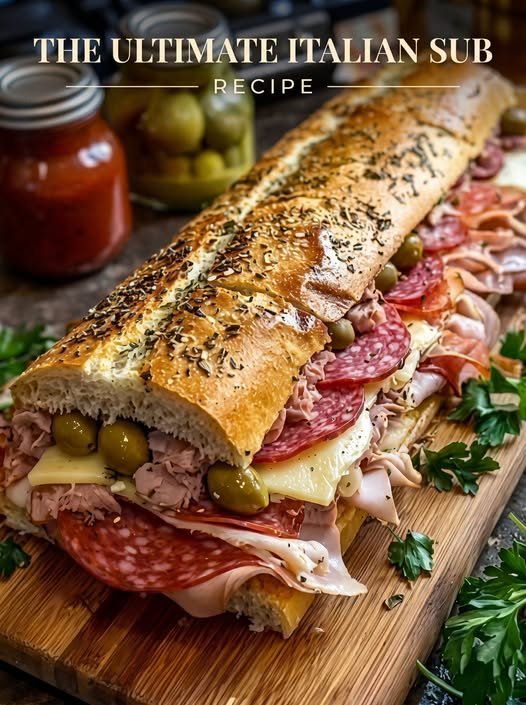
Yield: 2 very large subs or 4 generous servings Prep: 25 minutes Resting: 30–60 minutes Total: about 1½ hours Difficulty: Easy
Ingredients
For the sandwich
1 large Italian/French baguette or sub loaf, about 12–16 inches
100 g (3½ oz) Genoa salami, thinly sliced
100 g (3½ oz) mortadella
75 g (2½ oz) capocollo/capicola
75 g (2½ oz) ham or prosciutto
120 g (4 oz) provolone, sliced
1 large tomato, thinly sliced
½ cup pitted green olives
¼ cup pepperoncini or banana peppers
½ cup shredded lettuce
Fresh parsley, for finishing
Olive dressing/relish
½ cup chopped green olives
¼ cup chopped Kalamata olives
¼ cup giardiniera, finely chopped
2 tbsp roasted red pepper, chopped
1 tbsp capers
1 small garlic clove, finely minced
2 tbsp extra-virgin olive oil
1 tbsp red-wine vinegar
½ tsp dried oregano
¼ tsp chili flakes
Black pepper, to taste
The combination of olives, giardiniera, peppers, capers, garlic, herbs, oil and vinegar is characteristic of muffuletta-style olive salad.
L
La Cucina Italiana
+1
Optional bread topping
For the appearance in your photo:
1 tbsp sesame seeds
1 tsp fennel seeds
1 tsp dried oregano
½ tsp dried Italian herbs
Method
1. Make the olive relish
Put the green olives, Kalamata olives, giardiniera, roasted peppers, capers and garlic on a cutting board.
Chop everything fairly finely—but don’t turn it into a paste.
Mix with olive oil, red-wine vinegar, oregano, chili flakes and black pepper.
Let it sit for at least 30 minutes. An hour is even better because the flavors become more integrated. Traditional versions are often made ahead and allowed to rest before assembly.
L
La Cucina Italiana
+1
2. Prepare the bread
Cut the loaf horizontally.
For a very heavily filled sandwich, scoop out a little of the soft interior from the top half. This creates a shallow cavity for the meat and prevents everything from sliding out.
Don’t remove too much—you still want a substantial bread layer.
Lightly toast the cut surfaces for about 3–5 minutes at 180°C/350°F, just until they’re lightly crisp.
Let them cool for a few minutes.
3. Add the olive mixture
Spread the olive relish generously over the inside of both halves.
Don’t drain away all the oil—the seasoned oil is part of what makes the sandwich delicious.
However, if the relish is extremely wet, drain a little first so the bread doesn’t become soggy.
4. Build the meat layers
For the most impressive cross-section, layer rather than simply piling everything in one mound:
Provolone
Mortadella
Ham
Capocollo
Salami
A little more provolone
Tomato
Pepperoncini
Lettuce
Remaining olive relish
Fold the cured meats rather than laying them completely flat. This creates the tall, ruffled appearance seen in the photograph.
Classic Italian subs similarly rely on layers of cured meats, provolone, tomato, lettuce and pickled peppers.
K
Kitchn
5. Close and compress
Put the top half of bread on.
Press down firmly with your hands.
Wrap the entire sandwich tightly in parchment or plastic wrap and place a heavy pan or cutting board on top.
Rest for 30–60 minutes in the refrigerator.
For a muffuletta-style version, a longer compression/rest—up to several hours—allows the olive dressing to soak into the bread and meld with the fillings.
K
Kitchn
6. Slice
Use a serrated knife.
Cut into:
2 large pieces for a meal, or
4–6 pieces for a party.
Finish with fresh parsley and a drizzle of good olive oil.
To make it look even more like the photo
The photograph has a particularly substantial, rustic appearance. For that effect:
Use a wide, crusty seeded loaf, not a thin supermarket hoagie.
Use very thinly sliced meats.
Fold the salami and mortadella into loose waves.
Use plenty of green olives.
Let some cheese extend toward the edges.
Add fresh parsley immediately before serving.
Brush the crust with olive oil before baking.
Sprinkle sesame + fennel + oregano over the top.
For an even richer version, briefly warm the assembled sandwich at 160°C/320°F for 8–10 minutes, but the classic muffuletta-style approach is generally served at room temperature or chilled rather than piping hot.
L
La Cucina Italiana
+1
Nut & Allergy Information
Does this recipe contain nuts?
Not intentionally, but there is an important caveat: check the processed meats and bread.
The basic ingredients—bread, olives, cured meats, provolone, vegetables and olive oil—do not inherently require tree nuts or peanuts.
However, mortadella is the big one to watch. Some mortadella is made with pistachios, while other varieties are pistachio-free.
So if someone has a tree-nut allergy:
Choose pistachio-free mortadella, or omit it.
Check the label on the salami/capocollo.
Check the bread for tree nuts and peanut cross-contact.
Check giardiniera/olive products for facility allergen statements.
Don’t assume deli-counter meats are allergen-free simply because nuts aren’t visible.
Also, sesame is a seed, not a tree nut, but it is a major food allergen and should be separately checked.
A recipe source for a similar muffuletta specifically notes bread can potentially have traces of nuts depending on the product, while a classic Italian-sub recipe can be prepared without peanuts or tree nuts.
R
Recipe By Me
+1
Major allergens to watch
Ingredient Possible allergen
Bread Wheat/gluten, possibly sesame
Provolone Milk/dairy
Mortadella Milk and pistachio/tree nuts depending on brand
Salami/capocollo Check individual label
Mayonnaise, if used Egg
Giardiniera Usually no major allergen, but check label
Olive relish Usually no nuts, check prepared products
For a severe allergy, use the manufacturer’s allergen statement rather than relying on the recipe. Deli slicers and preparation surfaces can also cause cross-contact.
📊 Approximate Nutrition
This is highly dependent on how much meat and cheese you use.
For 1 large serving (¼ of the recipe), a reasonable estimate is:
Calories: 650–800 kcal
Protein: 30–40 g
Carbohydrates: 45–60 g
Fat: 35–50 g
Saturated fat: 12–18 g
Sodium: potentially 1,500–2,500+ mg
The sodium can become quite high because cured meats, provolone, olives, capers and pickled vegetables are all salty. A comparable classic Italian sub recipe lists over 2,500 mg sodium per serving in its particular formulation.
K
Kitchn
Recipe Q&A
Q: Can I make this without mortadella? Yes. Replace it with extra ham, turkey, capocollo or another Italian deli meat. If avoiding nuts, this is also an easy way to eliminate the pistachio issue.
Q: Can I use mozzarella instead of provolone? Absolutely. Provolone gives a sharper, more traditional Italian-sub flavor, while mozzarella makes it milder and creamier.
Q: What is the best bread? A sturdy Italian loaf, sesame-topped loaf, ciabatta or French-style sub roll. It needs enough structure to support all the fillings.
K
Kitchn
Q: Why rest the sandwich? It lets the olive oil, vinegar and vegetable juices permeate the bread and brings the meat, cheese and relish together. This is particularly important for muffuletta-style sandwiches.
K
Kitchn
Q: Can I prepare it the day before? Yes, but keep it tightly wrapped and refrigerated. For maximum freshness, I’d assemble it a few hours ahead rather than a full day ahead, particularly if using juicy tomatoes.
Q: Can I leave out the olives? Yes, but you’ll lose much of the distinctive muffuletta/Italian-sandwich character. Substitute extra pepperoncini, roasted peppers and a little vinaigrette.
Q: Can I make it vegetarian? Yes. Replace the meats with grilled zucchini, roasted peppers, artichokes, eggplant and additional cheese.
Q: Can I make it spicy? Add Calabrian chili paste, hot giardiniera, sliced banana peppers or chili flakes to the olive relish.
Q: What is the difference between this and a muffuletta? A traditional muffuletta is associated with New Orleans’ Sicilian immigrant food culture and typically uses a round sesame bread with olive salad, cured meats and cheese. The pictured sandwich uses a long sub-style loaf, so it’s best described as an Italian sub inspired by muffuletta flavors, rather than a strictly traditional muffuletta.
L
La Cucina Italiana
Q: What is the secret to getting that enormous deli-style appearance? Thinly sliced meat, lots of layers, folded rather than flat slices, a sturdy loaf, and compressing the finished sandwich before cutting. The compression also keeps the filling from falling out.
F
foodnetwork.com
+1
Q: Can I toast the entire sandwich? Yes. For a hot version, assemble the meat and cheese first, warm until the cheese softens, then add lettuce, tomato and fresh olive relish afterward. This keeps the vegetables crisp.