
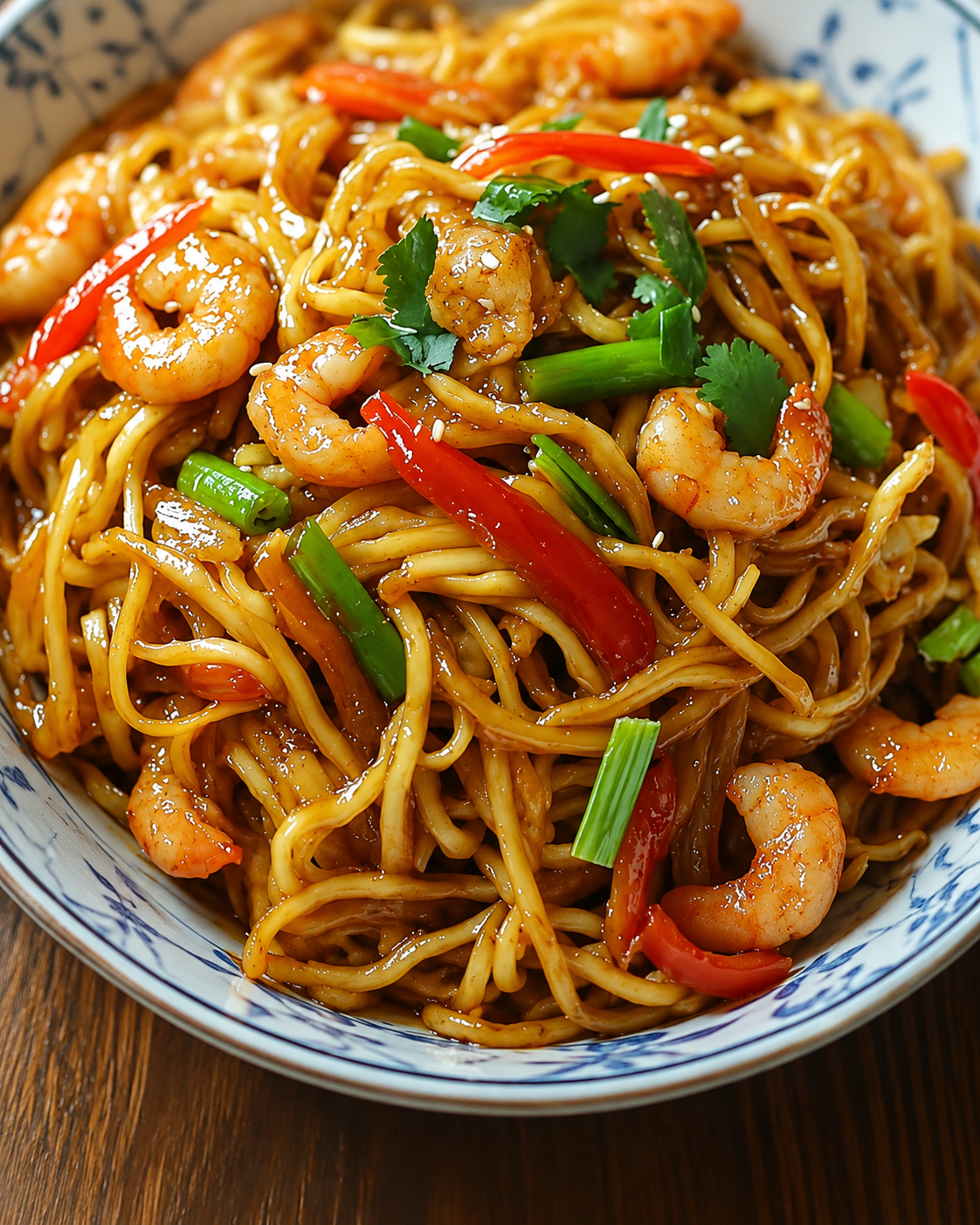
A flavorful Chinese-style noodle stir-fry made with plump shrimp, thick Shanghai noodles, crisp vegetables, garlic, ginger, and a glossy savory sauce. Shanghai noodles are typically thick, round wheat noodles, and they work especially well in quick stir-fries.
Recipe Details
Servings: 4
Prep Time: 15 minutes
Cook Time: 15 minutes
Total Time: 30 minutes
Cuisine: Chinese-inspired
Course: Main Dish
Difficulty: Easy
Ingredients
For the Noodles
1 lb (450 g) fresh Shanghai noodles
1 tbsp vegetable oil
Water, for boiling
Udon noodles can be substituted if Shanghai noodles aren’t available.
For the Shrimp
1 lb (450 g) medium or large shrimp, peeled and deveined
1/2 tsp salt
1/4 tsp black pepper
1 tbsp cornstarch
1 tsp sesame oil
For the Vegetables
1 tbsp vegetable oil
3 cloves garlic, minced
1 tbsp fresh ginger, minced
1 small red bell pepper, thinly sliced
1 medium carrot, julienned
1 1/2 cups shredded cabbage
1 cup sliced mushrooms
4 green onions, cut into 1-inch pieces
1/2 cup bean sprouts, optional
For the Sauce
3 tbsp low-sodium soy sauce
2 tbsp oyster sauce
1 tbsp dark soy sauce
1 tbsp Shaoxing wine or rice vinegar
1 tsp honey or brown sugar
1 tsp sesame oil
1/4 tsp black pepper
2 tbsp water
The combination of light soy sauce, oyster sauce, dark soy sauce, cooking wine, sugar, and sesame oil is commonly used for Shanghai-style shrimp noodles.
Instructions
1. Prepare the Sauce
In a small bowl, whisk together:
Soy sauce
Oyster sauce
Dark soy sauce
Shaoxing wine or rice vinegar
Honey or brown sugar
Sesame oil
Black pepper
Water
Set aside.
2. Prepare the Shrimp
Pat the shrimp dry with paper towels.
Place them in a bowl and toss with salt, black pepper, cornstarch, and sesame oil.
The light coating helps the shrimp develop a flavorful surface while keeping them tender.
3. Cook the Noodles
Bring a large pot of water to a boil.
Add the Shanghai noodles and cook according to the package directions, usually just until softened.
For fresh Shanghai noodles, a short blanching is generally enough. Drain thoroughly and rinse briefly with cold water to stop the cooking.
Toss with 1 tbsp vegetable oil to prevent sticking.
Tip: Don’t fully overcook the noodles because they’ll cook again in the wok.
4. Cook the Shrimp
Heat a large wok or skillet over medium-high to high heat.
Add 1 tbsp vegetable oil.
Add the shrimp in a single layer and stir-fry for approximately 1–2 minutes per side, until pink and nearly cooked through.
Remove the shrimp to a plate.
Avoid overcooking them because shrimp can quickly become rubbery.
5. Stir-Fry the Aromatics
Add another small splash of oil to the wok if needed.
Add the garlic and ginger.
Stir-fry for about 20–30 seconds, just until fragrant.
6. Add the Vegetables
Add:
Carrot
Bell pepper
Mushrooms
Cabbage
Stir-fry for 2–3 minutes.
The vegetables should be tender-crisp rather than completely soft.
Add the green onions and optional bean sprouts and cook for another 30 seconds.
7. Add the Noodles
Add the cooked Shanghai noodles to the wok.
Pour the prepared sauce over the noodles.
Using tongs or two spatulas, toss everything together for 2–3 minutes.
Shanghai noodles are commonly stir-fried until glossy and the sauce has been absorbed.
8. Add the Shrimp
Return the shrimp to the wok.
Toss everything together for another 1 minute, just until the shrimp are completely cooked and heated through.
9. Serve
Transfer immediately to serving bowls.
Garnish with:
Sliced green onions
Fresh cilantro
Sesame seeds, optional
Thinly sliced red chili, optional
Serve hot.
Chef Tips
Keep the wok hot: High heat gives the noodles that delicious stir-fried flavor.
Don’t overcrowd the pan: If your wok is small, stir-fry the shrimp and vegetables in batches.
Don’t overcook noodles: Slightly firm noodles hold their texture much better.
Dry the shrimp well: Excess moisture causes steaming instead of proper stir-frying.
Add sauce gradually: You can start with about 3/4 of the sauce and add more according to taste.
For extra spicy noodles: Add 1–2 tsp chili garlic sauce or sliced fresh chili.
For more vegetables: Add bok choy, snow peas, broccoli, or baby corn.
Easy Substitutions
Ingredient Substitute
Shanghai noodles Udon or thick wheat noodles
Shrimp Chicken, beef, tofu
Oyster sauce Vegetarian mushroom oyster sauce
Shaoxing wine Rice vinegar
Cabbage Bok choy
Fresh mushrooms Shiitake mushrooms
Honey Brown sugar
Nutrition Information
Estimated per serving, based on 4 servings:
Calories: ~540 kcal
Protein: ~32 g
Carbohydrates: ~66 g
Fat: ~16 g
Saturated Fat: ~3 g
Fiber: ~5 g
Sugar: ~9 g
Cholesterol: ~170 mg
Sodium: ~1,400 mg
Nutrition is approximate and will vary depending on noodle, sauce, shrimp, and oil brands.
Nut & Allergen Information
Tree nuts: None in the standard recipe.
Peanuts: None in the standard recipe.
Important: Sesame oil and sesame seeds are sesame, which is a major allergen in some countries. The recipe contains sesame oil.
Contains:
Shellfish (shrimp)
Wheat/gluten (Shanghai noodles and soy sauce)
Soy
Sesame
Oyster/shellfish ingredients
For nut-free preparation: Use products labeled according to your required nut-allergen standard and check all sauce labels for cross-contact warnings.
For gluten-free: Use certified gluten-free noodles, gluten-free soy sauce/tamari, and gluten-free oyster sauce.
Frequently Asked Questions
Q: What are Shanghai noodles?
Shanghai noodles are thick, round wheat noodles with a chewy texture. They are especially suitable for stir-frying.
Q: Can I use regular noodles?
Yes. Udon, lo mein, or another thick wheat noodle can work well.
Q: Can I use frozen shrimp?
Absolutely. Thaw them completely and pat them very dry before cooking.
Q: How do I keep the noodles from sticking?
After draining, rinse them briefly and toss with a little vegetable oil. This is particularly useful when preparing them before the stir-fry.
Q: Why are my noodles mushy?
They were probably overcooked before going into the wok. Cook them only until just tender because they’ll continue cooking during the stir-fry.
Q: Can I make this without oyster sauce?
Yes. Use vegetarian mushroom oyster sauce or add a little extra soy sauce plus a small amount of hoisin sauce.
Q: Can I make it spicy?
Yes. Add chili crisp, chili garlic sauce, red pepper flakes, or fresh sliced chilies.
Q: Can I prepare this ahead of time?
The shrimp, vegetables, sauce, and noodles can be prepared separately several hours ahead. For the best texture, stir-fry everything shortly before serving.
Q: How long do leftovers last?
Store leftovers in an airtight container in the refrigerator for up to 3–4 days. Reheat thoroughly in a skillet or wok.
Q: Can I freeze Shanghai shrimp noodles?
You can, although the noodles and vegetables may lose some texture. For best quality, refrigerate rather than freeze.
Q: What makes this dish taste like restaurant-style noodles?
The key is very hot cooking, slightly firm noodles, properly seared shrimp, fresh garlic and ginger, and a balanced savory sauce. Classic versions also emphasize quick wok cooking and sauce absorption.
Q: Can I make this low-carb?
Yes. Replace the Shanghai noodles with shirataki noodles, zucchini noodles, or cabbage noodles, and use a low-sugar sauce.