
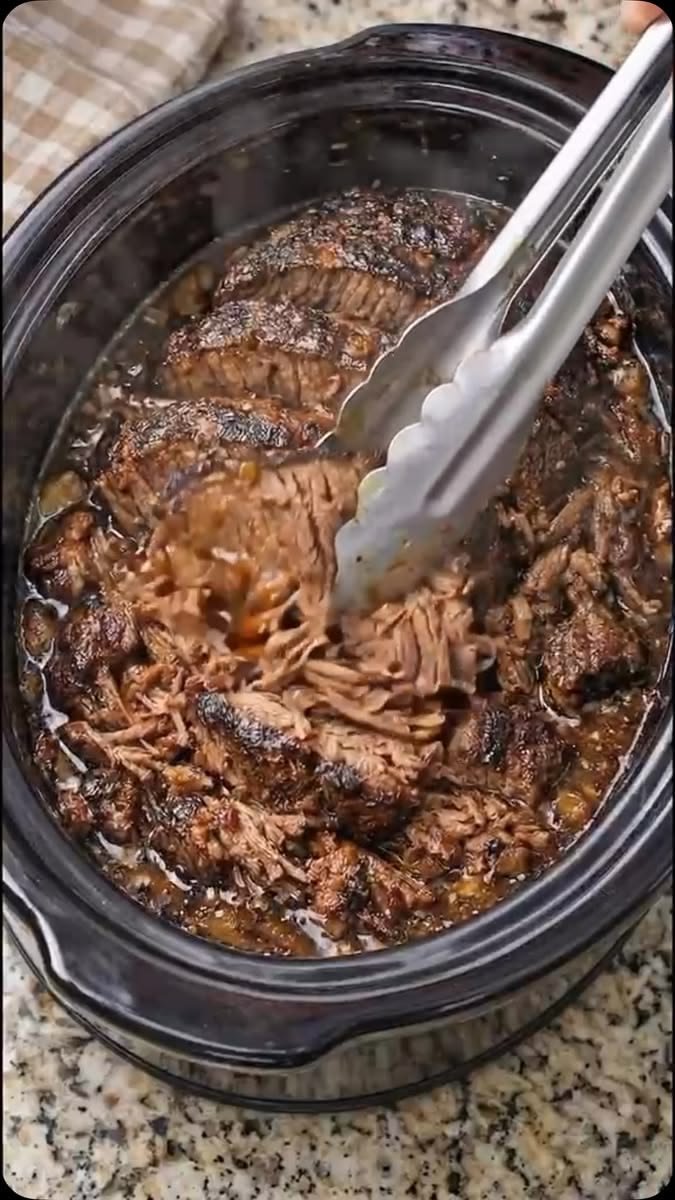
This High-Protein Low-Carb Slow Cooker Garlic Onion Brisket is a rich, tender, savory meal made with beef brisket, plenty of garlic and onions, and a deeply flavorful cooking broth. Slow cooking allows the brisket to become exceptionally tender while the onions practically melt into the sauce.
It is an excellent option for a high-protein, low-carb dinner and works especially well for meal prep because the flavor becomes even better after resting overnight.
Recipe Overview
The brisket is first seasoned generously and seared to develop a flavorful crust. It is then slow-cooked with garlic, onions, beef broth, Worcestershire sauce, herbs, and spices until fork-tender.
The result is:
- Tender, juicy beef
- Rich garlic and onion flavor
- Deep savory cooking juices
- Naturally low in carbohydrates
- High in protein
- Excellent for meal prep
- Suitable for keto-style eating when low-carb ingredients are used
Preparation and Cooking Details
Prep Time: 20 minutes
Sear Time: 8–10 minutes
Slow Cooker Time: 8–10 hours on LOW or 4½–6 hours on HIGH
Resting Time: 15–20 minutes
Total Time: Approximately 9–10½ hours on LOW
Servings: 8
Difficulty: Easy to Moderate
Ingredients
For the Brisket
- 3½–4 lb (1.6–1.8 kg) beef brisket
- 2 tablespoons olive oil or avocado oil
- 2 teaspoons kosher salt
- 1½ teaspoons freshly ground black pepper
- 2 teaspoons smoked paprika
- 2 teaspoons garlic powder
- 1 teaspoon onion powder
- 1 teaspoon dried thyme
- 1 teaspoon dried rosemary
- ½ teaspoon paprika
- ½ teaspoon chili flakes, optional
Garlic and Onion Base
- 2 large yellow onions, thinly sliced
- 10–12 cloves fresh garlic, minced or thinly sliced
- 1 cup low-sodium beef broth
- 2 tablespoons Worcestershire sauce
- 1 tablespoon apple cider vinegar
- 1 tablespoon Dijon mustard
- 1 tablespoon tomato paste, optional
- 2 bay leaves
- ½ teaspoon dried thyme
- ½ teaspoon black pepper
Optional Finishing Ingredients
- 1 tablespoon chopped fresh parsley
- 1 teaspoon fresh thyme
- 1 teaspoon lemon juice or apple cider vinegar
- 1–2 teaspoons butter, optional
- Additional salt and pepper to taste
Equipment Needed
- 6–8 quart slow cooker
- Large heavy skillet
- Tongs
- Sharp knife
- Cutting board
- Measuring spoons
- Small bowl
- Spoon
- Meat thermometer
- Fat separator, optional
Detailed Step-by-Step Instructions
Step 1: Prepare the Brisket
Remove the brisket from the refrigerator approximately 20–30 minutes before cooking.
Pat the meat thoroughly dry with paper towels.
This is important because a dry surface browns much better than a wet one.
If the brisket has a very thick layer of fat, trim it down to approximately ¼ inch.
Do not remove all of the fat. A moderate amount helps keep the brisket moist and flavorful during slow cooking.
Step 2: Make the Dry Rub
In a small bowl, combine:
- Salt
- Black pepper
- Smoked paprika
- Garlic powder
- Onion powder
- Dried thyme
- Rosemary
- Paprika
- Optional chili flakes
Mix thoroughly.
Rub the seasoning mixture over every surface of the brisket.
Press the seasoning firmly into the meat so it adheres well.
For an even deeper flavor, refrigerate the seasoned brisket uncovered for 4–12 hours before cooking. This step is optional but excellent for meal preparation.
Step 3: Prepare the Garlic and Onions
Thinly slice the onions.
Peel and mince or thinly slice the garlic.
Keep the garlic pieces relatively large rather than mincing them into a paste. Larger pieces are less likely to burn during the initial sautéing process.
Step 4: Sear the Brisket
Heat a large heavy skillet over medium-high heat.
Add the olive oil.
Once hot, carefully place the brisket into the skillet.
Sear for approximately 3–5 minutes per side, including the edges.
You are looking for a deep brown crust.
Do not constantly move the meat while it is searing. Allow it to remain in contact with the hot pan so proper browning can occur.
Once browned, transfer the brisket to the slow cooker.
Step 5: Cook the Onions
Reduce the skillet heat to medium.
Add the sliced onions.
Cook for approximately 3–4 minutes, stirring occasionally.
The onions do not need to be completely caramelized because they will continue cooking in the slow cooker.
Add the garlic and cook for another 30–60 seconds.
Do not allow the garlic to become dark brown or burned.
Step 6: Deglaze the Pan
Pour approximately ½ cup of the beef broth into the skillet.
Use a wooden spoon to scrape up the browned bits from the bottom.
These browned pieces contain a lot of concentrated flavor and will make the final brisket sauce much richer.
Add:
- Worcestershire sauce
- Apple cider vinegar
- Dijon mustard
- Tomato paste, if using
Stir until combined.
Step 7: Build the Slow Cooker
Place approximately half of the cooked onions and garlic in the bottom of the slow cooker.
Place the seared brisket on top.
Add the remaining onions and garlic around and over the brisket.
Pour the broth mixture around the sides.
Add the remaining beef broth.
Add the bay leaves and additional thyme.
The liquid should surround the brisket but should not completely submerge it.
Step 8: Slow Cook
Cover the slow cooker.
For the best texture
Cook on LOW for 8–10 hours.
This is the recommended method because the longer, gentler cooking time allows the connective tissue in the brisket to gradually break down.
Faster option
Cook on HIGH for approximately 4½–6 hours.
However, LOW is generally preferable for the most tender result.
Cooking time can vary significantly according to the size, thickness, and particular cut of brisket.
Step 9: Check for Tenderness
Begin checking the brisket toward the end of the estimated cooking time.
A thermometer can help, but tenderness is more important than temperature alone for this particular cut.
The brisket should feel very tender when pierced with a fork.
If it still feels firm or resistant, continue cooking.
A brisket can be technically cooked through but still tough because its connective tissue has not yet broken down sufficiently.
Step 10: Remove and Rest the Brisket
Carefully transfer the brisket to a large cutting board.
It will be extremely tender, so use two large spatulas or sturdy tongs.
Cover loosely with foil.
Allow it to rest for 15–20 minutes.
Resting helps the juices redistribute and makes the brisket easier to slice.
Step 11: Prepare the Cooking Juices
While the brisket rests, remove the bay leaves.
Taste the cooking liquid.
Adjust with:
- Salt
- Black pepper
- A little Dijon mustard
- A small splash of apple cider vinegar
If there is a large amount of fat floating on the surface, skim it off with a spoon.
For an even easier method, refrigerate the cooking liquid and remove the solidified fat from the surface before reheating.
Step 12: Make a Richer Low-Carb Sauce
For a thicker sauce, transfer approximately 1½–2 cups of the cooking liquid to a saucepan.
Bring to a gentle simmer.
Reduce for 8–15 minutes, stirring occasionally, until the liquid becomes more concentrated.
For an even thicker sauce, whisk together:
- 1 teaspoon xanthan gum
- 1 tablespoon cold water
Add only a very small amount of this mixture to the simmering sauce while whisking continuously.
Add gradually because xanthan gum thickens quickly.
Step 13: Slice the Brisket
Look carefully at the direction of the muscle fibers.
Slice the brisket against the grain.
This is one of the most important steps for tender brisket.
Cutting with the grain can make even perfectly cooked brisket seem chewy.
For maximum tenderness, aim for slices approximately ¼ inch thick.
Step 14: Serve
Arrange the brisket on a serving platter.
Spoon the cooked onions over the top.
Pour some of the reduced garlic-onion cooking juices over the slices.
Finish with fresh parsley or thyme.
Serve immediately.
Taste and Texture Notes
Flavor: Deeply savory, garlicky, rich, slightly tangy, and smoky.
Texture: Extremely tender and juicy when properly slow-cooked.
Sauce: Concentrated beef flavor with soft onions and roasted garlic notes.
Garlic: Pronounced but mellow rather than sharp because the garlic slowly cooks.
Onions: Soft, sweet, and deeply savory.
Spice level: Mild. Add chili flakes or cayenne for additional heat.
High-Protein Version
This recipe is naturally high in protein because brisket provides a substantial amount of beef protein.
To make the meal even more protein-focused:
- Use leaner brisket if desired.
- Trim excess external fat before cooking.
- Serve approximately 5–6 oz cooked brisket per portion.
- Add a large serving of steamed broccoli.
- Include roasted cauliflower or green beans.
- Serve with a high-protein side such as plain Greek yogurt-based sauce if desired.
- Keep high-carbohydrate sides such as bread, pasta, and regular mashed potatoes out of the meal.
A larger portion of brisket will increase protein but also increases calories and fat, so portion size matters.
Low-Carb and Keto Notes
The basic recipe is naturally very low in carbohydrates.
The primary carbohydrate-containing ingredients are onions, tomato paste, and Worcestershire sauce.
For a stricter low-carb version:
- Reduce onions from 2 large to 1 large.
- Use only 1 tablespoon Worcestershire sauce or choose a low-sugar variety.
- Omit tomato paste.
- Avoid adding honey, brown sugar, maple syrup, or other sweeteners.
- Serve with cauliflower mash, broccoli, asparagus, or green beans.
The recipe can fit a keto-style meal plan, but exact carbohydrate totals depend on the portion of onions and other ingredients consumed.
Ingredient Substitutions
| Original Ingredient | Substitute |
|---|---|
| Beef brisket | Chuck roast |
| Olive oil | Avocado oil |
| Yellow onions | White onions |
| Beef broth | Beef stock |
| Worcestershire sauce | Coconut aminos |
| Dijon mustard | Yellow mustard |
| Apple cider vinegar | Red wine vinegar |
| Fresh garlic | Garlic powder |
| Fresh thyme | Dried thyme |
| Fresh rosemary | Dried rosemary |
| Tomato paste | Omit or use a small amount of unsweetened tomato puree |
Brisket Substitute
If brisket isn’t available, a well-marbled chuck roast can be cooked using the same general slow-cooker technique.
The texture will be slightly different but still very tender.
Variations
1. Extra Garlic Brisket
For serious garlic lovers, increase the fresh garlic to 15–16 cloves.
Use half minced garlic and half whole peeled cloves.
The whole cloves become soft and almost spreadable during slow cooking.
2. Spicy Garlic Onion Brisket
Add:
- 1 teaspoon crushed red pepper
- ½ teaspoon cayenne
- 1 chopped jalapeño
This creates a spicy, savory brisket with plenty of heat.
3. Rosemary Garlic Brisket
Increase rosemary to 1½ teaspoons and add several fresh rosemary sprigs to the slow cooker.
The rosemary pairs especially well with beef.
4. Mushroom Garlic Brisket
Add 8 oz sliced mushrooms during the final 2–3 hours of cooking.
For a stronger mushroom flavor, sauté the mushrooms separately and add them during the final 30–60 minutes.
5. Peppercorn Brisket
Add:
- 1 teaspoon cracked black pepper
- ½ teaspoon crushed coriander seeds
The cracked pepper creates a stronger steakhouse-style flavor.
6. Smoky Brisket
Increase smoked paprika to 1 tablespoon.
You can also add a small amount of liquid smoke if desired, but use it sparingly because it can quickly overpower the dish.
7. Herb Garlic Brisket
Add:
- Fresh thyme
- Rosemary
- Parsley
- 1 bay leaf
- Fresh oregano
This creates a more herb-forward version.
Dietary Adjustments
Gluten-Free
The brisket itself can be made gluten-free.
However, Worcestershire sauce varies by brand, so check the label or use a certified gluten-free alternative.
Dairy-Free
The standard recipe is naturally dairy-free.
No butter, cream, cheese, or other dairy products are required.
Egg-Free
The recipe is naturally egg-free.
Sugar-Free
For a no-added-sugar version:
- Use unsweetened beef broth.
- Check Worcestershire sauce for added sugar.
- Omit tomato paste if you want to minimize natural sugar further.
- Do not add sweeteners.
Lower-Fat
To reduce fat:
- Choose a leaner brisket.
- Trim excess external fat.
- Refrigerate the cooking liquid after cooking.
- Remove the solidified fat before reheating.
- Use only a small amount of oil for searing.
The brisket will still contain some natural fat because brisket is not an extremely lean cut of beef.
Meal Prep and Storage
Refrigerator
Store cooked brisket in an airtight container with some of the cooking juices.
Refrigerator storage: 3–4 days.
Keeping some broth with the meat helps prevent it from drying out.
Freezer
Brisket freezes very well.
Allow it to cool completely.
Slice or portion the meat.
Place it into freezer-safe containers or bags with some cooking juices.
Remove as much air as possible.
Best quality: approximately 2–3 months.
Reheating
Oven
Place brisket slices in an oven-safe dish.
Add a few tablespoons of cooking liquid.
Cover tightly with foil.
Reheat at 300°F (150°C) until warmed through.
Stovetop
Place slices and some broth in a covered skillet.
Warm gently over low heat.
Avoid boiling the meat because aggressive reheating can make it tougher.
Slow cooker
For a large batch, reheat on LOW with some broth until thoroughly hot.
Make-Ahead Instructions
This brisket is particularly good when prepared a day ahead.
Cook the brisket completely.
Allow it to cool in the cooking juices.
Refrigerate overnight.
The next day:
- Remove the hardened fat from the surface.
- Slice the cold brisket against the grain.
- Place the slices back into the cooking juices.
- Reheat gently.
- Reduce some of the broth separately for a concentrated sauce.
The overnight resting period allows the flavors to develop further.
Approximate Nutrition
Estimated per serving based on 8 servings and assuming some external fat is trimmed.
Calories: Approximately 430–500
Protein: Approximately 45–50 g
Fat: Approximately 25–32 g
Carbohydrates: Approximately 5–7 g
Fiber: Approximately 1 g
Net Carbohydrates: Approximately 4–6 g
These numbers are estimates. Brisket can vary significantly in fat content, and the nutrition will change depending on how much cooking fat and sauce are consumed.
WW-Friendly Tips
Brisket can be relatively high in Points because of its fat content, so portion size and trimming are important.
For a lighter version:
- Trim visible fat before cooking.
- Refrigerate the cooking liquid and remove solidified fat.
- Use approximately 4–5 oz cooked brisket per serving.
- Increase vegetables on the plate.
- Reduce the amount of added oil.
- Serve with cauliflower mash, roasted vegetables, or a large salad.
- Avoid sugary sauces.
For an exact WW Points value, enter the specific cut and quantities into your current WW calculator because brisket’s fat content varies considerably.
Frequently Asked Questions
Can I put the raw brisket directly into the slow cooker?
Yes.
However, searing it first gives the meat a deeper browned flavor and improves the overall character of the finished dish.
Do I need to sear brisket before slow cooking?
It is not mandatory, but strongly recommended.
Searing creates browned flavor compounds that you cannot achieve from slow cooking alone.
Should the brisket be completely covered with liquid?
No.
The brisket does not need to be submerged.
The slow cooker creates a moist environment, and the meat releases additional juices during cooking.
Why is my brisket still tough?
It probably needs more time.
Brisket contains substantial connective tissue. It can be fully cooked yet remain tough until that connective tissue has sufficiently broken down.
Continue cooking until it becomes fork-tender.
Can I cook it overnight?
Yes.
Cooking on LOW for approximately 8–10 hours is ideal for many briskets.
If your slow cooker tends to run very hot, check the meat earlier than usual.
Can I use a smaller brisket?
Yes.
Cooking time will depend on thickness more than weight alone.
Begin checking smaller briskets earlier.
Can I use onion powder instead of fresh onions?
Yes, but fresh onions provide much better texture and flavor.
If necessary, use approximately 1–2 teaspoons onion powder.
Can I use garlic powder instead of fresh garlic?
Yes.
However, fresh garlic creates a much richer slow-cooked flavor.
For the best result, use a combination of fresh garlic and garlic powder.
Can I make this without Worcestershire sauce?
Yes.
Replace it with:
- Coconut aminos
- A little tamari
- Extra beef broth plus a small amount of vinegar
- Soy sauce if gluten is not a concern
Can I add potatoes?
Yes, but potatoes significantly increase the carbohydrate content.
For a low-carb version, use cauliflower, turnips, radishes, or rutabaga instead.
Can I add carrots?
Yes, but carrots will also increase carbohydrates.
For a strict low-carb version, keep the quantity modest or replace them with mushrooms, celery, or zucchini.
Can I make this in an Instant Pot?
Yes.
Sear the brisket using the sauté function, then pressure cook with the broth and seasonings.
Allow for a natural pressure release.
The exact pressure-cooking time depends on the brisket’s size and thickness.
Troubleshooting Guide
| Problem | Likely Cause | Solution |
|---|---|---|
| Brisket is tough | Not cooked long enough | Continue slow cooking until fork-tender |
| Brisket is dry | Too much cooking time or very lean meat | Use a well-marbled cut and monitor cooking |
| Flavor is weak | Insufficient seasoning | Season generously and reduce the cooking liquid |
| Onions disappeared | Cooked for a long time | This is normal; they become part of the sauce |
| Garlic tastes bitter | Garlic burned during searing | Add garlic after the onions and cook briefly |
| Sauce is watery | Too much broth | Reduce the cooking liquid in a saucepan |
| Sauce is too salty | Broth or Worcestershire was salty | Add unsalted broth and adjust gradually |
| Meat falls apart too much | Very long cooking time | Handle gently and slice thicker |
| Meat is difficult to slice | Sliced with the grain | Identify the grain and slice across it |
| Too much fat | Brisket was highly marbled | Chill the cooking liquid and remove excess fat |
| Brisket lacks crust | It wasn’t seared | Sear thoroughly before slow cooking |
Chef’s Tips and Tricks
- Dry the brisket before seasoning. Moisture prevents good browning.
- Don’t skip the sear if you want maximum flavor. The browned crust adds significant depth.
- Use plenty of garlic. Slow cooking mellows garlic, so a generous amount works beautifully.
- Don’t burn the garlic. Add it after the onions have started softening.
- Use low-sodium broth. It gives you more control over the final seasoning.
- Don’t completely cover the brisket with liquid. The slow cooker naturally creates plenty of moisture.
- Cook until tender, not simply until technically cooked. Brisket needs time for connective tissue to break down.
- Slice against the grain. This can make an enormous difference in perceived tenderness.
- Rest before slicing. Give the brisket at least 15 minutes.
- Save the cooking juices. They are one of the best parts of the recipe.
- Remove excess fat after chilling. This makes meal prep much easier and produces a cleaner sauce.
- Make it a day ahead. Brisket often tastes even better the next day.
- Don’t boil the meat when reheating. Gentle heat preserves its tenderness.
- Reduce the sauce separately. This gives you a concentrated sauce without overcooking the brisket.
- Use a sharp knife. Clean, thin slices make the finished dish much more appealing.
Serving and Presentation Ideas
Low-Carb Serving
Serve sliced brisket with:
- Garlic cauliflower mash
- Roasted broccoli
- Buttered green beans
- Sautéed mushrooms
- Roasted asparagus
- Creamed spinach
- Zucchini noodles
- Cauliflower rice
Spoon the garlic-onion sauce over the brisket and vegetables.
High-Protein Dinner Plate
For a balanced high-protein meal, serve:
- 5–6 oz brisket
- Steamed broccoli
- Roasted cauliflower
- Green salad
- A small amount of the reduced cooking sauce
Family Dinner
Serve the brisket alongside:
- Mashed potatoes
- Roasted carrots
- Green beans
- Dinner rolls
- Gravy made from the cooking juices
For a low-carb family meal, substitute cauliflower mash for traditional potatoes.
Holiday Presentation
Arrange thin slices of brisket slightly overlapping on a large serving platter.
Spoon caramelized onions across the center.
Drizzle a small amount of reduced garlic-beef sauce over the slices.
Garnish with fresh parsley and rosemary.
Serve the remaining sauce in a small bowl alongside the platter.
Final Recipe Notes
The most important elements of this High-Protein Low-Carb Slow Cooker Garlic Onion Brisket are proper seasoning, a good initial sear, enough slow-cooking time, and slicing against the grain.
For the most tender result, use the LOW setting and let the brisket cook until it is genuinely fork-tender rather than relying solely on the clock. Save the garlic-onion cooking juices, remove excess fat if desired, and reduce some of the liquid separately for a deeply savory low-carb sauce.