
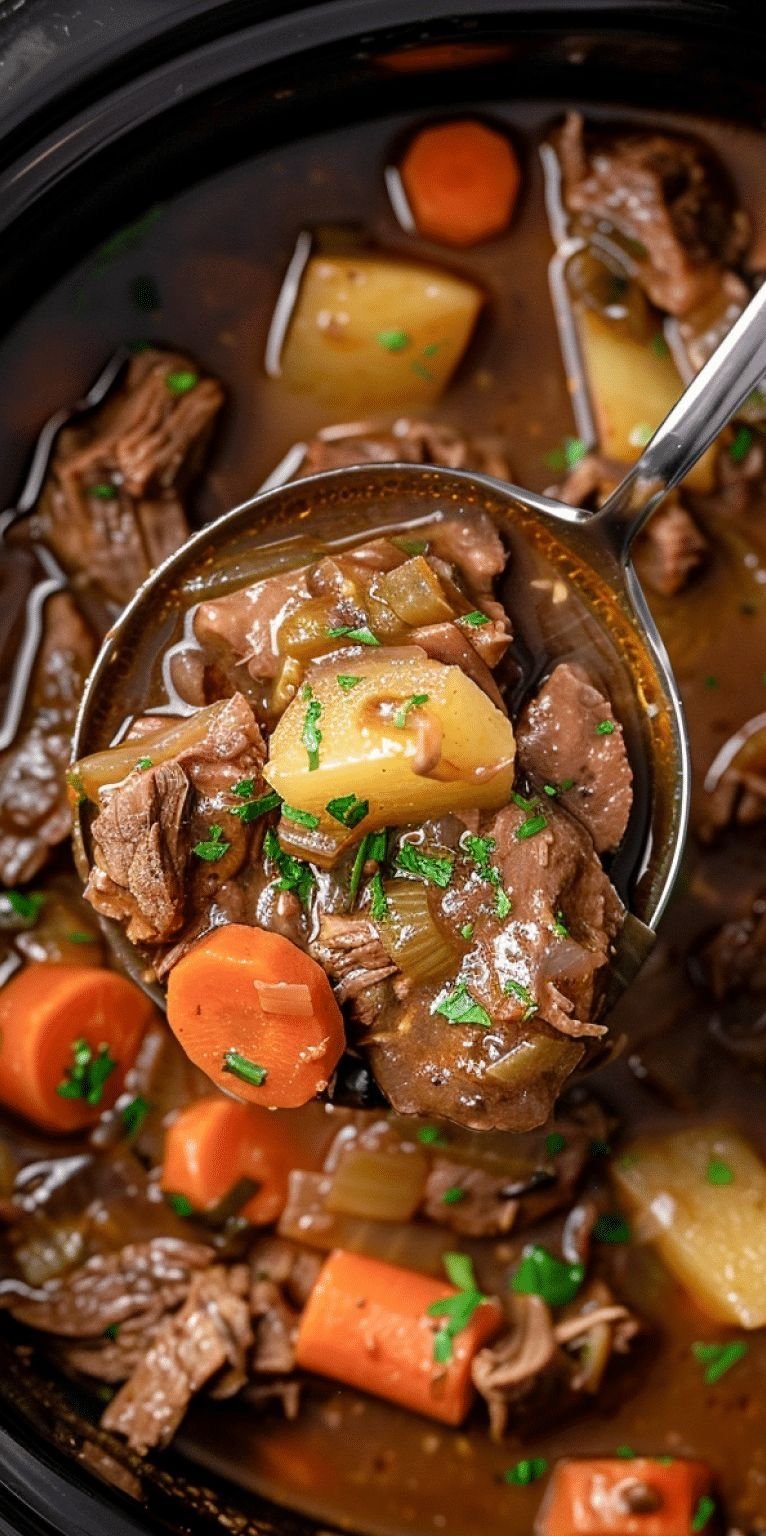
A rich, hearty, old-fashioned beef stew made with tender chunks of beef, soft potatoes, sweet carrots, onions, garlic, and a deeply savory gravy. This classic slow cooker recipe is perfect for cozy family dinners because the beef becomes wonderfully tender while the vegetables slowly absorb all the delicious flavors.
Recipe Overview
Prep Time
20 minutes
Cook Time
7–8 hours on LOW
Total Time
7 hours 20 min–8 hours 20 min
Servings
6 servings
Cooking Method
Slow cooker
Difficulty
Easy
Ingredients
For the beef stew
-
2 pounds (900 g) beef chuck, cut into 1-inch cubes
-
1½ pounds (680 g) potatoes, peeled if desired and cut into chunks
-
4 medium carrots, peeled and sliced into thick rounds
-
1 large yellow onion, chopped
-
3 cloves garlic, minced
-
3 cups (720 ml) beef broth
-
2 tablespoons tomato paste
-
1 tablespoon Worcestershire sauce
-
1 teaspoon dried thyme
-
1 teaspoon dried rosemary
-
1 teaspoon paprika
-
2 bay leaves
-
1 teaspoon salt, or to taste
-
½ teaspoon black pepper
-
2 tablespoons olive oil, for browning the beef (optional)
-
2 tablespoons all-purpose flour, for coating the beef (optional)
-
2 tablespoons cornstarch mixed with 2 tablespoons cold water, for thickening the gravy if needed
-
1 cup chopped celery, optional
-
½ cup frozen peas, optional, added near the end
Equipment Needed
-
5–6-quart slow cooker
-
Large skillet, if browning the beef
-
Cutting board and sharp knife
-
Measuring cups and spoons
-
Mixing bowl for the gravy thickener
Detailed Step-by-Step Instructions
Step 1: Prepare the beef
Pat the beef cubes dry with paper towels. This helps them brown more effectively.
If desired, toss the beef with 2 tablespoons of flour, a little salt, and black pepper. The flour adds flavor when browned and can help create a richer stew.
For the best flavor, heat the olive oil in a large skillet over medium-high heat. Brown the beef in batches for approximately 2–3 minutes per side. Avoid overcrowding the pan, as this can cause the meat to steam rather than brown.
Transfer the browned beef to the slow cooker.
Helpful tip: Browning is optional. You can add the raw beef directly to the slow cooker when you want a quicker preparation, although browning creates a deeper, more developed flavor.
Step 2: Prepare the vegetables
Wash and cut the potatoes into roughly 1½-inch chunks. Cut the carrots into thick slices so they retain their shape during the long cooking process.
Chop the onion and mince the garlic.
Place the potatoes, carrots, onion, and optional celery into the slow cooker. Arrange the beef among the vegetables.
Cutting the vegetables into similarly sized pieces helps them cook more evenly.
Step 3: Make the flavorful broth
In a mixing bowl, whisk together:
-
Beef broth
-
Tomato paste
-
Worcestershire sauce
-
Minced garlic
-
Dried thyme
-
Dried rosemary
-
Paprika
-
Salt and black pepper
Whisk until the tomato paste is evenly incorporated into the broth.
Pour this mixture over the beef and vegetables. Add the bay leaves and gently stir to distribute the ingredients.
The broth does not need to completely cover every ingredient. The slow cooker traps moisture, allowing the meat and vegetables to cook in the flavorful liquid.
Step 4: Slow cook the stew
Cover the slow cooker with its lid.
Choose one of the following cooking settings:
-
LOW: 7–8 hours for tender beef and well-developed flavor.
-
HIGH: Approximately 4–5 hours, depending on the slow cooker and the size of the beef cubes.
Avoid repeatedly lifting the lid, because heat escapes and increases the cooking time.
The stew is ready when the beef is fork-tender and the potatoes and carrots are cooked through. Beef suitable for stewing should be tender enough to break apart easily with a fork.
Step 5: Check the seasoning
Carefully remove the bay leaves.
Taste the broth and adjust the salt, pepper, or Worcestershire sauce as needed.
If the stew tastes too concentrated, add a little warm beef broth. If the flavor seems mild, allow it to cook a little longer or add a small amount of additional seasoning.
For a brighter finish, stir in a teaspoon of fresh lemon juice or a little chopped fresh parsley just before serving.
Step 6: Thicken the gravy
If you prefer a thicker, traditional beef stew gravy, mix 2 tablespoons of cornstarch with 2 tablespoons of cold water until smooth.
Stir the mixture into the hot stew. Cover and cook on HIGH for another 15–20 minutes, or until the gravy thickens.
If the stew is already thick enough, skip this step.
Another option is to gently mash two or three cooked potato pieces into the broth. This thickens the gravy naturally without adding extra starch.
Step 7: Add the optional peas
If using frozen peas, stir them into the stew during the final 15–20 minutes of cooking.
They add a little sweetness, color, and texture without becoming overly soft.
Remove the bay leaves, give the stew a gentle stir, and serve while hot.
Taste and Texture
-
Beef: Tender, juicy, and rich in savory flavor.
-
Potatoes: Soft and comforting, absorbing the seasoned beef broth.
-
Carrots: Sweet, tender, and full of flavor.
-
Gravy: Deeply savory, smooth, and rich, with a hint of tomato and herbs.
-
Overall flavor: Classic homestyle comfort food with a satisfying balance of meat, vegetables, and aromatic seasonings.
The slow cooking process allows the beef and vegetables to develop a cohesive flavor that tastes even better the following day.
Tips for the Best Slow Cooker Beef Stew
-
Choose beef chuck. It contains connective tissue that softens during slow cooking, making it ideal for stew.
-
Brown the beef when possible. This adds caramelized flavor and improves the overall richness.
-
Cut potatoes into large chunks. Small pieces may become mushy during extended cooking.
-
Use thick carrot slices. They hold their shape better than thin slices.
-
Avoid adding too much liquid. The ingredients release moisture during cooking.
-
Keep the lid closed. Frequent opening can slow the cooking process.
-
Thicken at the end. Cornstarch works best when added near the end of cooking.
-
Season gradually. Broth and Worcestershire sauce already contain salt, so taste before adding more.
Ingredient Substitutions
| Original ingredient | Substitute |
|---|---|
| Beef chuck | Beef stew meat or boneless beef shoulder |
| Yellow potatoes | Yukon Gold or red potatoes |
| Beef broth | Low-sodium beef stock |
| Worcestershire sauce | Soy sauce in a smaller amount |
| Tomato paste | A small amount of tomato purée |
| Cornstarch | Flour slurry or mashed potatoes |
| Fresh onion | Frozen chopped onion |
| Dried thyme and rosemary | Italian seasoning, used sparingly |
Delicious Variations
1. Garlic Herb Beef Stew
Increase the garlic to 5 cloves and add extra thyme and rosemary. Finish with fresh parsley for a fragrant, herb-forward stew.
2. Mushroom Beef Stew
Add 8 ounces (225 g) of sliced mushrooms. They contribute an earthy flavor and make the gravy taste richer.
3. Red Wine Beef Stew
Replace up to ½ cup of the beef broth with dry red wine. If browning the beef, add the wine to the skillet afterward and scrape up the browned bits before transferring the liquid to the slow cooker.
4. Hearty Vegetable Beef Stew
Add chopped celery, parsnips, or turnips. Add softer vegetables later if you prefer them to retain more texture.
5. Gluten-Free Beef Stew
Use certified gluten-free beef broth and Worcestershire sauce, omit the flour coating, and thicken the gravy with cornstarch.
6. Low-Carb Beef Stew
Reduce or omit the potatoes and use extra mushrooms, celery, and turnips instead. Keep in mind that carrots still contribute carbohydrates.
Dietary Adjustments
-
Dairy-free: The basic recipe is naturally dairy-free if your broth and other packaged ingredients contain no dairy.
-
Gluten-free: Omit the flour and check the labels of the broth and Worcestershire sauce.
-
Lower sodium: Use low-sodium broth, reduce added salt, and adjust the seasoning after cooking.
-
Higher protein: Increase the amount of lean beef per serving and serve with a suitable high-protein side.
-
Lower calorie: Trim visible fat from the beef, measure the oil carefully, and use a leaner cut if desired.
-
Low-carb: Replace the potatoes with lower-carbohydrate vegetables and recalculate the nutrition.
Meal Prep and Storage
Refrigerator: Allow leftovers to cool promptly and refrigerate in airtight, shallow containers within 2 hours. Use within 3–4 days.
Freezer: Freeze in airtight, freezer-safe containers for approximately 2–3 months for best quality. Potatoes may become softer after thawing.
Reheating on the stove: Place the stew in a saucepan and heat gently, stirring occasionally, until it reaches 165°F (74°C).
Microwave reheating: Place a serving in a microwave-safe bowl, cover loosely, and heat in intervals, stirring between intervals until thoroughly hot.
Meal-prep tip: Divide the stew into individual portions with plenty of beef, vegetables, and gravy. This makes weekday lunches and dinners easy to reheat.
Approximate Nutrition Information
Estimated per serving, assuming 6 servings and the optional flour coating, olive oil, and cornstarch thickener are included. Actual values vary with beef fat content and portion size.
| Nutrient | Approximate amount |
|---|---|
| Calories | 430–500 kcal |
| Protein | 32–38 g |
| Carbohydrates | 30–38 g |
| Fat | 17–23 g |
| Fiber | 4–6 g |
| Sugar | 5–8 g |
| Sodium | 500–850 mg |
These are estimates rather than laboratory-tested nutrition values. For more precise figures, calculate the recipe using the specific ingredients and quantities you use.
Weight Watchers-Friendly Tips
-
Choose a leaner cut of beef and trim visible fat.
-
Use a measured amount of olive oil or brown the beef in a good nonstick pan with minimal oil.
-
Select low-sodium broth.
-
Fill each serving with plenty of carrots and other non-starchy vegetables.
-
Measure the potatoes and beef into portions rather than estimating serving sizes.
-
Calculate WW Points using your current plan and the exact ingredients, particularly the beef, oil, and any flour used.
The recipe’s WW Points can vary by plan and ingredient choices, so a single Points value should not be assumed for every version.
Frequently Asked Questions
1. Can I put raw beef directly into the slow cooker?
Yes. The beef can cook safely from raw when the slow cooker is used according to its manufacturer’s instructions and the meat reaches a safe temperature. Browning first is optional but improves flavor.
2. Why is my beef still tough?
The beef may need more time. Tough stewing beef often becomes tender after its connective tissue has had enough time to break down. Continue cooking and check periodically.
3. Can I cook the stew overnight?
Yes, provided you use the LOW setting, follow your slow cooker’s instructions, and ensure the cooking time suits the appliance and recipe. Avoid leaving cooked food sitting at room temperature overnight.
4. Can I add frozen vegetables?
Yes. Frozen peas can be added near the end. For frozen mixed vegetables, follow the package guidance and add them late enough to avoid excessive softness.
5. How can I prevent mushy potatoes?
Use waxy or firm potatoes, cut them into large pieces, and avoid cooking longer than necessary. If your slow cooker runs hot, begin checking for doneness toward the earlier end of the suggested time.
6. Why is my stew watery?
Slow cookers retain moisture, and vegetables release liquid. Use the recommended broth amount and thicken the finished stew with a cornstarch slurry or mashed potatoes if needed.
7. Can I make this recipe without tomato paste?
Yes. You can omit it, although the broth will have a slightly less rich flavor. A little tomato purée can also work.
8. Can I prepare the ingredients the night before?
Yes. Chop the vegetables and measure the seasonings in advance. Refrigerate the prepared ingredients separately in covered containers, and assemble the stew when you are ready to start cooking.
9. Can I cook this stew on HIGH instead of LOW?
Yes. Allow approximately 4–5 hours on HIGH, checking that the beef is tender and the vegetables are cooked through. Actual timing depends on the appliance.
10. What should I serve with beef stew?
Crusty bread, dinner rolls, a green salad, steamed green beans, or roasted Brussels sprouts all complement the rich gravy.
Troubleshooting Guide
| Problem | Likely reason | Solution |
|---|---|---|
| Beef is tough | Insufficient cooking time | Continue cooking until fork-tender |
| Gravy is too thin | Excess moisture | Add a cornstarch slurry |
| Potatoes are mushy | Pieces too small or overcooked | Cut larger chunks and check earlier |
| Stew tastes bland | Insufficient seasoning | Adjust salt, pepper, herbs, and Worcestershire sauce |
| Gravy is too salty | Salty broth or excess seasoning | Add unsalted broth and more suitable vegetables |
| Vegetables are undercooked | Pieces too large or cooker runs cool | Continue cooking until tender |
Serving and Presentation Ideas
Serve the stew in warm bowls with generous portions of beef, potatoes, carrots, and gravy. Sprinkle with freshly chopped parsley for a fresh finish.
For a complete family dinner, pair it with:
-
Warm crusty bread for dipping into the gravy.
-
A simple green salad with a light vinaigrette.
-
Steamed green beans or broccoli.
-
Fresh dinner rolls for a traditional comfort-food meal.
For a thicker, restaurant-style presentation, spoon the gravy over the beef and vegetables rather than adding extra broth to the bowl.
Final Recipe Notes
This Classic Slow Cooker Beef Stew with Potatoes and Carrots is an easy, comforting meal made with everyday ingredients. Browning the beef adds extra depth, while slow cooking transforms the meat into tender bites and allows the potatoes and carrots to soak up the savory broth.