
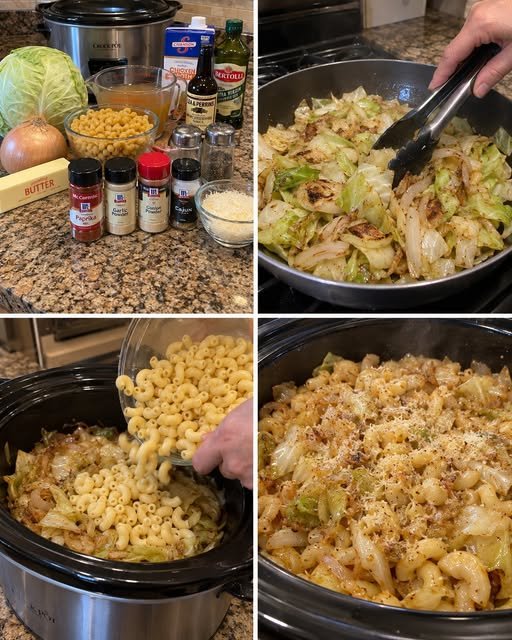
Ingredients
-
1 medium green cabbage, chopped into bite-sized pieces
-
2 cups elbow macaroni, uncooked
-
1 medium onion, sliced or diced
-
4 tbsp butter
-
2 cups chicken broth or vegetable broth
-
½ cup grated Parmesan cheese
-
2 tbsp olive oil
-
1 tsp garlic powder
-
1 tsp onion powder
-
1 tsp paprika
-
½–1 tsp Cajun seasoning, to taste
-
½ tsp black pepper
-
Salt, to taste
-
1–2 tsp Worcestershire sauce, optional
-
1–2 tbsp sliced jalapeños, optional
Note: The picture shows cooked macaroni being added to the slow cooker. Cooking the pasta separately before combining it helps prevent mushy macaroni.
Instructions
-
Prepare the vegetables: Remove the outer cabbage leaves, cut the cabbage into quarters, remove the core, and chop. Slice the onion.
-
Sauté the cabbage: Heat olive oil and 2 tablespoons of butter in a large skillet over medium heat. Add the onion and cook for 3 minutes. Add the cabbage and sauté for 8–10 minutes until slightly softened and lightly browned.
-
Season: Stir in garlic powder, onion powder, paprika, Cajun seasoning, black pepper, and a little salt. Add Worcestershire sauce if desired.
-
Transfer to the slow cooker: Place the seasoned cabbage and onion into the slow cooker. Pour in the broth and add the remaining 2 tablespoons of butter.
-
Cook: Cover and cook on LOW for 2–3 hours or HIGH for about 1–1½ hours, until the cabbage is tender. Slow cookers vary, so check periodically.
-
Cook the macaroni separately: Near the end of the cabbage cooking time, boil the elbow macaroni in salted water according to the package directions until just al dente. Drain well.
-
Combine: Stir the cooked macaroni into the tender cabbage. Add the Parmesan cheese and mix gently until everything is evenly coated. If needed, add a small splash of broth to keep the mixture moist.
-
Finish and serve: Taste and adjust the Cajun seasoning, salt, and pepper. Cover for another 5–10 minutes to let the flavors blend, then serve hot.
Nutrition Information
Estimated per serving, based on 6 servings.
| Nutrient | Approx. amount |
|---|---|
| Calories | 280–360 kcal |
| Protein | 8–12 g |
| Carbohydrates | 35–45 g |
| Total fat | 12–17 g |
| Saturated fat | 6–9 g |
| Fiber | 4–6 g |
| Sugar | 5–8 g |
| Sodium | 450–850 mg |
Nutrition depends on the broth, butter, cheese, and Cajun seasoning used.
Nut & Allergen Information
-
Peanuts and tree nuts: Not intentionally included in the listed ingredients.
-
Dairy: Contains butter and Parmesan cheese.
-
Wheat/gluten: Regular elbow macaroni contains wheat.
-
Possible soy or other allergens: Check broth, Worcestershire sauce, and seasoning labels.
-
Gluten-free option: Use gluten-free macaroni and verify that the broth and seasonings are gluten-free.
-
Dairy-free option: Use plant-based butter and a suitable dairy-free Parmesan alternative.
Always check product labels and cross-contact warnings for anyone with food allergies.
Q/S — Questions & Tips
Q: Can I cook the macaroni directly in the slow cooker?
Yes, but add it near the end with enough hot broth and check frequently. Pasta can become mushy if cooked for too long. Cooking it separately gives the most reliable texture.
Q: Can I make this without Cajun seasoning?
Yes. Use paprika, garlic powder, onion powder, and black pepper. Add a pinch of cayenne if you want heat.
Q: Can I add meat?
Yes. Cooked smoked sausage, bacon, or shredded chicken can make this a heartier meal. Cook raw meat safely before combining it with the vegetables.
Q: How can I make it creamier?
Stir in a little cream or cream cheese with the Parmesan at the end.
Q: How do I keep the cabbage from becoming watery?
Sauté it first to release some moisture, and avoid adding too much broth. Drain the macaroni well before mixing it in.
Q: How should I store leftovers?
Refrigerate within 2 hours in an airtight container and use within 3–4 days. Reheat thoroughly, adding a splash of broth if needed.
Q: Can I freeze it?
You can, but cabbage and macaroni may soften after thawing. For the best texture, freeze the cabbage mixture separately from the pasta.
Chef’s tip: Brown the cabbage before slow cooking. That little extra step develops a sweeter, deeper flavor and makes the finished dish much more delicious.