
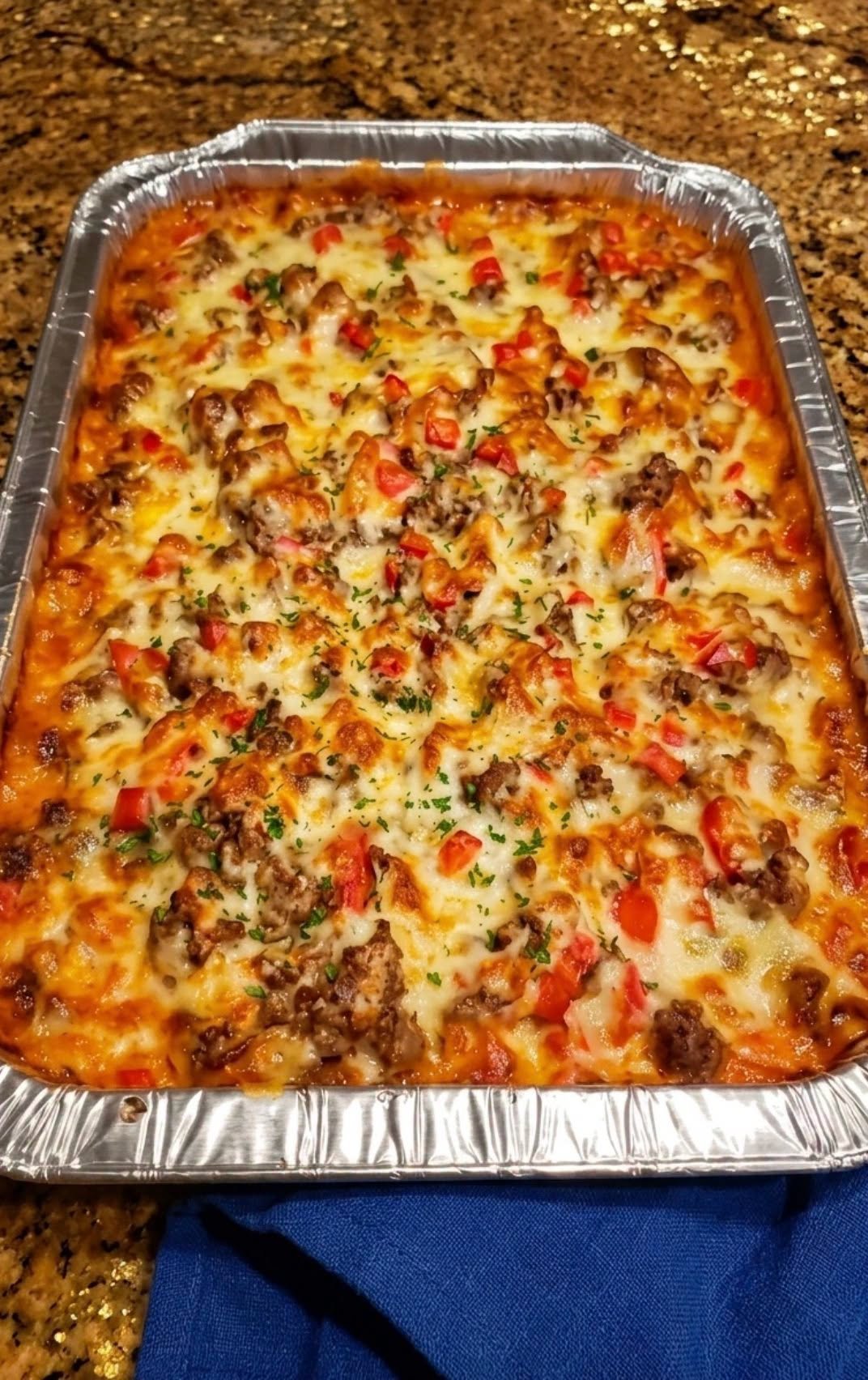
A hearty, comforting casserole made with seasoned ground beef, tomatoes, tender pasta, creamy sauce, and plenty of melted cheese. It is an easy weeknight dinner that comes together with simple pantry ingredients and reheats beautifully for meal prep.
Recipe Overview
This Cheesy Beef & Tomato Casserole combines:
- Savory seasoned ground beef
- Rich tomato sauce
- Tender pasta
- Creamy cheese
- Mozzarella and cheddar for a golden, bubbly topping
- Garlic, onion, and Italian herbs for extra flavor
It is filling, family-friendly, budget-conscious, and easy to customize.
Prep Time
15 minutes
Cook Time
35–40 minutes
Total Time
50–55 minutes
Servings
6 servings
Difficulty
Easy
Ingredients
For the Beef & Tomato Filling
- 1 lb (450 g) lean ground beef
- 1 medium yellow onion, finely diced
- 3 cloves garlic, minced
- 1 can (14–15 oz) diced tomatoes, undrained
- 1 can (15 oz) tomato sauce
- 2 tablespoons tomato paste
- 1 teaspoon Italian seasoning
- 1 teaspoon paprika
- ½ teaspoon onion powder
- ½ teaspoon garlic powder
- ½ teaspoon salt, or to taste
- ¼ teaspoon black pepper
- ½ teaspoon red pepper flakes, optional
- 1 teaspoon Worcestershire sauce, optional
For the Pasta
- 12 oz (340 g) short pasta such as penne, rotini, shells, or elbow macaroni
- 1 tablespoon salt for the pasta water
For the Creamy Cheese Mixture
- 4 oz (115 g) cream cheese, softened
- ½ cup sour cream or plain Greek yogurt
- ½ cup shredded cheddar cheese
For the Topping
- 1 cup shredded mozzarella
- ½ cup shredded cheddar
- ¼ cup grated Parmesan
- 1 tablespoon chopped fresh parsley, optional
Equipment
- Large skillet
- Large pot
- Colander
- 9 × 13-inch baking dish
- Wooden spoon or spatula
- Mixing spoon
- Aluminum foil, optional
Step-by-Step Instructions
Step 1: Preheat the Oven
Preheat your oven to 375°F (190°C).
Lightly grease a 9 × 13-inch casserole dish with cooking spray or a small amount of oil.
Step 2: Cook the Pasta
Bring a large pot of salted water to a boil.
Add the pasta and cook according to the package directions, but stop cooking about 1–2 minutes before it reaches al dente.
The pasta will continue cooking in the oven.
Drain well.
Do not rinse the pasta.
Set aside.
Step 3: Brown the Ground Beef
Heat a large skillet over medium-high heat.
Add the ground beef and cook for approximately 5–7 minutes, breaking it apart with a wooden spoon.
Cook until no longer pink.
If there is a large amount of excess fat, drain it.
For lean ground beef, you may not need to drain it.
Step 4: Add the Onion
Add the diced onion to the beef.
Cook for about 3–4 minutes, stirring occasionally, until the onion softens.
Add the minced garlic and cook for another 30–60 seconds.
Be careful not to burn the garlic.
Step 5: Build the Tomato Sauce
Add:
- Diced tomatoes
- Tomato sauce
- Tomato paste
- Italian seasoning
- Paprika
- Onion powder
- Garlic powder
- Salt
- Black pepper
- Red pepper flakes, if using
- Worcestershire sauce, if using
Stir everything together.
Bring the mixture to a gentle simmer.
Cook uncovered for approximately 8–10 minutes, stirring occasionally.
The sauce should become slightly thicker and more flavorful.
Step 6: Prepare the Creamy Cheese Mixture
In a bowl, combine:
- Softened cream cheese
- Sour cream or Greek yogurt
- ½ cup shredded cheddar
Mix until reasonably smooth.
A few small cream cheese pieces are fine because they will melt during baking.
Step 7: Combine the Pasta and Beef
Add the cooked pasta to the skillet with the beef and tomato sauce.
Stir gently until the pasta is evenly coated.
Turn off the heat.
Step 8: Add the Creamy Cheese
Add the cream cheese mixture to the beef and pasta.
Stir gently until everything is evenly distributed.
Taste the mixture.
Adjust the seasoning if needed.
If it seems very thick, stir in 2–4 tablespoons of reserved pasta water.
Step 9: Transfer to the Casserole Dish
Pour the mixture into the prepared baking dish.
Spread it into an even layer.
Step 10: Add the Cheese Topping
Sprinkle evenly with:
- Mozzarella
- Cheddar
- Parmesan
For an especially cheesy casserole, you can add another small handful of mozzarella.
Step 11: Bake
Place the casserole in the preheated oven.
Bake uncovered for approximately 25–30 minutes.
The casserole should be:
- Hot throughout
- Bubbling around the edges
- Melted on top
- Lightly golden in spots
For a more deeply browned cheese topping, switch to broil for 1–2 minutes at the end.
Watch it closely because cheese can burn quickly.
Step 12: Rest Before Serving
Remove the casserole from the oven.
Let it rest for approximately 5–10 minutes before serving.
This allows the sauce to settle and makes the casserole easier to portion.
Garnish with fresh parsley if desired.
Taste and Texture
The finished casserole is rich, savory, creamy, and cheesy.
The tomato sauce provides acidity and sweetness, while the beef adds a hearty savory flavor.
The cream cheese and sour cream create a creamy interior, while the mozzarella, cheddar, and Parmesan form a melted, golden cheese layer on top.
The slightly undercooked pasta holds its shape rather than becoming mushy.
High-Protein Version
For a higher-protein casserole:
- Use 93–96% lean ground beef.
- Replace sour cream with nonfat Greek yogurt.
- Use protein-enriched pasta if available.
- Increase the lean beef to 1¼ lb.
- Add ½ cup cottage cheese to the creamy mixture.
High-Protein Creamy Mixture
Blend together:
- ½ cup cottage cheese
- ½ cup Greek yogurt
- 4 oz cream cheese
- ½ cup cheddar
Blending the cottage cheese creates a smoother sauce.
Lower-Calorie Version
To make the casserole lighter:
- Use 96% lean ground beef or lean ground turkey.
- Use reduced-fat cream cheese.
- Use nonfat Greek yogurt instead of sour cream.
- Reduce the cheese topping slightly.
- Use whole-wheat or high-protein pasta.
- Increase the vegetables.
Good vegetables include:
- Mushrooms
- Zucchini
- Bell peppers
- Spinach
- Broccoli
- Diced carrots
Lower-Carb Version
Replace the pasta with:
- Zucchini noodles
- Spaghetti squash
- Cauliflower florets
- Shirataki pasta
- Low-carb pasta
For a cauliflower version, lightly steam the cauliflower first and drain it thoroughly.
This prevents excess water from making the casserole runny.
Gluten-Free Version
Use certified gluten-free pasta.
Also check the labels on:
- Tomato sauce
- Tomato paste
- Seasoning blends
- Worcestershire sauce
- Processed cheeses
Most of the basic ingredients are naturally gluten-free, but packaged products can vary.
Dairy-Free Version
Use dairy-free alternatives for:
- Cream cheese
- Sour cream
- Cheddar
- Mozzarella
- Parmesan
The flavor and melting characteristics will vary depending on the dairy-free products used.
Vegetable-Loaded Version
For an easy way to add more vegetables, sauté one or more of the following with the beef:
- 1 diced bell pepper
- 1 cup sliced mushrooms
- 1 small zucchini, diced
- 1 cup chopped spinach
- 1 small carrot, finely diced
Avoid adding too many watery vegetables without cooking them first.
Spicy Cheesy Beef & Tomato Casserole
For a spicy version, add:
- ½–1 teaspoon red pepper flakes
- 1 diced jalapeño
- ½ teaspoon smoked paprika
- Hot sauce to taste
You can also use pepper Jack cheese instead of some of the cheddar.
Mexican-Inspired Version
Replace the Italian seasoning with:
- 1 teaspoon chili powder
- 1 teaspoon cumin
- ½ teaspoon smoked paprika
- ½ teaspoon garlic powder
Add:
- 1 cup corn
- 1 small diced bell pepper
- ½ cup black beans
Top with cheddar and Monterey Jack.
Serve with fresh cilantro, avocado, or sliced green onions.
Italian-Style Version
Add:
- 1 teaspoon Italian seasoning
- ½ teaspoon dried basil
- ½ teaspoon dried oregano
- ¼ teaspoon red pepper flakes
Use mozzarella and Parmesan as the primary cheeses.
Add sliced mushrooms or chopped spinach for extra vegetables.
Make-Ahead Instructions
This casserole is excellent for making ahead.
Prepare the casserole completely but don’t bake it.
Cover tightly and refrigerate for up to 24 hours.
When ready to bake, remove it from the refrigerator and let it sit at room temperature for approximately 15–20 minutes.
Bake at 375°F until hot and bubbling.
Because the casserole is starting cold, it may need an additional 10–15 minutes of baking time.
Meal Prep
Divide the cooled casserole into individual containers.
Refrigerate and use within 3–4 days.
It makes an excellent lunch or quick dinner because it reheats well.
Freezing Instructions
The casserole can be frozen.
For best results:
- Prepare the casserole.
- Allow it to cool completely.
- Cover tightly with plastic wrap followed by aluminum foil, or use an airtight freezer-safe container.
- Freeze for up to approximately 2–3 months.
For individual portions, freeze in freezer-safe containers.
Reheating
Microwave
Heat individual portions for 1–2 minutes.
Stir if necessary and continue heating in 30-second intervals until hot.
Oven
Cover with foil and bake at 350°F (175°C) until heated through.
Remove the foil during the last few minutes to refresh the cheese topping.
Approximate Nutrition
Per serving, assuming 6 servings and using lean ground beef and regular cheese:
- Calories: approximately 500–570
- Protein: approximately 30–35 g
- Carbohydrates: approximately 45–50 g
- Fat: approximately 22–27 g
- Fiber: approximately 3–5 g
- Sugar: approximately 7–9 g
Nutrition varies depending on the type of beef, pasta, cheese, and other ingredients used.
WW-Friendly Tips
For a lighter WW-style version:
- Use extra-lean ground beef.
- Choose whole-wheat or higher-protein pasta.
- Replace sour cream with nonfat Greek yogurt.
- Use reduced-fat cheese.
- Increase the amount of vegetables.
- Measure the cheese rather than adding it freely.
- Choose a lower-fat mozzarella for the topping.
The exact Points value depends on the current WW program and the specific brands and quantities used.
Frequently Asked Questions
Can I use ground turkey instead of beef?
Yes.
Ground turkey works very well and creates a lighter casserole.
For maximum flavor, use ground turkey with enough seasoning and don’t overcook it.
Can I use different pasta?
Absolutely.
Good choices include:
- Penne
- Rotini
- Rigatoni
- Shells
- Elbow macaroni
- Bow-tie pasta
- Cavatappi
Short pasta shapes work particularly well because they hold the beef and tomato sauce.
Can I make this without cream cheese?
Yes.
Simply increase the Greek yogurt or sour cream.
You can also add ½ cup cottage cheese for additional protein and creaminess.
Can I use fresh tomatoes?
Yes, although canned tomatoes usually produce a richer and more consistent sauce.
If using fresh tomatoes, use approximately 2–3 cups diced ripe tomatoes and simmer the sauce longer to reduce excess liquid.
Can I add vegetables?
Yes.
Mushrooms, zucchini, spinach, bell peppers, broccoli, and carrots all work well.
Cook watery vegetables before adding them to the casserole.
Why is my casserole watery?
Common causes include:
- Pasta wasn’t drained well.
- Tomatoes contained too much liquid.
- Watery vegetables were added.
- The casserole wasn’t allowed to rest.
- Too much liquid was added to the sauce.
Simmering the beef sauce longer before combining it with the pasta can help.
Why is my pasta mushy?
The pasta was probably cooked too long before baking.
Cook it 1–2 minutes less than the package directions so it finishes cooking in the oven.
Can I make it extra cheesy?
Absolutely.
Add another ½ cup mozzarella or cheddar to the top.
For the best flavor, combine mozzarella for stretchiness, cheddar for sharpness, and Parmesan for a salty, nutty finish.
Troubleshooting
Casserole is too dry
Stir a few tablespoons of tomato sauce or pasta water into the mixture before baking.
Casserole is too watery
Simmer the tomato-beef mixture uncovered for longer before combining it with the pasta.
You can also let the baked casserole rest for 10 minutes before serving.
Cheese isn’t browning
Place the casserole under the broiler for 1–2 minutes.
Keep the oven door slightly open if required by your oven and watch the cheese continuously.
Beef tastes bland
Add additional:
- Salt
- Black pepper
- Garlic
- Italian seasoning
- Worcestershire sauce
- Parmesan
Taste the sauce before combining it with the pasta.
Casserole is too acidic
Add a small pinch of sugar or a splash of cream/milk to balance the tomato acidity.
Chef’s Tips
- Don’t overcook the pasta. Slightly undercooked pasta gives the best baked texture.
- Brown the beef properly. Let it develop some color instead of immediately adding the tomato sauce.
- Cook the tomato sauce before assembling. A few extra minutes of simmering creates a deeper flavor.
- Season each component. Season the beef, sauce, and pasta water instead of relying entirely on the cheese.
- Use freshly shredded cheese when possible. It generally melts more smoothly than pre-shredded cheese.
- Don’t skip the resting time. Five to ten minutes helps the casserole set.
- Add Parmesan to the topping. It gives the cheese crust more flavor and browns beautifully.
- For meal prep, slightly underbake the casserole. It will finish reheating without becoming overly soft.
Serving and Presentation Ideas
Serve this casserole hot with:
- Steamed broccoli
- Green salad
- Roasted vegetables
- Garlic bread
- Crusty bread
- Sautéed green beans
For presentation, sprinkle the finished casserole with fresh parsley or basil.
A little freshly grated Parmesan on each serving adds a restaurant-style finish.
For a complete family dinner, serve one square of casserole with a large green salad and roasted vegetables.
Final Notes
Cheesy Beef & Tomato Casserole is one of those dependable comfort-food recipes that can easily be adapted to whatever you have available. Ground beef can be replaced with turkey, chicken, or sausage, while the pasta can be swapped for whole-wheat, high-protein, gluten-free, or lower-carb alternatives.