
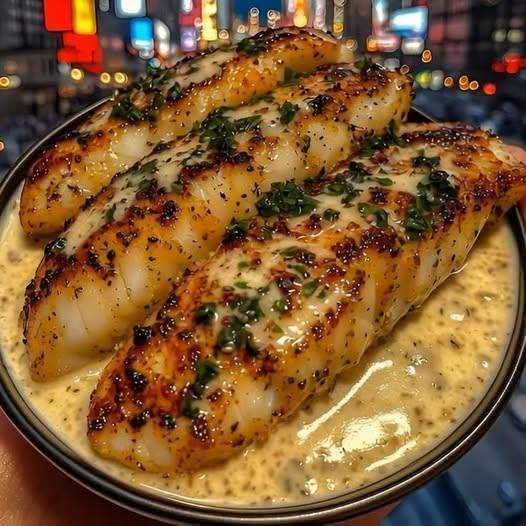
The photo appears to show pan-seared chicken breasts over a rich, creamy garlic-herb sauce, with browned garlic, parsley/herbs, black pepper and a glossy buttery finish. The exact ingredients can’t be determined from the image, so this recipe is a close reconstruction rather than the original recipe.
Servings
4 servings
Prep: 15 minutes
Cook: 25–30 minutes
Total: about 40–45 minutes
Ingredients
Chicken
4 boneless, skinless chicken breasts — about 600–700 g
1 tsp salt
1 tsp black pepper
1 tsp paprika
1 tsp Italian seasoning
½ tsp dried oregano
½ tsp garlic powder
2 tbsp olive oil
1 tbsp butter
Creamy garlic-herb sauce
4 tbsp butter
5–6 cloves garlic, finely minced
1 cup heavy cream
½ cup chicken stock
½ cup freshly grated Parmesan cheese
1 tsp Dijon mustard
½ tsp Italian seasoning
½ tsp dried thyme
¼ tsp chili flakes, optional
2 tbsp fresh parsley, finely chopped
1 tbsp fresh basil or cilantro, chopped
½ tsp black pepper
Salt, to taste
1 tsp lemon juice
Optional finishing ingredients
1 tbsp grated Parmesan
Fresh parsley
A little cracked black pepper
1 tsp melted butter or olive oil for gloss
Method
1. Prepare the chicken
If the breasts are very thick, slice them horizontally into thinner cutlets or pound them to an even thickness.
Pat them very dry with paper towels. This is important for getting the browned, slightly charred surface visible in the picture.
Mix:
salt
black pepper
paprika
Italian seasoning
oregano
garlic powder
Rub the seasoning evenly over both sides of the chicken.
2. Sear the chicken
Heat a large heavy skillet over medium-high heat.
Add the olive oil and butter.
When the butter is foaming, place the chicken in the pan.
Cook approximately 4–6 minutes on the first side, without moving it too much.
Flip and cook another 4–5 minutes.
You want a deep golden-brown crust.
The chicken does not necessarily need to be completely cooked at this point because it will finish in the sauce.
Remove the chicken to a plate.
3. Make the garlic butter base
Reduce the heat to medium.
Add the 4 tbsp butter.
Once melted, add the minced garlic.
Cook for approximately 30–60 seconds.
Don’t let the garlic become dark brown—it can turn bitter.
Add the thyme, Italian seasoning, black pepper and optional chili flakes.
Stir for about 20 seconds.
4. Deglaze the pan
Pour in the chicken stock.
Scrape the bottom of the pan with a wooden spoon or spatula.
Those browned bits are packed with flavor and help create the darker specks visible throughout the sauce in the photograph.
Simmer for 2–3 minutes.
5. Add the cream
Lower the heat to medium-low.
Add the heavy cream and Dijon mustard.
Stir continuously until combined.
Allow the sauce to gently simmer for about 3–5 minutes.
Don’t aggressively boil it, because high heat can cause a cream sauce to separate.
6. Add Parmesan
Gradually stir in the Parmesan.
Continue stirring until the cheese melts and the sauce becomes creamy and slightly thick.
Taste.
Add salt if necessary.
Finish with 1 tsp lemon juice. It won’t make the sauce taste strongly lemony; it helps balance the richness.
7. Return the chicken
Place the seared chicken back into the sauce.
Spoon sauce over the top.
Cover loosely and cook over low heat for approximately 5–8 minutes, depending on the thickness of the chicken.
Chicken should reach 165°F / 73.9°C internally, measured with a food thermometer.
A
Ask USDA
8. Finish like the photograph
Turn off the heat.
Sprinkle generously with fresh chopped parsley and a little basil/cilantro.
Add a few cracks of black pepper.
For an especially glossy finish, stir 1 tsp butter into the sauce just before serving.
Spoon plenty of the creamy sauce onto a serving plate and arrange the chicken on top.
Nut information
Does this recipe contain nuts?
No. The recipe as written contains no peanuts or tree nuts.
However, Parmesan, butter, cream, chicken stock, Dijon mustard and seasoning blends can have different manufacturing processes. For someone with a serious allergy, check the specific product labels and cross-contact warnings.
The FDA recognizes peanuts and tree nuts among the nine major food allergens; the list also includes milk, eggs, fish, crustacean shellfish, wheat, soy and sesame.
U
U.S. Food and Drug Administration
+1
Is Parmesan a nut?
No. Parmesan is a dairy cheese made from milk. It is not a tree nut.
Can I add nuts?
You could add toasted almonds, pine nuts or cashews, but then the dish would no longer be nut-free.
If serving someone with a nut allergy, I would not add them and would also avoid using a shared cutting board, pan or utensils that may have had nuts on them.
What about pesto?
Be careful. Many traditional pesto products contain pine nuts, and some commercial pesto products may contain other nuts. If using pesto, check the ingredient label carefully.
What to serve with it
This chicken is particularly good with:
8. Finish like the photograph
Turn off the heat.
Sprinkle generously with fresh chopped parsley and a little basil/cilantro.
Add a few cracks of black pepper.
Garlic mashed potatoes
Buttered rice
Pasta
Fettuccine
Roasted potatoes
Steamed broccoli
Green beans
Asparagus
Crusty bread for the sauce
For something close to the presentation in the photo, serve the chicken over a shallow pool of sauce with parsley scattered over the top.
Tips for the best result
Don’t overcrowd the pan.
If your skillet is small, sear the chicken in batches. Crowding causes steaming rather than browning.
Dry chicken = better browning.
Patting the chicken dry before seasoning makes a noticeable difference.
Don’t burn the garlic.
Add it after the chicken has been removed and keep the heat moderate.
Use freshly grated Parmesan.
Pre-shredded Parmesan can contain anti-caking ingredients and doesn’t always melt as smoothly.
Don’t boil the cream hard.
A gentle simmer produces a smoother sauce.
Adjust thickness.
If too thick, add a splash of chicken stock. If too thin, simmer uncovered for another 1–3 minutes.
For extra-browned chicken:
After the chicken is cooked, briefly increase the heat and spoon some sauce over it, allowing the exposed surface to caramelize slightly.
Recipe Q&A
Q: Can I use chicken thighs?
Yes. Boneless skinless thighs work extremely well and are more forgiving if slightly overcooked. Cooking time will vary according to thickness.
Q: Can I make this without heavy cream?
Yes. Use half-and-half for a lighter sauce. For a thicker sauce, add a little more Parmesan.
Q: Can I use milk?
Yes, but the sauce will be considerably thinner. You can thicken it with a small cornstarch slurry.
Q: Can I make it gluten-free?
Yes. The basic recipe is naturally gluten-free, but check your chicken stock, Dijon mustard, seasoning blends and Parmesan for their specific ingredients and cross-contact information.
Q: Can I make it dairy-free?
Yes. Use dairy-free butter, unsweetened plant-based cream and a dairy-free Parmesan alternative. The flavor will change somewhat.
Q: Can I make it spicy?
Absolutely. Add ½–1 tsp red-pepper flakes or a little cayenne to the seasoning.
Q: Why is my sauce grainy?
Usually because the Parmesan was added over excessive heat or the sauce was boiled. Lower the heat and add Parmesan gradually.
Q: Why isn’t my chicken brown like the picture?
The most common reasons are wet chicken, insufficiently hot oil, overcrowding the pan, or moving the chicken too frequently.
Q: Can I prepare it ahead?
Yes. Refrigerate the cooked chicken and sauce in a sealed container and reheat gently over low-medium heat. Add a splash of stock or cream if the sauce has become too thick.
Q: How do I know the chicken is safe?
Use a food thermometer and check the thickest part. Poultry should reach 165°F / 73.9°C.
A
Ask USDA
Q: Is this recipe keto-friendly?
As written, it is relatively low in carbohydrates, but the exact carbohydrate content depends on the stock, mustard and other packaged ingredients. Serve it with low-carb vegetables rather than pasta, rice or potatoes.
Q: Can I make the sauce without Parmesan?
Yes. The sauce will be less cheesy and slightly thinner. You can compensate with a little additional cream and reduce it longer.
Quick version
Season → sear chicken → remove → sauté garlic in butter → add stock → add cream + Dijon → add Parmesan → return chicken → simmer until 165°F → finish with parsley and lemon.
The result should be juicy browned chicken with a rich garlic-Parmesan cream sauce, very close to the appearance of the dish shown in your image.