
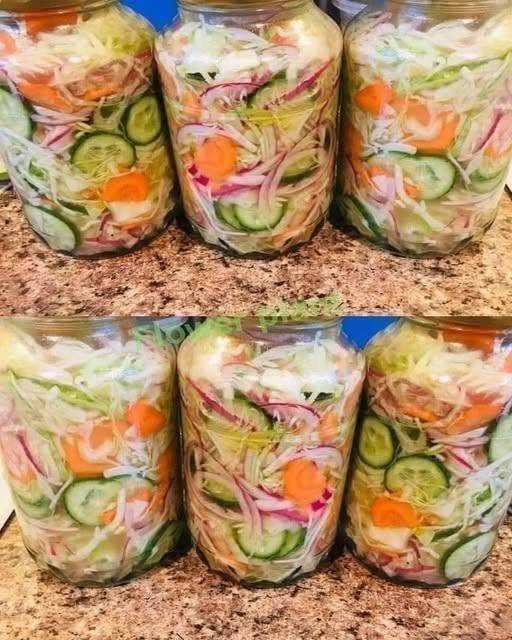
Makes: about 3 large 1-quart/1-liter jars
Prep: 25–30 minutes
Pickling: 24–48 hours
Storage: Refrigerator only
Vegetables
-
½ medium green cabbage, finely shredded
-
2 large carrots, thinly sliced
-
2 cucumbers, thinly sliced
-
1 small daikon or 4–5 red radishes, thinly sliced
-
1 small red onion, thinly sliced
-
1 small bell pepper, thinly sliced — optional
-
2–3 cloves garlic, thinly sliced
-
1–2 jalapeños or chilies, sliced — optional
Pickling brine
-
2 cups 5% acidity white vinegar
-
2 cups water
-
2½ tbsp pickling/canning salt or plain non-iodized salt
-
2–3 tbsp sugar
-
1 tsp black peppercorns
-
1 tsp mustard seeds — optional
-
1 tsp coriander seeds — optional
-
2–3 bay leaves — optional
Method
1. Prepare the vegetables
Wash everything thoroughly.
Slice the vegetables fairly thinly but not paper-thin. This helps them absorb the brine while staying crunchy.
For the cabbage, shred it into strips.
2. Pack the jars
Use clean glass jars.
Layer the vegetables loosely:
cabbage → carrot → cucumber → radish → onion → cabbage
Add a little garlic and chili between the layers.
Don’t pack them so tightly that the brine can’t circulate.
3. Make the brine
Add the following to a saucepan:
-
vinegar
-
water
-
salt
-
sugar
-
peppercorns
-
mustard/coriander seeds if using
-
bay leaves
Bring just to a simmer, stirring until the salt and sugar dissolve.
Don’t boil it aggressively for a long time.
4. Fill the jars
Carefully pour the warm brine over the vegetables.
Press the vegetables down gently with a clean spoon so that they’re covered by liquid.
Leave about 1–2 cm (½–¾ inch) of space at the top.
5. Cool and refrigerate
Let the jars cool uncovered until they’re no longer hot.
Close the lids and refrigerate.
After 24 hours: lightly pickled
After 48 hours: much more flavorful
After 3–5 days: strongest flavor
For the crunchiest vegetables, I recommend eating them within about 1–2 weeks.
Nutrition — approximate
For 1 cup, depending on the exact vegetables and amount of brine consumed:
| Nutrient | Approx. amount |
|---|---|
| Calories | 40–70 |
| Carbohydrates | 8–12 g |
| Fiber | 2–4 g |
| Protein | 1–2 g |
| Fat | <1 g |
| Added sugar | ~2–4 g |
| Sodium | Can be high |
Most of the calories come from the vegetables and added sugar. The sodium can vary considerably, especially depending on how much brine you consume.
Nut information
No nuts are required for this recipe.
It is naturally nut-free as written.
For allergies, check packaged vinegar, spices, and other ingredients for cross-contact warnings if you’re preparing this for someone with a severe allergy.
Recipe Q&A
Can I use apple cider vinegar?
Yes. Use 5% acidity vinegar. It will give the vegetables a slightly sweeter/fruity flavor.
Can I use lemon juice instead of vinegar?
Not as a direct substitution. Lemon juice doesn’t provide the same acidity profile or predictable preservation. For this recipe, stick with 5% acidity vinegar.
Do I have to heat the vegetables?
No. The vegetables are packed raw and the warm brine is poured over them. This helps retain their crunch.
Why did my cucumbers become soft?
Usually because they were sliced too thin, left in warm brine too long, or stored for an extended period. Use firm, fresh cucumbers and keep the finished jars refrigerated.
Can I leave out the sugar?
Yes. Sugar is primarily for balancing the vinegar’s acidity. You can reduce it or omit it.
Can I make it spicy?
Absolutely. Add sliced jalapeño, serrano, red chili, or chili flakes.
Can I add cauliflower?
Yes. Small cauliflower florets work very well.
Can I add broccoli?
You can, although broccoli becomes softer and develops a stronger flavor than cabbage, carrot, or radish.
Can I use red cabbage?
Yes. It will turn some of the other vegetables pink/purple, especially the onions.
Do I need to sterilize the jars?
For this refrigerator pickle, use thoroughly washed, clean jars and lids. This recipe is not a shelf-stable canning recipe.
Can I keep these in the pantry?
No. Because this is a refrigerator recipe rather than a tested shelf-stable canning formula, keep the jars refrigerated.
How do I know they’re spoiled?
Discard them if you notice mold, an unusual rotten/off odor, sliminess, bulging lids, or other obvious signs of spoilage. When in doubt, throw them out.
Can I reuse the brine?
It’s better not to repeatedly reuse pickle brine for a fresh batch because the acidity and salt concentration can change.
How can I make them extra crunchy?
Use very fresh vegetables, slice them evenly, don’t overcook them, and refrigerate promptly. Daikon, carrot, cabbage and radish generally retain crunch particularly well.
Important: Because the exact recipe from the photo isn’t provided, the recipe above is a close homemade recreation rather than a claim that it is the original recipe used for those jars.