
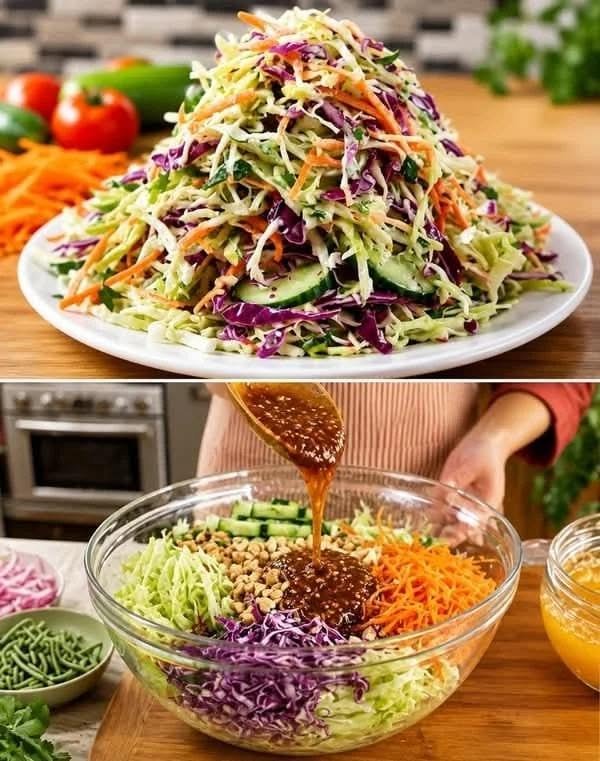
Serves: 4
Prep time: 15–20 minutes
Cook time: None
Total: About 20 minutes
Style: Mediterranean / Middle Eastern
Vegetarian: Yes
Vegan: Yes, if using maple syrup instead of honey
Gluten-free: Yes
Make-ahead: Yes
Ingredients
For the salad
- 4 cups finely shredded green or white cabbage
- 2 medium cucumbers, thinly sliced or diced
- ½ small red onion, very thinly sliced
- 1 cup cherry tomatoes, halved
- ¼ cup fresh parsley, finely chopped
- 2 tablespoons fresh mint, chopped
- 1 tablespoon fresh dill, optional
- 2 tablespoons toasted pine nuts — optional
- 1 tablespoon pumpkin seeds or sunflower seeds — optional
- ½ teaspoon sumac
- ¼ teaspoon freshly ground black pepper
Lemon-tahini dressing
- 3 tablespoons tahini
- 3 tablespoons fresh lemon juice
- 2–4 tablespoons cold water
- 1 tablespoon extra-virgin olive oil
- 1 small garlic clove, finely grated or minced
- ½ teaspoon ground cumin
- ½ teaspoon salt
- ½ teaspoon honey or maple syrup, optional
- ¼ teaspoon sumac, optional
Tahini-based lemon dressings commonly become thick when lemon juice is first mixed into tahini and then loosened gradually with water, so don’t worry if the dressing initially looks unusually thick.
Step-by-step method
1. Prepare the cabbage
Remove any damaged outer leaves.
Cut the cabbage into quarters, remove the hard core, and slice it very thinly.
Put it into a large bowl.
Add about ¼ teaspoon salt and gently massage the cabbage with your hands for about 30–60 seconds.
You don’t want to crush it. The goal is simply to soften it slightly while retaining plenty of crunch.
Tip: If you want an especially crunchy salad, skip the massaging.
2. Prepare the cucumber
Slice the cucumbers thinly.
If you’re using large cucumbers with a lot of watery seeds, cut them lengthwise and scrape out some of the seeds first. This helps prevent the finished salad from becoming watery.
For Persian or Lebanese cucumbers, you can generally leave the skin and seeds intact.
3. Prepare the remaining vegetables
Add to the cabbage:
- cucumber
- red onion
- cherry tomatoes
- parsley
- mint
- dill
Add the sumac and black pepper.
Don’t add the dressing yet.
4. Make the lemon-tahini dressing
Put the tahini into a small bowl.
Add lemon juice and whisk.
It may suddenly become very thick. That’s normal.
Add cold water one tablespoon at a time, whisking continuously.
The tahini will gradually become smooth and creamy.
Add:
- olive oil
- garlic
- cumin
- salt
- honey/maple syrup, if using
- sumac
Whisk again.
You want a dressing that is:
creamy + pourable + lemony, rather than extremely thick.
If it’s too thick → add another teaspoon or tablespoon of water.
If it’s too thin → whisk in a little more tahini.
5. Taste the dressing
This is important.
You are looking for a balance of:
- lemon → bright and acidic
- tahini → creamy and nutty
- olive oil → richness
- garlic → savory bite
- cumin → warmth
- salt → brings everything together
Adjust according to taste.
Too sour? → Add a tiny amount of honey/maple or more olive oil.
Too bitter? → Add a little more lemon and/or sweetener.
Too thick? → Water.
Too bland? → Salt and lemon.
6. Combine
Pour approximately ⅔ of the dressing over the salad.
Toss thoroughly.
Taste.
Add more dressing if necessary.
I recommend leaving a little dressing aside rather than putting everything in immediately.
7. Add the nuts/seeds
Just before serving, sprinkle with toasted pine nuts.
You can also add pumpkin or sunflower seeds.
The toasted nuts provide a particularly nice contrast to the soft vegetables and creamy tahini dressing. Pine nuts are also used in Mediterranean/Middle Eastern cabbage-and-cucumber salad variations.
Complete nut information
This is important because “nut-free” and “sesame-free” are not the same thing.
Does this recipe contain nuts?
The basic recipe does not require tree nuts.
However:
- Pine nuts are optional and are considered a tree nut for allergen purposes in many food-labeling systems.
- Tahini is made from sesame seeds, not nuts.
- Sesame is a major allergen in many countries.
- Pumpkin seeds and sunflower seeds are not tree nuts, but they can still cause individual allergies.
- Cross-contamination is possible with packaged tahini, nuts, seeds, and spice mixes.
If you have a tree-nut allergy
Make the salad without pine nuts.
You can simply leave them out—the salad remains delicious.
If you want crunch, use an allergy-safe seed such as pumpkin or sunflower seeds only if you know they are safe for you.
If you have a sesame allergy
You should not use tahini.
Replace the tahini dressing with:
- 3 tablespoons extra-virgin olive oil
- 2 tablespoons lemon juice
- 1 tablespoon apple-cider vinegar
- 1 small grated garlic clove
- ½ teaspoon cumin
- ½ teaspoon salt
- black pepper
- 1 teaspoon honey or maple syrup
Whisk everything together.
Important: Don’t assume tahini is safe simply because it doesn’t contain tree nuts—tahini is sesame paste.
If you want a completely nut-free and sesame-free salad
Use the olive-oil dressing above and omit:
- pine nuts
- tahini
- nut-based toppings
You can still use sunflower or pumpkin seeds if they’re appropriate for your allergy situation.
Best ingredient choices
Cabbage
Green/white cabbage: mild, crunchy, ideal for everyday use.
Red cabbage: stronger flavor and beautiful color.
Combination: 3 cups green + 1 cup red cabbage is particularly attractive.
Cucumber
Persian/Lebanese cucumbers are excellent because they’re crisp and relatively small.
English cucumber is another good option.
If using large watery cucumbers, removing some seeds is helpful.
Herbs
For the most Mediterranean flavor, I’d use:
Parsley + mint
For a more Middle Eastern character:
Parsley + mint + dill + sumac
Should you add olive oil?
Yes, if you want a more traditional Mediterranean-style richness.
The tahini already supplies substantial richness, so you don’t need much.
1 tablespoon extra-virgin olive oil is enough for this quantity.
For an oil-free version, simply omit it and add a little extra water to the dressing.
How long does it last?
Best texture
Eat immediately or within several hours.
Refrigerator
The undressed vegetables can generally be kept for 2–3 days in an airtight container.
The dressed salad is best within 1 day, because cucumber and tomatoes gradually release water.
A cabbage-heavy salad is more forgiving than a lettuce salad because cabbage maintains its crunch for longer.
Best meal-prep method
Store separately:
- Shredded cabbage
- Cucumber/tomatoes
- Herbs
- Dressing
- Nuts/seeds
Combine immediately before eating.
This gives you the freshest texture.
🍽️ How to make it a complete meal
For a more filling lunch, add:
- chickpeas
- grilled chicken
- grilled fish
- boiled eggs
- lentils
- feta cheese
- falafel
For a vegetarian meal, chickpeas + feta + tahini dressing work particularly well.
For a vegan meal, use chickpeas or lentils and maple syrup instead of honey.
Frequently asked questions
Q: Can I make it without tahini?
Yes. Use an olive-oil/lemon dressing instead. The salad will be lighter and less creamy.
Q: Can I use yogurt instead?
Yes. Use approximately ½ cup plain Greek yogurt, 1–2 tablespoons lemon juice, garlic, cumin, salt, and a little water to loosen it.
Q: Why did my tahini dressing become thick?
That’s normal. Tahini can thicken dramatically when acidic lemon juice is initially mixed into it. Slowly whisking in water turns it creamy and pourable.
Q: Can I prepare it the night before?
Yes, but preferably keep the dressing separate.
Q: Can I use red cabbage?
Absolutely. It works very well and gives the salad a beautiful purple color.
Q: Can I skip onion?
Yes. Green onion or shallot can be substituted, or simply omit it.
Q: Can I skip garlic?
Yes. The dressing will taste milder.
Q: Can I make it spicy?
Yes. Add:
- Aleppo pepper
- red chili flakes
- finely chopped fresh chili
Q: What is sumac?
Sumac is a reddish-purple Middle Eastern spice with a pleasantly tart, lemon-like flavor. It’s excellent with cabbage, cucumber, lemon, and tahini.
Q: Can I use bottled lemon juice?
You can, but fresh lemon juice is strongly preferable for this dressing.
Q: Can I use regular vegetable oil instead of olive oil?
Yes, but extra-virgin olive oil gives the salad much more Mediterranean character.
Q: Can I add feta?
Definitely. About ½ cup crumbled feta makes the salad more substantial and salty.
Q: Is it keto-friendly?
The vegetable base is relatively low in carbohydrates, but tahini and optional sweeteners contribute some carbohydrates. The exact nutritional profile depends on quantities.
Q: Is it vegan?
Yes, provided you use maple syrup rather than honey.
Q: Is it gluten-free?
The ingredients themselves are naturally gluten-free, but check packaged tahini, spices, and other prepared ingredients for cross-contact if you have celiac disease or a serious gluten allergy.
Q: What should I serve with it?
It’s particularly good alongside:
- grilled chicken
- grilled fish
- kebabs
- falafel
- hummus
- pita
- roasted vegetables
- lentil dishes
- rice or bulgur
My recommended “daily” version
For the best balance, I’d make it with:
4 cups cabbage + 2 cucumbers + ½ red onion + 1 cup tomatoes + parsley + mint + 3 tbsp tahini + 3 tbsp lemon + garlic + cumin + 1 tbsp olive oil + sumac + 2 tbsp toasted pine nuts.
The result is crunchy, lemony, creamy, herby and slightly nutty, while still being light enough to eat regularly.
Allergen note: despite the name “nutty,” the creaminess comes from sesame tahini, not nuts. If serving someone with allergies, treat sesame, pine nuts, and any seeds as separate allergen considerations, and check packaged ingredients for cross-contact.