
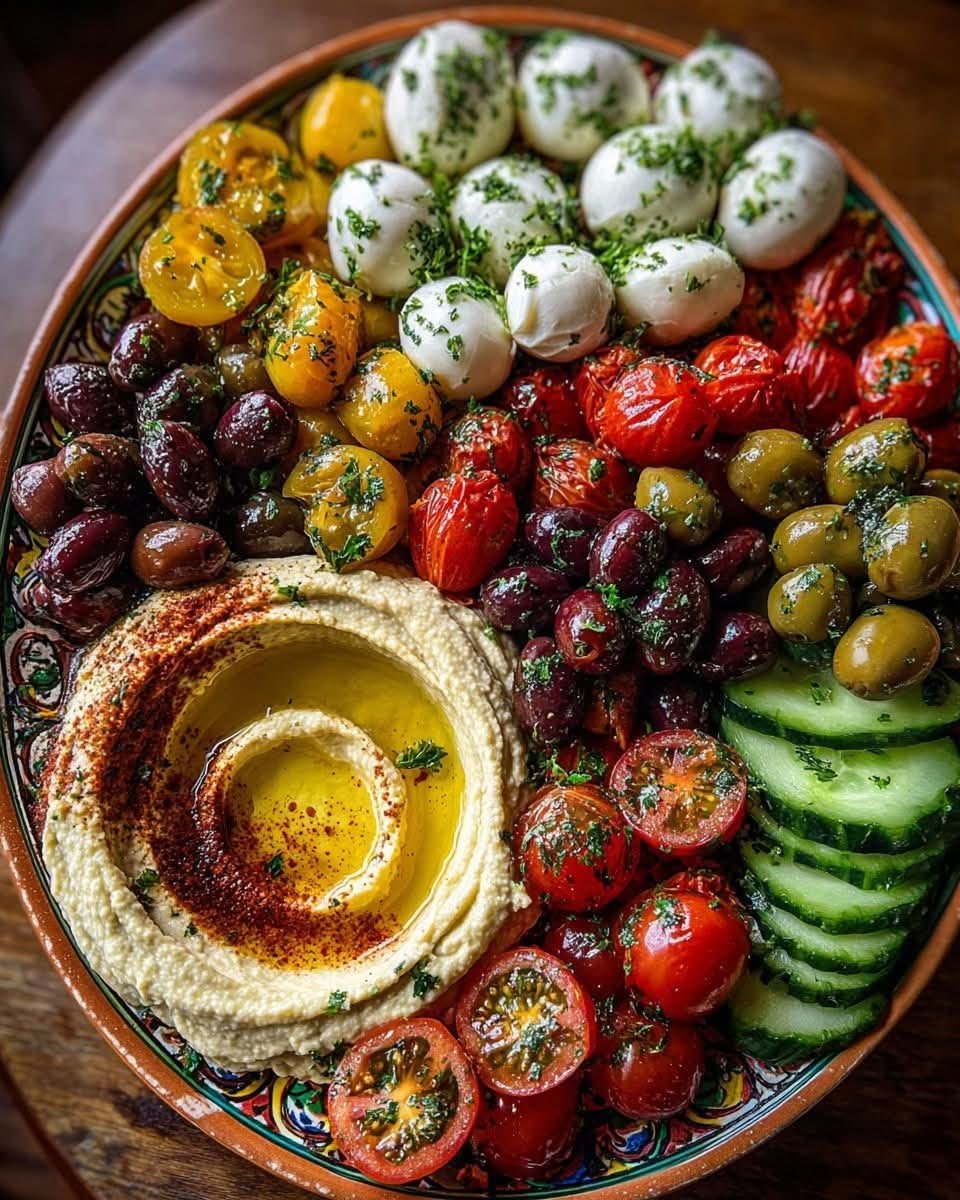
This colorful Mediterranean mezze platter features silky homemade hummus, fresh mozzarella balls, juicy roasted and fresh tomatoes, crisp cucumbers, green and black olives, herbs, olive oil, and paprika. It makes a beautiful appetizer, light lunch, party platter, or sharing board.
1. Recipe details
-
Prep time: 25 minutes
-
Cook time: 15–20 minutes if roasting tomatoes
-
Total time: 40–45 minutes
-
Servings: 4–6 people as an appetizer, or 2–3 as a light meal
-
Difficulty: Easy
-
Cuisine: Mediterranean-inspired
-
Dietary notes: Vegetarian; gluten-free when served without bread containing gluten
-
Nuts: No nuts required; check ingredient labels for cross-contamination.
2. Ingredients
For the creamy hummus
-
1 can (400 g) chickpeas, drained and rinsed, about 240 g drained
-
3 tbsp tahini (sesame paste)
-
2–3 tbsp fresh lemon juice
-
1 small garlic clove
-
2 tbsp extra-virgin olive oil, plus more for serving
-
3–5 tbsp cold water
-
½ tsp ground cumin
-
½ tsp salt, or to taste
-
½ tsp paprika, for garnish
For the mezze platter
-
200–250 g fresh mozzarella balls
-
250 g cherry tomatoes, red and yellow
-
1 medium cucumber, sliced
-
100 g green olives
-
100 g Kalamata or other black olives
-
2 tbsp extra-virgin olive oil
-
1 tbsp lemon juice or red wine vinegar
-
1–2 tbsp chopped fresh parsley
-
1 tbsp chopped fresh basil or oregano
-
¼ tsp black pepper
-
A pinch of salt, as needed
-
Optional: chili flakes, za’atar, smoked paprika, or toasted pita bread
Optional roasted tomatoes
-
200–250 g additional cherry tomatoes
-
1 tbsp olive oil
-
1 small garlic clove, finely chopped
-
A pinch of salt and black pepper
-
½ tsp dried oregano
Roasted tomatoes add a sweet, concentrated flavor that contrasts beautifully with the creamy hummus and mild mozzarella.
3. Step-by-step preparation
Step 1: Prepare the chickpeas
Drain and rinse the chickpeas thoroughly. For extra-smooth hummus, remove the loose skins by rubbing the chickpeas gently in a clean towel or between your fingers. This step is optional.
Step 2: Blend the hummus
Add chickpeas, tahini, lemon juice, garlic, cumin, salt, and olive oil to a food processor. Blend for 1–2 minutes, scrape down the sides, and blend again until smooth.
Step 3: Make it silky
Add cold water one tablespoon at a time while blending until the hummus is light and creamy. Taste and adjust the lemon juice, salt, or garlic. Refrigerate while preparing the remaining ingredients.
Step 4: Roast the tomatoes (optional)
Heat the oven to 200°C (400°F). Toss half the tomatoes with olive oil, garlic, oregano, salt, and pepper. Roast for 15–20 minutes until softened and lightly blistered. Allow them to cool slightly.
Step 5: Season the vegetables, olives, and mozzarella
Slice the cucumber and halve some of the fresh tomatoes. Drain the mozzarella and pat it dry. Toss the tomatoes and mozzarella separately with a little olive oil, herbs, black pepper, and lemon juice or vinegar. Taste the olives before adding salt because they are often already salty.
Step 6: Assemble the platter
Spread the hummus into a large shallow bowl or platter, creating a circular well in the center. Pour in a little olive oil and dust with paprika. Arrange mozzarella balls, red and yellow tomatoes, roasted tomatoes, green and black olives, and cucumber slices in separate colorful sections.
Step 7: Garnish and serve
Finish with chopped parsley or basil, a drizzle of extra-virgin olive oil, and a sprinkle of paprika or za’atar. Serve immediately with pita bread, crackers, or vegetable sticks.
4. Nut information and allergy guidance
This recipe contains no tree nuts or peanuts by default, but it does contain tahini, which is made from sesame seeds.
|
Ingredient |
Allergen information |
|---|---|
|
Chickpeas |
Legume; not a tree nut |
|
Tahini |
Contains sesame, a major food allergen |
|
Mozzarella |
Contains milk |
|
Olives, tomatoes, cucumber, herbs |
Generally free of the major allergens listed above |
|
Olive oil |
No nuts required |
|
Pita bread or crackers |
May contain wheat/gluten and sometimes sesame |
If you have a nut allergy:
-
Check labels on tahini, olives, mozzarella, spices, and packaged ingredients for allergy warnings.
-
Choose products made and packaged in facilities appropriate for your allergy needs.
-
Avoid cross-contact from shared utensils, cutting boards, food processors, and serving dishes.
-
If sesame is also an allergy, omit the tahini. Blend the chickpeas with extra lemon juice, olive oil, and cold water instead. The flavor and texture will be slightly different.
-
If dairy is an issue, replace the mozzarella with a suitable dairy-free alternative or additional vegetables.
A recipe being nut-free by ingredients does not guarantee that a particular packaged product is free from cross-contact.
5. Nutrition information
Estimated nutrition per serving, assuming six servings and the ingredients listed above, including the hummus, mozzarella, olives, and vegetables.
Calories
300–380
kcal per serving
Protein
11–15 g
per serving
Carbohydrates
20–28 g
Fat
20–28 g
Fiber
5–8 g
Sodium
Variable
These are approximate values, not laboratory-tested nutrition facts. Actual values depend on the amount of oil, mozzarella, tahini, chickpeas, and olives used. Bread or crackers will increase the totals.
6. Tips for the best results
-
Extra-creamy hummus: Blend longer than you think necessary and add cold water gradually.
-
Balanced flavors: Lemon juice cuts through the richness of hummus and mozzarella.
-
Avoid watery hummus: Drain the chickpeas well and add water gradually.
-
Make it colorful: Combine red and yellow tomatoes with green cucumber and olives.
-
Keep the platter fresh: Add the final olive oil drizzle and herbs shortly before serving.
-
Make it more filling: Add falafel, grilled chicken, roasted chickpeas, or warm pita bread.
-
Reduce sodium: Choose lower-sodium olives and chickpeas, rinse canned ingredients, and season at the end.
7. Storage and make-ahead instructions
-
Hummus: Store in an airtight container in the refrigerator and use within 3–4 days, provided it was prepared and handled safely.
-
Cut vegetables: Refrigerate in a covered container and ideally use within 2–3 days for best quality.
-
Mozzarella: Keep refrigerated according to the package instructions and leave it in its original liquid until needed, when applicable.
-
Assembled platter: Best served fresh. Refrigerate perishable ingredients within 2 hours, or within 1 hour if the ambient temperature is above 32°C (90°F).
-
Freezing: Hummus can be frozen, although the texture may change. Fresh mozzarella, cucumber, and the fully assembled platter are not ideal for freezing.
For entertaining, make the hummus a day ahead and prepare the vegetables shortly before guests arrive.
8. Frequently asked questions (Q&A)
Q1. Is this Mediterranean platter healthy?
Yes. It provides vegetables, chickpeas, fiber, protein, and predominantly unsaturated fats from olive oil. Mozzarella contributes protein and calcium, while olives can increase the sodium content.
Q2. Is this recipe suitable for a nut-free diet?
The ingredients do not require peanuts or tree nuts. However, tahini contains sesame, and packaged ingredients may carry cross-contact warnings. Always check labels and follow your allergy management plan.
Q3. Can I make the hummus without tahini?
Yes. Omit the tahini and add a little extra olive oil, lemon juice, and cold water. The result will be less nutty and somewhat different in richness. Tahini is sesame paste, not a nut butter.
Q4. Can I use feta instead of mozzarella?
Absolutely. Crumbled feta gives the platter a saltier, tangier flavor. Reduce the additional salt and pair it with extra cucumber and tomatoes.
Q5. Can I use dried chickpeas?
Yes. Soak them according to package directions and cook until completely tender. Around 100 g of dried chickpeas generally yields approximately 230–250 g cooked, though the final amount varies.
Q6. Is the recipe gluten-free?
The hummus, cheese, olives, and plain vegetables are generally gluten-free. Use gluten-free crackers or omit the pita bread, and check the labels of packaged seasonings and other ingredients.
Q7. Can I make this platter vegan?
Yes. Replace mozzarella with dairy-free mozzarella, marinated tofu, or extra roasted vegetables. The hummus and remaining components can be vegan if their ingredients are suitable.
Q8. What can I serve with it?
Serve with warm pita, flatbread, falafel, tabbouleh, lentil salad, grilled vegetables, or a simple green salad. For a lower-carbohydrate option, use extra cucumber, celery, and bell pepper sticks.
Q9. How do I keep the mozzarella from releasing water?
Drain it thoroughly and gently pat it dry with paper towels. Add it to the platter shortly before serving and avoid mixing it with heavily salted tomatoes too far in advance.
Q10. How can I make the platter more budget-friendly?
Use homemade hummus, seasonal vegetables, fewer mozzarella balls, and a smaller quantity of premium olives. Add roasted carrots, bell peppers, or chickpeas to fill out the platter.
9. Serving suggestion
For a platter that looks like the reference, place the hummus in a generous swirl at the lower left, mozzarella at the top, tomatoes across the upper and lower sections, olives in the center, and cucumber slices along the right edge. Finish with olive oil, paprika, and finely chopped herbs.
The key to making this dish memorable is the contrast between creamy hummus, soft mozzarella, juicy tomatoes, crisp cucumber, briny olives, and fragrant herbs. Serve at once for the freshest flavors and best presentation.