
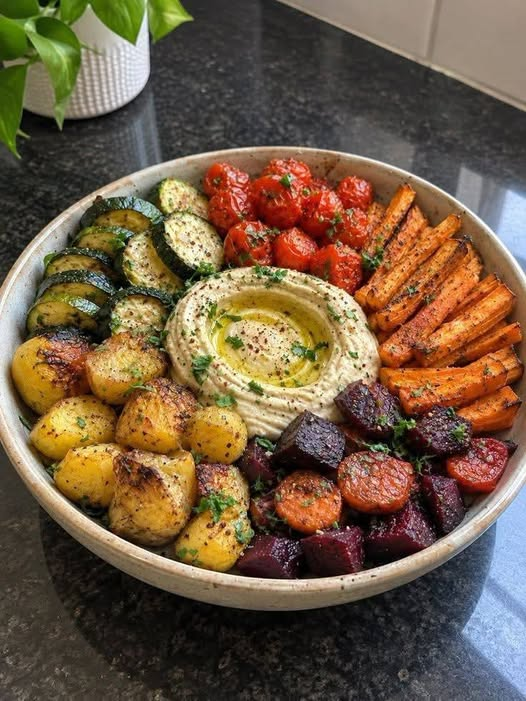
This Mediterranean Roasted Vegetable Bowl is a colorful, wholesome dish featuring golden roasted potatoes, tender zucchini, juicy cherry tomatoes, sweet roasted carrots, earthy beets, and creamy homemade-style hummus. Finished with extra-virgin olive oil, fresh herbs, and simple Mediterranean seasonings, this nourishing bowl is perfect for lunch, dinner, meal prep, or a healthy side dish.
Ingredients
For the Roasted Vegetables
– 2 medium zucchini, sliced into thick rounds
– 1 pint (300 g) cherry tomatoes
– 3 medium carrots, peeled and cut into sticks
– 500 g (about 1 lb) baby potatoes, halved
– 2 medium cooked beets, peeled and cut into cubes
– 3 tablespoons extra-virgin olive oil, divided
– 3 cloves garlic, minced
– 1 teaspoon dried oregano
– 1 teaspoon paprika
– ½ teaspoon ground cumin
– ½ teaspoon dried thyme
– ½ teaspoon black pepper
– ¾ teaspoon salt, or to taste
– 1 tablespoon fresh parsley, chopped
– 1 tablespoon fresh lemon juice
For the Creamy Hummus
– 1 can (15 oz / 425 g) chickpeas, drained and rinsed
– ¼ cup (60 g) tahini
– 2 tablespoons fresh lemon juice
– 1–2 cloves garlic
– 2 tablespoons extra-virgin olive oil
– ¼ teaspoon ground cumin
– ½ teaspoon salt, or to taste
– 3–5 tablespoons cold water, as needed
– 1–2 tablespoons chickpea liquid, optional
For Garnishing
– 1 tablespoon extra-virgin olive oil
– 1 tablespoon fresh parsley, finely chopped
– A pinch of paprika
– Freshly ground black pepper
– Lemon wedges, optional
– Toasted sesame seeds, optional
Equipment Needed
– Large baking sheets or roasting trays
– Mixing bowls
– Sharp knife and cutting board
– Vegetable peeler
– Food processor or high-speed blender
– Spatula or serving spoon
– Large serving bowl
Instructions
Step 1: Preheat the Oven
1. Preheat your oven to 425°F (220°C).
2. Line two large baking sheets with parchment paper or lightly grease them with olive oil.
3. Prepare all the vegetables before seasoning them. Cut the potatoes into halves, slice the zucchini into thick rounds, cut the carrots into evenly sized sticks, and halve the cherry tomatoes if they are particularly large.
4. If using raw beets, peel and cube them. They generally need a longer roasting time than the other vegetables, so roast them separately or use pre-cooked beets and add them near the end.
Tip: Cutting vegetables into similar-sized pieces helps them cook evenly and develop a delicious golden-brown exterior.
Step 2: Season the Baby Potatoes
1. Place the halved baby potatoes in a large bowl.
2. Add 1 tablespoon olive oil, half of the minced garlic, ½ teaspoon paprika, ½ teaspoon dried oregano, a pinch of salt, and black pepper.
3. Toss until every potato is evenly coated.
4. Spread the potatoes cut-side down on the prepared baking sheet.
5. Roast for 30–40 minutes, turning once halfway through cooking, until the potatoes are golden brown outside and fork-tender inside.
Potatoes usually take longer than zucchini and tomatoes, so give them a head start in the oven.
Step 3: Prepare the Roasted Carrots
1. Place the carrot sticks in a bowl.
2. Add 1 teaspoon olive oil, ¼ teaspoon cumin, ¼ teaspoon paprika, a pinch of salt, and black pepper.
3. Toss thoroughly to coat the carrots.
4. Arrange them in a single layer on the second baking sheet, leaving space between the pieces.
5. Roast for approximately 25–35 minutes, turning halfway through, until tender and lightly caramelized.
The natural sugars in the carrots become sweeter during roasting, creating a delicious contrast with the tangy hummus.
Step 4: Roast the Zucchini
1. Place the zucchini rounds in a bowl.
2. Add 1 teaspoon olive oil, the remaining dried oregano, a pinch of thyme, and a little salt and black pepper.
3. Toss gently to coat.
4. Arrange the zucchini in a single layer on a baking sheet.
5. Roast for approximately 15–20 minutes, flipping halfway through, until tender with lightly browned edges.
Avoid overcrowding the zucchini, as excess moisture can prevent browning.
Step 5: Roast the Cherry Tomatoes
1. Place the cherry tomatoes in a small bowl.
2. Add 1 teaspoon olive oil, the remaining minced garlic, a pinch of salt, black pepper, and a little thyme.
3. Toss gently so the tomatoes remain intact.
4. Spread them on a baking sheet or place them in a small oven-safe dish.
5. Roast for approximately 15–20 minutes, until the skins wrinkle and begin to burst.
The tomatoes will release their juices as they roast, creating a naturally sweet and flavorful addition to the bowl.
Step 6: Prepare the Beets
1. If using pre-cooked beets, cut them into bite-sized cubes.
2. Toss them with a small amount of olive oil, lemon juice, and black pepper.
3. For a warm serving bowl, place them in the oven for the final 8–10 minutes to heat through.
4. If using raw beets, roast them separately at 425°F (220°C) for approximately 35–50 minutes, depending on the size of the pieces, until tender.
Keep the beets separate from the other vegetables until serving because their deep red color can stain the zucchini, potatoes, and carrots.
Step 7: Make the Creamy Hummus
1. Add the drained chickpeas, tahini, lemon juice, garlic, cumin, salt, and olive oil to a food processor.
2. Blend for 1–2 minutes, stopping to scrape down the sides as needed.
3. Add cold water one tablespoon at a time until the hummus becomes smooth, creamy, and easy to spread.
4. Blend for another 1–2 minutes for a lighter texture.
5. Taste and adjust the seasoning. Add more lemon juice for brightness, a little salt for flavor, or extra water for a softer consistency.
For extra-smooth hummus: Blend the tahini and lemon juice briefly before adding the chickpeas. This helps create a creamy base.
If you prefer a more traditional texture, you can peel the chickpeas before blending, although this step is optional.
Step 8: Season the Finished Vegetables
Once the vegetables are roasted:
1. Transfer the zucchini, carrots, potatoes, and cherry tomatoes to separate sections of a large serving dish.
2. Drizzle with a little fresh lemon juice.
3. Sprinkle with chopped parsley, freshly ground black pepper, and a small amount of salt if needed.
4. Toss the individual vegetables gently, keeping the different colors and textures intact.
5. Taste a piece of each vegetable to ensure the seasoning is balanced.
The goal is to achieve golden potatoes, tender zucchini, sweet carrots, juicy tomatoes, and earthy beets without making any vegetable mushy.
Step 9: Assemble the Mediterranean Bowl
1. Spoon the hummus into the center of a large, shallow serving bowl.
2. Use the back of a spoon to create a circular swirl in the hummus.
3. Drizzle a little extra-virgin olive oil into the center.
4. Arrange the roasted zucchini on one side of the bowl.
5. Place the golden baby potatoes beside the zucchini.
6. Add the roasted cherry tomatoes along the upper edge.
7. Arrange the carrot sticks in a neat section opposite the zucchini.
8. Add the beet cubes along the bottom of the bowl.
9. Sprinkle fresh parsley and a pinch of paprika over the hummus.
10. Finish with a light drizzle of olive oil and serve with lemon wedges if desired.
Your Mediterranean Roasted Vegetable Bowl is ready to enjoy!
Nutritional Information
Estimated nutrition per serving, assuming 4 servings and the listed ingredients. Actual values vary by brand and portion size.
Nutrient Approximate amount
Calories 450–520 kcal
Protein 11–14 g
Total carbohydrates 48–58 g
Dietary fiber 11–14 g
Total fat 23–29 g
Saturated fat 3–5 g
Total sugars 10–14 g
Sodium 450–700 mg
Nutrition Highlights
– Fiber: Chickpeas and vegetables provide dietary fiber that supports digestive health.
– Plant-based protein: Chickpeas and tahini contribute protein to this vegetarian meal.
– Healthy fats: Extra-virgin olive oil and tahini provide mostly unsaturated fats.
– Colorful vegetables: Zucchini, tomatoes, carrots, potatoes, and beets provide a variety of vitamins, minerals, and beneficial plant compounds.
– Naturally vegetarian: The recipe contains no meat, poultry, or fish.
– Vegan-friendly: All ingredients are plant-based, provided the ingredients you select contain no animal-derived additives.
This bowl can be a satisfying meal on its own. For a higher-protein version, add grilled chicken, baked tofu, or extra chickpeas.
Mediterranean Diet Benefits
This recipe fits many principles of Mediterranean-style eating because it emphasizes vegetables, legumes, olive oil, herbs, and minimally processed ingredients.
1. A variety of vegetables: Using several different vegetables adds color, flavor, texture, and a range of nutrients.
2. Extra-virgin olive oil: Olive oil provides unsaturated fats and is a common ingredient in Mediterranean cooking.
3. Chickpea-based hummus: Chickpeas contribute plant protein, fiber, and complex carbohydrates.
4. Simple ingredients: Fresh lemon juice, garlic, parsley, and dried herbs provide flavor without requiring heavy sauces.
5. Flexible meal preparation: The ingredients can be prepared in advance and combined for easy lunches or dinners throughout the week.
Note: This dish can be part of a balanced eating pattern, but no single recipe guarantees weight loss or prevents disease.
Helpful Cooking Tips
How to Get Perfectly Roasted Vegetables
– Avoid overcrowding: Spread vegetables in a single layer so moisture can escape.
– Use a hot oven: A temperature of 425°F (220°C) encourages browning and caramelization.
– Add delicate vegetables later: Zucchini and tomatoes cook faster than potatoes and raw beets.
– Dry vegetables before seasoning: Excess water can make them steam instead of roast.
– Use separate trays when possible: This makes it easier to remove vegetables as soon as they are done.
– Season after roasting if needed: A little lemon juice and fresh parsley brighten the finished dish.
How to Make the Hummus Taste Better
– Use fresh lemon juice instead of bottled juice when possible.
– Add cold water gradually until the texture is smooth.
– Adjust garlic according to your preference.
– Add a small pinch of cumin for a warm, earthy flavor.
– Finish with extra-virgin olive oil and paprika just before serving.
Storage and Meal Prep
Refrigeration: Store the roasted vegetables and hummus in separate airtight containers in the refrigerator for up to 3–4 days, provided they were cooled and refrigerated promptly.
Reheating: Reheat the roasted vegetables in an oven at 375°F (190°C) for approximately 8–12 minutes, or until hot throughout. A skillet also works well.
Hummus: Serve the hummus cold or at room temperature. Keep it refrigerated and use a clean spoon each time.
Freezing: Roasted potatoes, carrots, and beets can be frozen, although their textures may change after thawing. Zucchini and tomatoes tend to become softer. Hummus can also be frozen separately in an airtight container.
Meal-prep idea: Divide the vegetables into individual containers and pack the hummus in small separate cups. Assemble the bowl just before eating to keep the vegetables looking fresh and colorful.
Frequently Asked Questions (Q&A)
Q1: What is a Mediterranean Roasted Vegetable Bowl?
It is a colorful meal made with oven-roasted vegetables, Mediterranean seasonings, olive oil, and a creamy base such as hummus. This version includes zucchini, cherry tomatoes, carrots, baby potatoes, and beets.
Q2: Is this roasted vegetable bowl healthy?
It can be a nutritious, balanced option. The vegetables provide fiber and micronutrients, while chickpeas and tahini contribute protein and fats. The overall nutrition depends on portion size and the amount of olive oil used.
Q3: Is this recipe vegetarian?
Yes. The recipe is vegetarian and contains no meat, poultry, or fish.
Q4: Is this recipe vegan?
Yes. The ingredients listed are plant-based. Check packaged tahini, chickpeas, and seasonings if you have strict dietary requirements.
Q5: Can I make this recipe without hummus?
Absolutely. Serve the vegetables with lemon-tahini sauce, white bean dip, tzatziki, or another favorite dressing. Note that traditional tzatziki contains dairy.
Q6: Can I use store-bought hummus?
Yes. Store-bought hummus saves time and works perfectly. Use approximately 1½–2 cups, depending on how much you want in each bowl.
Q7: Can I use different vegetables?
Yes. Red onion, bell peppers, cauliflower, broccoli, eggplant, and sweet potatoes are all good choices. Adjust cooking times according to the size and density of each vegetable.
Q8: Can I make this recipe oil-free?
Yes. Roast the vegetables with a small amount of water or vegetable broth and use parchment paper to reduce sticking. For the hummus, replace the olive oil with cold water or additional lemon juice as needed. The texture and browning will be different.
Q9: How can I make this meal higher in protein?
Add grilled chicken, baked tofu, extra chickpeas, or a serving of lentils. You can also serve it with a protein-rich side dish.
Q10: Is this recipe gluten-free?
The ingredients listed are naturally gluten-free, but check all packaged ingredients for cross-contact or additives if you need to avoid gluten strictly.
Q11: Can I serve this bowl cold?
Yes. The roasted vegetables can be chilled and served cold or at room temperature with hummus, making this a convenient meal-prep option. Refrigerate leftovers promptly.
Q12: How do I stop the beet color from spreading?
Keep the beets in a separate bowl until serving. Tossing them separately with lemon juice and olive oil also helps preserve the appearance of the other vegetables.
Q13: Can I prepare the vegetables in an air fryer?
Yes. Cook in batches at approximately 375–400°F (190–200°C), shaking or turning the vegetables as needed. Potatoes and carrots generally require more time than zucchini and cherry tomatoes. Follow your air fryer’s guidance and check each vegetable for tenderness.
Q14: What can I serve alongside this bowl?
It pairs well with whole-grain pita, warm flatbread, lemon rice, lentil soup, or grilled chicken. For a lighter meal, serve it on its own.
Q15: How can I make the presentation look restaurant-quality?
Use a wide, shallow bowl. Place the hummus in the center, create a swirl with the back of a spoon, and arrange each vegetable in its own colorful section. Finish with parsley, paprika, and a small drizzle of olive oil.
Serving Suggestion
Serve this bowl as a wholesome Mediterranean lunch, a light dinner, or a colorful centerpiece for a shared table. Pair it with warm pita bread and lemon wedges for a satisfying meal.