
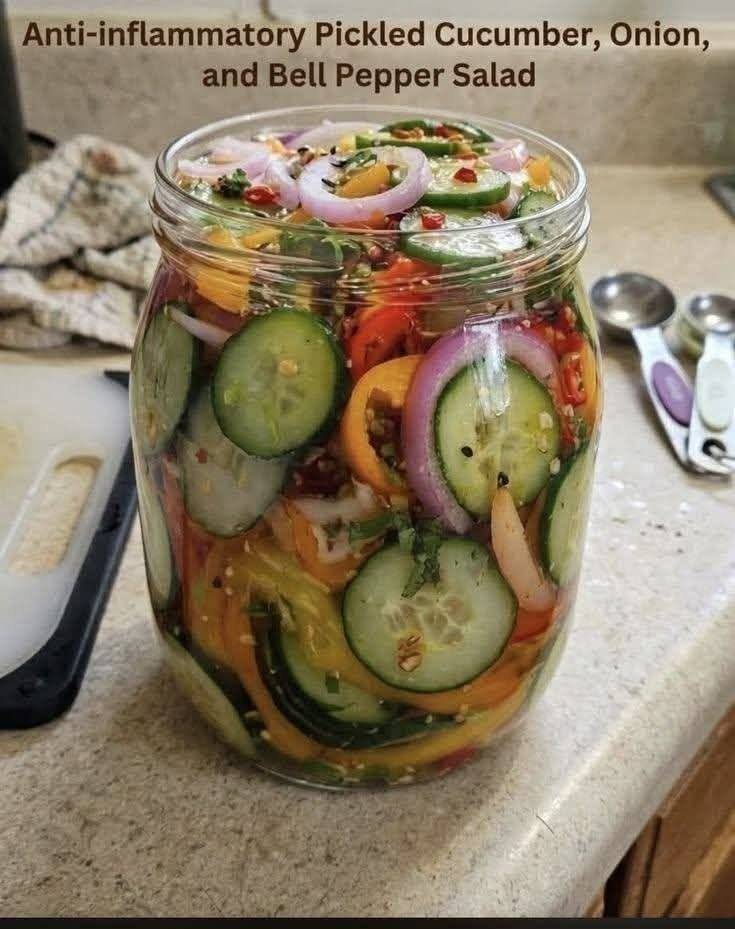
A crunchy, tangy refrigerator-pickle salad inspired by the photo, made with cucumber, colorful bell peppers, red onion, garlic, herbs, and a lightly spicy vinegar dressing. It’s fresh and flavorful and works well as a side dish.
Ingredients
Vegetables
- 3 medium cucumbers, thinly sliced
- 1 medium red onion, thinly sliced into rings
- 1 red bell pepper, thinly sliced
- 1 yellow bell pepper, thinly sliced
- 1 orange bell pepper, thinly sliced
- 3 garlic cloves, thinly sliced
- ¼ cup fresh parsley or cilantro, chopped
- 1 small jalapeño, thinly sliced — optional
- 1 tsp red pepper flakes, optional
- 1 tsp sesame seeds, optional
Pickling Dressing
- ¾ cup apple cider vinegar
- ¼ cup water
- 2 tbsp olive oil
- 1 tbsp honey or maple syrup
- 1 tsp salt
- ½ tsp black pepper
- 1 tsp dried oregano
- ½ tsp mustard seeds, optional
- ½ tsp celery seeds, optional
👩🍳 Instructions
1. Prepare the Vegetables
Wash the cucumbers, peppers, and onion thoroughly.
Slice the cucumbers into approximately ¼-inch rounds.
Thinly slice the red onion and bell peppers. For the colorful appearance in the photo, use red, yellow, and orange peppers.
Slice the garlic and jalapeño if using.
2. Reduce Excess Cucumber Water
Place the sliced cucumbers in a large bowl.
Sprinkle with about ½ teaspoon salt and gently toss.
Let them sit for 15–20 minutes.
Drain any liquid that collects and gently pat the cucumbers dry.
This helps keep the finished salad crisp rather than watery.
3. Make the Pickling Liquid
In a saucepan, combine:
- Apple cider vinegar
- Water
- Honey or maple syrup
- Salt
- Black pepper
- Oregano
- Mustard seeds
- Celery seeds
Warm over medium heat for about 2–3 minutes, just until the salt dissolves.
Remove from the heat and let it cool until warm or room temperature.
4. Combine the Vegetables
Place the cucumber, red onion, bell peppers, garlic, parsley/cilantro, and jalapeño into a large bowl.
Add the red pepper flakes and sesame seeds if using.
Toss gently.
5. Add the Dressing
Pour the cooled pickling liquid over the vegetables.
Add the olive oil.
Toss gently until everything is evenly coated.
6. Pack Into the Jar
Transfer the vegetables into a clean glass jar or airtight container.
Press them down gently with a clean spoon, but don’t crush them.
Pour enough dressing into the jar to thoroughly coat the vegetables.
Leave a little space at the top.
7. Refrigerate
Close the jar tightly and refrigerate for at least 2 hours.
For stronger flavor, refrigerate overnight.
The vegetables will become more flavorful as they sit.
8. Serve
Give the jar a gentle shake before serving.
Use clean tongs or a fork to transfer the pickled vegetables to a serving plate.
They are delicious chilled as a side dish, salad topping, or accompaniment to grilled chicken, fish, sandwiches, or rice dishes.
Flavor Variations
Spicy
Add extra jalapeño, red pepper flakes, or a small amount of chili powder.
Mediterranean
Add oregano, fresh dill, parsley, and a little extra olive oil.
Asian-Inspired
Replace some of the olive oil with sesame oil and add sesame seeds and a little grated ginger.
Sweeter Pickle
Increase the honey to 2 tablespoons if you prefer a sweeter tang.
Storage
Keep refrigerated in a sealed container.
For best quality, use within approximately 5–7 days. Always use clean utensils when serving and discard if it develops an unusual smell, appearance, or texture.
This is a refrigerator pickle, not a shelf-stable canned pickle. Keep it refrigerated.
Q&A
Q: Can I use regular white vinegar?
Yes. Apple cider vinegar gives a slightly milder, fruity flavor, while white vinegar produces a sharper pickle.
Q: Can I skip the honey?
Absolutely. The honey balances the acidity, but you can leave it out.
Q: Can I add tomatoes?
Yes, but add them shortly before serving because tomatoes can make the mixture watery and soft.
Q: How long should I pickle the vegetables?
At least 2 hours for a lightly pickled flavor. Overnight gives a stronger flavor.
Q: Can I use this as a meal-prep salad?
Yes. Keep it refrigerated and use clean utensils when portioning it.
Q: Is this really “anti-inflammatory”?
The ingredients include vegetables, herbs, and spices that fit well into a generally nutritious eating pattern, but a homemade salad shouldn’t be considered a treatment for inflammation or a specific medical condition.