
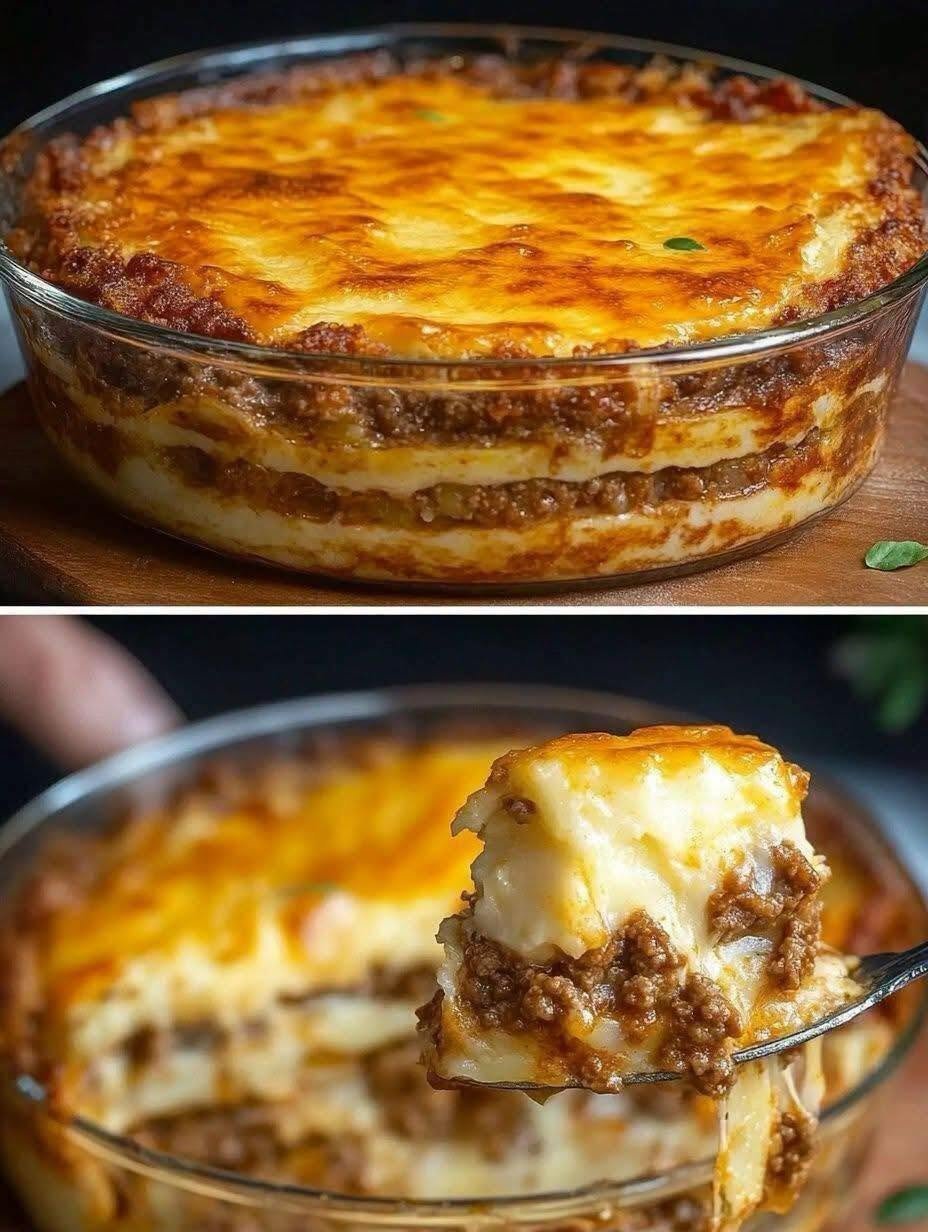
This Cheesy Ground Beef & Creamy Potato Lasagna Casserole is a rich, comforting family dinner made with layers of tender potatoes, savory seasoned ground beef, creamy cheese sauce, and plenty of melted mozzarella. It combines the hearty flavors of a beef lasagna with the creamy texture of a cheesy potato casserole—without needing traditional lasagna noodles.
Perfect for weeknight dinners, Sunday family meals, potlucks, or meal prep, this casserole bakes into delicious layers with golden cheese on top and a creamy, savory filling underneath.
Recipe Overview
The recipe uses thinly sliced potatoes as the layers, seasoned ground beef as the hearty filling, and a creamy garlic cheese sauce to bring everything together. Mozzarella creates a stretchy, melted topping, while Parmesan adds a savory finish.
Recipe Details
|
Category |
Details |
|---|---|
|
Prep Time |
25 minutes |
|
Cook Time |
55–70 minutes |
|
Total Time |
About 1 hour 30 minutes |
|
Servings |
6–8 |
|
Difficulty |
Easy to moderate |
|
Course |
Main course |
|
Cuisine |
Italian-inspired comfort food |
|
Cooking Method |
Stovetop and oven |
Ingredients
For the Ground Beef Filling
-
1½ lb (680 g) lean ground beef
-
1 medium onion, finely diced
-
3 cloves garlic, minced
-
1 tbsp olive oil, if needed
-
2 tbsp tomato paste
-
1 can (14–15 oz / 400 g) crushed tomatoes
-
1 tsp Italian seasoning
-
1 tsp paprika
-
½ tsp dried oregano
-
½ tsp black pepper
-
¾ tsp salt, or to taste
-
½ tsp onion powder
-
¼ tsp red pepper flakes, optional
-
2 tbsp chopped fresh parsley, optional
For the Potato Layers
-
2½–3 lb (1.1–1.35 kg) potatoes
-
1 tsp salt for the cooking water, if parboiling
-
½ tsp black pepper
-
½ tsp garlic powder
-
1 tbsp olive oil or melted butter
Russet potatoes work well for a softer, hearty casserole. Yukon Gold potatoes hold their shape nicely and have a naturally buttery flavor.
For the Creamy Cheese Sauce
-
3 tbsp butter
-
3 tbsp all-purpose flour
-
2½ cups (600 ml) milk, preferably whole milk
-
½ cup heavy cream, optional
-
1 cup shredded mozzarella
-
½ cup grated Parmesan
-
½ tsp garlic powder
-
¼ tsp black pepper
-
Salt to taste
-
A small pinch of nutmeg, optional
For the Cheesy Topping
-
1½ cups shredded mozzarella
-
½ cup shredded cheddar cheese
-
¼ cup grated Parmesan
-
1 tbsp chopped parsley for garnish, optional
Cheese tip: Shred mozzarella from a block if possible. It generally melts more smoothly than pre-shredded cheese.
Equipment Needed
-
9 × 13-inch (23 × 33 cm) baking dish
-
Large skillet
-
Medium saucepan
-
Whisk
-
Sharp knife or mandoline
-
Cutting board
-
Mixing spoon
-
Aluminum foil
-
Measuring cups and spoons
Detailed Step-by-Step Instructions
Step 1: Preheat the Oven
Preheat your oven to 375°F (190°C).
Lightly grease a 9 × 13-inch baking dish with butter or cooking spray.
Set the dish aside while you prepare the filling, potatoes, and sauce.
Step 2: Prepare the Potatoes
Wash and peel the potatoes, or leave the skins on if you prefer a more rustic texture.
Slice them into even rounds approximately ⅛–¼ inch (3–6 mm) thick.
Try to keep the slices uniform so they cook evenly.
For more reliable results, especially if your slices are on the thicker side, parboil them:
-
Bring a large pot of lightly salted water to a boil.
-
Add the potato slices.
-
Cook for approximately 5–7 minutes, depending on thickness.
-
They should begin to soften but should not fall apart.
-
Drain carefully and allow excess moisture to evaporate.
Toss the slices gently with black pepper, garlic powder, and olive oil or melted butter.
Important: If you slice the potatoes very thinly, you can assemble them without parboiling, but they may need additional baking time. Parboiling helps ensure the middle layers become tender.
Step 3: Cook the Ground Beef
Heat a large skillet over medium-high heat.
Add the ground beef and break it into small crumbles using a wooden spoon.
Cook for approximately 6–8 minutes, stirring occasionally, until browned and fully cooked.
If the beef releases a large amount of fat, carefully drain the excess.
Add the diced onion and cook for another 3–4 minutes until softened.
Stir in the minced garlic and cook for about 30 seconds, just until fragrant.
Avoid burning the garlic because it can make the filling taste bitter.
Step 4: Season the Beef Filling
Add the tomato paste to the skillet and stir it into the beef mixture.
Cook for 1–2 minutes to deepen the tomato flavor.
Add the crushed tomatoes, Italian seasoning, paprika, oregano, onion powder, salt, black pepper, and optional red pepper flakes.
Stir thoroughly.
Reduce the heat and simmer for 8–10 minutes, allowing the sauce to thicken slightly.
The filling should be moist but not watery. Excess liquid can make the potato layers slide apart.
Taste and adjust the seasonings.
Stir in chopped parsley if desired, then remove the skillet from the heat.
Step 5: Make the Creamy Cheese Sauce
Place a medium saucepan over medium heat.
Add the butter and let it melt.
Sprinkle in the flour and whisk continuously for 1–2 minutes. This forms a roux, which thickens the sauce.
Gradually pour in the milk while whisking to prevent lumps.
Continue cooking for approximately 4–6 minutes, whisking frequently, until the sauce becomes smooth and thick enough to coat the back of a spoon.
If using heavy cream, stir it in now.
Reduce the heat to low.
Add the garlic powder, black pepper, and a little salt.
Stir in the mozzarella and Parmesan until melted.
Do not let the sauce boil vigorously after adding the cheese, as high heat can make the sauce grainy or oily.
If the sauce becomes too thick, add a splash of milk.
If it seems too thin, let it cook gently for another minute or two while stirring.
Step 6: Start Layering the Casserole
Spread a thin layer of creamy cheese sauce over the bottom of the prepared baking dish.
Arrange a single layer of potato slices over the sauce, overlapping them slightly if necessary.
Spread approximately one-third of the ground beef filling over the potatoes.
Spoon a layer of creamy cheese sauce over the beef.
Sprinkle a small amount of mozzarella on top.
The first layer is now complete.
Step 7: Build the Remaining Layers
Repeat the layering process:
-
Arrange another layer of potatoes.
-
Add another portion of ground beef filling.
-
Spread creamy cheese sauce over the beef.
-
Sprinkle with a little mozzarella.
-
Repeat until the ingredients are used.
Finish with a final layer of potatoes and spread the remaining cheese sauce over the top.
Make sure the sauce reaches the edges of the dish to help the potatoes cook evenly.
Do not pack the layers too tightly. A little space allows the sauce to move between the slices.
Step 8: Add the Cheesy Topping
Combine the remaining mozzarella, cheddar, and Parmesan in a small bowl.
Sprinkle the mixture evenly over the casserole.
For a more golden, flavorful crust, make sure some Parmesan is distributed across the surface.
If you prefer a very cheesy casserole, you can add another small handful of mozzarella.
Step 9: Cover and Bake
Cover the baking dish tightly with aluminum foil.
Bake for approximately 35–45 minutes.
The foil traps steam, helping the potatoes soften while preventing the cheese from browning too early.
After this initial baking period, carefully remove the foil.
Pierce the center of the casserole with a thin knife. If the knife meets significant resistance, cover and bake for another 10–15 minutes before checking again.
Step 10: Bake Until Golden and Bubbly
Once the potatoes are nearly tender, remove the foil.
Bake uncovered for another 15–25 minutes, until:
-
The potatoes are completely tender.
-
The cheese is melted and bubbling.
-
The top is golden brown in places.
-
The sauce is bubbling around the edges.
Cooking time depends on the thickness of the potatoes, the depth of the dish, and whether the potatoes were parboiled.
For food safety, the ground beef should reach an internal temperature of 160°F (71°C) during cooking.
If the cheese browns too quickly before the potatoes are tender, loosely cover the dish again with foil.
Step 11: Rest Before Serving
Remove the casserole from the oven and let it rest for 10–15 minutes.
This is an important step.
During resting, the creamy sauce thickens slightly and the layers settle, making the casserole easier to slice.
Garnish with chopped parsley or a little extra Parmesan.
Serve warm while the cheese is still melted and creamy.
Taste and Texture
This casserole combines several comforting textures:
-
Potatoes: Soft, tender, and buttery.
-
Ground beef: Savory, richly seasoned, and hearty.
-
Cream sauce: Smooth, creamy, and full of cheesy flavor.
-
Mozzarella: Melty and stretchy.
-
Parmesan: Salty, nutty, and savory.
-
Golden topping: Lightly crisp in places with a delicious baked-cheese flavor.
The tomato beef filling gives the casserole a lasagna-like taste, while the creamy sauce makes it richer and more comforting.
Recipe Variations
1. Extra-Cheesy Beef and Potato Casserole
For a more indulgent version:
-
Increase the mozzarella topping to 2 cups.
-
Add another ½ cup cheddar.
-
Mix ½ cup ricotta into the creamy sauce.
-
Sprinkle Parmesan between the layers.
Ricotta gives the casserole a texture closer to traditional lasagna.
2. Mushroom and Ground Beef Version
Add 8 oz (225 g) sliced mushrooms.
Cook them with the onions until their moisture evaporates, then add the garlic and ground beef if starting from raw beef, or stir them into the browned beef mixture.
Mushrooms add an earthy flavor and make the filling taste even heartier.
3. Bacon Cheddar Version
Add 4–6 slices of cooked, crumbled bacon to the beef filling.
Use extra cheddar in the topping and a small amount of smoked paprika for a smoky flavor.
4. Spicy Beef and Potato Lasagna
Add:
-
½–1 tsp chili flakes
-
½ tsp cayenne pepper, if desired
-
Pepper Jack cheese instead of some mozzarella
-
A diced jalapeño cooked with the onion
Adjust the heat to suit your preference.
5. Italian Herb Version
Use extra oregano, basil, and Italian seasoning in the beef filling.
Add a little fresh basil after baking for a more traditional Italian-inspired flavor.
6. Vegetable-Packed Version
Add 1–2 cups of vegetables, such as:
-
Diced bell peppers
-
Chopped spinach
-
Zucchini
-
Mushrooms
-
Finely diced carrots
Cook watery vegetables before layering so they do not release excess liquid into the casserole.
High-Protein Version
To increase the protein content:
-
Use lean ground beef.
-
Add ½–1 cup cottage cheese or ricotta between the layers.
-
Use high-protein milk if available.
-
Choose a reduced-fat cheese with a higher protein content per serving.
-
Serve with a side of plain Greek yogurt mixed with herbs as a cool, tangy accompaniment.
Cottage cheese can be blended until smooth before adding if you prefer a texture closer to ricotta.
Lower-Calorie Version
For a lighter casserole:
-
Use 90–95% lean ground beef.
-
Replace heavy cream with additional low-fat milk.
-
Use reduced-fat mozzarella and cheddar.
-
Reduce the butter to 2 tablespoons and flour to 2 tablespoons, adjusting the milk as needed.
-
Increase the vegetables in the beef filling.
-
Use a slightly lighter hand with the cheese topping.
The result will still be creamy, although somewhat less rich than the original.
Lower-Carbohydrate Version
Traditional potatoes and flour are the main carbohydrate sources in this recipe.
For a lower-carbohydrate adaptation:
-
Replace some or all of the potatoes with thinly sliced zucchini or eggplant.
-
Salt and drain watery vegetables before layering.
-
Use a low-carbohydrate thickener suitable for cheese sauce instead of flour.
-
Check the carbohydrate content of canned tomatoes and other packaged ingredients.
Zucchini and eggplant soften more quickly than potatoes, so reduce the baking time and watch the casserole carefully.
Gluten-Free Version
To make the casserole gluten-free:
-
Replace all-purpose flour with a gluten-free flour blend or suitable cornstarch slurry.
-
Check that the tomato paste, crushed tomatoes, seasonings, and cheeses are gluten-free.
-
Avoid cross-contamination from shared utensils or baking equipment.
Potatoes, ground beef, and plain cheese are naturally gluten-free, but packaged ingredients should always be checked.
Make-Ahead Instructions
This casserole is ideal for preparing ahead of time.
Option 1: Prepare the Components Ahead
-
Cook the beef filling.
-
Prepare the creamy cheese sauce.
-
Slice and parboil the potatoes.
-
Cool the components promptly.
-
Store each component separately in airtight containers in the refrigerator.
-
Assemble and bake the next day.
Option 2: Assemble Ahead
Assemble the casserole, allow the ingredients to cool if they are hot, cover, and refrigerate.
For the best potato texture, bake within 24 hours.
Because chilled potatoes take longer to heat through, allow additional baking time and check the center carefully. Do not put a cold glass baking dish directly into a hot oven unless the manufacturer confirms it is safe.
Storage Instructions
Allow leftovers to cool, then transfer them to airtight containers or cover the baking dish.
-
Refrigerator: Store for 3–4 days.
-
Reheating in the oven: Cover with foil and heat at 350°F (175°C) until hot throughout.
-
Microwave: Reheat individual portions in short intervals, checking that the center is hot.
-
Prevent dryness: Add a tablespoon of milk or a little extra sauce before reheating if needed.
Refrigerate leftovers within 2 hours of cooking, or within 1 hour when the surrounding temperature is above 90°F (32°C).
Can You Freeze It?
Yes. This casserole can be frozen, although potatoes may become slightly softer or grainier after thawing.
For best results:
-
Bake the casserole completely.
-
Let it cool promptly.
-
Divide into individual portions or freeze in a suitable airtight container.
-
Freeze for up to 2–3 months for best quality.
-
Thaw overnight in the refrigerator.
-
Reheat covered until hot throughout, reaching 165°F (74°C) for leftovers.
Approximate Nutrition
Estimated per serving, assuming 8 servings and using lean ground beef, whole milk, and the listed cheese quantities:
|
Nutrient |
Approximate Amount |
|---|---|
|
Calories |
480–600 |
|
Protein |
28–36 g |
|
Carbohydrates |
32–42 g |
|
Fat |
24–34 g |
|
Fiber |
3–5 g |
|
Sugar |
4–7 g |
|
Sodium |
650–950 mg |
These are estimates, not laboratory measurements. Actual values depend on the beef fat percentage, potato size, type and amount of cheese, milk, and portion size.
WW-Friendly Tips
To make the casserole more compatible with your WW plan:
-
Choose extra-lean ground beef.
-
Use less butter and omit the heavy cream.
-
Replace some of the cheese sauce with blended low-fat cottage cheese.
-
Use reduced-fat mozzarella and cheddar.
-
Add mushrooms, spinach, or zucchini to increase the vegetable content.
-
Measure the cheese rather than adding it freely.
-
Divide the finished casserole into equal portions.
WW Points depend on the exact ingredients, serving size, and current program calculations. Use your WW app to calculate the recipe accurately rather than relying on a universal points estimate.
Frequently Asked Questions
1. Can I use leftover mashed potatoes?
You can, but the result will be more like a layered shepherd’s-pie casserole than a sliced-potato lasagna. Spread the mashed potatoes in layers with the beef filling and cheese sauce, then bake until hot and golden.
2. Do I have to peel the potatoes?
No. Thin-skinned Yukon Gold or red potatoes can be used with their skins on after thorough washing.
3. Why are my potatoes still hard?
The slices may be too thick, the dish may be too dry, or the casserole may need more time. Cover it with foil and continue baking until a knife slides easily into the center.
4. Can I use ground turkey instead of beef?
Yes. Ground turkey works well, although it is leaner and has a milder flavor. Add a little olive oil if needed and season the filling generously.
5. Can I use jarred tomato sauce?
Yes. Replace the crushed tomatoes and tomato paste with approximately 2 cups of thick pasta sauce. Adjust the salt and Italian seasoning because prepared sauces may already be seasoned.
6. Can I make the cheese sauce without flour?
Yes. You can use a cornstarch slurry or another suitable thickener. Alternatively, blend cottage cheese with milk and Parmesan for a different creamy sauce.
7. Can I make it without heavy cream?
Absolutely. Use milk alone. The sauce will still be creamy because the butter, flour, and cheese provide richness and thickness.
8. How do I stop the casserole from becoming watery?
Drain excess fat from the beef, simmer the tomato filling until thick, and cook watery vegetables before layering. Allow the casserole to rest before cutting it.
9. Can I prepare it in a slow cooker?
Yes, with adjustments. Use thin potato slices, a thick beef filling, and a reduced amount of liquid. Layer in a greased slow cooker and cook until the potatoes are tender. Cooking times vary by appliance, and the cheese topping will not brown unless you transfer the casserole to an oven-safe dish for a final bake.
10. What cheese melts best?
Mozzarella provides stretch, cheddar adds stronger flavor, and Parmesan creates a savory finish. Combining all three gives the best balance.
Troubleshooting Guide
|
Problem |
Likely Cause |
Solution |
|---|---|---|
|
Hard potatoes |
Thick slices or insufficient baking |
Cover and bake longer |
|
Watery casserole |
Thin beef sauce or excess vegetable moisture |
Simmer filling longer and drain vegetables |
|
Grainy cheese sauce |
Sauce overheated after adding cheese |
Melt cheese over low heat |
|
Dry casserole |
Not enough sauce or overbaking |
Add a little milk or sauce before reheating |
|
Greasy surface |
High-fat beef or too much cheese |
Drain beef and use leaner meat |
|
Cheese browns too quickly |
Dish uncovered too early |
Cover loosely with foil |
|
Layers fall apart |
Casserole cut too soon |
Rest 10–15 minutes before slicing |
Chef’s Tips for the Best Results
-
Slice the potatoes evenly so they cook at the same rate.
-
Parboil the potatoes for a more dependable tender center.
-
Brown the ground beef well to develop deeper flavor.
-
Cook the tomato filling until thick rather than watery.
-
Whisk milk into the flour-and-butter roux gradually to prevent lumps.
-
Melt the cheese over low heat to keep the sauce smooth.
-
Season each component separately because potatoes, beef, and sauce all need flavor.
-
Keep enough sauce between the layers to prevent dry patches.
-
Cover during the first stage of baking to soften the potatoes.
-
Uncover near the end to create the golden cheese crust.
-
Let the casserole rest before slicing so the layers hold together.
-
Taste the beef filling before assembling; seasoning is harder to correct once everything is layered.
Serving and Presentation Ideas
Serve generous squares with one or two simple sides.
Good pairings include:
-
Fresh green salad with a vinaigrette
-
Steamed green beans
-
Roasted broccoli
-
Garlic green beans
-
Cucumber and tomato salad
-
Roasted carrots
-
Crusty bread or garlic bread
-
A light cabbage slaw
For a beautiful presentation, sprinkle fresh parsley over the golden cheese crust and add a little freshly grated Parmesan. Serve each portion with visible layers of potatoes, beef, and creamy cheese sauce.
Final Notes
Cheesy Ground Beef & Creamy Potato Lasagna Casserole is a hearty, family-friendly comfort meal that combines the familiar flavors of beef lasagna with tender potato layers and a rich, creamy cheese sauce.