
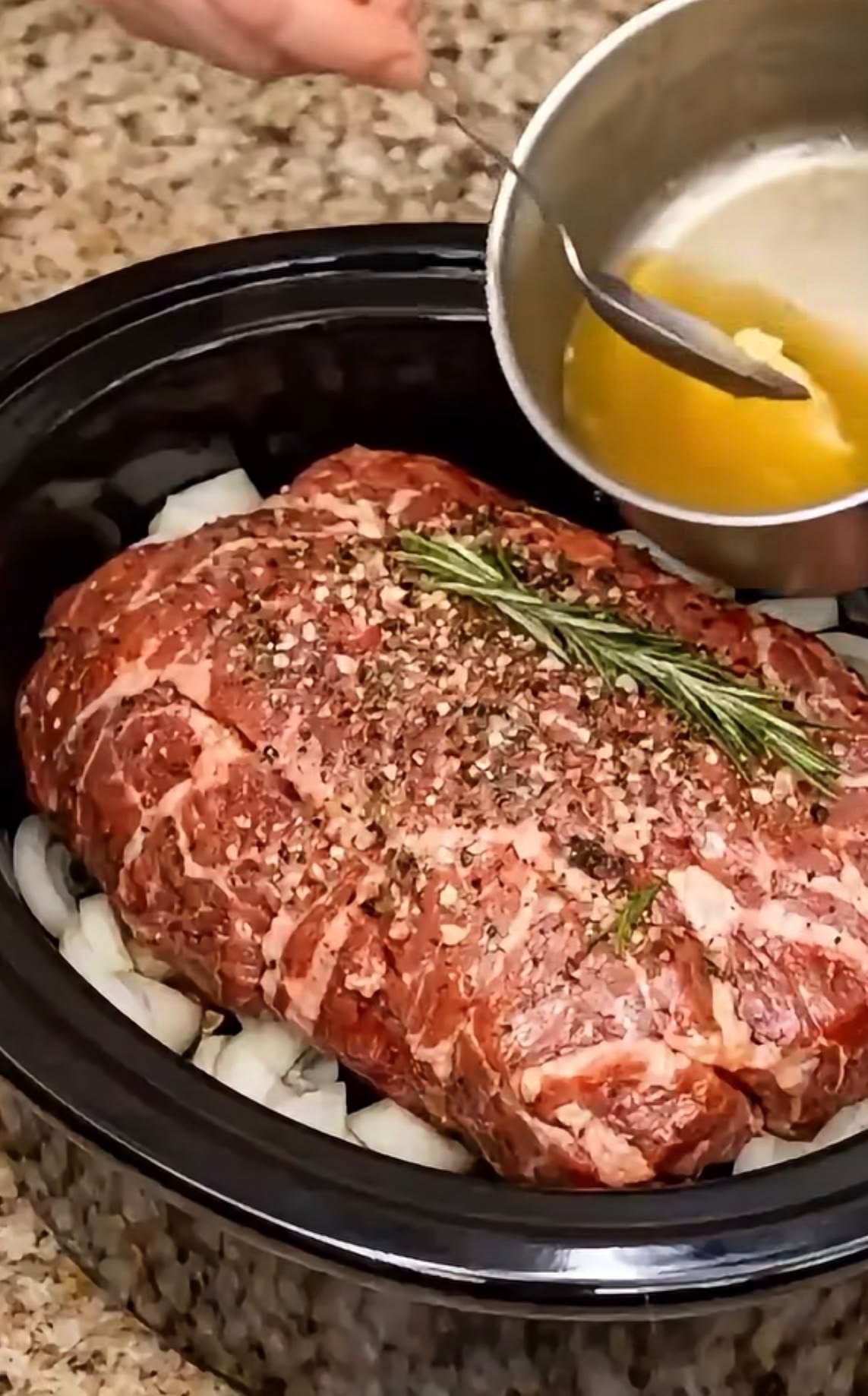
A tender, juicy prime rib roast seasoned with garlic, rosemary, black pepper, and onions, then slow-cooked with a rich buttery beef broth. The image appears to show the roast being prepared in a slow cooker, with melted butter/broth being poured over it. Similar prime-rib methods use rosemary, garlic, beef broth and a thermometer to control doneness.
Ingredients
For the Roast:
- 4–5 lb bone-in prime rib/standing rib roast
- 2 tbsp olive oil
- 4 cloves garlic, minced
- 2 tbsp fresh rosemary, chopped
- 1 tsp dried thyme or 1 tbsp fresh thyme
- 1½ tsp kosher salt
- 1 tsp coarse black pepper
- 1 tsp garlic powder
- ½ tsp onion powder
- 1 large onion, sliced
- 1 cup beef broth
- 3 tbsp unsalted butter
- 1–2 fresh rosemary sprigs
For the Au Jus:
- 1 cup beef broth
- ½ cup roast drippings
- ½ cup dry red wine, optional
- 1 tsp Worcestershire sauce
- Black pepper, to taste
Instructions
- Prepare the roast: Pat the prime rib completely dry with paper towels.
- Make the seasoning: Mix olive oil, minced garlic, rosemary, thyme, salt, pepper, garlic powder and onion powder.
- Season generously: Rub the mixture all over the roast, making sure the seasoning reaches every surface.
- Prepare the slow cooker: Place sliced onions across the bottom. Add 1 cup beef broth.
- Add the roast: Place the roast fat-side up over the onions. Add rosemary sprigs.
- Add butter: Melt the butter and spoon or drizzle it over the seasoned roast, as shown in the image.
- Slow cook: Cover and cook on LOW until the desired internal temperature is reached. Cooking time varies substantially with roast size, so a meat thermometer is more reliable than the clock.
- For medium-rare: Remove around 120°F (49°C); the temperature can rise during resting. A final temperature around 130–135°F (54–57°C) is commonly used for medium-rare prime rib.
- Brown the outside: For a crustier finish, place the cooked roast under a hot broiler for several minutes until deeply browned.
- Rest: Loosely cover with foil and rest for 20–30 minutes before slicing.
- Make au jus: Pour the cooking juices into a saucepan. Add beef broth, Worcestershire sauce and optional red wine. Simmer for about 5–10 minutes.
- Slice and serve: Slice the roast against the grain and serve with warm au jus and the cooked onions.
Approximate Timing
- Prep: 15–20 minutes
- Slow cooking: roughly 4–6 hours for a 4–5 lb roast, depending on the cooker and desired doneness
- Resting: 20–30 minutes
- Servings: 6–8
Important: Don’t rely on cooking time alone. The internal temperature is the best guide for prime rib doneness.
Approximate Nutrition
Per serving, assuming 8 servings and excluding optional wine:
- Calories: ~600 kcal
- Protein: ~43 g
- Fat: ~46 g
- Saturated Fat: ~18 g
- Carbohydrates: ~4 g
- Fiber: ~1 g
- Sugar: ~2 g
- Sodium: ~650 mg
Nutrition varies significantly depending on the size/fat content of the roast and how much butter and drippings are consumed.
Q&A
Q: Can I use a boneless roast?
Yes. A boneless rib roast works well, but cooking time can differ.
Q: Can I prepare this in the oven instead?
Yes. Prime rib is commonly roasted in the oven, and temperature should still be checked with an instant-read thermometer.
Q: How do I get a crispy crust?
After slow cooking, broil the roast for several minutes until browned, watching closely so the crust doesn’t burn.
Q: Why should I let the roast rest?
Resting gives the juices time to redistribute before slicing, helping the meat stay juicy.
Q: Can I make this without red wine?
Absolutely. Replace the wine with additional beef broth.
Q: What should I serve with it?
Mashed potatoes, roasted carrots, green beans, Brussels sprouts, Yorkshire pudding, or a fresh green salad all pair well.
Q: How should I store leftovers?
Refrigerate leftovers in an airtight container and use within about 3–4 days. Reheat gently with a little beef broth or au jus to help prevent drying.
Q: What is the best doneness for prime rib?
Many prime-rib recipes target medium-rare, but the preferred doneness is a personal choice. Use the thermometer to cook it to your desired temperature.