
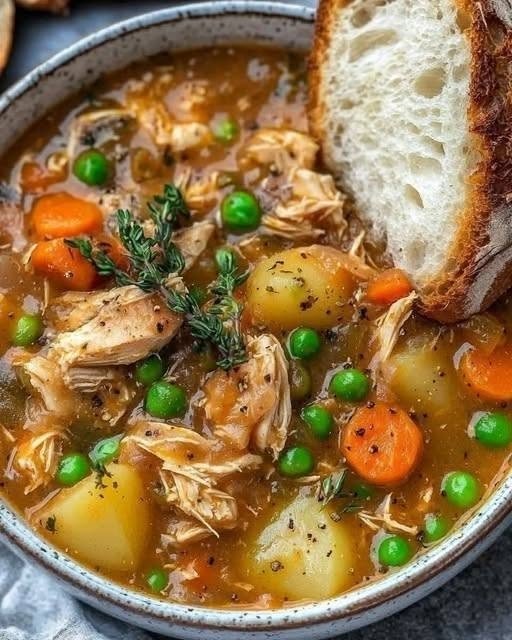
This hearty homemade chicken stew is inspired by the dish in your picture: tender shredded chicken, soft potatoes, sweet carrots, bright green peas, and a rich golden-brown gravy seasoned with thyme, garlic, and black pepper. It is comforting, filling, and perfect for a family dinner on a chilly evening or whenever you want a warm, homemade meal.
The stew is thick enough to coat a spoon but still has plenty of savory gravy. Serve it with crusty bread to soak up every last drop.
1. Recipe overview
Prep time
20 minutes
Cook time
50–60 min
Servings
6 people
Difficulty: Easy to intermediate
Naturally dairy-free; nut-free when prepared with suitable ingredients.
2. Ingredients
The following quantities make approximately six generous servings.
A. Chicken and vegetables
Zappfresh – Fresh Meat, Chicken & Fish Delivery Online
Chicken
900 g (2 lb) boneless, skinless chicken thighs or chicken breast
Alternatively, use about 1.2 kg (2.6 lb) bone-in chicken pieces
Thighs give a richer flavor and stay juicy during simmering. Breast meat is leaner.
Chopped Potatoes
Potatoes
600–700 g (about 1.3–1.5 lb) potatoes
Approximately 4 medium potatoes, peeled or scrubbed
Yukon Gold or other waxy potatoes hold their shape well. Starchy potatoes create a thicker stew.
slice carrots
Carrots
3 medium carrots, sliced into thick rounds
Approximately 250–300 g
Green peas
Green peas
– 150 g (1 cup) frozen or fresh peas
Frozen peas are convenient and retain their color when added near the end.
B. Aromatics and seasonings
1 large yellow onion, finely chopped
3–4 garlic cloves, minced
2 celery stalks, diced
2 tablespoons olive oil or vegetable oil
2 tablespoons butter or an additional 2 tablespoons oil
3 tablespoons all-purpose flour
1 tablespoon tomato paste (optional)
1 teaspoon dried thyme, or 3–4 fresh thyme sprigs
1 teaspoon dried rosemary, crushed (optional)
1 bay leaf
1 teaspoon paprika, preferably sweet paprika
½ teaspoon freshly ground black pepper
1–1½ teaspoons salt, adjusted to taste
1 tablespoon Worcestershire sauce (optional; check the label for allergens)
1 tablespoon chopped fresh parsley, for serving
C. Liquid ingredients
1.2 liters (5 cups) chicken broth or stock
½ cup water, if needed during cooking
1 teaspoon lemon juice, optional, to brighten the finished flavor
Important: Choose low-sodium chicken broth if possible. This allows you to control the salt as the stew reduces.
D. Optional ingredients
These additions are not necessary, but they can make the stew more flavorful:
150 g mushrooms, sliced
½ teaspoon onion powder
½ teaspoon garlic powder
1 teaspoon Dijon mustard
A pinch of chili flakes for gentle heat
A small splash of cream for a creamy variation
For a traditional golden-brown stew like the picture, the flour, broth, thyme, and browned chicken provide the most important flavor and texture.
3. Equipment needed
A large, heavy-bottomed pot or Dutch oven, preferably 5–6 liters
A wooden spoon or heat-resistant spatula
A sharp knife and cutting board
Measuring cups and spoons
Tongs
Two forks for shredding the chicken
A ladle for serving
4. Step-by-step cooking instructions
One Pan Baked Chicken and Rice | Combi Steam Oven Recipes
Step 1: Prepare the chicken
Pat the chicken dry with paper towels. Season both sides with approximately ½ teaspoon salt, ¼ teaspoon black pepper, and the paprika.
If you are using chicken breast, leave the pieces whole for now. Whole pieces are easier to remove and shred after cooking.
Wash your hands and clean any utensils or surfaces that have touched raw chicken.
Receta de Pollo Mechado Mexicana (75 min) | Recetas Mexas
Step 2: Brown the chicken
Heat the oil in your pot over medium-high heat. Add the chicken in a single layer, working in batches if necessary.
Brown for approximately 3–5 minutes on the first side and 2–4 minutes on the second side. The chicken does not need to cook completely at this stage.
Transfer it to a clean plate.
Why this matters: Browning creates flavorful browned bits on the bottom of the pot, giving the gravy its deep, savory taste.
Reduce the heat to medium. Add the butter, followed by the chopped onion, carrots, and celery.
Cook for 6–8 minutes, stirring regularly, until the onion softens and the carrots begin to develop a little color.
If the bottom of the pot looks dry, add a tablespoon of water rather than allowing the vegetables to burn.
Italian Tacos with Braised Chuck Roast and Crispy Mozzarella – Dope Kitchen
Step 4: Add garlic and tomato paste
Add the minced garlic and tomato paste, if using. Cook for about 45–60 seconds, stirring continuously.
Add the thyme, rosemary, and black pepper.
Avoid burning the garlic because it can make the entire stew taste bitter.
This creamy Chicken Potato Soup recipe is warm, filling, and quick enough for a weeknight meal. Made with tender chunks of chicken, potato, and vegetables simmered in a creamy, herb-infused broth. | HandmadeV
Step 5: Make the thickening base
Sprinkle the flour evenly over the vegetables. Stir continuously for 1–2 minutes so the flour coats the vegetables and cooks in the fat.
The mixture will look thick and slightly pasty. This is normal.
Cooked flour gives the broth a smooth, gravy-like consistency rather than a watery soup texture.
6 Mistakes That Ruin Gravy (And How to Fix Them)
Step 6: Add the broth gradually
Slowly pour in about 1 cup of broth while stirring. Scrape the bottom of the pot to release the browned bits.
Once the mixture is smooth, add the remaining broth gradually. Stir in the Worcestershire sauce, if using, and add the bay leaf.
Bring the liquid to a gentle simmer. Do not worry if the broth initially looks thinner than the finished stew; it will thicken as it cooks.
Braised Chicken with Potato Recipe | The Feedfeed
Step 7: Add the chicken and potatoes
Return the browned chicken and any accumulated juices to the pot. Add the potatoes and stir gently.
The liquid should mostly surround the ingredients. Add a little water or broth if needed, but avoid adding so much that the stew becomes diluted.
Bring it to a gentle simmer, then reduce the heat to low. Cover partially with a lid.
Hearty Chicken Stew with Potatoes and Veggies – cozy baking life
Step 8: Simmer until tender
Cook gently for approximately 25–35 minutes, stirring carefully every 8–10 minutes to prevent sticking.
Check the potatoes with a fork. They should be tender without falling apart.
Check the chicken with a food thermometer: it must reach an internal temperature of 74°C (165°F). If the chicken is not yet cooked through, continue cooking and check again.
Instant Pot Shredded Chicken Recipe — The Mom 100
Step 9: Shred the chicken
Remove the fully cooked chicken to a clean plate. Let it rest for a few minutes, then shred it using two forks.
Make the pieces small enough to distribute throughout the stew, but leave some larger strands for a rustic appearance.
Return the shredded chicken to the pot and stir gently. If you prefer chunky chicken, cut it into bite-sized pieces instead.
Elegant Chicken Stew Recipe
Step 10: Add peas and finish the stew
Add the peas during the final 3–5 minutes of cooking. Remove the bay leaf.
Taste the gravy and adjust the salt, pepper, and herbs. Add the optional lemon juice if the flavor needs a little brightness.
If the stew is too thick, add warm broth a little at a time. If it is too thin, simmer uncovered for several minutes, stirring occasionally.
Chicken Stew Comfort Recipe – Cozy Holiday Dinner Ideas (digital Download) – Etsy
Step 11: Rest and serve
Turn off the heat and let the stew stand for 5 minutes. This allows the flavors to settle and the gravy to thicken slightly.
Sprinkle with fresh parsley or thyme. Ladle into warm bowls and serve with toasted crusty bread.
For the appearance in the reference picture, keep the peas bright green, leave the potatoes in large chunks, and place a fresh thyme sprig on top.
5. How to make the gravy rich, thick, and flavorful
The gravy is one of the most important parts of this recipe.
For a smooth, classic gravy: Use the flour-and-fat method in the recipe. Add the broth gradually and stir thoroughly to avoid lumps.
For an extra-thick stew: Mix 1 tablespoon cornstarch with 1 tablespoon cold water. Stir the mixture into the gently simmering stew and cook for 1–2 minutes. Repeat only if necessary.
For a more rustic texture: Mash two or three cooked potato pieces against the side of the pot and stir them into the broth.
For deeper flavor: Brown the chicken properly, scrape up the browned bits, and allow the broth to simmer gently. A little tomato paste and Worcestershire sauce can add savory depth.
Avoid boiling aggressively. A rolling boil can break apart the potatoes, evaporate too much liquid, and make the chicken less pleasant in texture.
6. Nut information and allergen guide
This homemade chicken stew is naturally nut-free when prepared with suitable ingredients and protected from cross-contact. It does not require peanuts, tree nuts, nut flour, almond milk, or nut butter.
However, packaged broth, sauces, seasonings, and bread may have allergen warnings or different formulations. Always check the labels if you are cooking for someone with a food allergy.
Nut and allergen breakdown
Ingredient
Nut information
Important note
Chicken
Naturally contains no nuts
Check marinades and pre-seasoned products
Potatoes
Naturally contains no nuts
Use clean utensils and preparation surfaces
Carrots, peas, onion, celery, garlic
Naturally contain no nuts
Celery is a separate major allergen in some countries
Olive or vegetable oil
Usually suitable when verified
Check the source and label if allergies are severe
Wheat flour
Contains no nuts by itself
Contains wheat; may contain gluten
Chicken broth
Depends on the product
Check ingredients and allergen statements
Butter
Contains no nuts by itself
Contains milk
Worcestershire sauce
Usually not nut-based
Check for fish, soy, and other declared allergens
Crusty bread
Usually not nut-based
May contain wheat, sesame, milk, or cross-contact warnings
Estimated nutrition per serving
These estimates assume six servings, boneless skinless chicken, the stated vegetables, flour, and a moderate amount of oil and butter. They exclude optional bread and cream.
Calories
380–460
kcal per serving
Protein
32–40 g
per serving
Carbohydrates
35–45 g
Fat
10–18 g
Fiber
5–7 g
Sugar
5–9 g
Nutrition is approximate, not laboratory-tested. Values vary with the chicken cut, exact portion size, broth, and amount of oil used.
Is this recipe safe for someone with a nut allergy?
The ingredients listed do not intentionally include nuts. However, no recipe can be guaranteed safe for every allergy situation without checking the actual ingredients and preparation environment.
If the allergy is severe:
Use broth and sauces whose ingredient labels meet the person’s requirements.
Avoid products carrying relevant allergen warnings if advised by the person’s allergy specialist.
Use thoroughly cleaned cookware, utensils, chopping boards, and work surfaces.
Do not assume that an oil or packaged ingredient is safe based on its name alone.
If using bread, verify its ingredients and possible cross-contact with nuts.
For a dairy-free version, replace butter with olive oil. For a wheat-free version, use a suitable gluten-free flour blend or thicken the stew with mashed potatoes or verified gluten-free cornstarch.
7. Frequently asked questions (Q&A)
Q1. Can I use chicken breast instead of chicken thighs?
Yes. Chicken breast is leaner and works very well. Keep the pieces whole while simmering, monitor the internal temperature, and remove them as soon as they are cooked through and tender enough to shred. Thighs generally tolerate longer cooking without drying out.
Q2. Can I use leftover cooked chicken?
Yes. Use approximately 700–900 g cooked shredded chicken. Prepare the gravy and vegetables first, simmer until the potatoes are tender, then add the cooked chicken during the last 5–10 minutes so it heats thoroughly without becoming dry.
Q3. Can I make this recipe without flour?
Yes. Omit the flour and use mashed potatoes to thicken the stew, or stir in a slurry made from 1 tablespoon cornstarch and 1 tablespoon cold water. Add the slurry gradually to simmering liquid.
Q4. How do I stop the gravy from becoming lumpy?
Cook the flour with the fat and vegetables first. Add the broth gradually while whisking or stirring continuously. If lumps remain, use a whisk to break them up before adding the chicken and potatoes.
Q5. Why is my chicken stew watery?
It may contain too much broth, may not have simmered long enough, or may need more thickener. Simmer uncovered for 5–10 minutes, mash a few potatoes into the broth, or add a small amount of cornstarch slurry.
Q6. Why are my potatoes falling apart?
They may be cut too small, overcooked, or stirred too vigorously. Cut them into approximately 3–4 cm chunks, maintain a gentle simmer, and stir carefully. Waxy potatoes generally hold their shape better.
Q7. Can I use frozen peas?
Absolutely. There is no need to thaw them first. Add them directly from the freezer during the last 3–5 minutes of cooking.
Q8. Can I add other vegetables?
Yes. Mushrooms, green beans, corn, parsnips, and diced turnips work well. Add firm vegetables earlier and delicate vegetables near the end so that everything finishes cooking at approximately the same time.
Q9. Can I make it spicy?
Yes. Add ¼ teaspoon chili flakes or a little cayenne pepper with the other seasonings. Start with a small amount and adjust to taste.
Q10. Can I make this stew in a slow cooker?
Yes, with a slightly different method. Brown the chicken and sauté the vegetables first if possible. Transfer them to the slow cooker with the broth, potatoes, carrots, and seasonings. Cook on low for about 6–7 hours or high for 3–4 hours, checking that the chicken reaches 74°C (165°F) and the potatoes are tender. Add peas near the end. For a thick gravy, prepare a flour-based thickener separately or use a cornstarch slurry near the end.
Q11. Can I make this stew in a pressure cooker?
Yes. Brown the chicken using the sauté function, then add the aromatics, potatoes, carrots, seasonings, and broth. Pressure-cook boneless chicken pieces for approximately 8–10 minutes at high pressure, followed by a suitable natural release. Timing depends on the size of the chicken pieces and the appliance. Add peas afterward, shred the chicken, and thicken the gravy using the sauté function if necessary. Avoid filling the cooker beyond its recommended limit.
Q12. Can I prepare it in advance?
Yes. The stew can be made a day ahead and refrigerated promptly. Its flavor often becomes even more developed after resting overnight. Reheat it gently, adding a little broth if the gravy has thickened too much.
Q13. How should I store leftovers?
Transfer leftovers into shallow containers and refrigerate within 2 hours of cooking, or within 1 hour if the surrounding temperature is above 32°C (90°F). Store at 4°C (40°F) or colder and use within 3–4 days. Reheat to 74°C (165°F). For longer storage, freeze in airtight containers for about 2–3 months for best quality.
Q14. Can I freeze chicken stew with potatoes?
Yes, although the potatoes may become softer or grainier after thawing. Cool the stew promptly, package it in freezer-safe containers, and leave a little headspace. Thaw in the refrigerator and reheat thoroughly. If you want firmer potatoes, cook and add them separately when serving.
Q15. What bread goes best with this stew?
Crusty sourdough, French bread, whole-wheat rolls, garlic bread, or simple homemade dinner rolls are excellent. For someone with a nut allergy, select bread with suitable ingredients and allergen precautions.
Q16. Can I make it dairy-free?
Yes. Replace butter with olive oil or another suitable cooking oil. The rest of the recipe can be dairy-free if the broth, sauces, and any additional ingredients are also dairy-free.
Q17. How can I make it healthier?
Use skinless chicken, reduce the oil slightly, choose low-sodium broth, and increase the carrots, peas, and celery. You can omit the butter and use a smaller amount of flour or mashed potatoes for thickening. Keep in mind that potatoes are nutritious vegetables but contribute substantially to the carbohydrate content.
Q18. What if I do not have fresh thyme?
Use dried thyme. A useful starting substitution is 1 teaspoon dried thyme for about 1 tablespoon fresh thyme leaves. Add dried herbs earlier so they have time to release their flavor.
Q19. How do I know when the stew is fully cooked?
The chicken must reach an internal temperature of 74°C (165°F), measured with a food thermometer in the thickest portion. The potatoes should be fork-tender, the carrots should be soft enough to bite comfortably, and the gravy should be hot and gently bubbling.
Q20. Can I double the recipe for a large family?
Yes. Double the ingredients and use a sufficiently large pot. You may need to brown the chicken in several batches. Start with about twice the broth, but adjust toward the end rather than adding extra liquid automatically. A larger batch may take longer to return to a simmer and finish cooking.
8. Common mistakes and how to fix them
Problem
Likely reason
Solution
Bland flavor
Insufficient seasoning or browning
Adjust salt, pepper, thyme, and a little lemon juice
Thin gravy
Too much liquid or insufficient thickener
Simmer uncovered or add a cornstarch slurry
Overly thick gravy
Too much flour or excessive reduction
Add warm broth gradually
Dry chicken
Overcooking, especially breast meat
Monitor the internal temperature and remove cooked pieces promptly
Hard potatoes
Not enough simmering time
Continue simmering until fork-tender
Mushy peas
Added too early
Add peas only during the final few minutes
Bitter flavor
Burnt garlic or flour
Avoid scorching; add broth promptly after cooking the flour
Greasy surface
Excess fat
Skim excess fat from the surface with a spoon
9. Serving suggestions
Sliced Sourdough Bread on wood board on wood background, homemade bakery
Crusty bread
Serve warm bread alongside the stew for dipping into the thick gravy.
Salada Verde com Azeite e Limão – My Framer Site
Fresh green salad
A light salad with cucumber, lettuce, and a lemon dressing balances the richness of the stew.
Roasted Carrots and Green Beans with Garlic – Gastronotherapy
Roasted vegetables
Serve with roasted green beans or seasonal vegetables if you want a larger meal.
10. Final recipe checklist
Cooking checklist
0 of 10
Chicken browned on both sides
Onion, carrots, and celery softened
Flour cooked before broth is added
Broth added gradually and stirred smooth
Potatoes cooked until fork-tender
Chicken reaches 74°C (165°F)
Chicken shredded and returned to the pot
Peas added during the final 3–5 minutes
Bay leaf removed and seasoning adjusted
Nut and allergen labels checked if needed
The secret to the best homemade chicken stew: Brown the chicken well, cook the flour before adding broth, simmer gently, and add the peas near the end. These simple steps create the rich brown gravy, tender shredded chicken, colorful vegetables, and comforting flavor that make this dish so satisfying.
Serve it piping hot with crusty bread and fresh thyme for a rustic, homemade meal.